Learn how pressured bull elk behave in late rifle season and how to locate them using sanctuary habits, glassing timing, and sign reading.
Bulls and Cows Continue To Separate
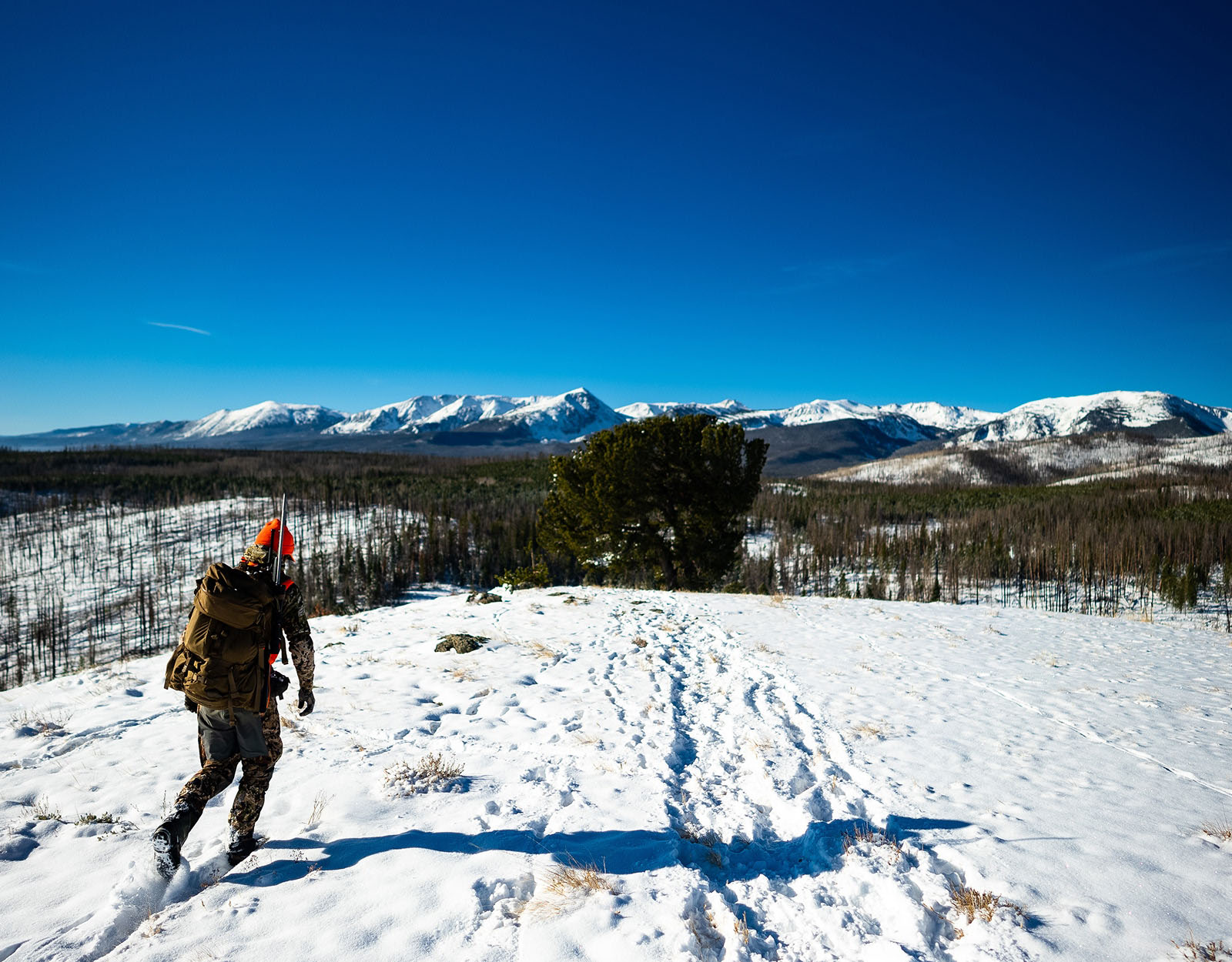
By November, food and breeding drop to the bottom of a bull’s priorities, and avoiding hunters becomes the main goal. Older, more pressured bulls leave the cow herds first, so the bulls still running with cows by mid-November are usually spikes. This generally means that if you’re seeing a lot of cows or cow sign—and you’re after a bull—you’re looking in the wrong spot. In migratory country, cows lead the migration and bulls trail it, so seeing a big group of cows usually means you should go higher in elevation for bulls.
Pressured Bulls Hide in Small Sanctuary Pockets
A pressured bull can hold an area as small as 80 acres. Sanctuaries typically combine three features: dark timber with a feeding edge nearby, a bedding bench flatter than a 20-degree slope, and an escape route that puts terrain between the bull and the most likely approach. Bulls often bed 200 to 300 yards inside the timber but slip to the edge in the day’s last light to feed, keeping their escape route short. Look for a bedding bench by scanning for steep terrain that suddenly flattens out below a 20-degree slope. Favor small, awkward-to-reach public pockets over the big, obvious forest blocks, which get hunted hard early and emptied out fast.

Slope Angle
onX Hunt’s Slope Angle Map Layer color-codes the map so you can key in on specific grades. Learn how to use Map Layers.
Glass With the Sun at Your Back
In November, elk hold tight to cover, so glassing replaces covering ground. Give each glassing spot three to four hours before moving on, and skip the midday trip back to camp. Position yourself so the sun lights up the slopes you’re watching first, keeping the sun mostly at your back whether you’re glassing morning or evening. In the morning, that means facing the slopes that catch sunrise first; in the evening, it means watching slopes that hold shade the longest. Bulls tend to bed in dark, north-facing timber but feed on sunnier south, east, and west-facing slopes during the low light of dawn and dusk, since that’s where most of the November forage is.
Read Late-Season Tracks, Beds, and Scent
- A long line of 40 or more tracks: Usually cows and young bulls already migrating toward winter range, meaning two things: 1.) They’re on the move, and you’re unlikely to catch up. 2.) There’s probably not a mature bull with them at this time of year.
- A few zigzagging tracks: Likely a bachelor group of bulls still in feeding mode, or getting ready to bed, and possibly still within reach.
- Rubs: Nearly worthless in late season, since most were made back in August or September.
- Beds and strong elk scent: A reliable November sign, often meaning a bull bedded nearby recently.
Condensed from the full guide: “Rifle Elk Hunting: Randy Newberg’s Late Season Tactics for Pressured Bulls.”