Trail Overview
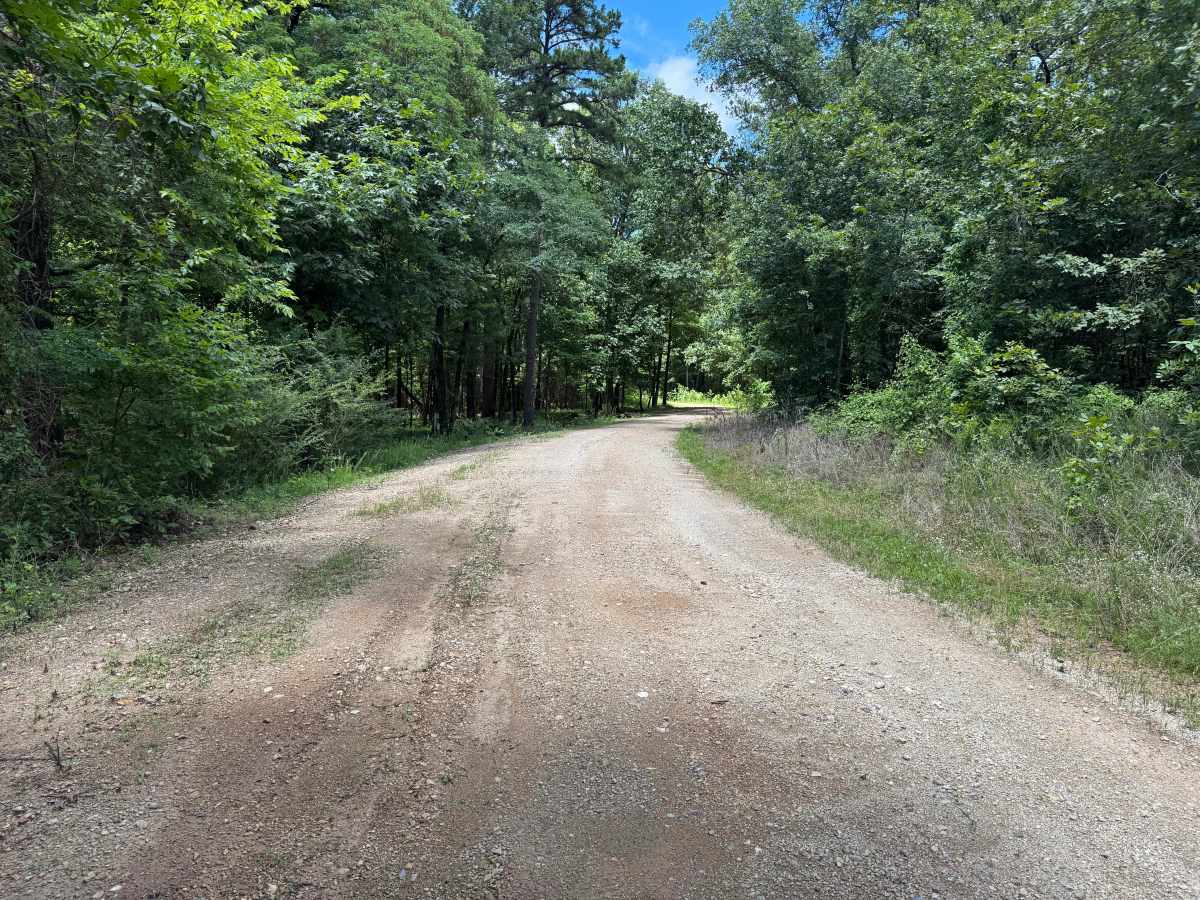
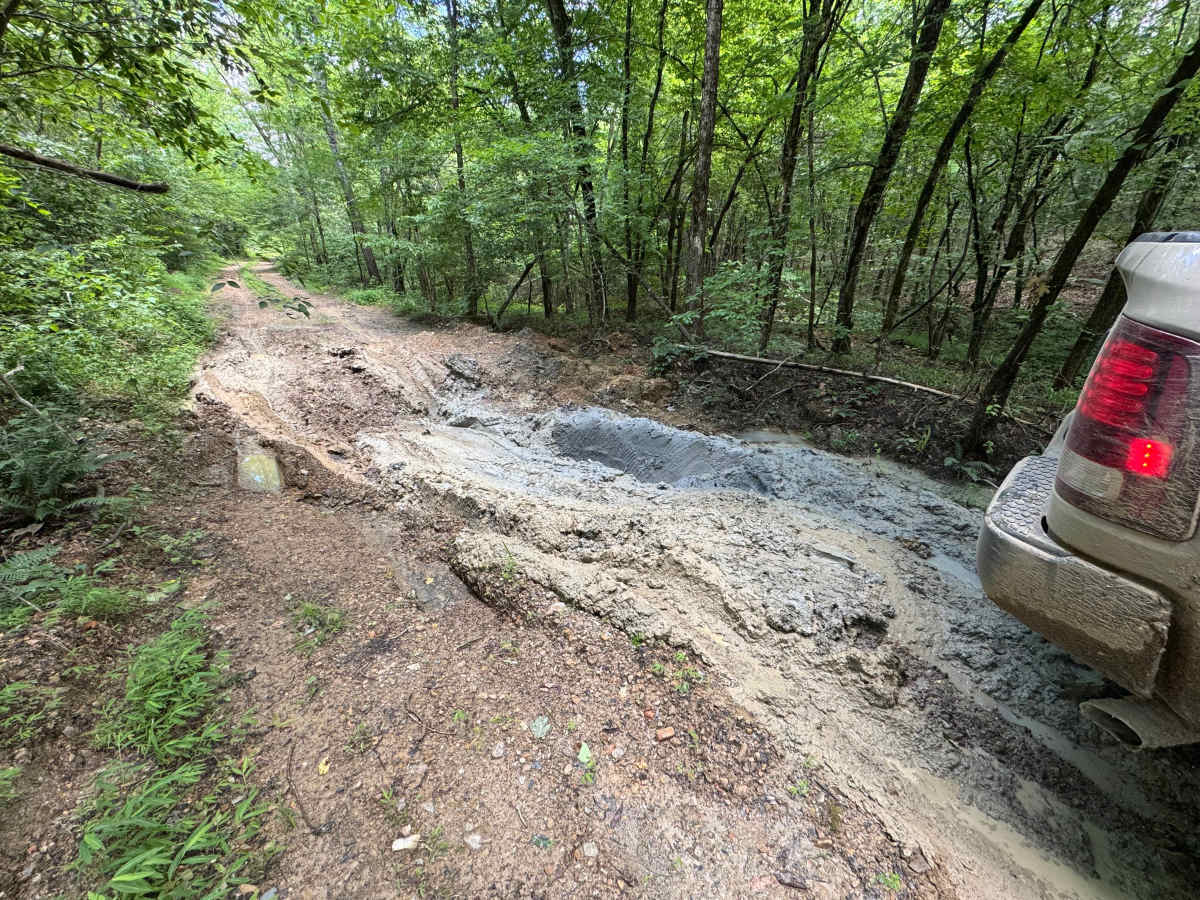
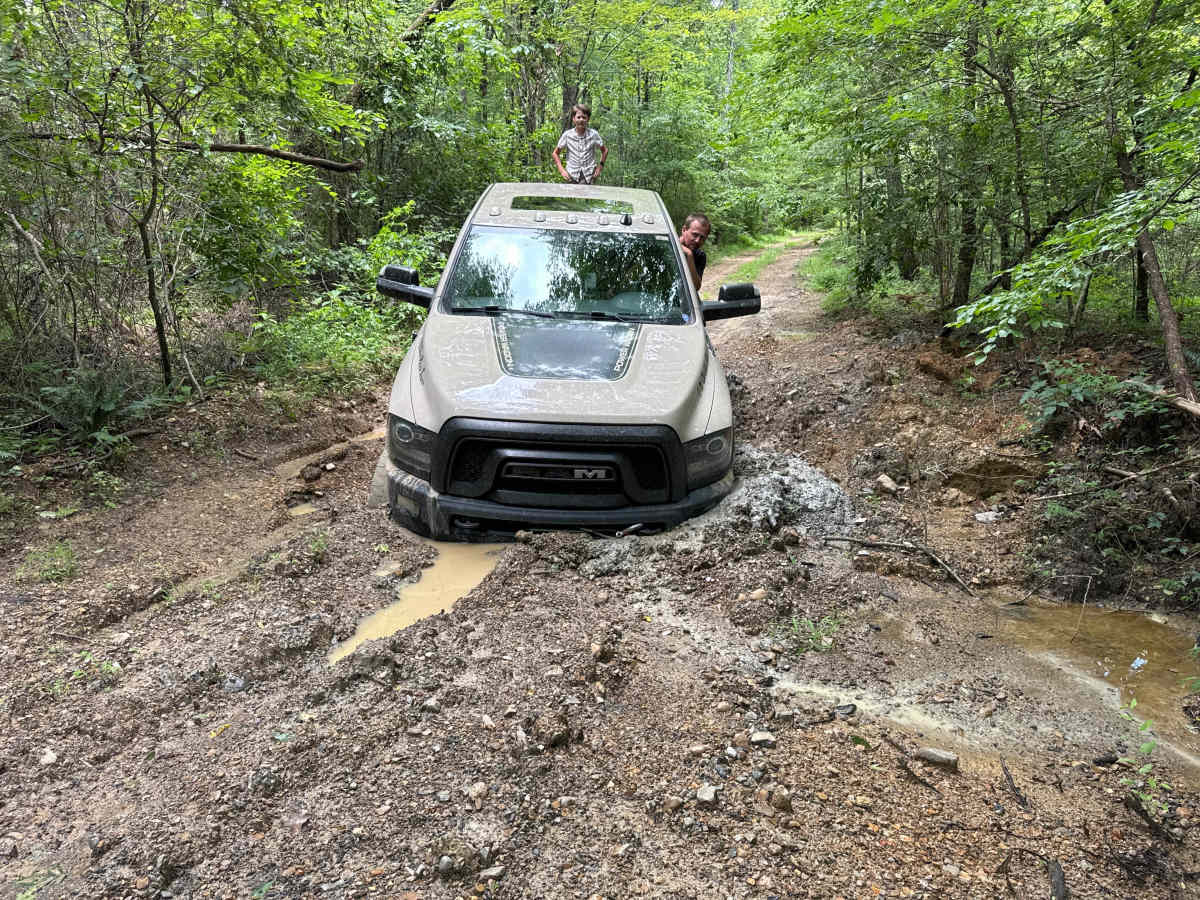
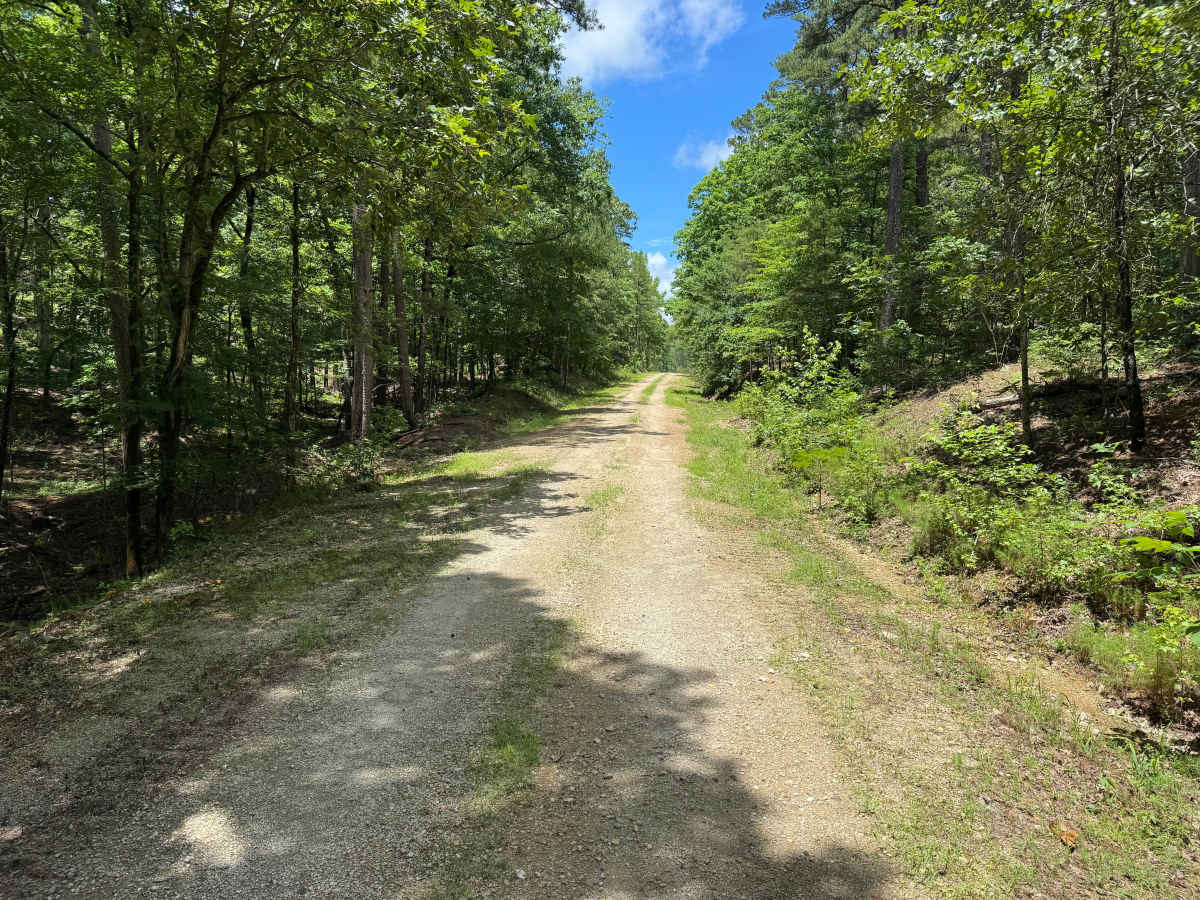
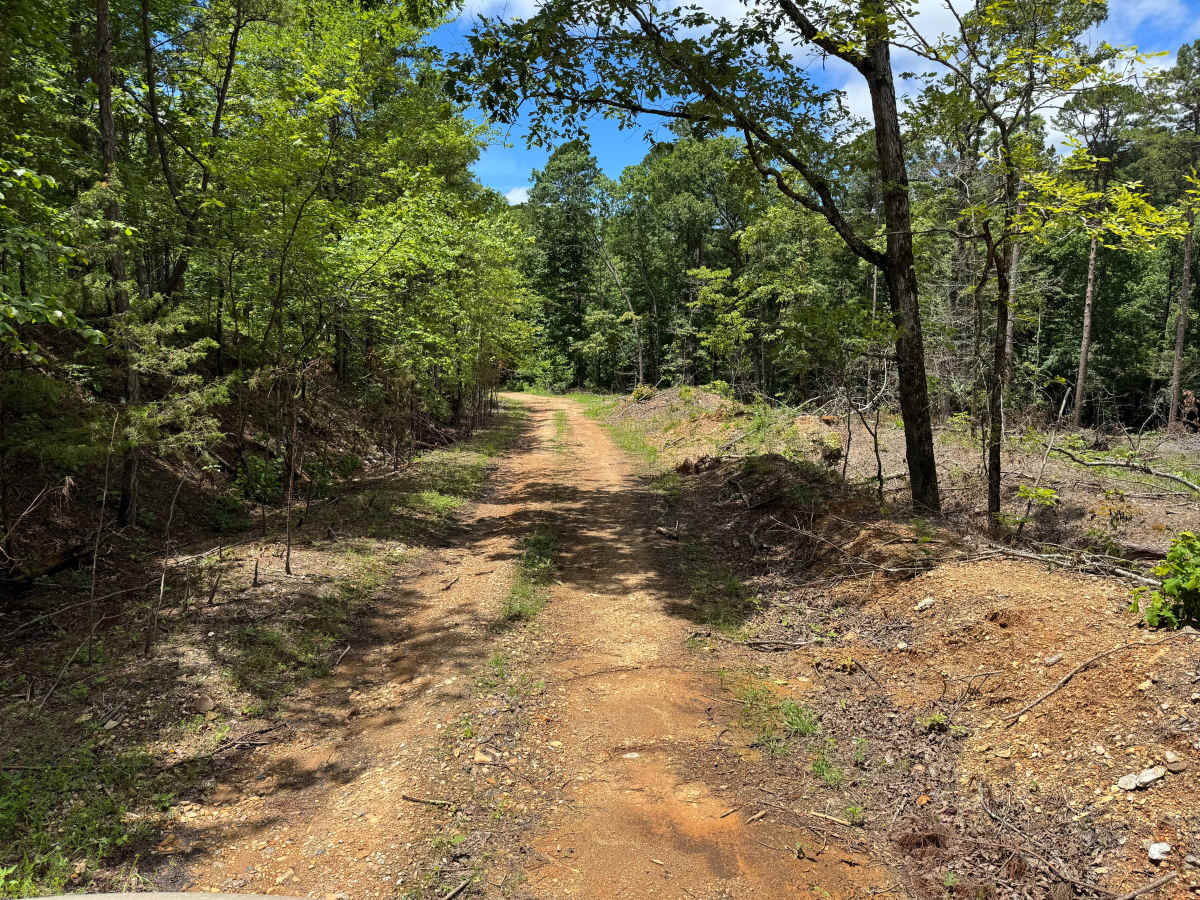
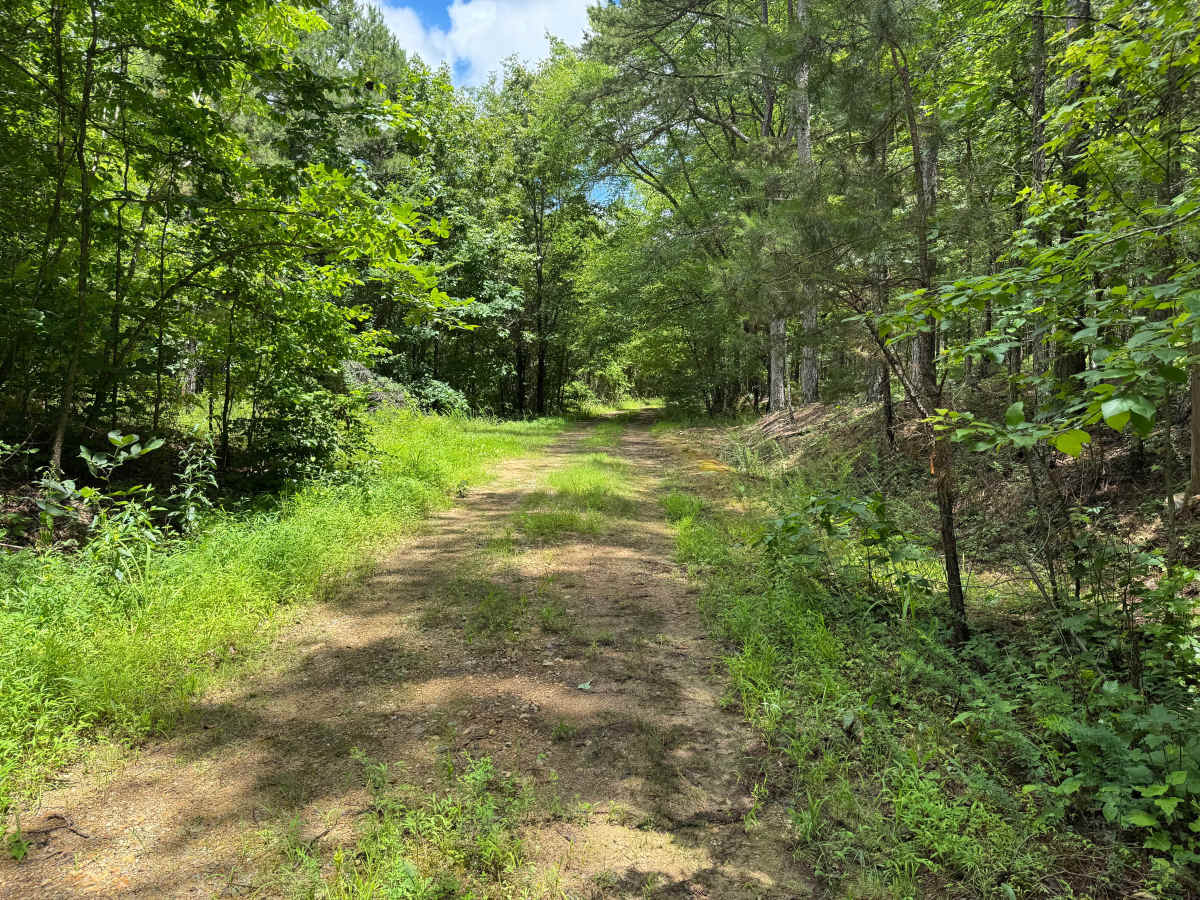
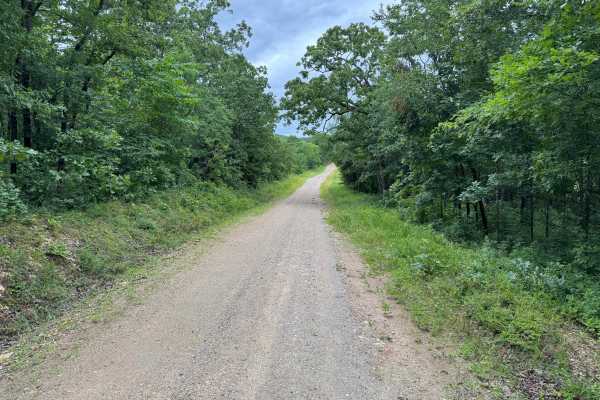
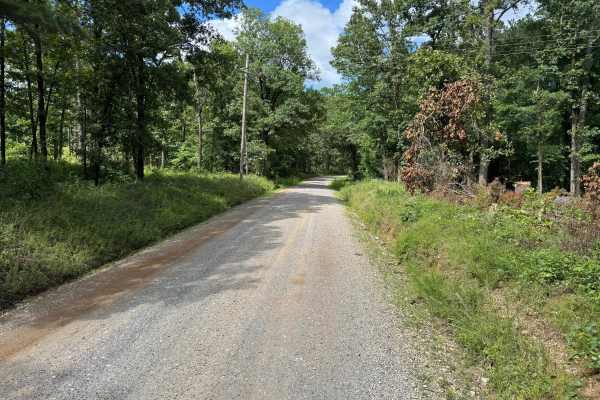
This route begins as a wide and well-maintained gravel road that offers an easy drive through a mix of pine forest and hardwood timber. Early sections are straightforward, with enough width for two vehicles to pass comfortably and plenty of room to enjoy the surrounding scenery. As the route progresses, the road gradually narrows and becomes less maintained, transitioning from gravel to dirt with increasing signs of erosion and washouts. The defining feature of this trail is a large mud and clay obstacle located near the end of the route. Under wet conditions, the soft clay base creates an extremely deep and unpredictable mud hole capable of swallowing large tires and trapping even well-equipped vehicles. Evidence of deep ruts, severe erosion, and recovery attempts are common in this section. During one visit, the mud was deep enough to bury much of a full-size truck's 37-inch tires, requiring recovery efforts to continue. Beyond the mud hole, the trail continues only a short distance before ending at a man-made dirt barricade. Because there is no alternate exit, all travelers must return the same way they entered. Anyone choosing to continue through the mud obstacle should understand they will be required to cross it a second time on the return trip. This route should not be attempted alone. Recovery gear, a second vehicle, and experience in deep mud are strongly recommended.
Difficulty
Most of the route would qualify as an easy forest road. However, the deep mud hole near the end significantly increases the overall difficulty and risk. The obstacle can easily stop vehicles lacking adequate tire size, traction, clearance, or recovery support. Because there is no bypass and no alternate exit, drivers must successfully negotiate the obstacle twice.
History
The Ouachita National Forest was established in 1907 and is recognized as the oldest national forest in the southern United States. Many roads found throughout the forest today originated as logging, timber management, fire access, or resource extraction routes before becoming part of the modern Forest Service road network. Forest management remains an important part of the landscape, and travelers may encounter evidence of prescribed burns, timber thinning, and habitat restoration efforts. The Ouachita Mountains themselves are among the oldest mountain ranges in North America and are notable for their unique east-west orientation.