Hearing Protection
Hearing loss cannot be reversed. Learn how to protect yourself.
What’s the Risk?
One study published by the U.S. Department of Health and Human Services found that only 66.7% of adults use hearing protection around loud noises or music. Another study found that of people who do wear foam earplugs as hearing protection, only half wear them correctly. The half that doesn’t gets half the amount of intended hearing protection. That means those foam earplugs, which only block 20-30 dB of sound when worn properly, might only be knocking off 10-15 dB of a gunshot that can be between 111-167 dB (the range from a .22 rifle to a .308 caliber).
All hearing studies have shown anything over 85 dB can permanently damage one’s hearing. Repeated gunshots, season after season of sighting in and shooting at game, will take its toll on most hunters, putting them at risk of being the one in 10 Americans who have enough hearing loss that it affects their ability to hear normal speech.
Hearing Protection and Enhancement
“There’s hearing protection and there’s hearing enhancement, and some people are really chasing the enhancement,” says SoundGear Product Manager Luke Maresh. “We see a lot of people that just want that edge to be able to hear better than they can with normal hearing but also to not have to fumble around with electronic muffs or non-electronic, passive hearing protection for a single shot in the field. They want to be able to have a conversation with their hunting partner while being able to leave in their hearing protection.”
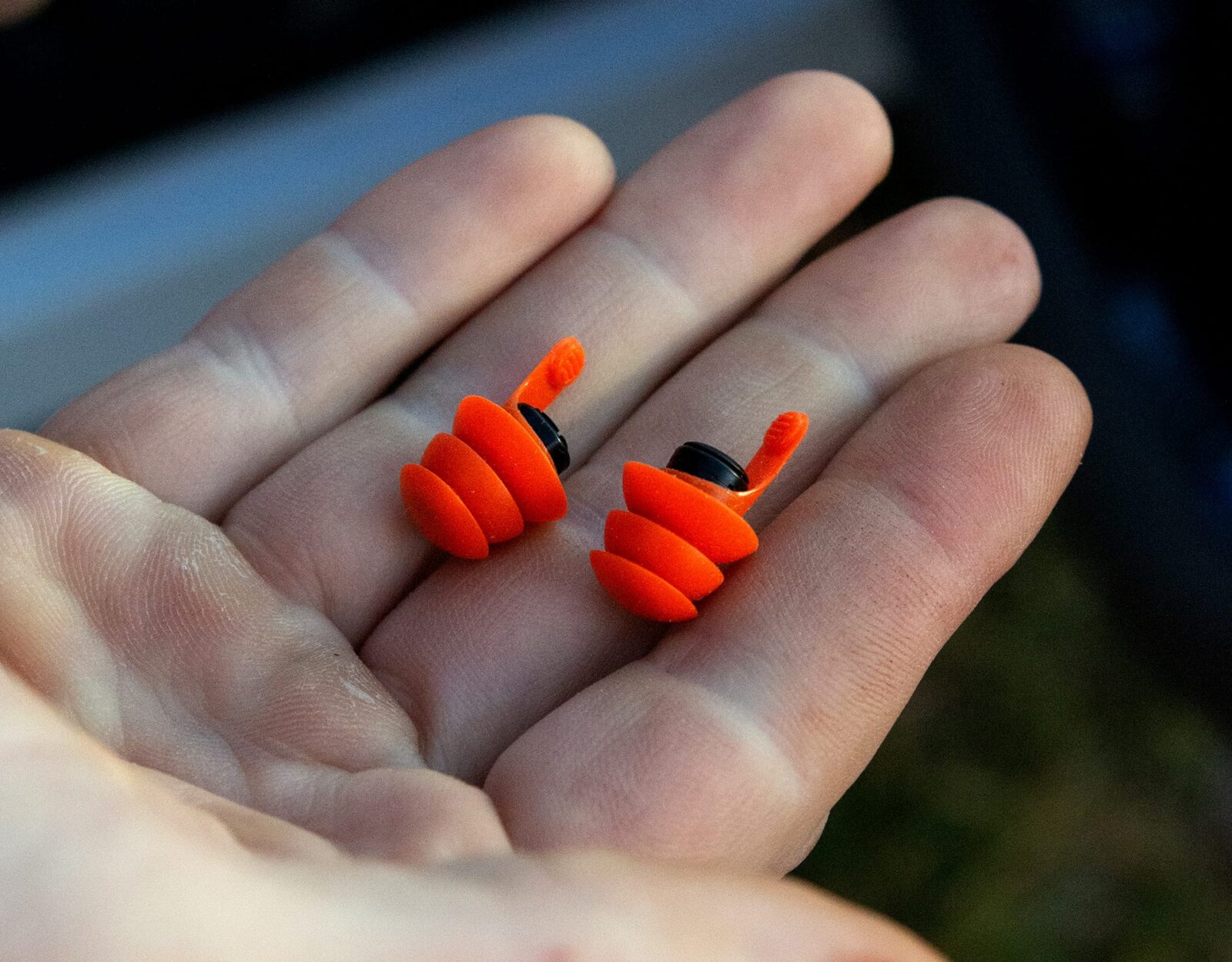
SoundGear’s solution is the Phantom, the world’s first custom-fit, Bluetooth-compatible, rechargeable hearing enhancement, and protection device. It offers a 22 dB Noise Reduction Rating (NRR), up to 30 dB of gain/amplification, and up to 23 hours of battery life. With SoundGear being owned by Starkey, the largest hearing aid designer and manufacturer in the U.S., the quality and technology behind their products go beyond the hunting companies that try to be a hearing aid company.
As a custom-fit product, the risk of wearing the Phantom incorrectly is essentially zero, so users have the full 22 dB level of hearing protection. Plus it has four preprogrammed settings to switch between depending on your listening environment, from max protect to amplifying almost everything.
With a network of about 3,000 audiologists around the country who take impressions of anyone ordering the Phantoms or other custom-fit products from SoundGear, it’s a fast and simple process to get a pair. The impression process involves having a silicon solution pushed into the ear via a syringe, and this solution hardens to create a mold. Once SoundGear has the impression, they ship the final product in about seven days.
As an electronic hearing enhancement and protection device, the circuitry inside the unit is designed to instantly (within one millisecond) receive and process any loud sound over 90 dB and reduce that noise by 22 dB. Once that sound is gone, it instantly kicks back on, meaning any conversation you’re having when the gunshot or loud noise happens won’t interrupt the other person’s voice.
Why Hunters Need Them
“Hunting-wise, as far as amplification goes it’s being able to hear the little things that you wouldn’t normally be able to pick up on, especially ambient noises, whether that’s certain sounds a duck makes or their wings whistling through the air,” says onX Hunt and SoundGear Ambassador Wade Shoemaker.
“I’m a photographer and I work with an outfitter for over 30 days a year,” he says, “and this might sound silly, but being able to hear a gun safety click off before it’s supposed to, that’s a big benefit if you’re hunting around a lot of people. So the real benefit of electronic amplification is hearing noises before you normally would and hearing noises you normally wouldn’t.”