Understanding Thermals
Learn how thermals work, how they interact with prevailing winds, and how you can use them on your next stalk.
The Science Behind Thermals
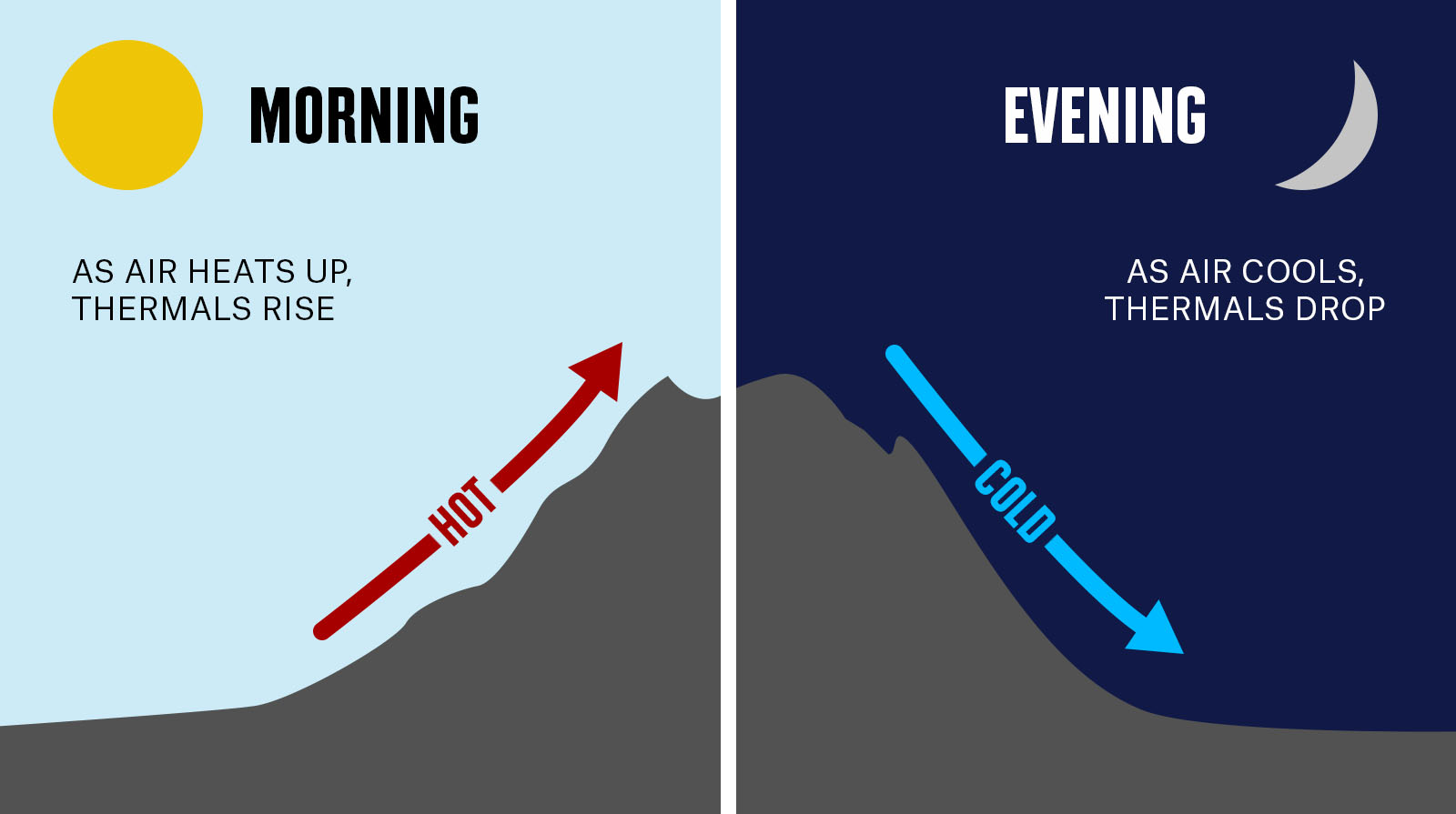
Thermals are driven by the difference in temperature between two areas. These temperature changes create thermal currents. The greater the temperature gradient, the stronger the thermal.
As the sun rises, it warms the ground, and in turn, the air near the surface becomes warmer. This warmer air begins to rise because it is lighter than the cooler air above it. As the sun sets and begins cooling the air, those cold temps cause the air to drop and thermal winds move downward.
Eastmans’ Brian Barney explains how to use thermals to your advantage. Watch the onX Hunt Masterclass clip below:
Using Thermals in Hunting Strategy
Big game, particularly mature bull elk, are acutely aware of how thermals work. They survive by knowing what danger smells like. They will bed in areas where thermals swirl, allowing them to detect predators from multiple directions. Understanding this behavior can significantly increase your odds of success in the field.
If you want to use thermals to your advantage, the general rule is to approach from above in the morning and below in the evening. This is because in the morning thermals rise, so staying above the animal keeps your scent from being carried down to it. In the evening, as thermals drop, approaching from below allows you to stay under the animal’s scent line.
Spot-and-stalk hunters will also want to understand the windward and leeward sides of hills and mountains. The windward side faces the prevailing wind and is generally more consistent, with winds blowing directly against the hill or mountain. This makes it easier to plan a stalk, as you can predict the wind’s behavior. The leeward side, though, is more protected from prevailing winds. But that doesn’t mean it’s calm.
In fact, Barney calls the top third of the mountain on the leeward side “an absolute nightmare” due to the shifting winds. The windward side is often more forgiving, allowing you to use the consistent directional wind to your advantage when stalking elk.
Factors That Affect Thermals
Prevailing Winds
While thermals are driven by temperature changes, prevailing winds are the directional winds that blow due to weather systems. These winds tend to kick in around 10 a.m. in most locations. When prevailing winds are strong, especially over 15 mph, they can override thermals, making them less of a factor in hunting.
If you hunt in the morning when thermals are rising, you can use the prevailing wind to mask your scent as you move downwind. As the day progresses and the prevailing wind strengthens, thermals become of less consequence.
Topography
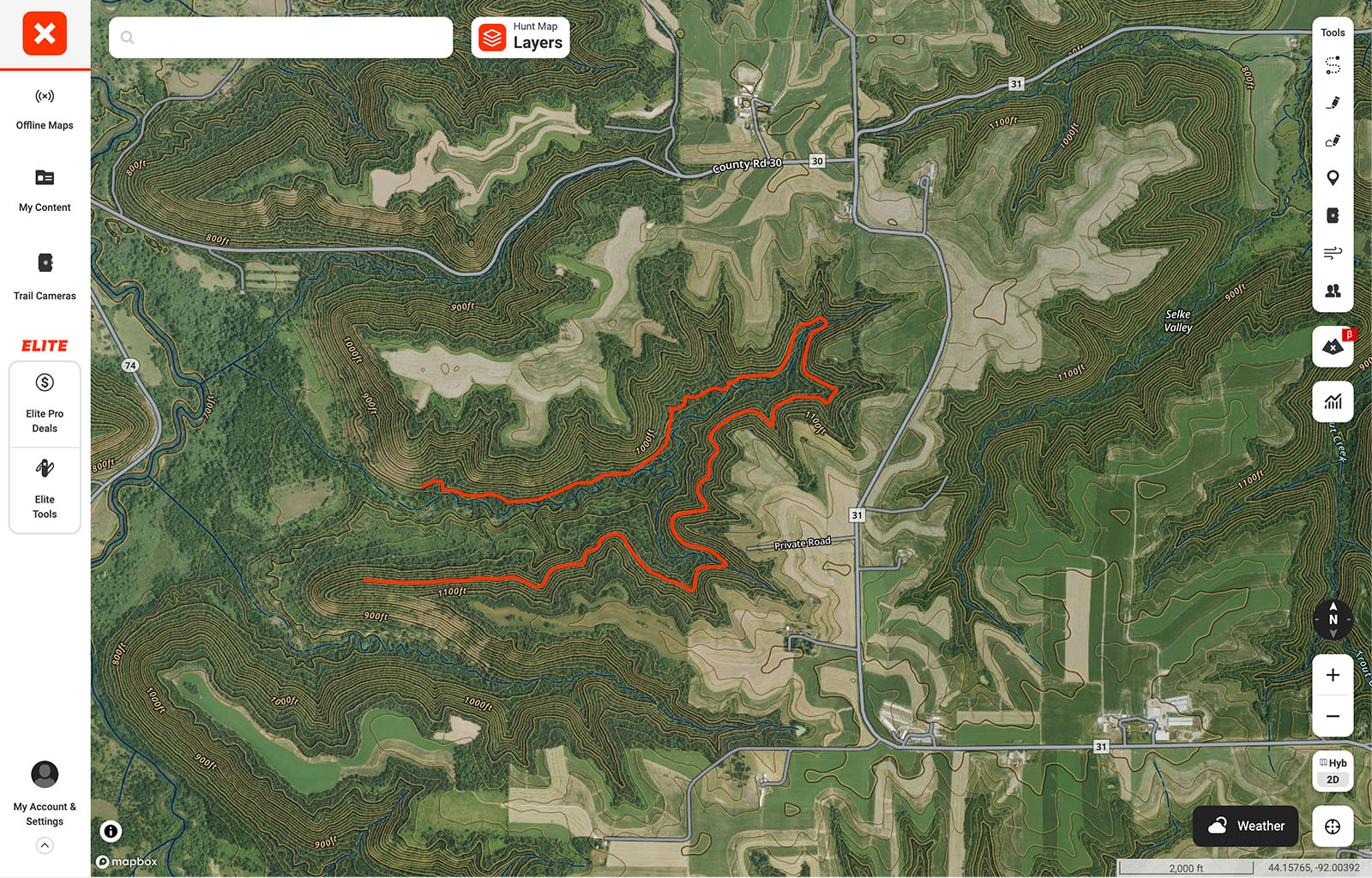
Topography adds complexity to predictable thermal patterns. Thermal hubs occur where several draws or drainages meet, creating swirling winds that make scent control particularly challenging. Even smaller elevation changes between 50-100 feet can have thermals, and those thermals can react to prevailing winds.
Microclimates
Microclimates can impact thermal behavior. For instance, shaded areas within a sunlit slope might act as thermal sinks even in the middle of the day. Similarly, areas near water bodies like ponds or streams can create cool zones that alter thermal movement. These cooler spots might delay the upward flow of thermals in the morning or expedite the downward flow in the evening.
Another common microclimate occurs near rocky outcroppings or depressions in the ground. These terrain features can either retain heat for longer periods or cool down more quickly than the surrounding area, affecting how thermals rise or fall. As a hunter, you need to study the terrain in detail to spot these areas where thermals behave differently.
Dense Vegetation
While we often focus on thermals in open terrain like hills and valleys, heavily vegetated areas create a different dynamic. In these places, the canopy traps heat, while the ground remains cooler, creating a thermal layering effect. The canopy might still radiate heat long after the ground has cooled, leading to unpredictable thermal movement that can confound hunters.
To navigate these complexities, hunters should pay close attention to how air behaves as it moves through dense vegetation. It’s also helpful to map out potential thermal hubs in thick timber, as these areas tend to trap and swirl scent, offering animals a significant advantage.