Calling in Elk Solo
Born and Raised walks you through calling in elk when hunting solo.
The Setup
When you’re calling in elk solo, the setup is critical. Find a location where the bull has to come all the way into range to see where the sound came from. Look for terrain breaks like finger ridges and heavy cover that naturally force an elk into your setup. If you’re in open terrain, you’re going to have a harder time. That bull is going to come in and be able to scan the whole area from a distance. When he doesn’t see another elk, he’ll have called your bluff.
Go With What Works
See what the bull is responding to, and react accordingly. If cow calls are working well, don’t just throw in a bugle because you feel like bugling. Assess each situation and if a bull is interested, keep doing what you’re doing to keep him interested.
Sneaking Into Position
If you can’t quite bring a bull into the right distance, make that last call and then move as quickly and quietly as possible into shooting position. Get the bull fired up, starting to converge, and bring him in using a hide-and-seek mindset. Sometimes you need to stop calling and let the bull come into position, then move quickly and quietly to meet him halfway.
Volume and Direction
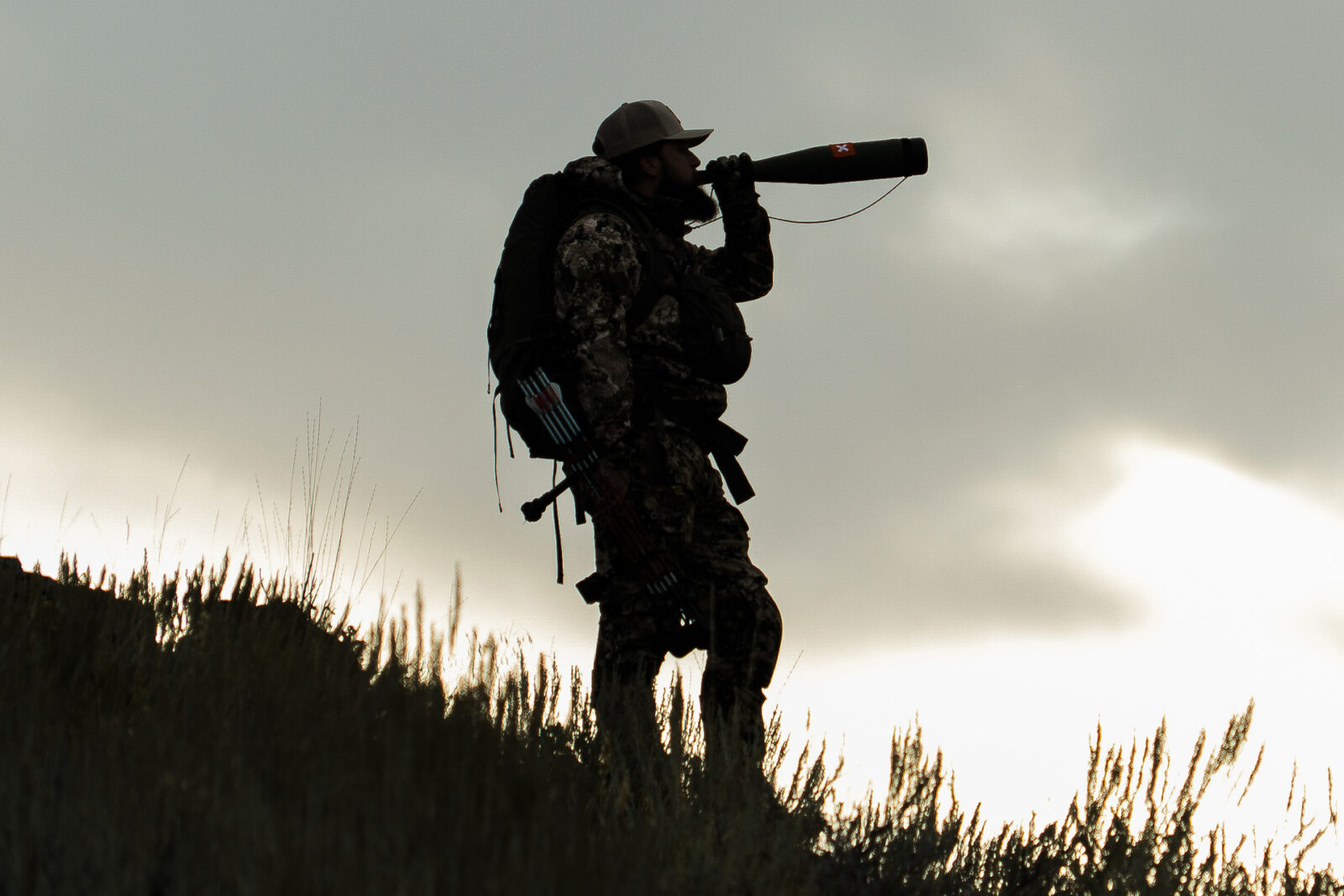
Instead of calling at the bull, turn your head and point the bugle toward the ground to give the illusion that the sound is coming from a different location, or from further away, than where you’re sitting. A lightweight glove can also be used to cap the end of the bugle to help muffle and direct sound.
Raking = Move
An advantage to solo hunting is that fewer people means less sound. Use that to your advantage. When the bull is raking, you can get away with a lot of movement and sound. Just keep in mind that if the bull is with a herd, you need to ensure all the elk are distracted. It only takes one cow to blow your stalk.
Patience
If you call a bull in and he hangs up, be patient. Let things develop. Sometimes a bull may get curious and come in, but if he can see where you’re calling from, just wait. Let him move on, then make a move and keep calling him in.
Bark Scream/Bark Chuckle
If all else fails and an elk hangs up, bring out the bark scream/bark chuckle. This sharp, shrill sound can intrigue a bull to stop and possibly even come back into position. Practice this call before you head into the field solo calling.