Ready to explore this trail?
View Trail Map in App$7 fee per vehicle for entering the monument (which includes the trail and the interpretive center).
Path Type
Point to Point
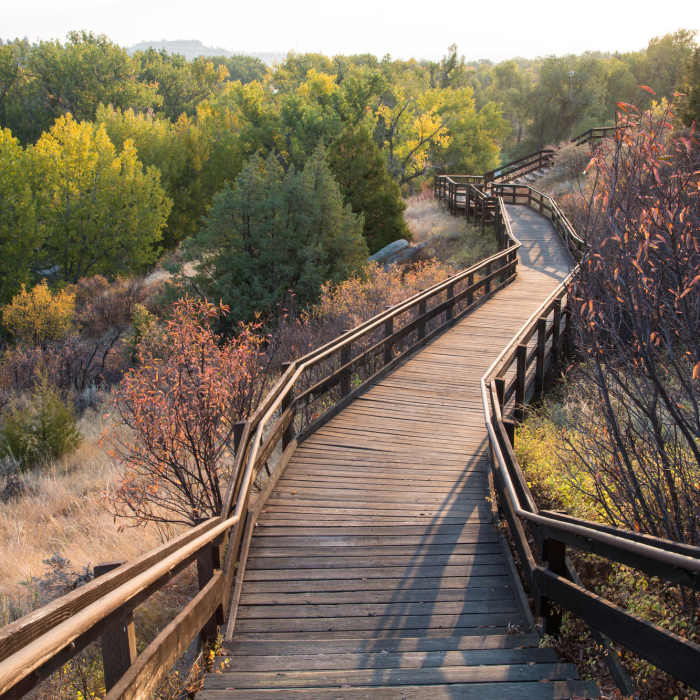
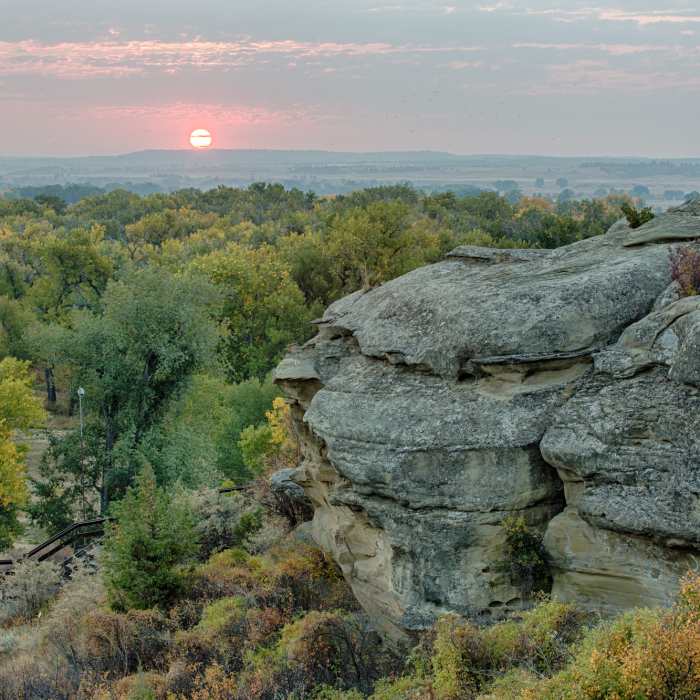
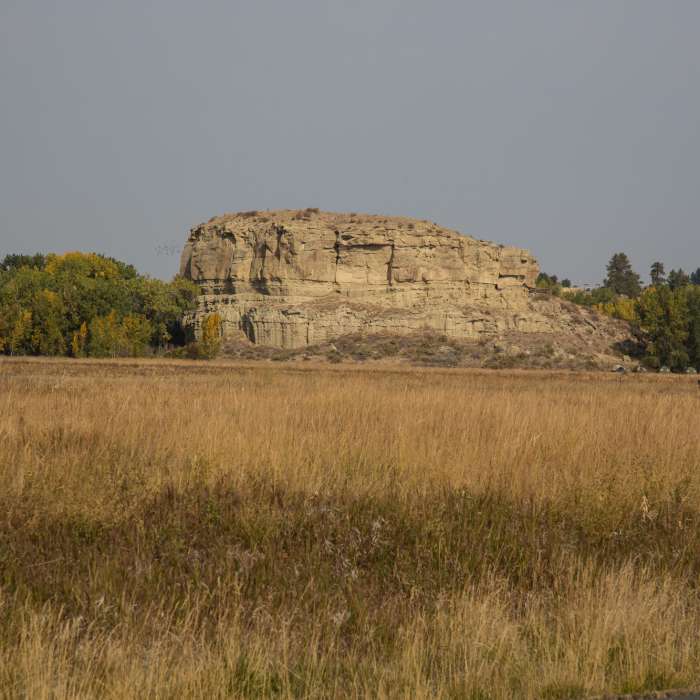
Pompeys Pillar is about 25 miles east of Billings, off of Highway 312. Park in the large lot and head west, towards the Interpretive Center. The center has information about the Lewis and Clark expedition and the Yellowstone Valley--it's certainly worth a visit, so be sure to pass through on the way to the pillar, or on the way back.Past the Interpretive Center, the paved walking path continues towards the 150 foot tall, sandstone pillar. The trail splits, and part loops towards the Yellowstone River, and the other part changes to a boardwalk with a series of steps and landings. The boardwalk reaches the pillar right where Captain William Clark carved his name into the stone on July 25th, 1806. Check out Clark's name, alongside numerous other markings and names from the past several centuries--but please practice leave no trace, and remember that these aren't an invitation to leave your own mark!Continue along the boardwalk to more views of the Yellowstone River and birdwatching opportunities. Head back towards the parking lot, and consider following the trail to the riverwalk or stopping at one of the picnic tables for a snack.
This monument is located on the historical territory of the Crow people. Indigenous people used the sandstone pillar as an important regional landmark for thousands of years. Petroglyphs, pictographs, and archeological evidence suggest that this was a religiously significant location to the Crow people.Other people--including trappers, hunters, railroad workers, miners, military--passing through the area also made marks in the soft stone. Most notoriously, Captain William Clark carved his name into the pillar when passing through the Yellowstone Valley in 1806. The interpretive center tells the story of the Lewis and Clark expedition, focusing on their time in the valley.
No Condition Reports
Contributors