Ready to explore this trail?
View Trail Map in AppThis trail enters the Ruby Mountains Wilderness and the usual federal wilderness area regulations and restrictions apply here. Practice Leave No Trace (LNT) backcountry skills and ethics. Camp 100 feet from fragile areas; bury human waste at least 200 feet from water, trails, and campsites. This trail is usually closed by snow between November and May. Snow may linger at the higher elevations into July.
Path Type
Point to Point
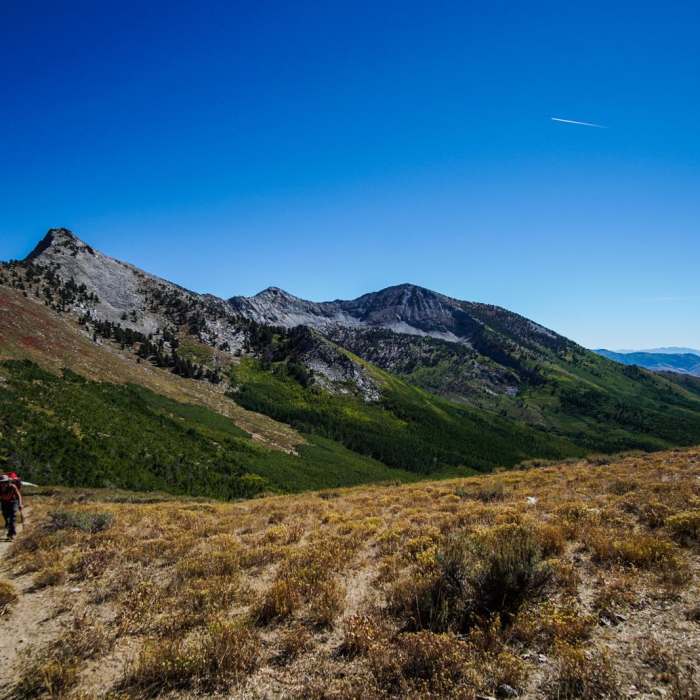
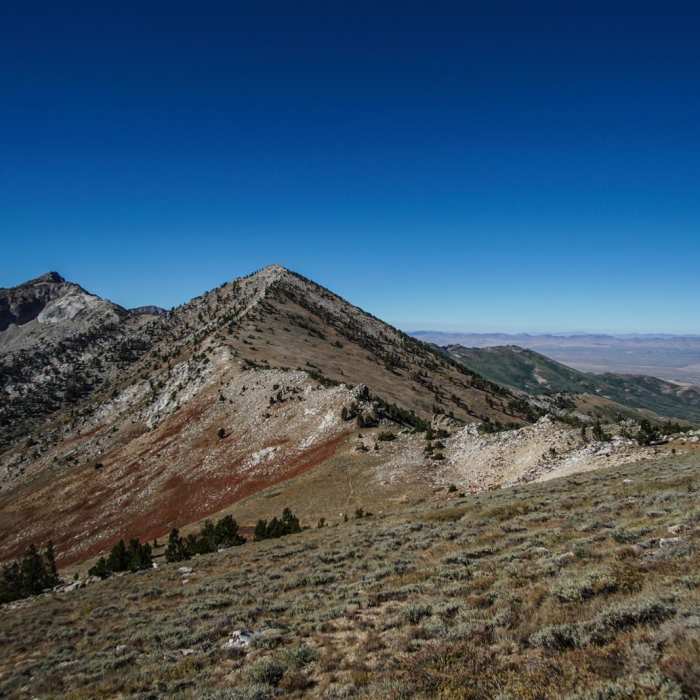
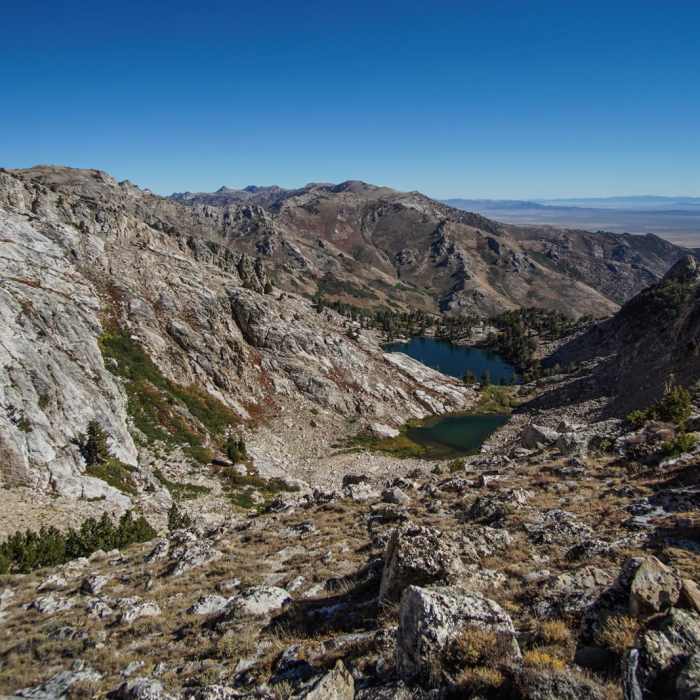
For a north to south hike, the trail starts at Lamoille Canyon at 8,780 feet and goes up to 10,445 feet at Liberty Pass. The view from the overlook above Liberty Lake is one of the best views in the entire range. From the pass, the trail drops to Favre Lake at 9,510 feet, goes back up to the saddle by North Furlong Lake at 10,135 feet, drops back again by North Furlong Lake, and then climbs again to Wines Peak at 10,893 feet.From Wines Peak, the trail runs along the top of the Ruby Mountains staying close to or above 10,000 feet until it's time to drop down to Overland Creek. This section has few trees and no water; however, you should be able to melt some snow while hiking this section most times of the year. You have great views of Ruby Valley to one side and Mahogany and Long Canyons on the other. There is also a great view of South Fork Reservoir and Mound Valley.From the area above Overland Creek at 10,150 feet you drop to the creek at 8,990 feet, then climb to Overland Lake at 9,453 feet. Overland Lake is set amongst steep, rocky cliffs and slopes. From the lake, you climb over the ridge above it (at around 10,000 feet) and descend into the North Fork Smith Creek drainage. There are a number of streams that cross the trail in this area and, as a result, wildlife is more abundant here and there are wildflowers scattered along the slopes in season.From the ridge above Overland Lake, the trail descends into and through the Smith Creek (North, Middle, South) drainages at around 8,000 feet. From there it climbs to around 9,300 feet and then drops a little into McCutcheon Creek, then heads toward Green Mountain and a slow descent to Harrison Pass at 7,200 feet. Around 4 miles before Harrison Pass, the trail becomes an OHV trail, then a 4x4 road. This section of the trail is a sagebrush-dominant landscape with very little shade so it can get pretty hot.Some prefer to do this backpack from south to north, so that the hotter and less scenic parts are disposed of first and the trip ends with the spectacular scenery near Lamoille Canyon. For this, you can leave your vehicle at the ample parking lot at the northern trailhead and arrange a shuttle to the Harrison Pass trailhead.
No Condition Reports
Contributors