Ready to explore this trail?
View Trail Map in AppOpen for rxhing from sunrise to sunset, May 15 - Nov 15 annually.
Path Type
Loop
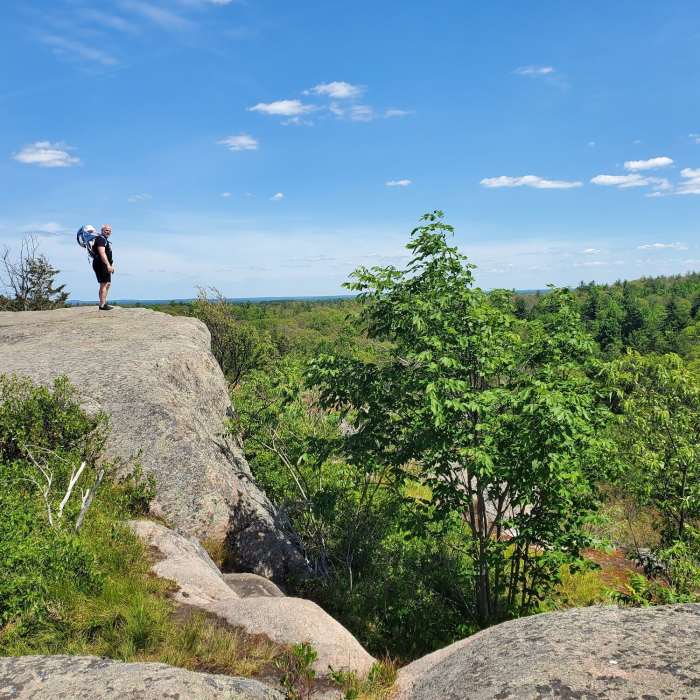
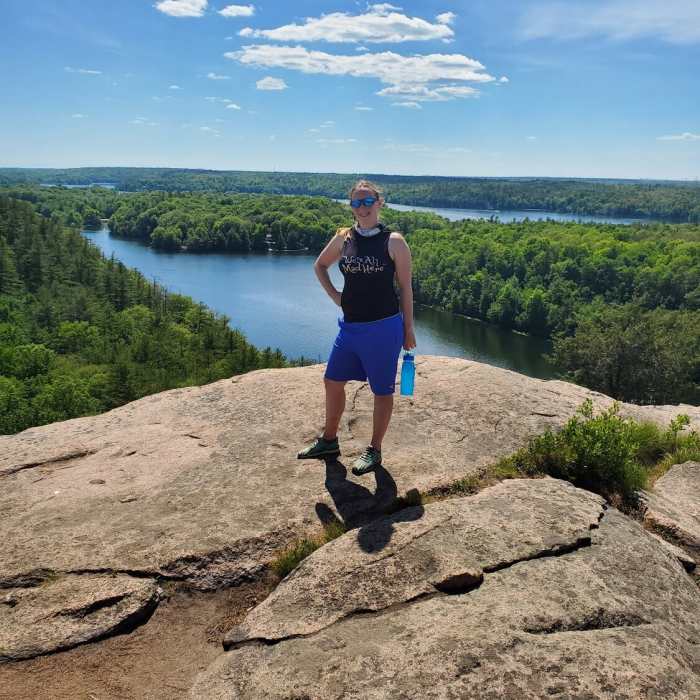
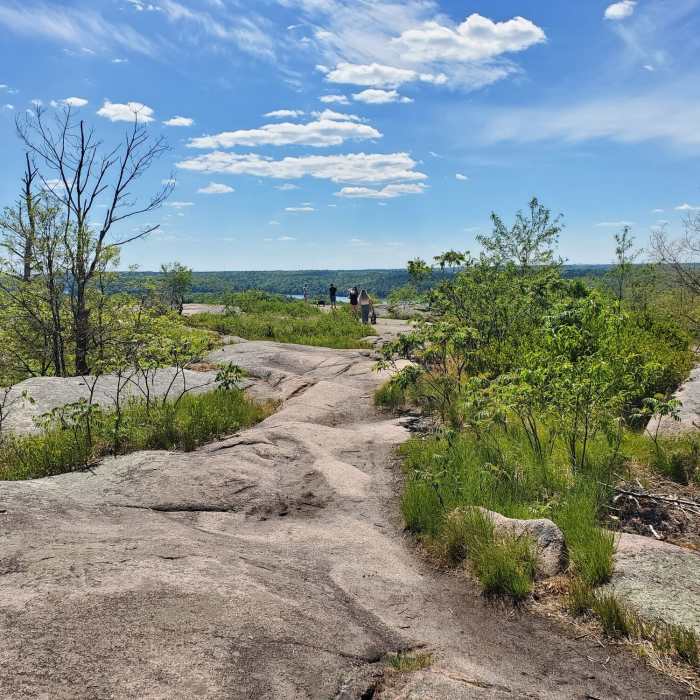
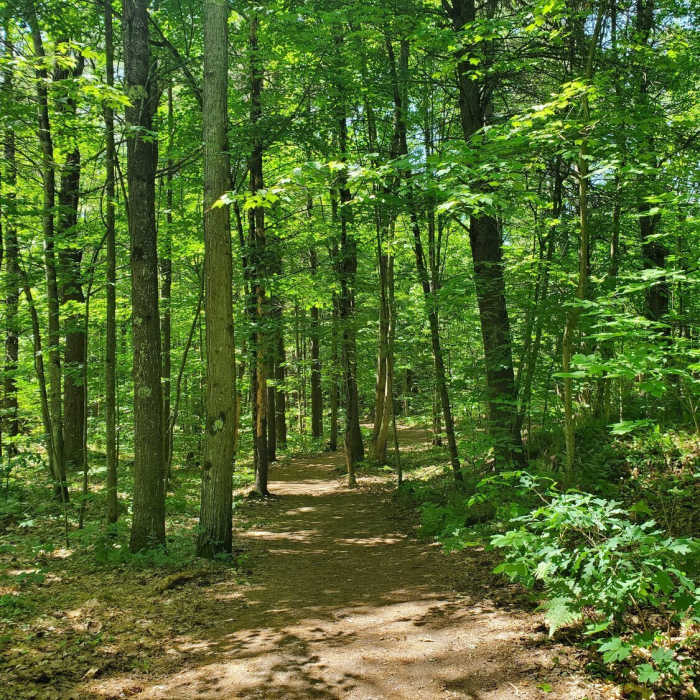
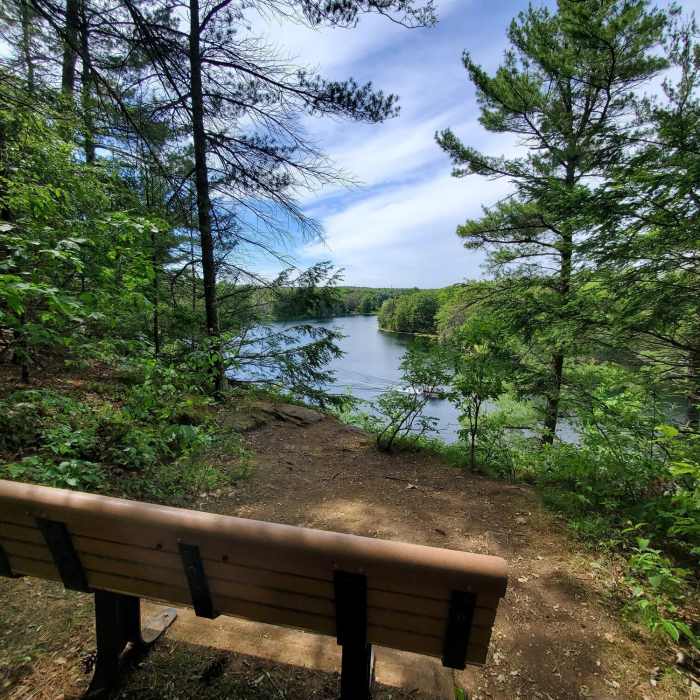
At the parking lot, take the left fork onto Summit Loop. Follow a gentle trail through alternating forest and exposed Canadian Shield for about 1.5km, then the terrain starts to get a little bit steeper. The Rock Dunder Summit is at about 2km along this trail, and is a large exposed rock with many outcroppings. Expect it to be reasonably busy here, but it's a great spot for pictures.Continue along Morton Bay, and you hike parallel to the water. You'll pass two different cabins that were previously used by Boy Scouts for camping in the area. There are a few rest stops and benches along the route. At about 3km, the Summit Loop ends and you'll encounter a fork. The right fork is Cabin Trail which is an easy way back to the parking lot.Take the left fork for a lightly longer loop; you are now on Morton Bay Loop. This section has more uneven terrain, is slightly less travelled and more rugged, and goes down to water level.At about 4.4km, Morton Bay Loop ends and connects with Cabin Trail; turn left and follow it for another 300m to the parking lot.
Rock Dunder is shown on some geological maps as a pluton. On others it is part of a much larger igneous feature termed Lyndhurst granite. But beyond definition, Rock Dunder is a remarkable formation of beautiful pink granite. It took form deep in the roots of the Grenville Mountains that a billion years ago towered over this part of Laurentia, now known as the Canadian Shield. Then, during the Ice Ages of the Pleistocene Epoch, which occurred within the last million years of our planet's history, Rock Dunder was under a solid sheet of slowly moving ice. That movement of ice did much to sculpt Rock Dunder's ancient and hard pink granite into its present shape on the Rideau Cataraqui landscape.
No Condition Reports
Contributors