Trail Overview
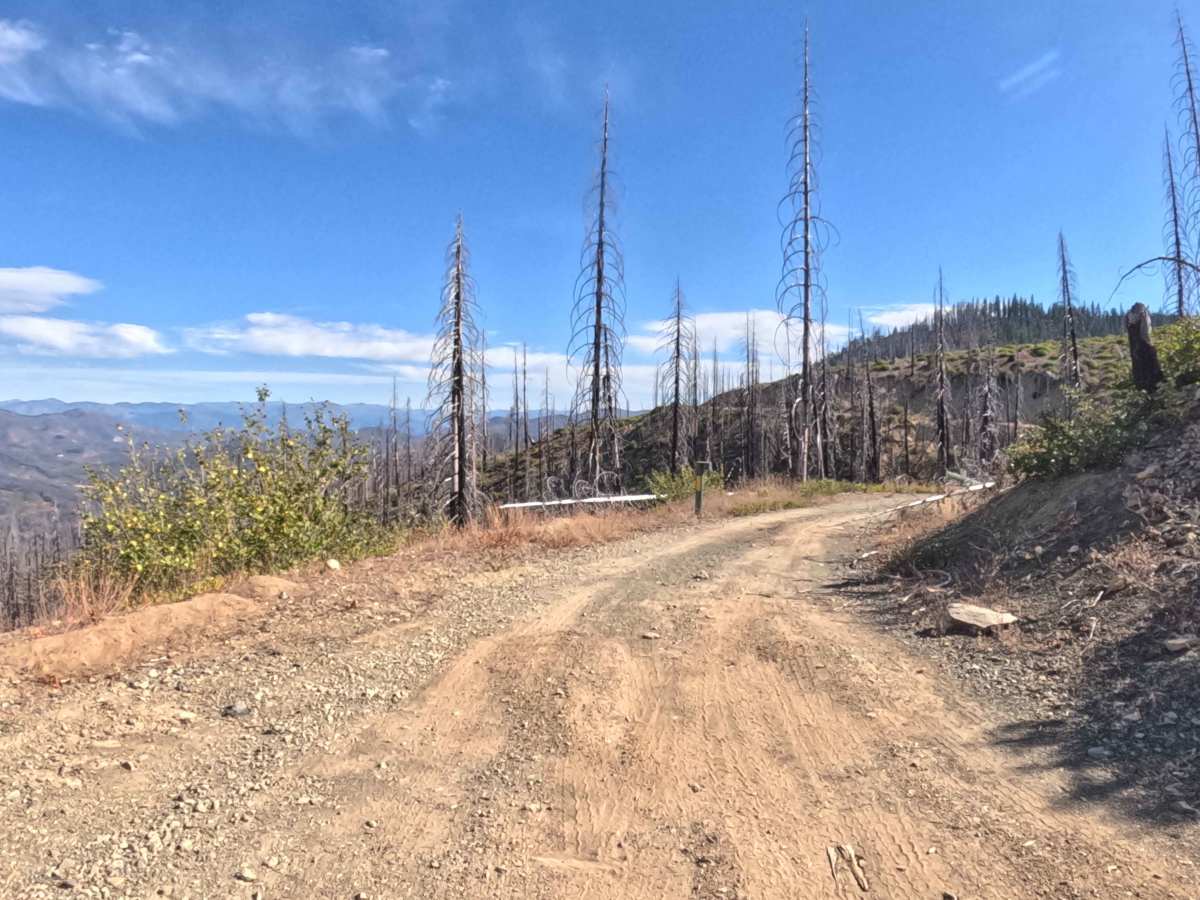
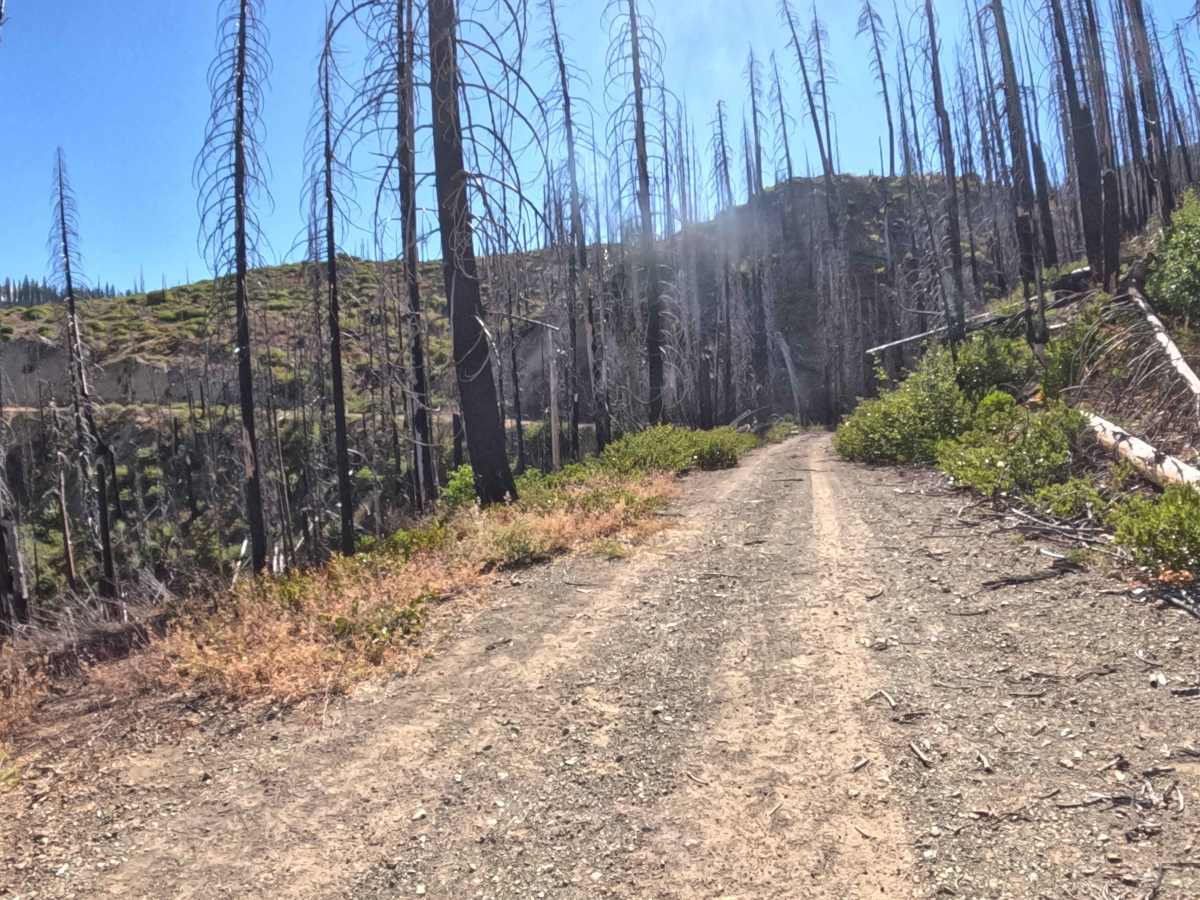
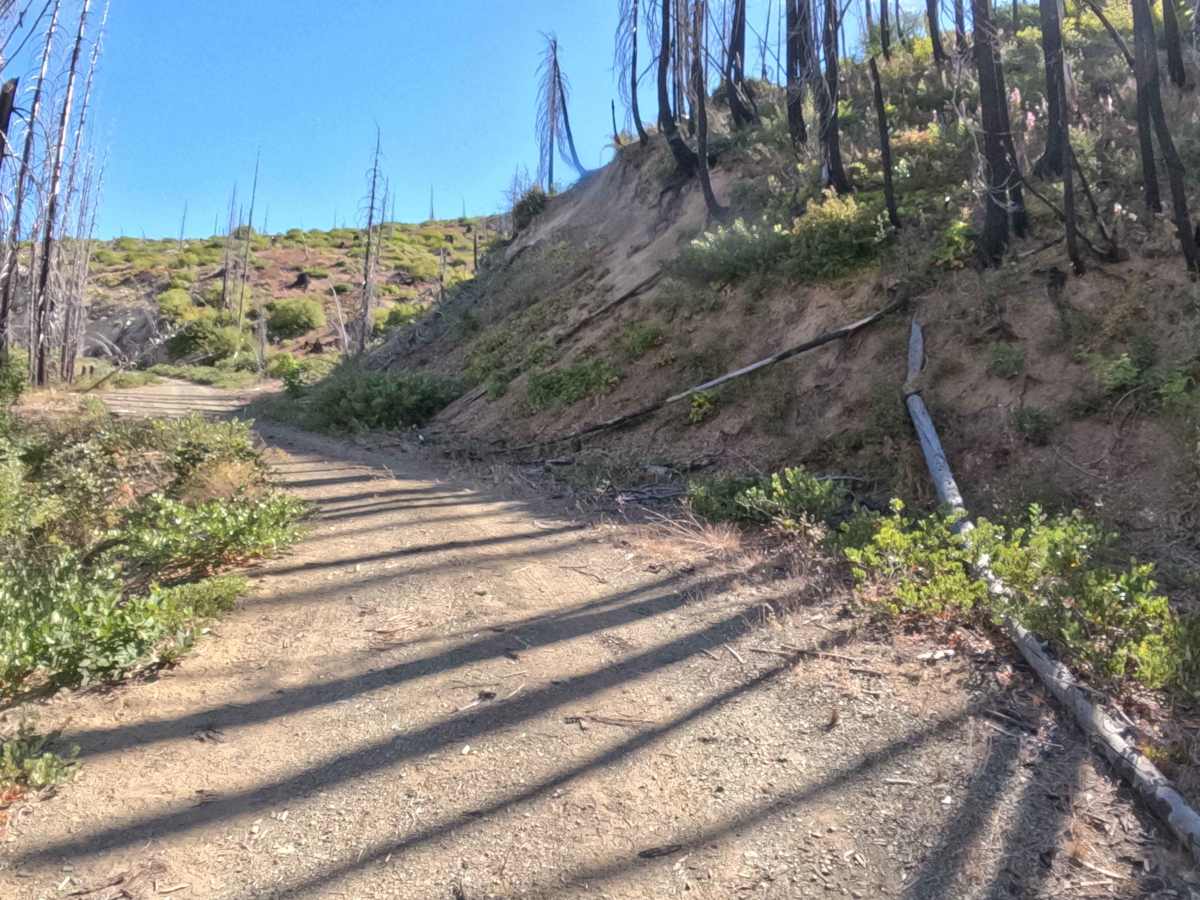
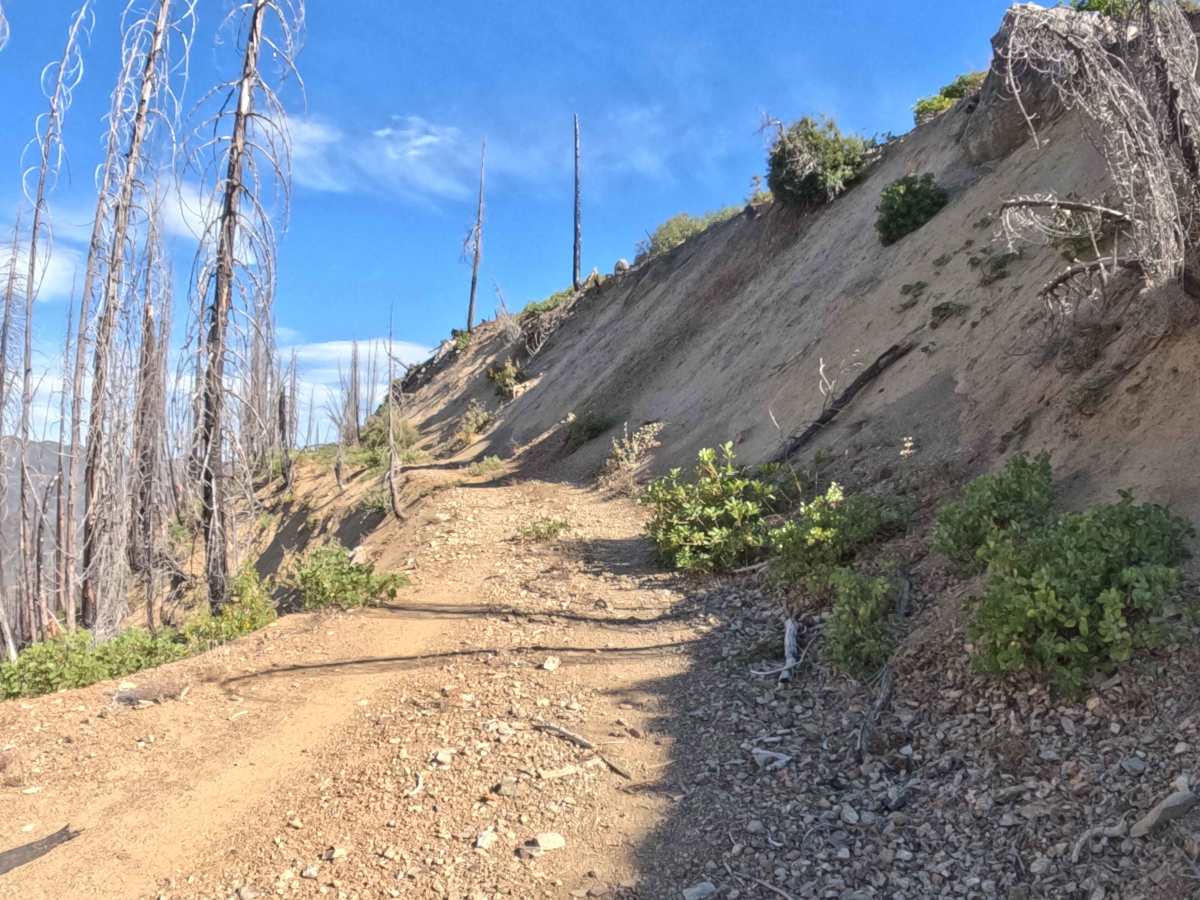
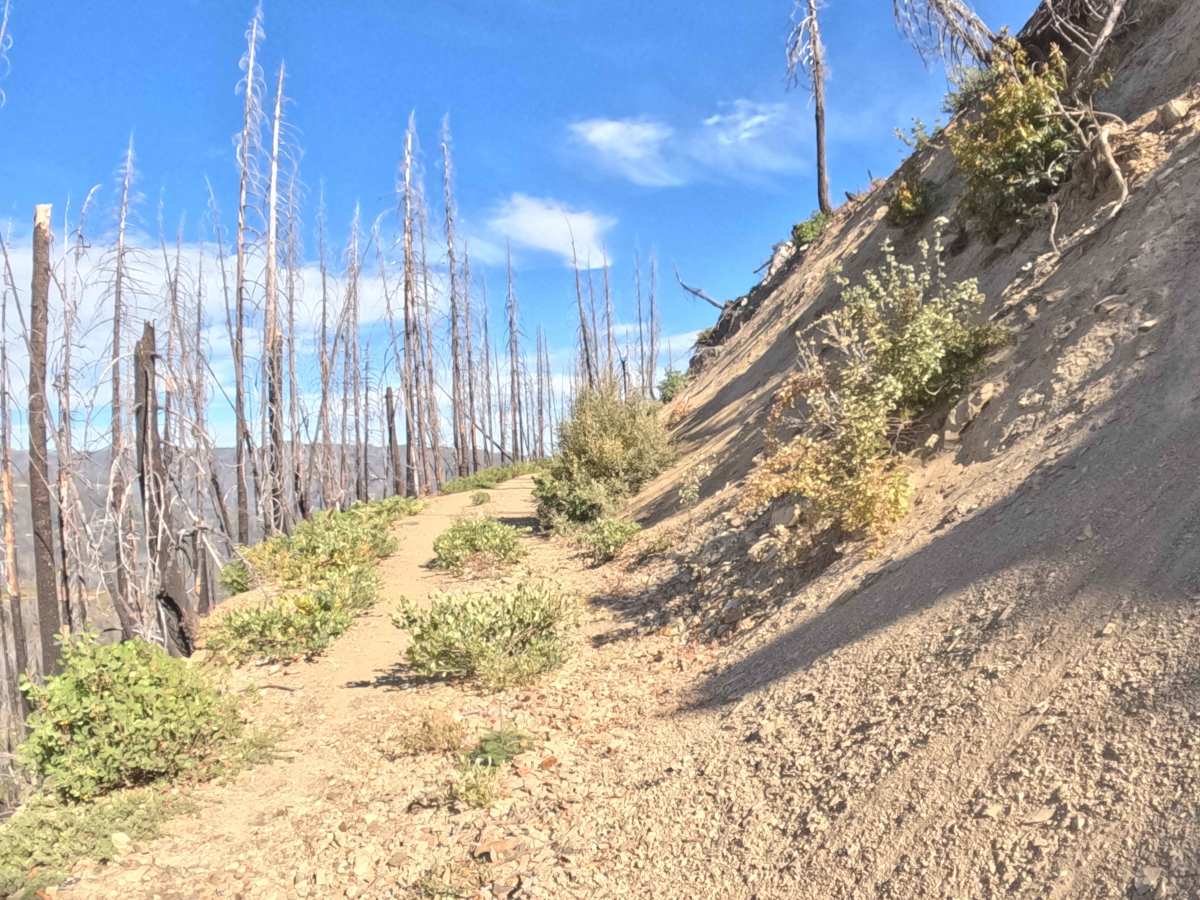
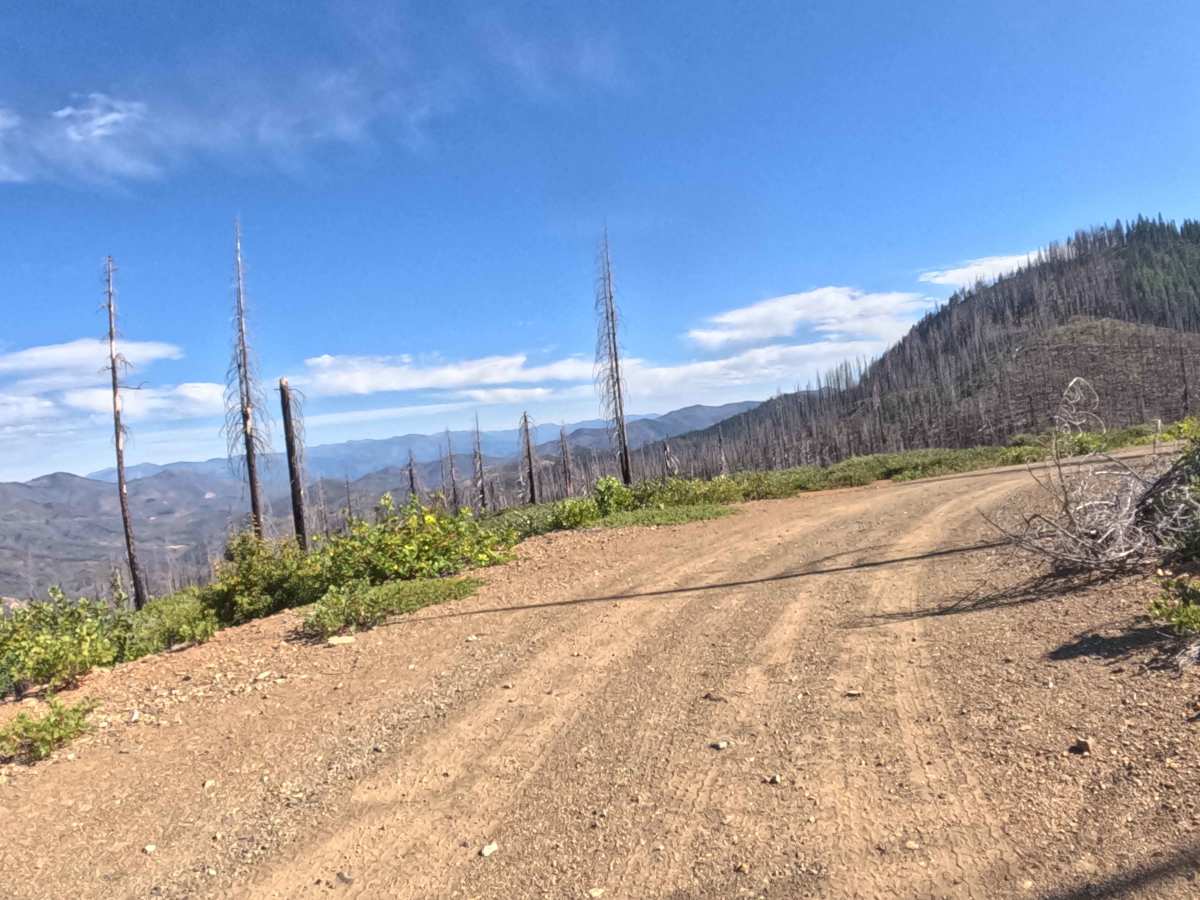
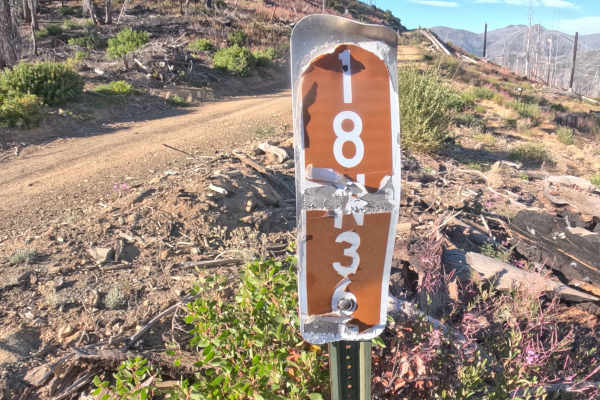
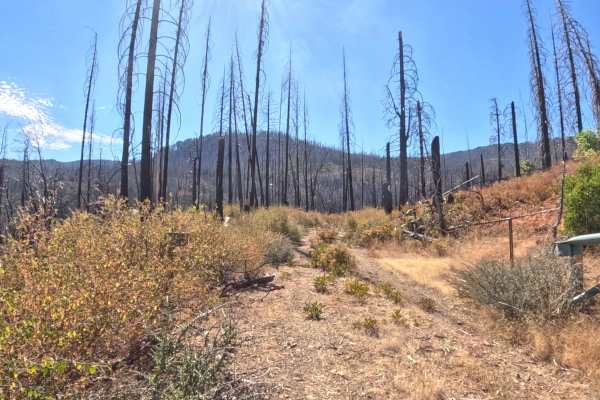
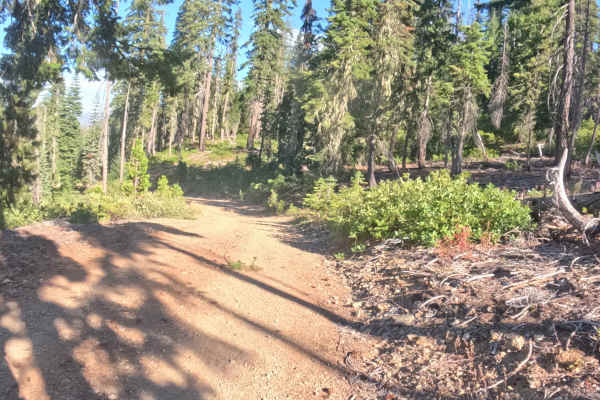
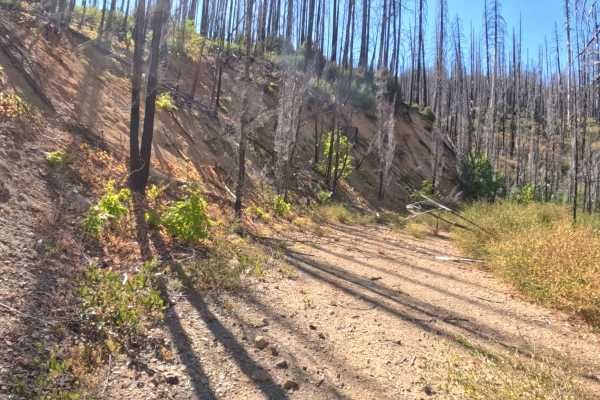
Branching directly off of route 18N33 near the Poker Flat Trail, Nipper (FS 18N45) functions as a relatively flat, out-and-back forest spur that ventures into the rugged backcountry. The pathway cuts through a stark, recovering woodland environment heavily scarred by recent wildfires, where a haunting canopy of blackened, lifeless snags towers over a regenerating brushy understory. The driving surface consists of a hard-packed dirt and gravel foundation that earns a moderate Grade 2 difficulty rating due to its increasingly restricted width and scattered hazards. Throughout the journey, the track meanders across several small, shallow creek beds that add a touch of scenic variety but demand careful navigation during the wetter seasonal months. While the route remains mostly level, the encroaching vegetation and sloughing hillsides create tightly pinched corridors. The harsh reality of the severe fire damage becomes fully apparent as travelers push deeper; intense weather has caused massive timber blowdowns across the route. At approximately the 1.3-mile mark, a heavy concentration of massive fallen trees and tangled wooden debris completely barricades the road, rendering the remainder of the trail impassable and forcing visitors to safely turn around.
Difficulty
With a moderate Grade 2 difficulty rating, this out-and-back spur features a structurally solid, hard-packed dirt and gravel base that is significantly compromised by severe environmental damage. Extreme technical off-road challenges like deep, impassable mud bogs or intimidating boulder climbs are absent from the flat journey. Instead, the primary hurdles are heavily constricted lane widths and relentless tree blowdowns resulting from recent wildfires. The corridor is quite narrow in several stretches, severely limiting lateral space and making it challenging for wider rigs to squeeze through without risking body damage. Navigating the intermittent small creek crossings requires basic traction management, especially after heavy rainfall. The absolute necessity to execute a tight, constrained turnaround at the 1.3-mile debris blockade demands a slow, deliberate driving approach throughout the entire excursion.