Tree Stands
Increase your odds of seeing deer by understanding fundamental tree stand concepts such as placement, tree selection, and entrance and exit strategies.
Types of Tree Stands
Portable tree stands come in three main categories:
- Hang-on stands, the most basic, are simple stands that must be manually moved into place and secured carefully.
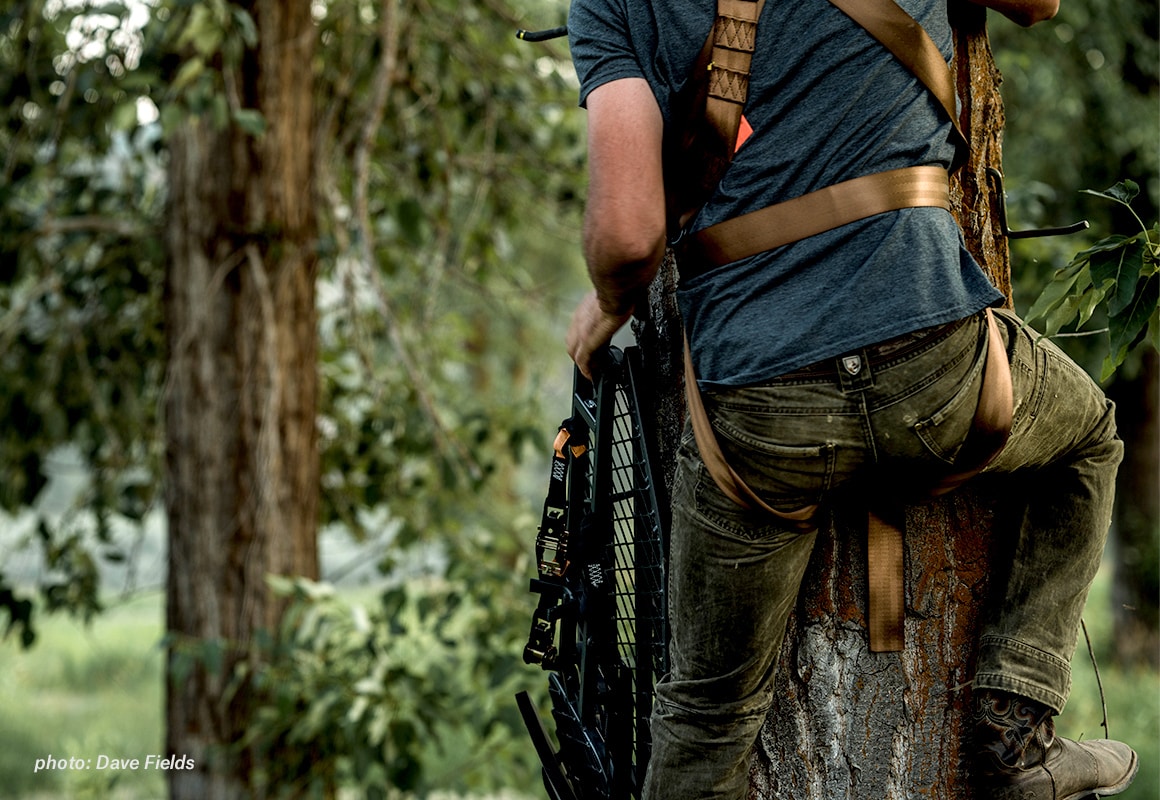
- Self-climbing stands allow a hunter to “walk” the stand up a tree and are best suited to smooth trees with no branches between the hunter and the ground.
- Ladder stands look like a combined ladder and tree stand, and can be used on a wide range of trees but are often more conspicuous.
Of the three options, hang-on stands are the most common.
Tree Stand Locations
When choosing a location for your stand, consider:
- Food: Crop field edges are one of the best places to sit pre-rut to take inventory of where deer are filtering in and out of fields, what deer are around, and how close the rut is based on deer interaction. Often these stand sites offer high visibility and sometimes are strategically placed to simply be a stand to watch from, not necessarily a killing tree (but they can be in the right situation).
- Water is a key requirement of any animal. In many locations, though, deer get enough water through the food they eat, and by the time bow season rolls around, the dog days of summer are a thing of the past. That said, hot days late in the season, drought years, and strategically placed water during the rut can lead to a full freezer.
- Cover (specifically bedding cover): Deer often sleep in the same areas day after day. If you can find where a mature buck sleeps, the other pieces of the puzzle can fall into place quickly. That said, these sits are a high-risk strategy. Bump a mature buck from his bedroom and you may never see him again, but get to your tree stand undetected and it may be a sit you never forget.
- Seclusion (especially when hunting pressured public land): Mature bucks will not put up with consistent human traffic. If you can find the thickest, deepest, gnarliest part of the property you are hunting, you may not see a lot of deer, but the ones you do see will be worth the wait.
- Prevailing Winds: Though not perfectly predictable, most locations have seasonally consistent winds. Pick your trees so the prevailing wind works in your favor.
- Pinch points can include the narrowest point of a gully where two ridges funnel activity, a gate in a fence, or even a small isthmus of land. Deer often funnel through these areas when transitioning from food to bedding. Pinch points can make great ambush stands, especially as a mid-season set after you’ve seen a mature buck cruise through the area.
Picking a Tree
When hanging your stand in July or August, try to visualize each tree leafless in November. In the summer, every tree looks like you can do jumping jacks in it without being seen, but by November, there are few single trees that you can get away with drawing back on a mature buck in. Be mindful of what your background will look like when more trees are naked.
When sitting deciduous trees, either a large tree, split trees, or small clusters of trees seem to provide the best remedy for not becoming a silhouette against the sky. If available, coniferous trees are optimal. These trees provide tons of background, scent to rub on yourself to help cover odor, and wind protection to keep warm.
Also, be as conservative as possible when cutting shooting lanes. Obviously, you need to be able to get off a clean, ethical shot, but over-trimming shooting lanes becomes obvious to wary whitetails.
Tree Stand Entrance/Exit Strategies
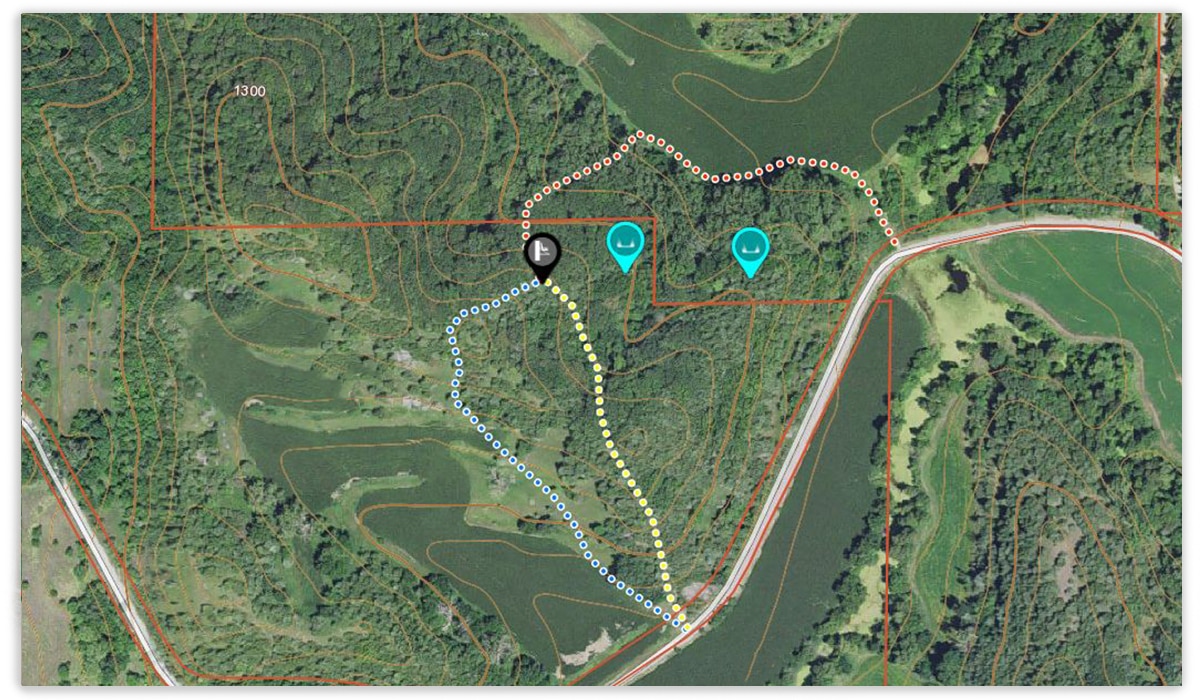
How to effectively enter and exit stands is often overlooked. The tree stand shown below is a prime example. The Waypoints represent known bedding areas in thick cover on the spine of a ridge. Many times, walking the field edge when entering the stand in the morning and leaving in the evening will blow deer out of the agricultural fields when feeding. During the summer months, consider clearing multiple trails to your stand, as shown below, so you can walk in based on deer feeding habits, wind direction, and time of day.
- The red dashed line is the easiest way in with the least incline and resistance, but with prevailing northerly winds in the fall, it will blow your scent right into the bedding areas. You would also blow feeding deer out of the agricultural areas when entering in the morning and leaving in the evening.
- The blue dashed line would be the second most obvious point of entry, but the same issue of blowing deer out of the ag fields is still present.
- This means it’s incumbent on the hunter to undertake summer prep work to make the yellow dashed line entry point the best option. All it takes is a rake and snippers to clear a small trail to sneak into tree stands. With the yellow trail, you do not expose yourself on the field edges, you are downwind of the bedding areas, and you can get to your tree stand undetected. Deer inevitably use a cleared trail, but that is simply part of the game.
Maintenance Tips
And after years of hunting out of tree stands, onX Hunt’s Jared Larsen has finessed his stand maintenance and set-up for maximum safety and comfort. He recommends:
• Oil any moving parts in the off-season to eliminate creaking in the cold.
• Add felt tape between metal parts that touch and move to eliminate the noise of metal-to-metal contact.
• If you leave your stand up year-round, remove your foam seating pads so rodents don’t ruin them.
• Use a screw-in bow holder for warmer hands and far more comfortable sits.
Also, to help prevent theft, place your tree stand away from heavily used trails (then add a Waypoint in your onX App so you can find it easily, and share with friends if needed). Secure your stand with a highly visible lock (a log chain or cable lock works well). You can also remove the bottom of the ladder, tree steps, or climbing sticks, making the tree stand more inaccessible.
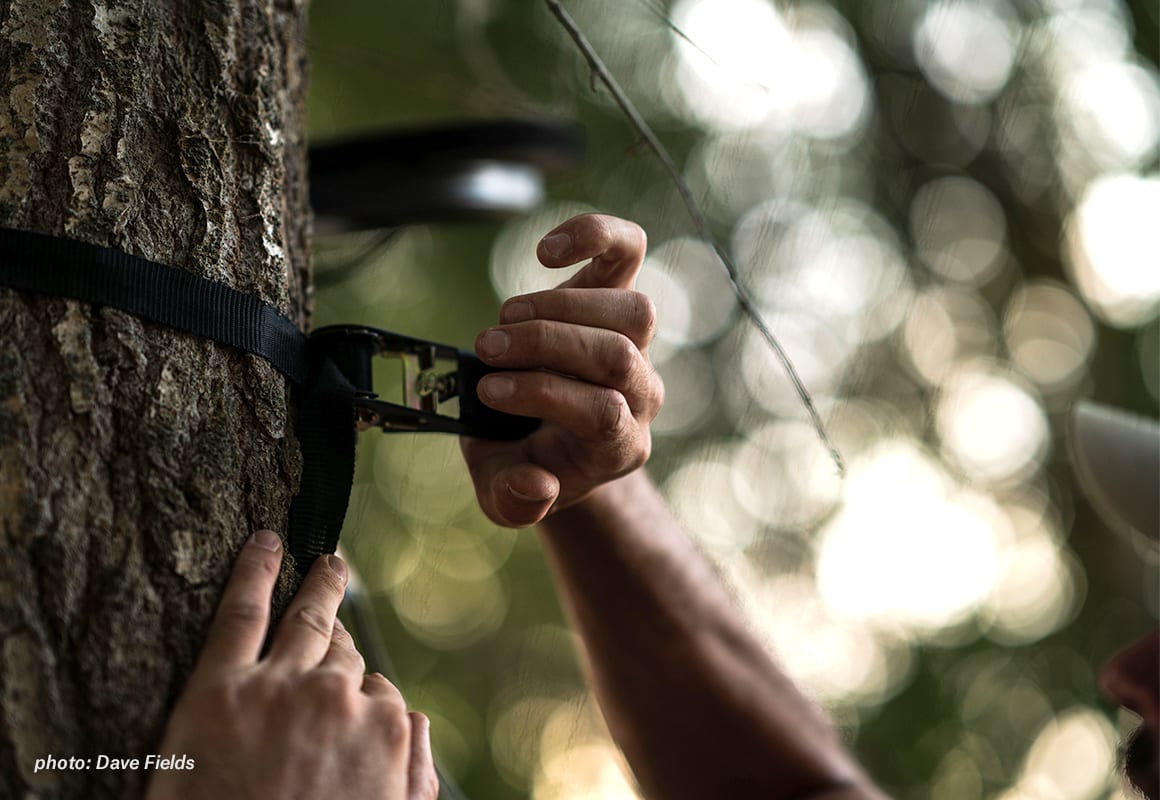
Safety Reminders
Wear a harness at all times, have a lifeline system on each stand, conduct regular maintenance, and hang your treestand at the appropriate height. Practice your movements of getting in and out of the tree stand and know your limits.
And don’t forget warm layers and snacks (remember to repackage food into quieter containers if necessary).