Saddle Hunting
Learn how to get started with saddle hunting, including essential gear and proper technique.
Saddles vs. Traditional Tree Stands
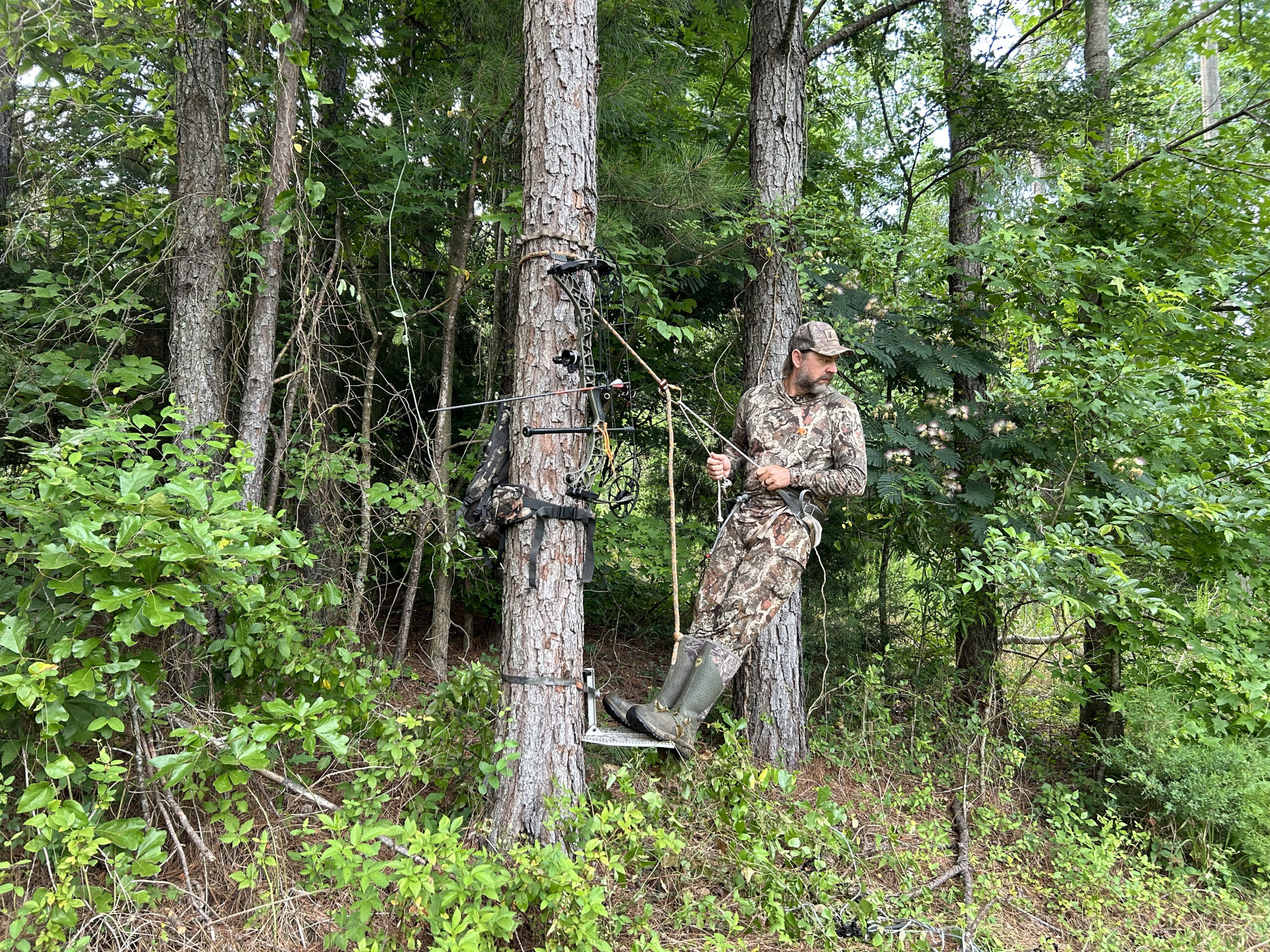
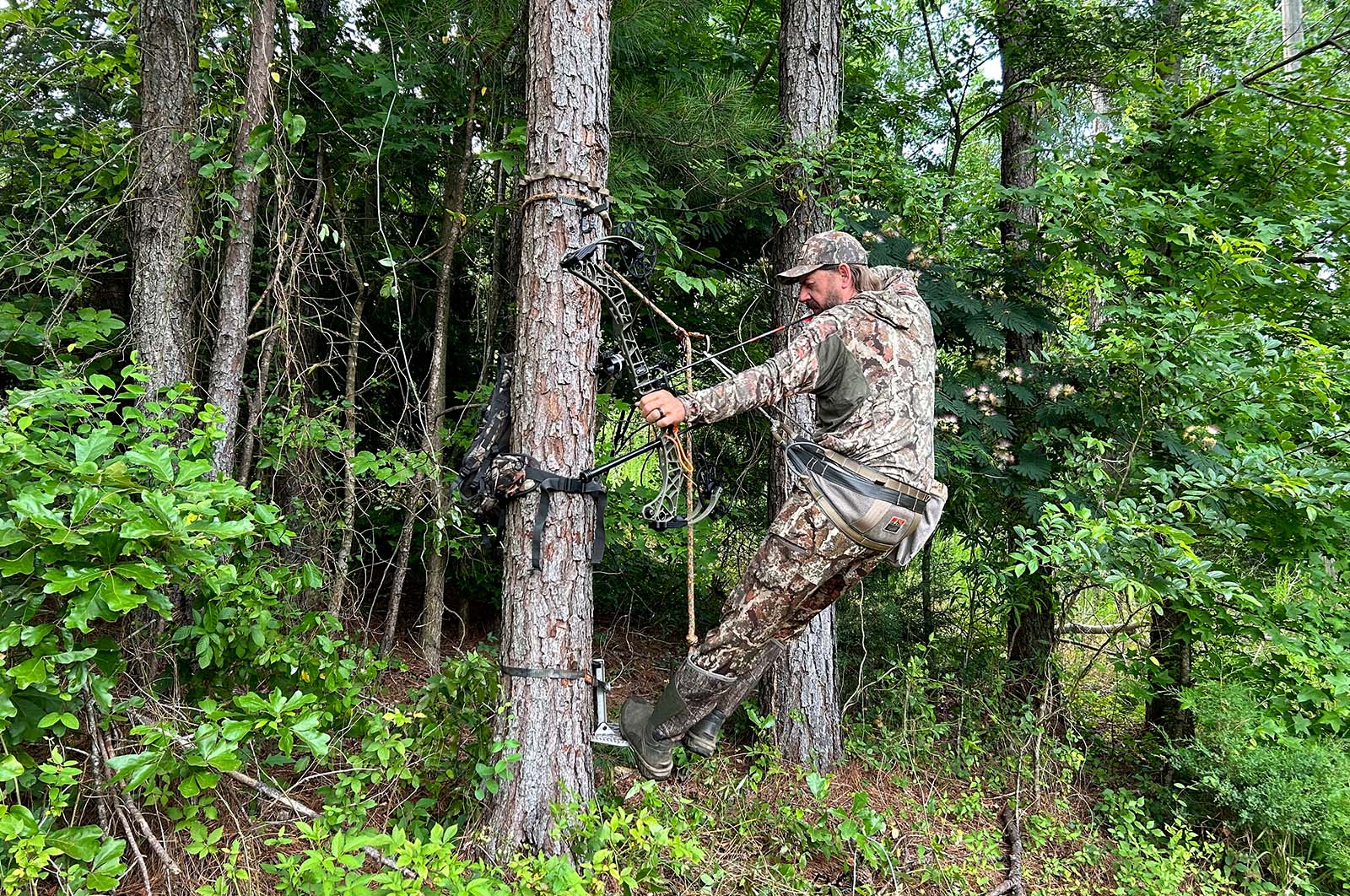
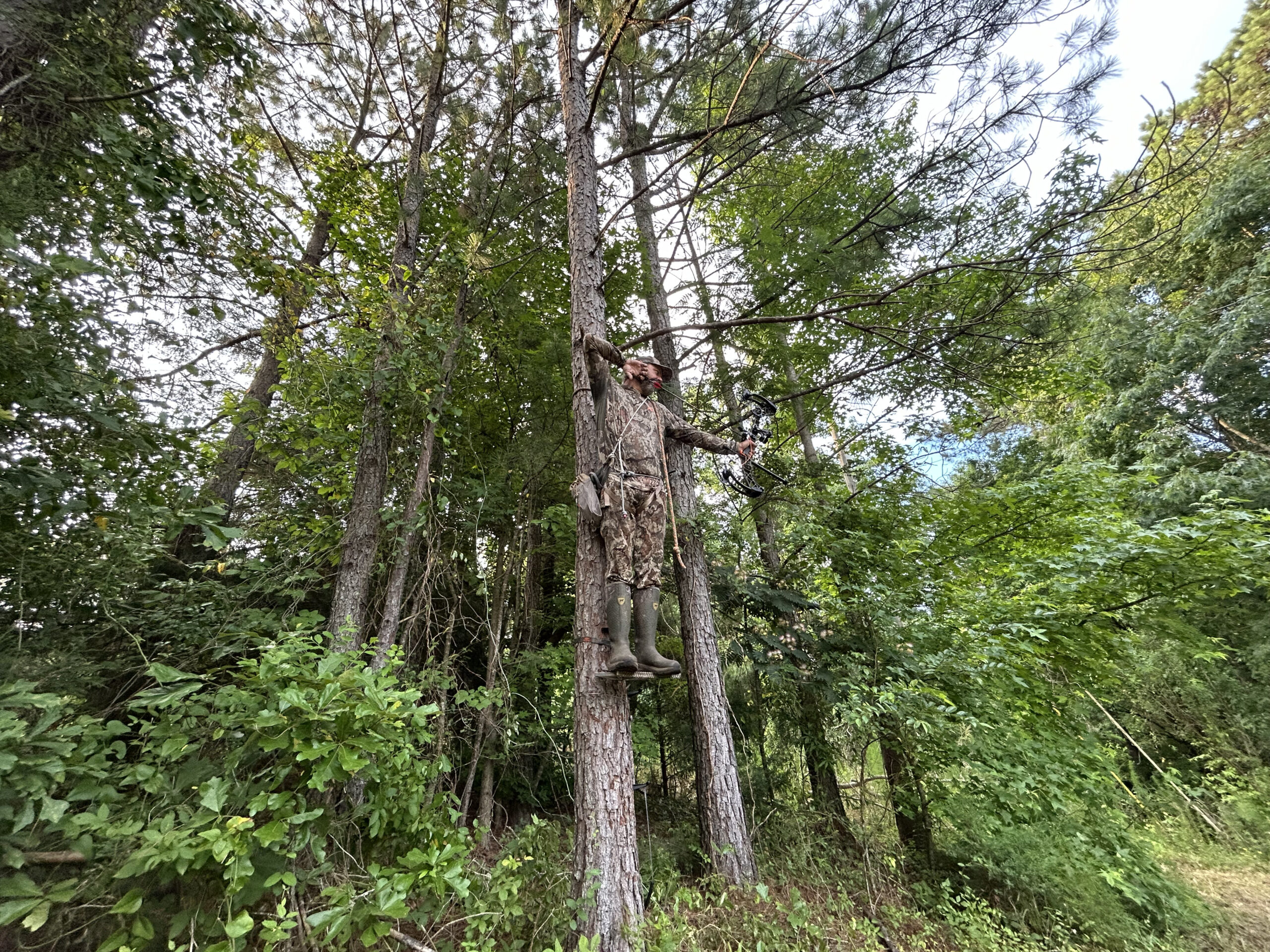
With traditional tree stand hunting, the hunter stands on the platform of the tree stand, or sits on its seat, with their back to the tree, facing out. Saddle hunting flips things around: Saddle hunters face the tree, and a tether rope connects the front of their saddle to the tree. They rest their feet on a small platform, much more compact than a traditional tree stand, and lean away from the tree.
It looks like this:
Saddle Hunting Benefits
- Lighter, more mobile gear.
- Improved concealment, with the flexibility to hide behind the tree from approaching deer.
- Better tree selection (less concern over limbs or lean).
Essential Gear
You only need a few things to get up and running.
Saddle Hunting Kit
While you could piece a saddle hunting kit together yourself, a pre-established kit will include your saddle, lineman and tether ropes, and necessary carabiners.
From there, you’ll just need a platform to rest your feet and stand on, and some way to climb the tree. There are a few climbing options, from screw-in steps to climbing spurs, but new saddle hunters should consider climbing sticks. They are the simplest and safest way to get to hunting height.
The final essential is some type of pack to carry your gear in.
Saddle Hunting Accessories
Arm yourself with the following accessories to stay comfortable and organized:
Knee Pads
Unless you plan to lean the whole time, knee pads or a knee cushion will protect your knees while resting in the sitting position.
Back Band
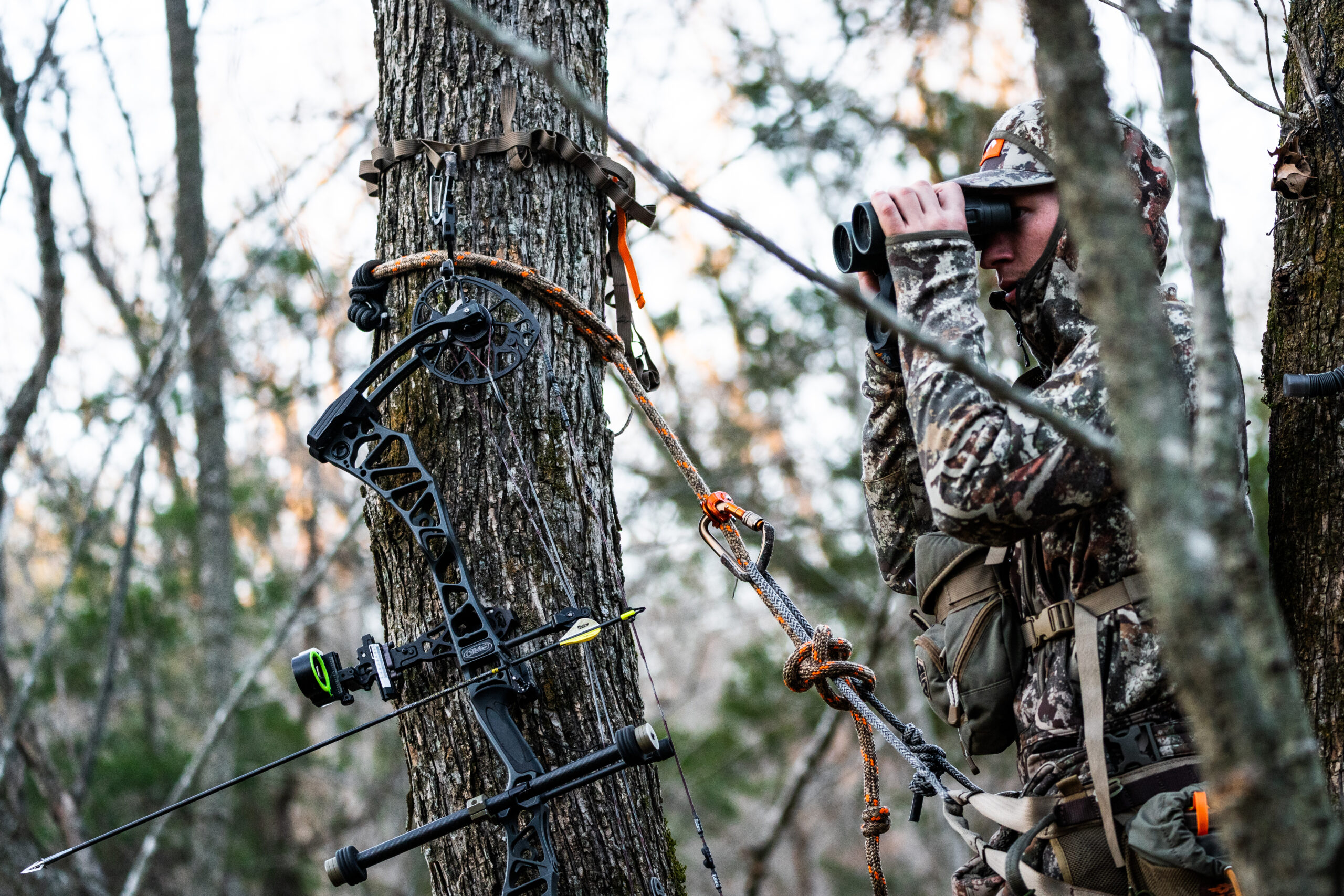
A back band is an adjustable strap that attaches to the carabiner of your tether rope and loops around your body, typically just under your arms. It provides support for your back as you lean away from the tree.
If you choose a single-panel saddle, get a back band from the start. If you go with a two-panel saddle, you may be able to get by without one.
Gear Strap
You’ll also want some type of gear strap to put in the tree to keep all your gear organized and easily accessible—from your bow and your rangefinder, to your grunt call and hunting pack.
There are other saddle hunting accessories on the market, but the ones discussed above should get you started.
Finding the Right Gear
When looking for the right saddle, platform, and climbing sticks, take your time and do your research. Getting outfitted for saddle hunting is not a cheap endeavor, so you want to start with gear that suits your needs.
A few options:
- Hit up outdoor expos where some of the key saddle hunting gear manufacturers will have booths. One example is the Mobile Hunters Expo.
- Join some of the many Facebook groups dedicated to saddle hunting.
- Find guys near you willing to meet up to let you try out their gear.
If you’re looking to shorten the learning curve as fast as possible, here is what has worked for Brian Grossman of the National Deer Association:
- Tethrd Phantom saddle.
- Tethrd Predator XL platform.
- Tethrd One climbing sticks.
Setting Up Your Saddle Hunting Gear
Practice Sessions
Find a straight, limbless tree to practice in, and start by setting your platform up a foot or so off the ground, step on the platform, loop your tether around the tree at eye level, and hook the carabiner from the prussic knot of your tether to the bridge rope of your saddle. You’re now hooked in, and it’s safe to start moving around the platform.
Once you’re comfortable in the saddle, start incorporating your bow to get a feel for taking shots from the saddle. Practice from every possible angle, so that when the opportunity arises during deer season, you’ll know exactly how and where to shoot a deer.
Getting Organized
Use your ground-level practice sessions to figure out how you want to organize your gear in the tree. Hang your gear strap just above your tether rope, and your bow on the left side of the tree, so it’s within easy reach of your left hand (lefties: put your bow on the right side of the tree). Hang your rangefinder, binos, and grunt call from the strap directly in front of you. Hook your backpack off the hanging end of the gear strap, on the right side of the tree, roughly waist high (again, lefties do the opposite).
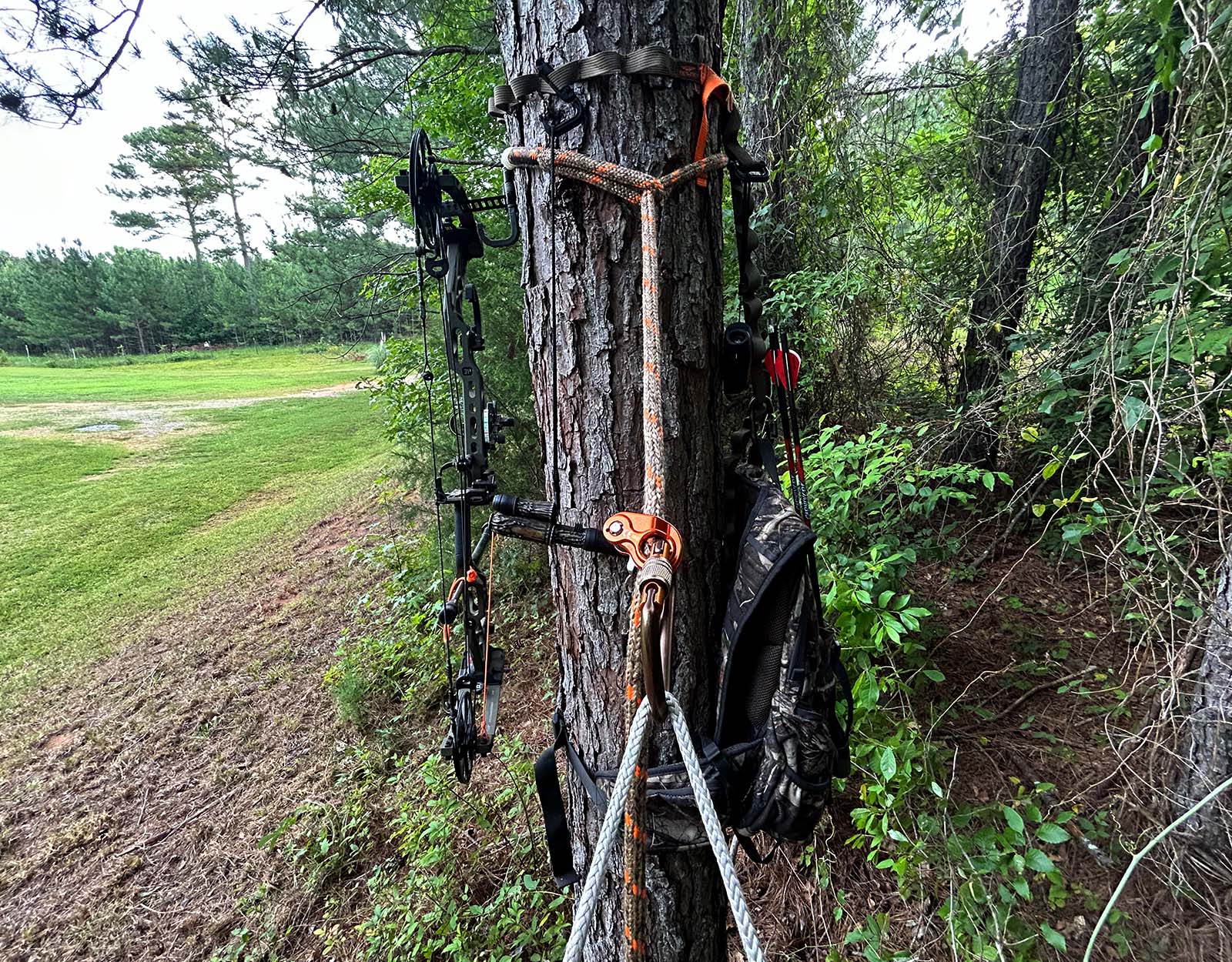
Once you have your setup routine nailed down, incorporate your climbing sticks to practice at full hunting height. Use your lineman’s rope to stay attached to the tree during the entire climbing process, until you are safely tethered in at hunting height.
Technique and Strategy
When possible, you’ll want the tree between you and the direction you think the deer will come from, and you want the deer to pass the tree to your left (if you’re right-handed). That’s completely different than setting up in a traditional deer stand.
Strong Side vs. Weak Side Shots
You’ll often hear saddle hunters refer to strong- or weak-side shots. When you’re in your saddle, facing the tree, any shot to your left—say from the 10 o’clock to 6 o’clock position—is relatively easy for a right-handed shooter. That is your strong side. Making a shot on the other side—from the 1 o’clock to 5 o’clock positions—is more difficult. That’s your weak side.
Safety Considerations
Saddle hunting is as safe as any other style of elevated hunting when you use the proper technique and equipment. But it still has its risks.
- Inspect your saddle, ropes, and carabiners before every hunt. If you see signs of wear, as far as loose or torn stitching, fraying, or anything that gives you pause, stop using the gear.
- Ensure you’re connected to the tree 100% of the time, from the moment you leave the ground until you come back down at the end of the hunt.
- Let someone know where you will be and when you’ll be back.
Adapted from an article from Brian Grossman.