Understand the origins of the orange army, as well as which states require hunters to wear blaze orange.
Blaze Orange Origins
Hunters did not always don Blaze Orange. The orange vest was a mid-1900s experiment conducted on a military base.
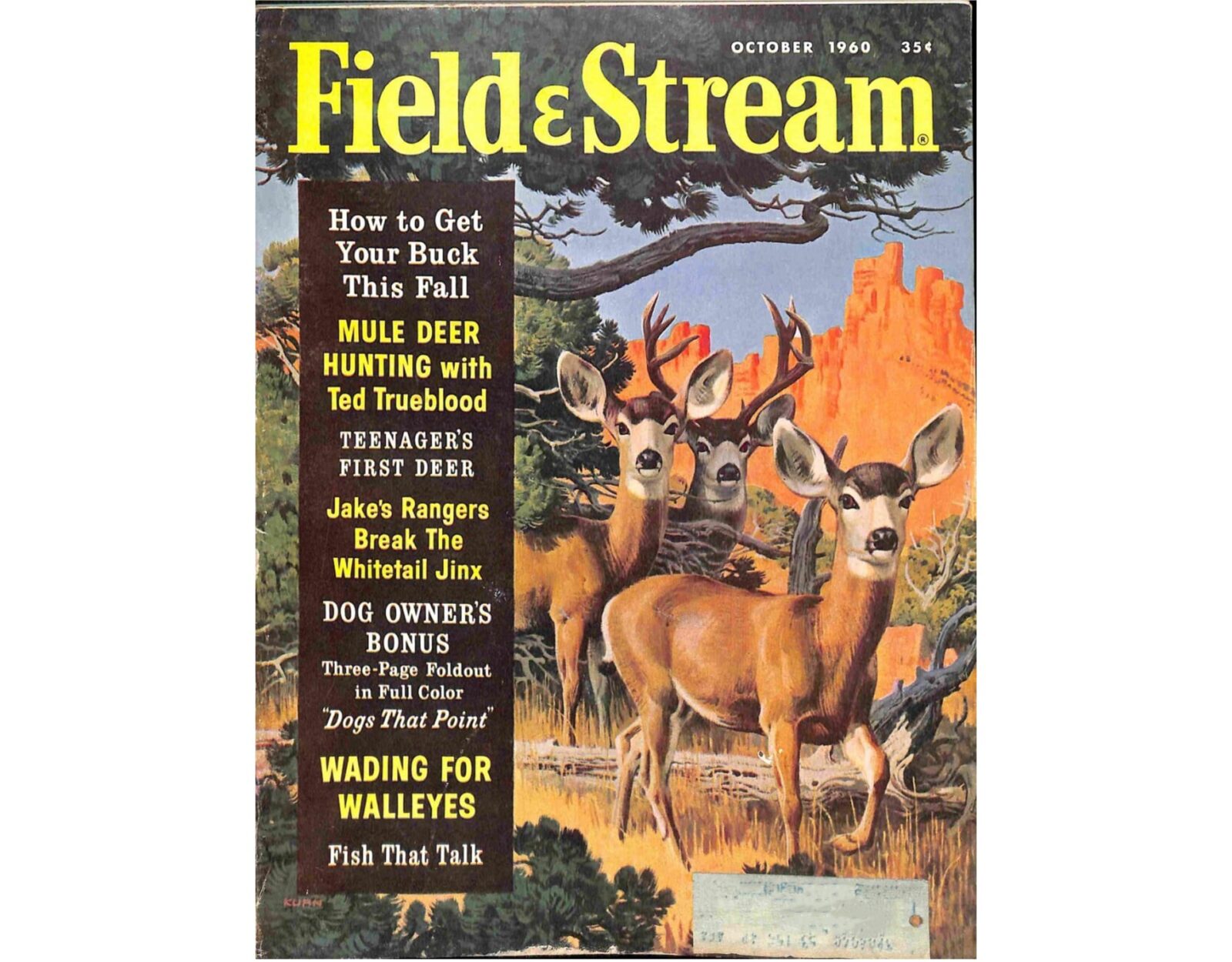
“Hunter Orange—Your Shield of Safety,” is how outdoor writer Frank Woolner titled his October 1960 article for Field & Stream. It was the first mainstream recognition of “Blaze Orange” in relation to hunting, and Woolner’s article made the case for its adoption based on the findings of a 1959 study conducted by the United States Army, the American Optical Company, the Massachusetts Division of Fisheries and Game, and the Massachusetts Division of Law Enforcement at Fort Devens, MA.
October 1960 issue of Field & Stream.
The Fort Devens experiment involved 1,100 men from the Army’s STRAC (Strategic Army Corps), including approximately nine percent who had some type of color-deficient vision.
The study aimed to determine which color stood out best in a variety of field conditions. The six colors chosen, plus white for a control, were non-fluorescent yellow, non-fluorescent bright red (think traditional red wool coats), and four of the newest fluorescents: Blaze Orange, Fire Orange, Neon Red, and Arc Yellow.
From late October 1959 through January 1960 (to use typical hunting season foliage and a winter snowfall), the soldiers participating observed all the colors 22,346 times in conditions that varied from grown-over fields, through brush, among hardwoods and evergreens, in midday and low-light conditions, and at ranges from 25 to 100 yards.
The field tests required observation skills and reactions to pop-up targets adorned in different colors. In the observation tests, soldiers were asked to name the color they saw in both stationary and moving targets at varying distances and light levels. The reaction test asked soldiers to shoot only white targets in four seconds or less when a pop-up appeared. Throughout every test, Blaze Orange was the only color never confused to be another color by any soldier, including the nine percent with color-deficient vision.
The results were indisputable. Blaze Orange was the safest color a hunter could wear in the woods. It screamed “Don’t shoot me.” In second place was Neon Red, followed by Fire Orange, and Arc Yellow (all the fluorescents).
The two worst-performing colors in the study were non-fluorescent red and yellow. The center of the human eye cannot register yellow. If a small piece of yellow material is placed on a wall and the observer backs away about 40 feet that yellow will appear white. One conclusion drawn was that a hunter’s yellow cap could be mistaken for a deer’s flagging white tail in some circumstances.
Can Deer See Orange?
Deer have dichromatic vision, meaning they only see short- and medium-wavelength light in shades of blue, purple, and green. Humans have trichromatic vision, which adds in long-wavelength light and a sensitivity to red and orange hues. Lacking this third photoreceptor (or cone cell) in their eye, deer cannot really see orange.
“Orange comes across as a muted yellow,” says Dr. Gino D’Angelo, Assistant Professor of Deer Ecology and Management at the University of Georgia Deer Research Laboratory. “Their peak sensitivity falls short of hunter’s orange.”
So is there a color one shouldn’t wear in the woods? “I probably wouldn’t wear blue jeans when hunting,” says Dr. D’Angelo. “They would really stand out to a deer.” He is also a proponent of getting his Blaze Orange a little less brilliant and recommends washing it several times, perhaps even getting it muddy, before taking it into the field. New Blaze Orange often has some ultraviolet enhancements and brighteners from the factory so it really pops to the human eye but can also come across as blue-enhanced to deer, so much so it might even glow to the deer’s eye.
What deer can see well is movement, and their field of vision is about 300 degrees at any one time. Think of it this way: imagine a pizza cut into its normal eight slices. Remove one slice of pizza and what’s left is a deer’s field of view (with the missing piece being what’s directly behind their head).
Hunter Orange Requirements by State
Below is the list of hunter orange requirements by state, but regulations can change frequently. Please double-check your state’s requirements prior to every hunting season.
States Where Hunter Orange Is Required
Alabama
Hunters must wear at least 144 square inches of solid Blaze Orange above the waist, or a Blaze Orange hat during firearm season. No camouflage-patterned Blaze Orange allowed. Turkey and waterfowlers excepted. Hunters in a treestand at least 12 feet above the ground or in an enclosed blind are excepted.
Arkansas
Hunters and those in their company in firearms zones must wear at least 400 square inches of Blaze Orange or hunter safety green above the waist as well as a fluorescent orange or green hat. Pop-up ground blinds must display at least 144 square inches of Blaze Orange or hunter safety green on each visible side. Waterfowl and night hunting excepted.
Colorado
Hunters must wear at least 500 square inches of solid Blaze Orange or hunter pink, including a hat or head covering. This is required while rifle hunting deer, elk, pronghorn, moose, or bear. Camouflage-patterned orange does not count. Archery hunting excepted.
Connecticut
From September 1 through the last day of February, all hunters, including archery (unless sitting in a treestand at least 10 feet high) must wear at least 400 square inches of Blaze Orange. Camouflage-patterned orange is permitted. Stationary turkey and waterfowl hunters, and night hunting, excepted.
Delaware
Hunters must wear at least 400 square inches of Blaze Orange on their head, chest, and back. Ground blinds must also display the same amount of Blaze Orange within 10 feet of the blind and at least three feet off the ground. Waterfowl and game bird hunters excepted.
Florida
Hunters and their companions must wear at least 500 square inches of Blaze Orange while on public land. Hunter orange hats are recommended but not required. Bow hunters and those hunting on private lands excepted.
Georgia
Hunters and their companions rifle hunting deer, bear, and feral hogs must wear at least 500 square inches of Blaze Orange above the waist. While head coverings or hats are not required, they do count toward the square inch minimum.
Hawaii
Hunters and their companions pursuing game birds or mammals during firearm season on public hunting land must wear a solid or mesh Blaze Orange shirt, vest, jacket, or coat. Archery-only public land hunting excepted.
Illinois
Hunters must wear a minimum of 400 square inches of solid Blaze Orange or hunter pink, including a hat, while hunting any game species during a firearm season. All upland game hunters must wear a Blaze Orange hat. Only migratory waterfowl hunters excepted.
Indiana
Hunters of deer, rabbit, squirrel, grouse, pheasant, woodcock, quail, and turkey (when fall turkey season overlaps a deer firearms season) must wear one of the following in solid Blaze Orange: a vest, coat, jacket, coveralls, hat, or head covering. Camouflage-patterned orange is not allowed. Bow hunters outside of firearm seasons are excepted.
Iowa
Deer hunters using firearms must wear at least one of the following in solid Blaze Orange: a vest, coat, jacket, sweatshirt, sweater, shirt, or coveralls. Camouflage-patterned orange is not allowed. While hunting in a blind, 144 square inches of Blaze Orange must be visible in all directions. Upland bird or small game hunters must wear a hat or head covering that is at least 50 percent solid Blaze Orange.
Kansas
All deer and elk firearms hunters and their companions must wear a minimum of 200 square inches of Blaze Orange, with 100 square inches being visible on the front and the back of each hunter. They must also wear a Blaze Orange hat, of which at least 50 percent visible from all directions. Camouflage-patterned Blaze Orange can contribute to this requirement.
Kentucky
All hunters must wear solid Blaze Orange on their head, chest, and back while hunting during deer, bear or elk firearm season, including muzzleloading season, or youth firearm season. Camouflage-patterned Blaze Orange is not acceptable. Waterfowl and dove hunters excepted.
Louisiana
All firearm deer hunters using centerfire rifles, shotguns loaded with slugs or buckshot, or muzzleloaders must wear a minimum of 400 square inches of Blaze Orange or hunter pink above the waist, including a hat or head covering. Quail and woodcock hunters and hunters participating in special dog seasons for rabbit, squirrel, and feral hogs are required to wear at least a Blaze Orange or hunter pink hat. 400 square inches of Blaze Orange or hunter pink must be displayed outside concealed blinds. Hunters hunting in elevated stands or on privately owned land may meet the minimum requirements with only a hat or head covering. Archery hunters on land not open to firearms are excepted.
Maine
During an open firearm season and for those using crossbows, hunters must wear at least two pieces of solid Blaze Orange clothing. One of these must be a hat or a head covering, and the second covering a majority of the torso and visible from all sides. Waterfowl hunters while hunting from a boat, blind, or with waterfowl decoys are excepted.
Maryland
Hunters and their companions must wear a solid Blaze Orange or hunter pink hat and either a vest or jacket totaling at least 250 square inches, which is the same amount that must be displayed while hunting from ground blinds. Hunters of wetland game birds, doves, crows, and wild turkeys; falconers; and bow hunters during archery season are excepted.
Massachusetts
Hunters during deer firearm season must wear at least 500 square inches of Blaze Orange above the waist. A Blaze Orange hat must also be worn by hunters in Wildlife Management Areas during pheasant or quail season. Waterfowl hunters in a blind or on a boat are excepted.
Michigan
All firearm hunters during daylight hours between August 15 and April 30 must wear a Blaze Orange hat, vest, jacket, or rain gear. Camouflage-patterned hunter orange that is at least 50 percent orange is acceptable. Archery hunters during archery deer season are excepted, as are archery bear hunters, turkey and migratory bird hunters, falconers, and stationary hunters pursuing bobcat, coyote, or fox.
Minnesota
Hunters and trappers must wear two pieces of Blaze Orange or a hunter pink, including a hat or head covering, during firearm season. Camouflage-patterned orange that is at least 50 percent Blaze Orange or hunter pink is acceptable. Outside of firearm season, hunters of small game (other than turkey, migratory birds, raccoons, and predators) must wear at least one piece of Blaze Orange or hunter pink above the waist. Migratory bird hunters on water or hunting from a stationary position are excepted, as are trappers on the water or hunters in archery-only areas.
Mississippi
All deer hunters, regardless of weapon, must wear at least 500 square inches of Blaze Orange visible from all sides. Hunters in a raised stand or a fully enclosed blind are excepted.
Missouri
All firearm deer, elk, and bear hunters must wear a Blaze Orange hat and shirt, vest, or coat. Camouflage-patterned orange is not acceptable. Migratory bird and small game hunters are excepted, as are hunters on archery-only lands.
Montana
Big game rifle hunters and their companions must wear at least 400 square inches of Blaze Orange above their waist. Archery hunters are excepted.
Nebraska
Big game hunters and turkey hunters during the firearm deer season must wear at least 400 square inches of Blaze Orange on their head, chest, and back. This includes archery hunters during the November firearm season and the January 1-15 antlerless deer season. Otherwise, archery hunters are excepted.
New Jersey
It is required for people hunting deer, hare, rabbit, squirrel, fox, and non-waterfowl game birds with firearms to wear at least 200 square inches of Blaze Orange. Hunters in a ground blind must also display 200 square inches of hunter orange. Waterfowl, crow, wild turkey, coyote, fox, and woodchuck hunters are excepted, as are archery hunters, except when carrying a deer decoy into or out of a hunting area.
New York
Hunters must wear a Blaze Orange or hunter pink hat or an upper body garment that is at least 250 square inches of solid or camouflage-patterned Blaze Orange or hunter pink and is visible from all directions when hunting deer or bear with a firearm.
North Carolina
Hunters of bear, feral swine, rabbit, squirrel, grouse, pheasant, or quail, as well as deer hunters during firearm season, must wear a hat or outer garment that is Blaze Orange and visible from all sides. People hunting fox, bobcat, raccoon, opossum, or upland game birds other than turkey and landholders and their immediate family hunting on their own private land are excepted.
North Dakota
Hunters must wear a minimum of 400 square inches of solid Blaze Orange, which must also include a hat or head covering. Archery hunters during bow season are excepted.
Ohio
During firearm and muzzleloading deer seasons hunters must wear at least one piece of Blaze Orange, either solid or camouflage-patterned. This can be a vest, coat, jacket, or overalls. Waterfowl hunters are excepted.
Oklahoma
Deer and elk hunters must wear a hat and garment of solid or camouflage-patterned Blaze Orange that is at least 500 square inches. The hunter orange portion of the clothing must be at least 400 square inches. Archery hunters and other hunters hunting during open firearm seasons must at least wear an orange hat. Waterfowl, crow, or crane hunters and hunters pursuing fur-bearing animals at night are excepted.
Oregon
A Blaze Orange hat or garment worn above the waist and visible from all directions is only required for youth hunters under the age of 17. Camouflage-patterned hunter orange is acceptable. Otherwise, Blaze Orange is only recommended for firearm hunters. Archery, turkey, and migratory bird hunters are excepted.
Pennsylvania
Any deer, bear, or woodchuck hunter must wear at least 250 square inches of Blaze Orange. Waterfowl, dove, turkey, crow, or furbearer hunters; and archery deer, bear, or elk hunters during archery season are excepted.
Rhode Island
Hunters must wear 500 square inches of solid Blaze Orange during firearm deer season. This includes at least 200 square inches of hunter orange as a hat or head covering, and the remaining as a garment visible from all sides. Camouflage-patterned Blaze Orange is not permitted. There are many other restrictions in place, including small game hunters during small game season, fall turkey hunters while traveling, and muzzleloader deer hunters during muzzleloader deer season must wear at least 200 square inches of hunter orange. Archers traveling to and from elevated stands during muzzleloader season must also follow this requirement. Hunters using pop-up blinds during firearm season must display 200 square inches of Blaze Orange. Waterfowl hunters in a boat or blind, over water or field with decoys are excepted, as are crow hunters using decoys, spring turkey hunters, first segment dove hunters, and raccoon hunters at night.
South Carolina
Blaze Orange is only required for hunters on Wildlife Management Area (WMA) lands. Dove, duck, geese, turkey, and other migratory bird hunters, plus nighttime small game hunters, are excepted.
South Dakota
One or more Blaze Orange garments above the waist must be worn by all big game rifle hunters. This can be a hat, vest, or coat. Turkey and mountain lion hunters are excepted.
Tennessee
Rifle hunters must wear at least 500 square inches of Blaze Orange during firearm seasons. This must include a hat and outer garment above the waist that is visible from all sides. Turkey hunters are excepted.
Texas
Blaze Orange is only required for firearm hunters during daylight hours while hunting on public lands, including national parks, state forests, and publicly managed grasslands. Then all persons must wear at least 400 square inches of hunter orange including a hat or head covering, or at least 144 square inches of Blaze Orange on both the chest and back. Desert bighorn sheep, turkey, migratory birds, and alligator hunters excepted.
Utah
Big game hunters are required to wear a minimum of 400 square inches of Blaze Orange on the head, chest, and back. Camouflage-patterned orange is allowed. Those hunting mountain goats, bison, moose, or bighorn sheep are excepted.
Virginia
During firearm deer season but excluding muzzleloading season, hunters must wear a solid Blaze Orange or hunter pink hat or a garment on their upper body that is visible from all sides and at least 100 square inches of material at shoulder level or higher. If hunting from a ground blind, hunters must display at least 100 square inches of solid Blaze Orange or hunter pink colored material. Waterfowl and dove hunters, dog field trial participants, and fox hunters on horseback without firearms are excepted.
Washington
Hunters pursuing any wildlife or big game, including hunting upland birds (except grouse) and rabbits with a non-muzzleloading firearm, are required to wear at least 400 square inches of Blaze Orange or hunter pink on their body above the waistline and visible from all sides. This can include a combination of the colors to reach the minimum. Bear, mountain lion, and migratory bird hunters excepted.
West Virginia
During the firearm deer and muzzleloading seasons, all hunters must wear at least 400 square inches of Blaze Orange on their exterior regardless of hunting on public or private lands.
Wisconsin
All hunters must wear Blaze Orange or hunter pink for at least 50 percent of their outer garments above the waist and it must include a hat or head covering. Camouflage-patterned orange or pink are acceptable for garments. Grounds blinds must also display 144 square inches of solid Blaze Orange. Only waterfowl hunters excepted.
Wyoming
Hunters during firearm seasons must wear at least one piece of Blaze Orange or hunter pink, either as a hat or vest, coat, shirt, jacket, or sweater. Camouflage patterns in either color are acceptable. Archers hunting during archery-only seasons are excepted.
States Where Hunter Orange Is Recommended
Alaska
Arizona
California
Idaho (Hunter orange is only required on sponsored hunts, such as organized youth hunts, or when hunting pheasants with certain permits that list it as a requirement. Then 36 square inches of hunter orange is required to be worn above the waist.)
Nevada
New Hampshire
New Mexico (244 square inches of Blaze Orange are required when hunting on military properties or in Valles Caldera National Preserve.)
Vermont
What About Hunter Pink?
In 2016, Wisconsin became the first state to officially allow fluorescent pink (aka. hunter pink) along with Blaze Orange as a safety color for hunters. Since Wisconsin’s adoption of hunter pink nine other states have done the same: Colorado, Illinois, Louisiana, Maryland, Minnesota, Virginia, Wyoming, Washington, and New York.