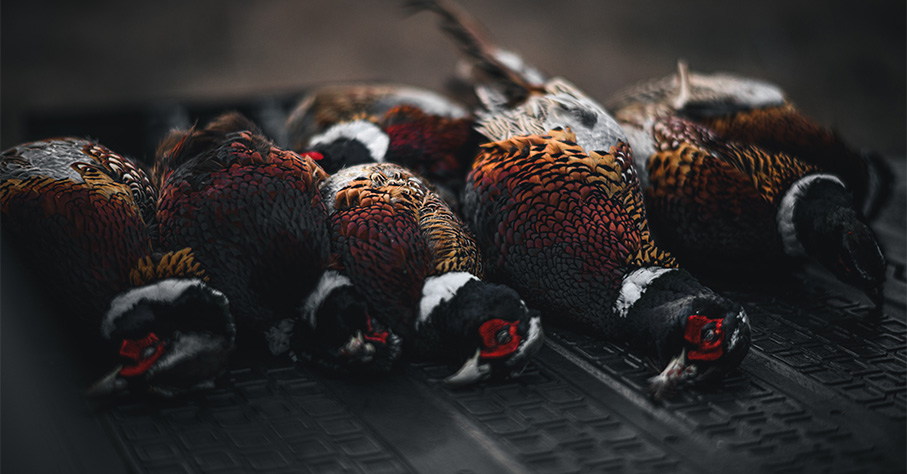
Top Upland Bird Hunting States
With insights from onX Ambassadors and staff, we hope this list introduces you to new places to run dogs, bust coveys, or yell “Rooster!”

Montana: Early Season Multi-species Hunts
Starting at the eastern half of the state, sharp-tailed grouse, Hungarian partridge, and pheasants are plentiful. It’s not uncommon to harvest all three species within the same walk.
As you head toward central Montana, you’ll also be able to target sage grouse. While the population is declining due to habitat loss, Montana is still home to an estimated population of 75,000+ birds. Unlike its neighbor to the south, Wyoming, with its two-week or three-day season depending on which area of the state you’re in, Montana has a lengthy 30-day season spanning September.
As you travel west into the Rockies, forest grouse become primary targets. Ruffed, spruce, and dusky grouse are plentiful in many areas.
Kansas: Liberal Bag Limits
If you’re in search of bobwhite quail, Kansas is the place to be. With a limit of four roosters and eight quail per day, Kansas can yield heavy vests.
While Kansas is 97% private land, you can find access opportunities through the Walk-in Hunting Areas program, better known as WIHA land (turn the WIHA Layer on in the onX Hunt App).
Both greater and lesser prairie chickens also call Kansas home. The southwest portion of the state is closed to prairie chicken hunting, where the struggling lesser prairie chicken is most often found. There are still excellent opportunities to hunt greater prairie chicken in the northwestern part of the state. The best opportunity to bag one will be the best in the Northern High Plains and Smoky Hills region where populations have been expanding or stable and public land that holds birds is easier to find.
South Dakota: King for Roosters
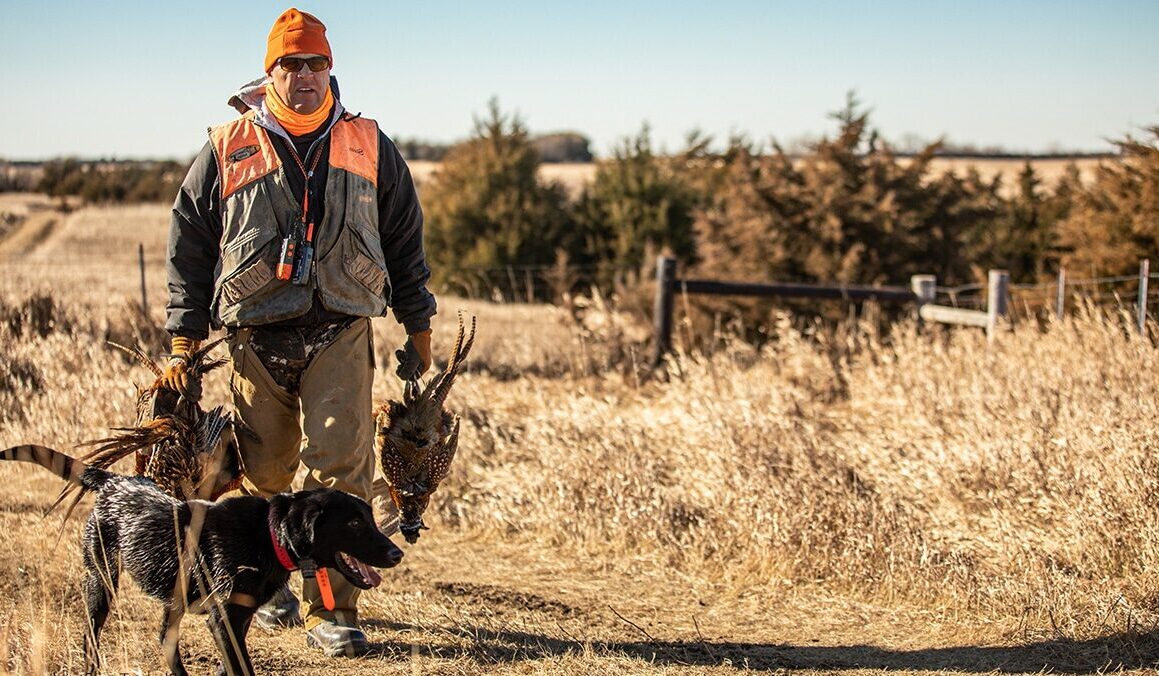
South Dakota is synonymous with pheasants and holds the undisputed title of “Pheasant Capital of America.” With bird harvests reaching over 1 million birds most years, it’s a place every upland hunter needs to experience. South Dakota doesn’t even have to be “pay to play” because public land opportunities are world-class with over 12 million acres open to hunters. The Walk-in Areas Program has also opened up 1.25 million additional acres, 300,000 of which are prime for chasing roosters.
Pheasant populations have declined from historic highs due to habitat loss, but thanks to organizations such as Pheasants Forever, new concepts are starting to help maintain habitat and offer more public hunting opportunities. The Aberdeen Pheasant Coalition was created by the local Aberdeen Pheasants Forever Chapter and consists of local businesses, the tourist industry, conservation organizations, and sportsmen coming together to provide funding for a signup incentive for farmers and landowners to enroll their lands into the Conservation Reserve Program.
The eastern two-thirds of the state has the best pheasant population and opening week is considered a holiday as thousands of hunters flock to chase these gaudy birds. By the time the season closes at the end of January, the competition is minimal.
Maine: The Best East Coast Bird State
Maine is a popular destination for die-hard grouse hunters because of the bird numbers and the tradition surrounding the hunt. There are nearly 2 million acres of public ground for hunting, and due to the health of the timber industry, Maine has an extensive patchwork of habitat.
A great kicker for those looking to travel in search of grouse, is a liberal bag limit of 4 per day. One of the best times to be in the woods is the last two weeks of October, as the majority of the leaves have fallen, and it falls between the big game firearms seasons.
Maine considers 17,721,600 acres of forest land to be grouse habitat, and with an annual harvest of roughly 500,000 birds per year, it’s your best bet to find great numbers in the east.
North Dakota: Best Sleeper State
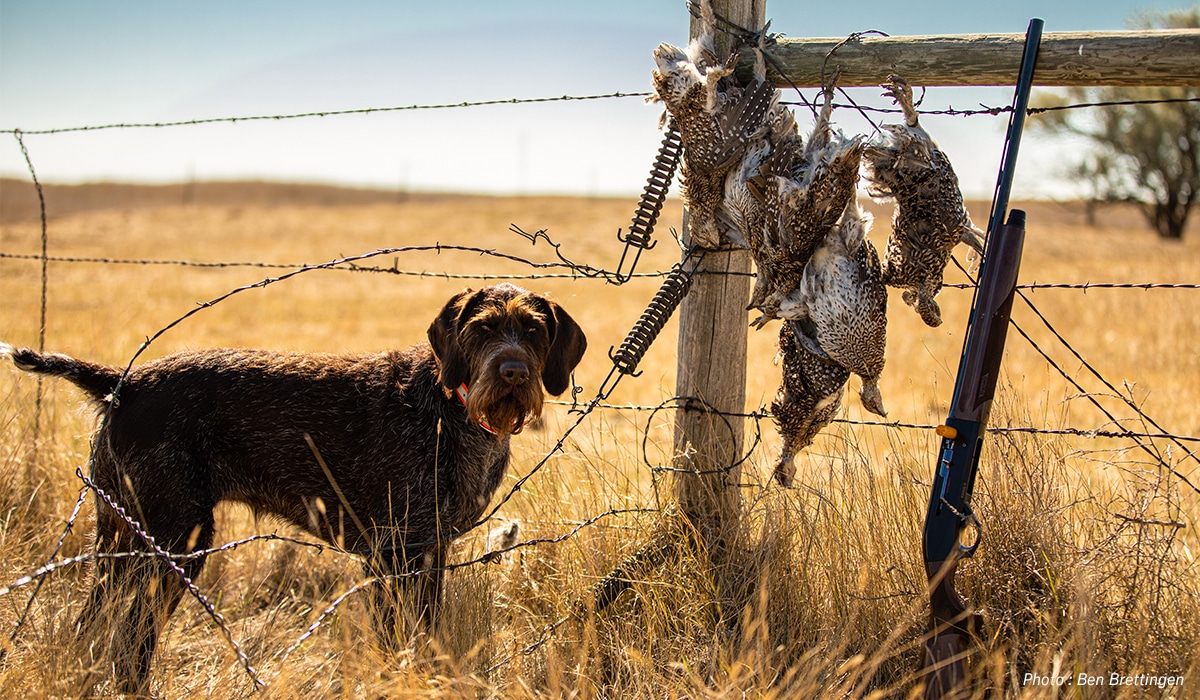
Often overshadowed by its neighbors to the south and west, North Dakota is still one of the best states in the nation to chase pheasants. North Dakota is also one of the best states to chase waterfowl, meaning you can hunt ducks and geese in the morning, and then walk for roosters, sharpies, and Huns in the afternoon.
Similar to Montana, North Dakota has an exceptional population of sharpies and Huns. If you’re looking to find these prairie birds, the western half of the state is where you’ll want to be hunting.
North Dakota is one of the few states that allows hunters access to private lands if they aren’t posted, opening up a lot more ground to hunt birds. It is important not to take this privilege for granted; when possible, it’s still a great idea to talk to the landowner, and always leave the area better than you found it.
Arizona: Winter Vacation Hunt
The mearns quail, also known as the Montezuma quail, range is mostly found in Mexico, but along the southern edge of Arizona, near Sierra Vista, a hunter is able to pursue them without leaving the country. Adorned with a black-and-white, harlequin-marked head, the Montezuma quail is a trophy for many hunters. This secretive bird is known to hold, creating great opportunities for dog work.
If you’re in the area, it’s worth chasing after gambles through the desert. While the mearns quail is found in the oak shrublands of the “Sky Islands,” the gambles live amongst the Saguaro Cactus, Jumping Cholla, and Teddy Bear Cholla of the desert.
Then, you might as well complete your Arizona slam and add scaled quail to the agenda. Found primarily near the eastern border of the state, scalies, like Gambles, are more prone to running than holding, making hunters alter their traditional tactics.
Wyoming: Best State for Sage Grouse
Over 37% of sage grouse call Wyoming home, and with over 35 million acres of government lands, there is ample opportunity. The core areas of sage grouse are distributed in a line stretching across the state from the northeast to the southwest part of the state.
If you’re going to pick Wyoming for a sage grouse hunt, it’s a tight window of time to hunt them. It runs from September 21-30 in Area 1, and Areas 2, 3, and 4 are closed.
Nebraska: Best Prairie Grouse State
One of the best areas to chase roosters in Nebraska is in its southwest and panhandle regions. Quail are also plentiful, especially in the southern reaches of the state, and make for a fantastic opportunity for the “Nebraska Upland Slam.”
Omaha native Marissa Jensen is Nebraska’s Outreach and Communications Coordinator for Pheasants and Quail Forever, and she gives high praise for the Cornhusker State.
“In certain parts of the state, you can find sharp-tailed grouse and greater prairie chickens together,” she says, “and you even have a chance at the other upland birds nearby. I have yet to find a place that captures the beauty of prairie grouse hunting in the sandhills like Nebraska does. Additionally, there are great public land opportunities, including over 372,000 acres enrolled in Open Fields and Waters, Nebraska’s walk-in access program.”
The rugged expanse of grassland in the Sandhills is reminiscent of pre-European settlement times. Some of the best public areas to hunt grouse and chickens are the Valentine, Samuel R. McKelvie, and Nebraska National Forests.
Minnesota: Best State for Grouse Hunting
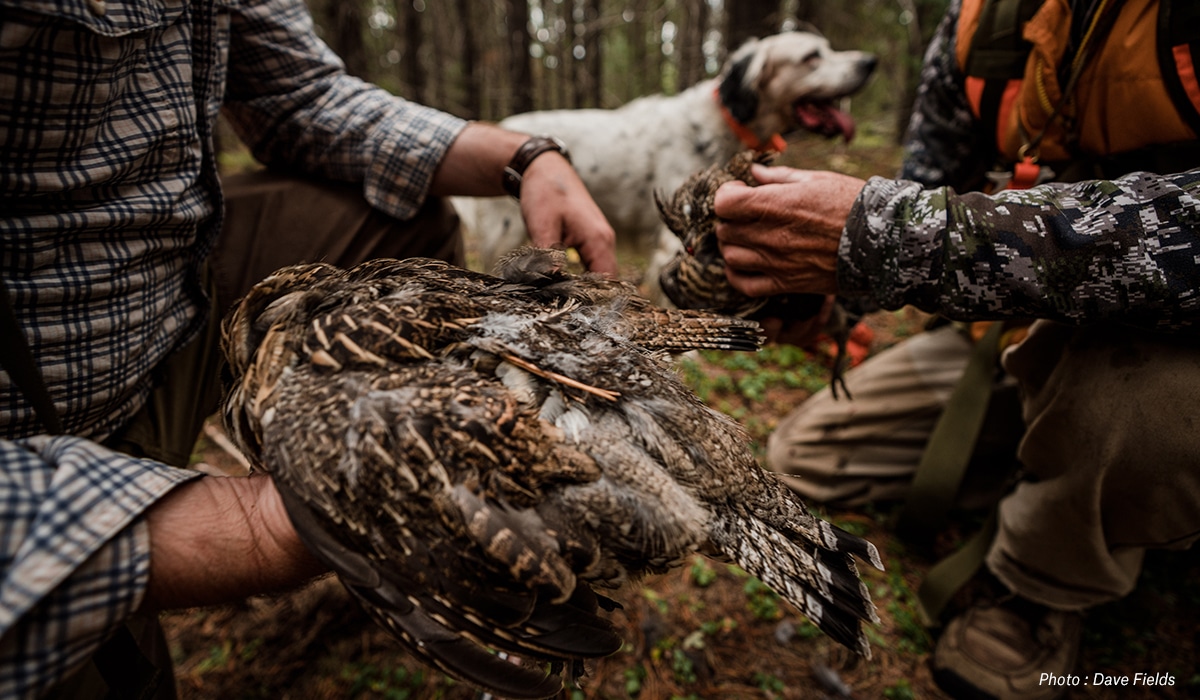
The northern half of Minnesota is home to a sprawling expanse of forests, offering prime habitat for ruffed grouse, spruce grouse, and woodcock. Large tracts like the Superior and Chippewa National Forests are big enough to get away from other hunters. Large state forests such as Beltrami, Pine Island, Bowstring, Kabetogama, and Koochiching represent over 2.6 million acres teeming with prime grouse habitat.
As you move south into pheasant country, Wildlife Management Areas and Waterfowl Production Areas are your best bets for getting into public land roosters. Many of the areas are a mix of wetlands and prairies, and being in farm country, often border cropland, making them great candidates to find birds. Every year the Minnesota Department of Natural Resources puts out a pheasant hunting prospect map, which shows projected bird densities based on the August roadside counts. Just because it may list an area as poor or fair doesn’t mean it’s worth skipping—where there are pockets of good habitat, the birds will likely be there as well.
In the Northwest corner of the state, grouse and pheasant country start to merge, and you’ll find sharp-tailed grouse, too. If you’re lucky, you may even be able to draw a prairie chicken permit.
Idaho: Birds With a View
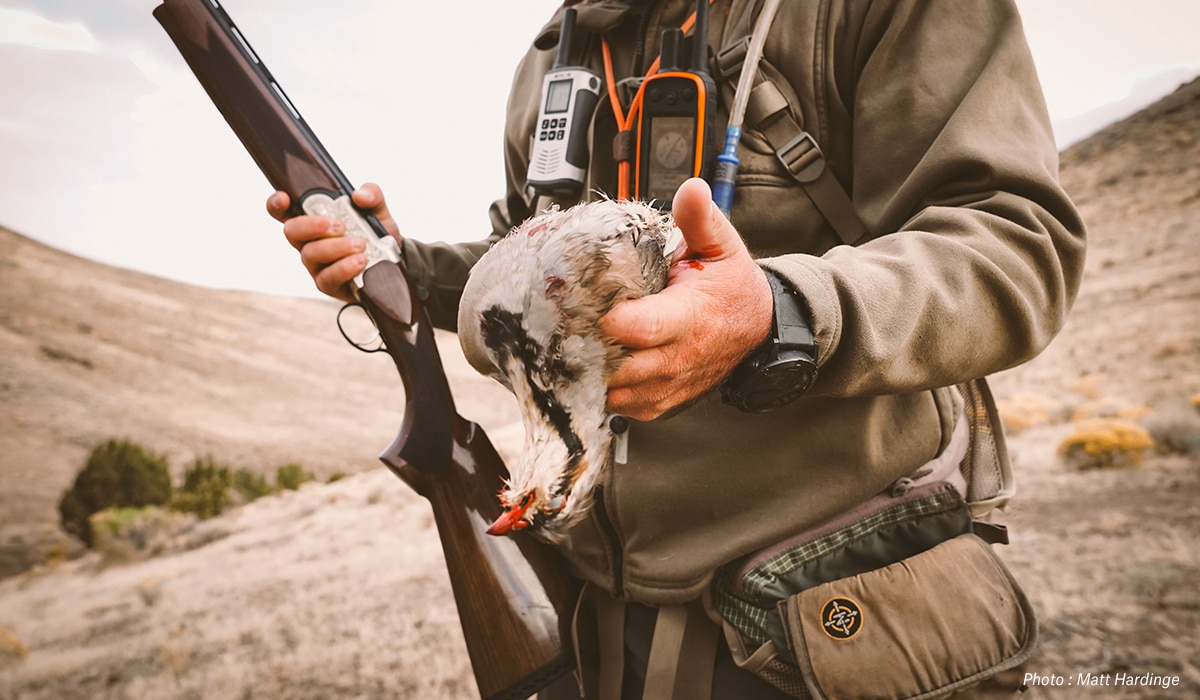
The quintessential chukar destination is Hells Canyon, which is the deepest gorge in North America. Scouting is essential to success in the steep and deep terrain. A mile in chukar country is different from a mile in the pheasant field, and you can burn out boot leather quickly. There’s also no need to worry about getting away from people, as public land is abundant.