Public Land Pheasants
Find Areas With Potential
How do we find birds? If hunting a new state, consult Pheasants Forever’s Pheasant Hunting Forecast. They compile information from state agencies as well as anecdotes from biologists about bird numbers in different areas of the state. Once you have read the reports, you’ll get an idea about what parts of the state hold birds.
Then, hit the maps to find clusters of public land in the areas you’ve identified from the state reports. The reason? Say you show up to hunt one piece of land and there are already four trucks surrounding it. Now what? You’ve just wasted all that time to drive there, and you continue to burn hunting time driving to the next spot. Finding these clusters in advance gives you a backup plan—and a backup for your backup.
The other reason is that many of the spots may only take an hour or two to walk, and then you’re burning time driving to the next spot. Lastly, just because it looked good on the map doesn’t necessarily mean it is good, and it’s nice to have the option to look at a property on the ground and say, “Nope, not worth my time” and drive five minutes down the road to the next one.
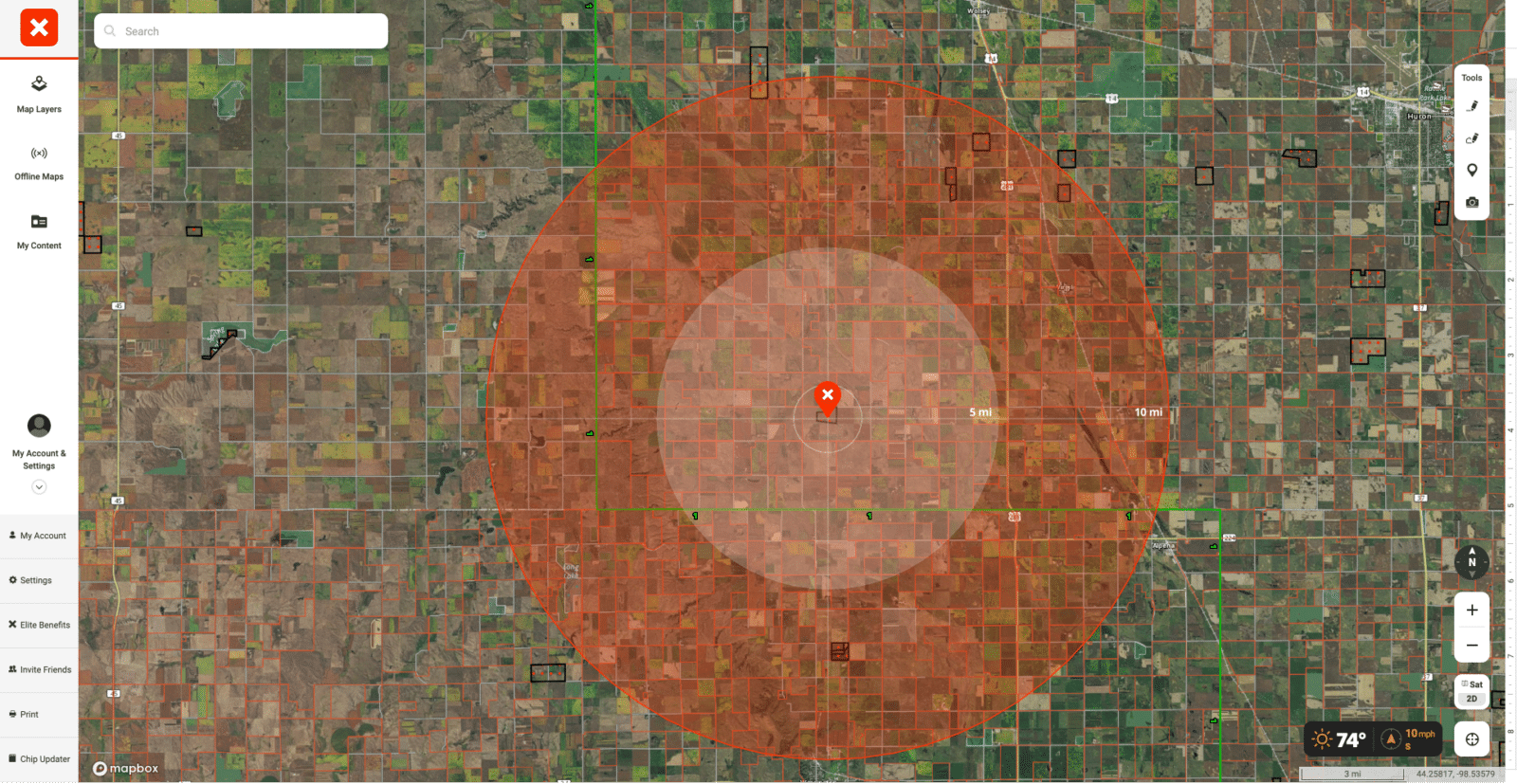
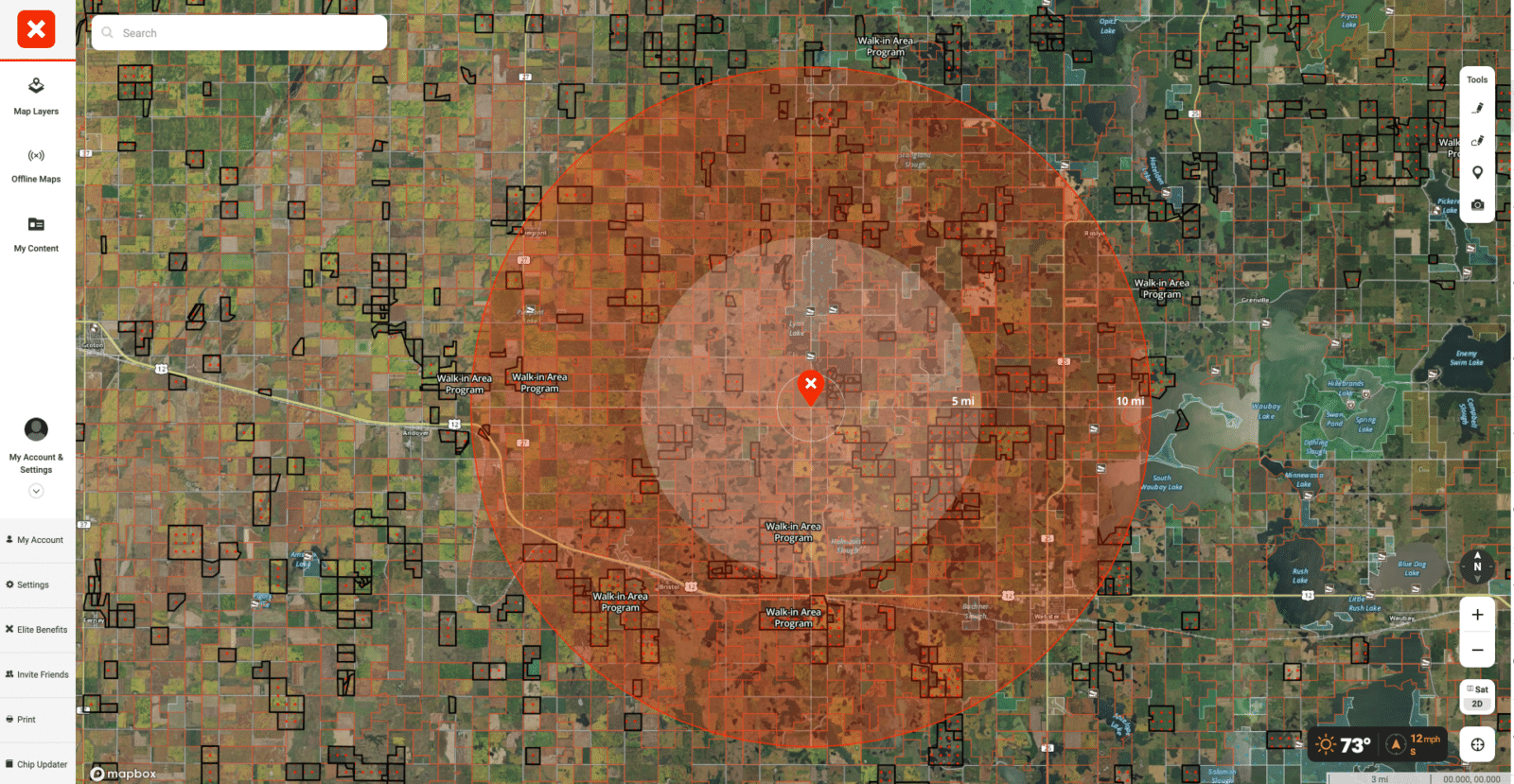
Both screenshots above are from South Dakota, and the diameter around the Waypoints is 20 miles. The Waypoint in the top screenshot is on a piece of walk-in land, and within 20 miles there are only four other properties. The second screenshot is centered on a piece of walk-in, and it has too many other public pieces surrounding it to count.
Get Eyes on It
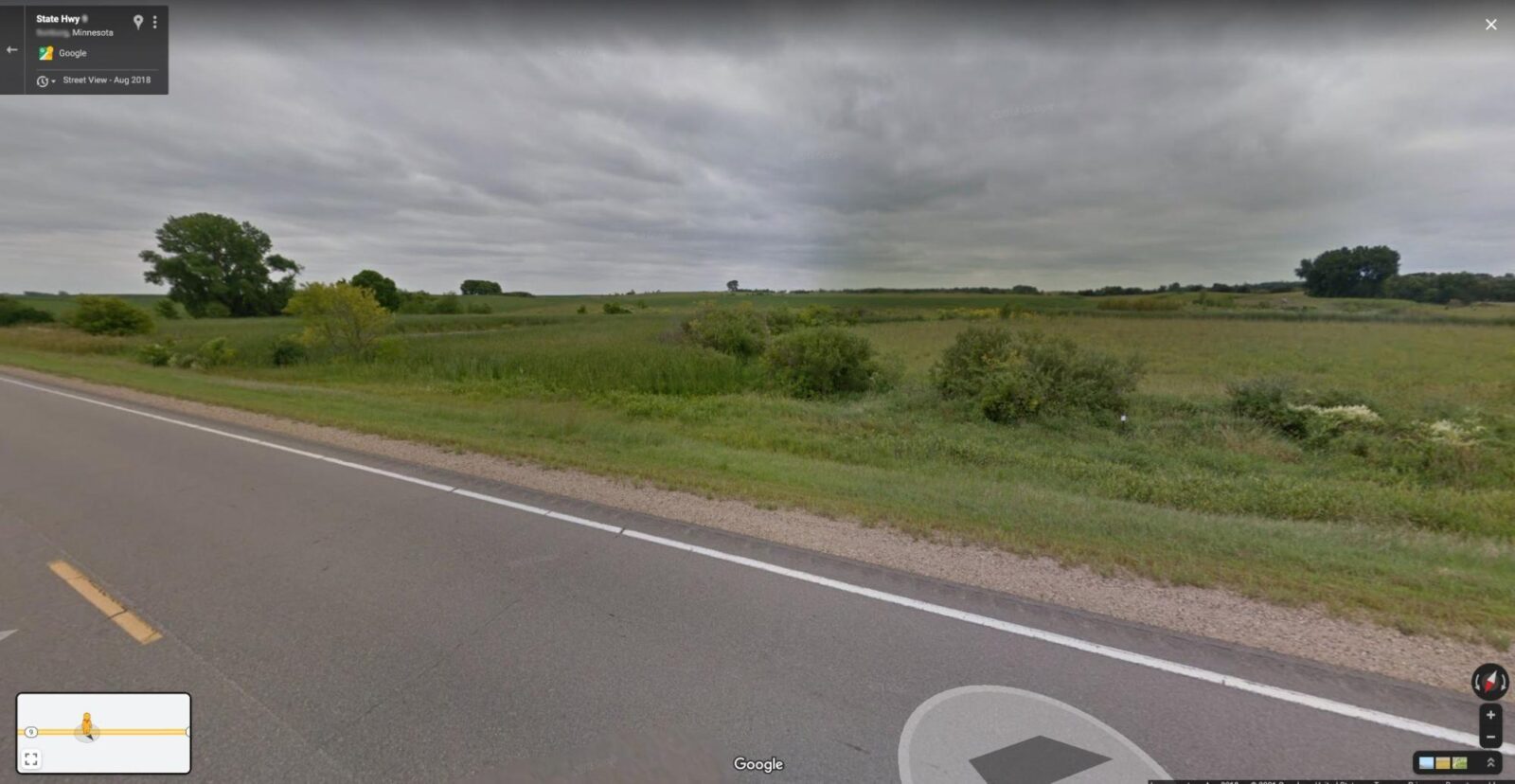
Once you’ve found a group of promising properties, it’s time to figure out which pieces are worth the walk and which ones you need to drive past. This is where Google’s Street View on your computer comes in handy. Find a piece of land that looks “birdy” along a main road or highway using Street View. Drag and drop the little orange man onto the road to see what the habitat looks like on the ground.
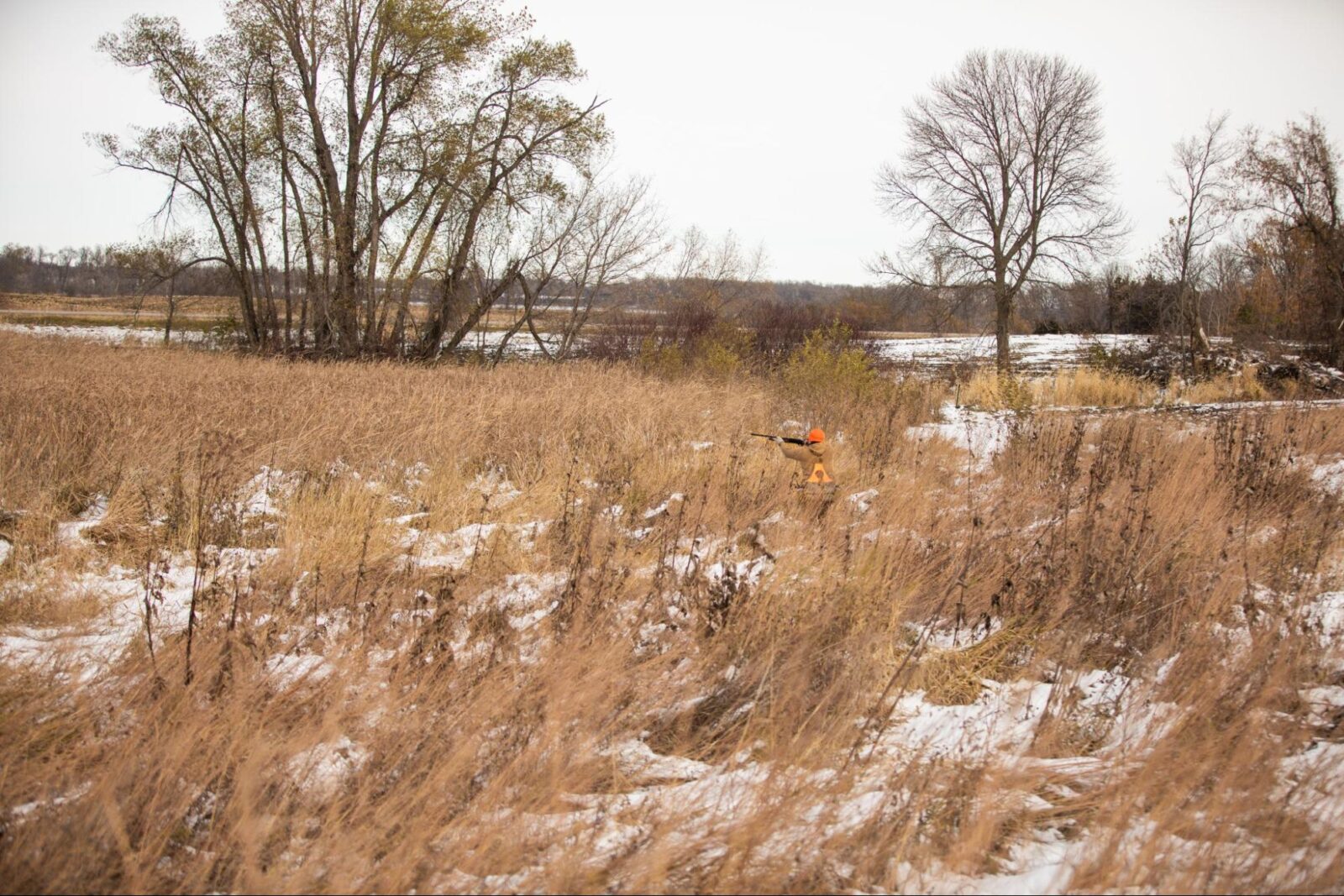
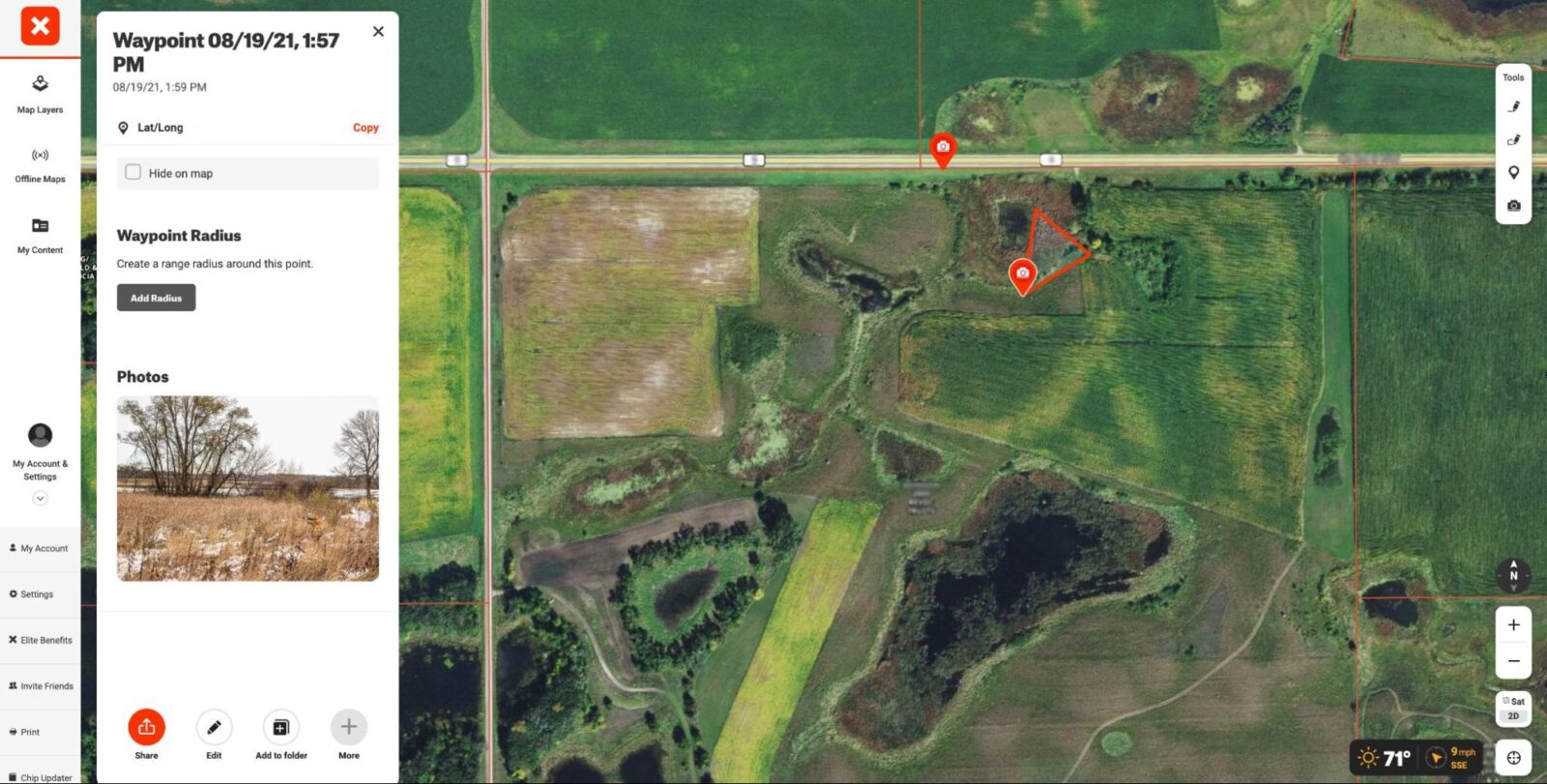
Below are three photos. The first is a photo of onX’s Ben Brettingen shooting at a rooster on the edge of the cattails. The second is aerial imagery from onX Hunt of the marsh with a red “camera” icon and field of view pointing in the direction of the photo, and the third is the Google Street View (little orange man) of the property.
Find Habitat Diversity
Now that you know how to start interpreting maps, it’s time to look at how to break down a specific piece of ground. The number one thing to look for is diversity: a mix of agriculture and different heights of natural vegetation, including native grass, cattails, and maybe even some trees.
Ideal Habitat Example
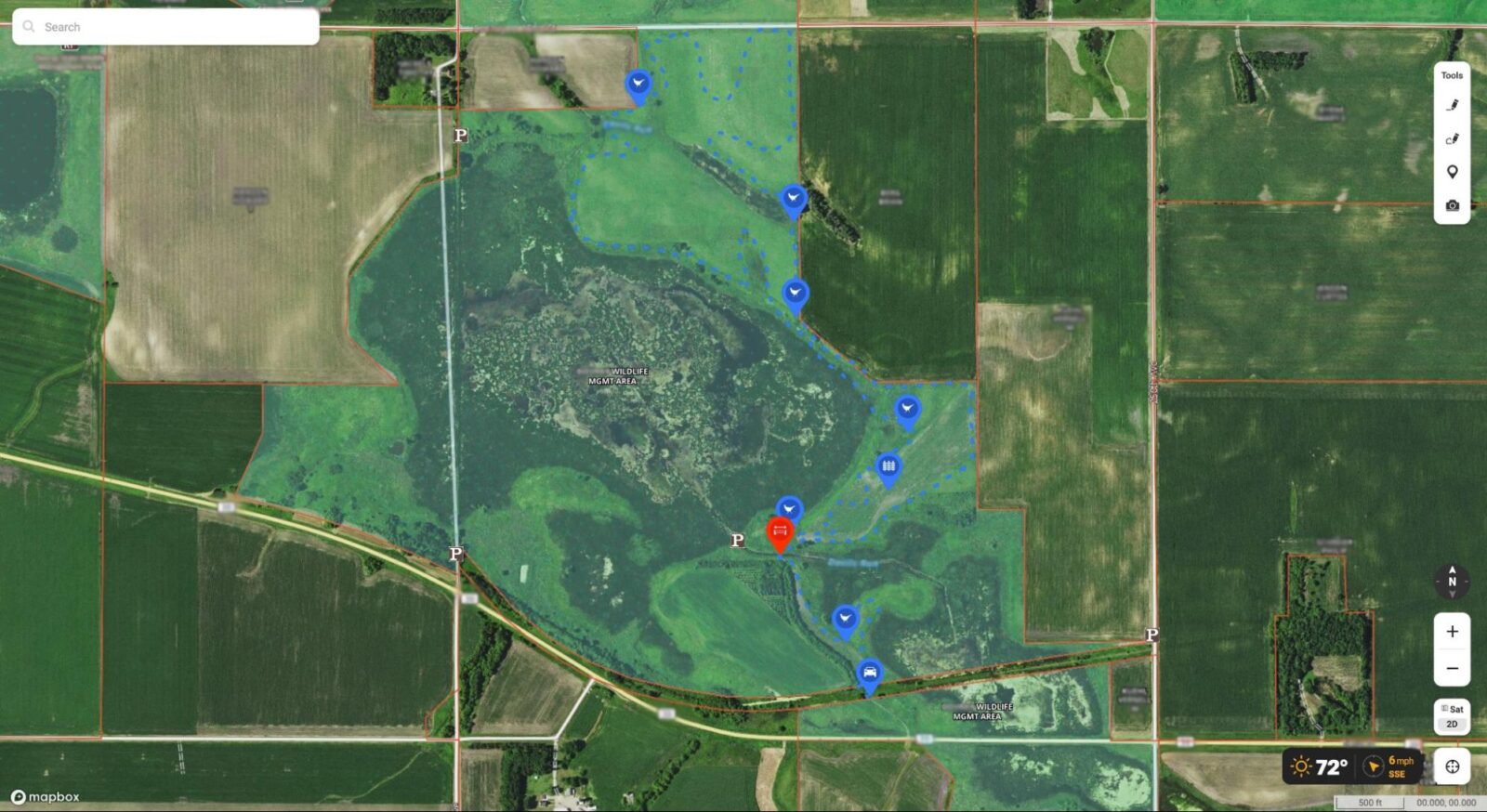
The screenshot above is an example of a piece of land that has habitat diversity and looks super birdy (in fact, the blue Waypoints with the pheasant icon show places Brettingen flushed birds on a scouting trip—notice how they’re all on edge habitat, where two types of habitat meet). If you don’t spend a ton of time looking at aerial maps, the next logical question is how can you tell what’s what? You can go the little orange man on the Google route, but here’s a little cheat sheet.
At the center of this property is a large marsh, with the water being the darkest color and the cattail areas being the darkest green. Generally the thicker the cover, the darker it will be. The lighter the color, the thinner the grass is likely to be.
Crops are another big consideration, and they aren’t created equal. For pheasants, corn is king. It’s a preferred food source as days start getting colder, and whenever possible, try to hunt fields close to cut corn. With onX Hunt, you can see what crops were planted where for the previous year via the US Crop Distribution Map Layer. If a field shows it was planted in corn last year, the odds of it being planted again this year are slim to none. You can assume those corn fields will be planted in soybeans this year. Conversely, if a field was planted in beans last year, there’s a good chance it will be corn this year.
Less Ideal Habitat Example
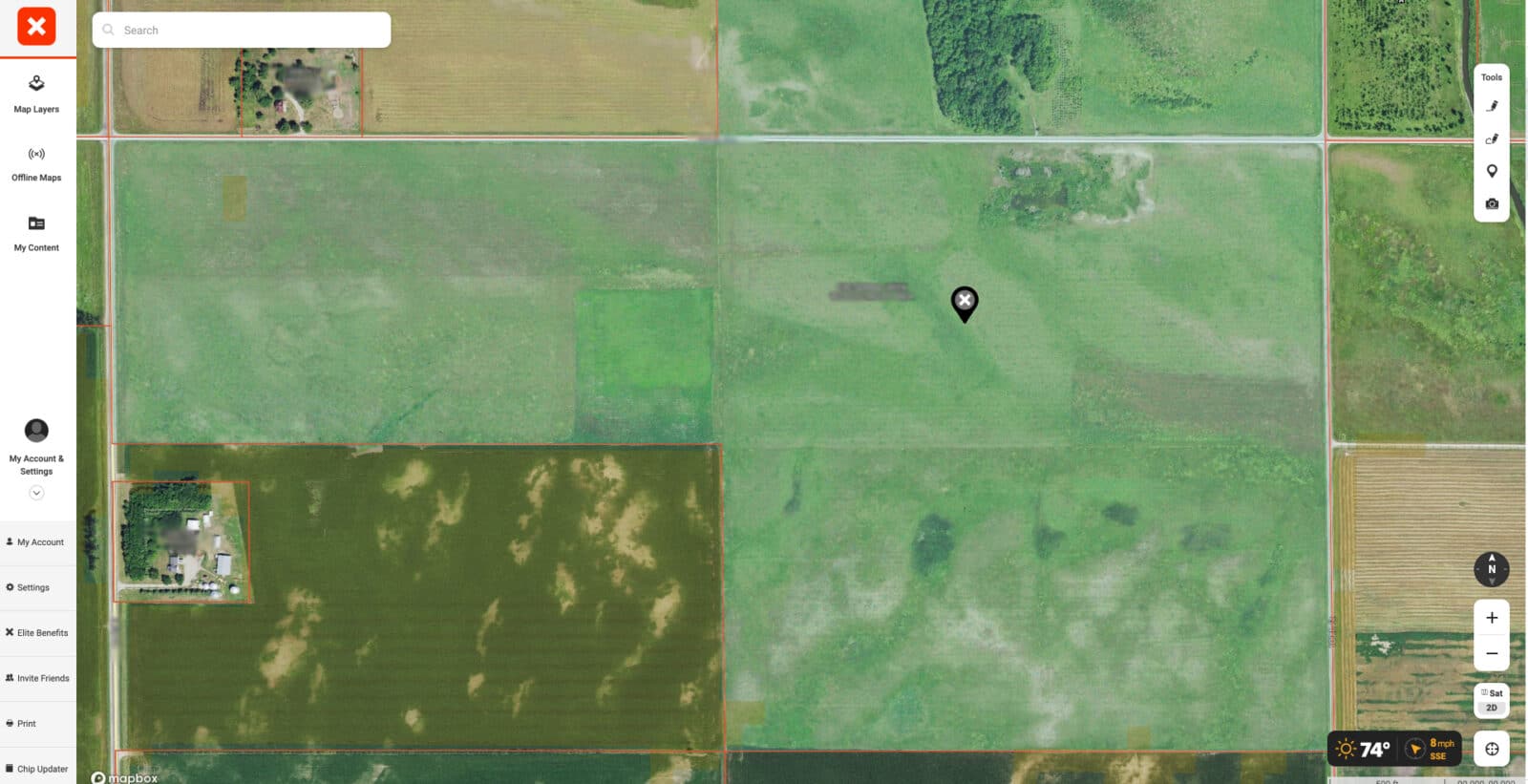
It’s also helpful to look at a map showing less ideal habitat. Yes, the above property has crops around it, but barring the marshy-looking area on the south side of the road, there’s little diversity and the lighter-colored grass indicates it’s going to be thinner. Other than hunting around the field edges, it’s just a large swath of grass. Can you find birds there? Probably. However, there’s probably going to be a lot of ground in between each flush.
Strategies for Early, Mid, and Late Season
Early Season
This is a fun time of year to hunt as there’s often an abundance of young birds and the wily veterans haven’t been shot at for months. In most years, corn hasn’t been harvested when the opener rolls around, and that gives pheasants the upper hand in the game of hide-and-go-seek. During the days, they’ll be hanging out in the standing crops getting fat and sassy—and avoiding you.
To combat this, look for areas that might have soybeans planted around them instead of corn. Beans are normally harvested by the end of September or early October. While not as powerful of a magnet as corn, there are still birds that eat plenty of soybeans.
Do we abandon those perfect spots surrounded by standing corn? Nope, but you have to take a different approach to hunt them. Consider hunting those areas either first thing at sunrise (if legal in your state) or right at sunset. You’ll have a much better chance of catching them before they go to feed.
Mid Season
Being that the season has been open for at least a month, the birds have started to feel the pressure and have wised up to the game. This time of year, try finding areas that might be harder to access because people don’t want to go through the work to get to them. It could be large pieces of property and having to walk miles into them or wading through streams or cattails to get to untouched areas.
Another trick is parking 300-500 yards away from the property you want to hunt and walking into the spot. This prevents making a racket while getting out of the truck and letting the dogs out.
Late Season
Shift your focus to woody cover and marshy areas.
Frozen sloughs can be real late-season magnets. If hunting solo or with a buddy, keep to swamps no more than about 150-200 yards wide. Larger than this and you’ll be spread too thin, passing up birds and allowing them to run behind or around you.
Finding the right woody cover is also important. Look for short, dense tree belts as well as willows growing in with grass or cattails. Shelterbelts are great places to find roosters as well, especially when nasty weather rolls in.
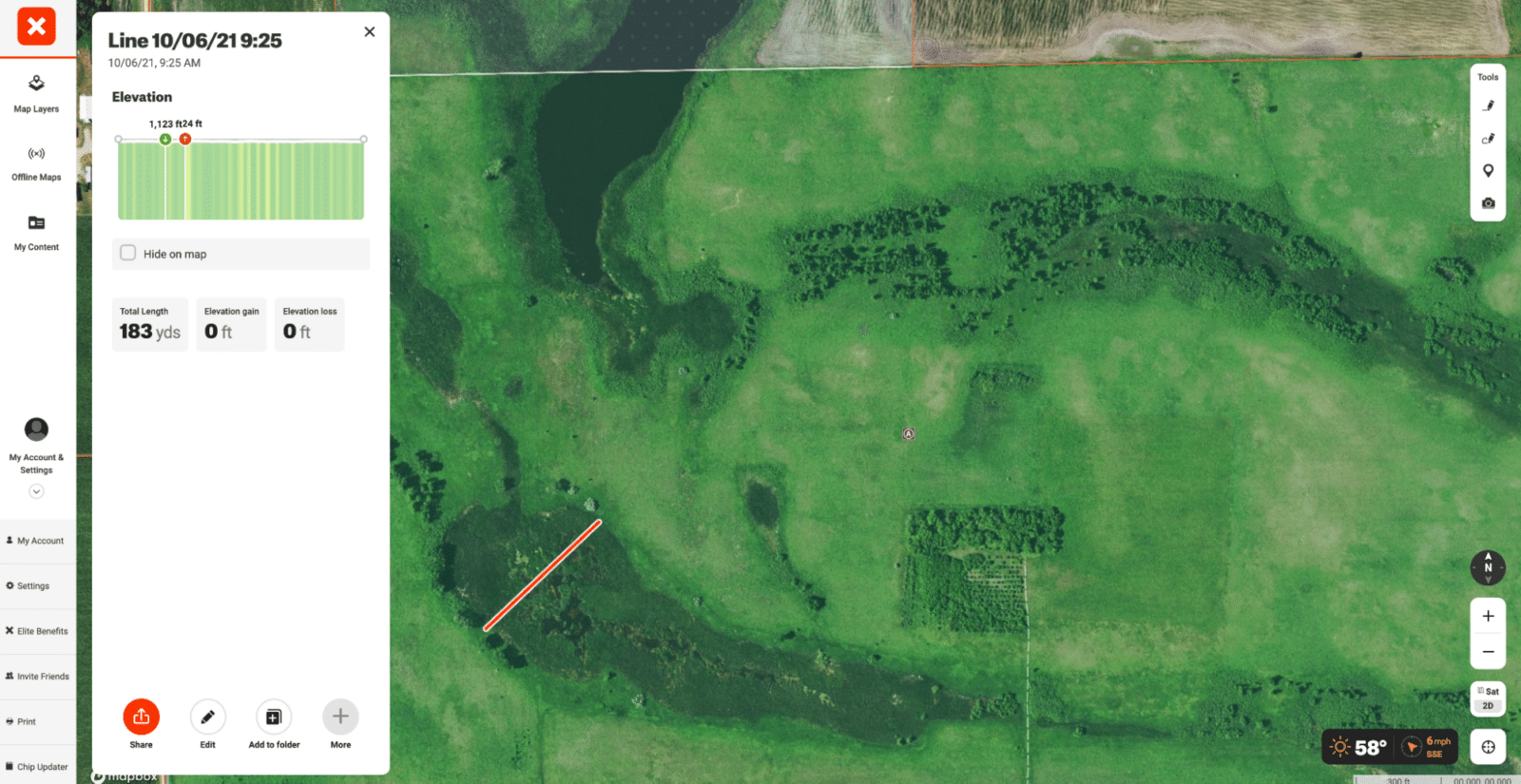
The example above is a great late-season haunt. It has a complex of marshy areas with scattered trees. Use the Line Distance Tool to determine the width of the marsh areas. The one pictured is a little too wide, at 180 yards, but notice how it necks down towards the southeast side. If. you hunt it from the northwest side, you’ll push the birds down into the skinny areas.
This piece of land also has a good flow, with a ring of cattails around it that lets you hunt prime areas almost the whole time.