Where To Hunt Rios
See the best Rio Grande turkey hunting states and get local intel.
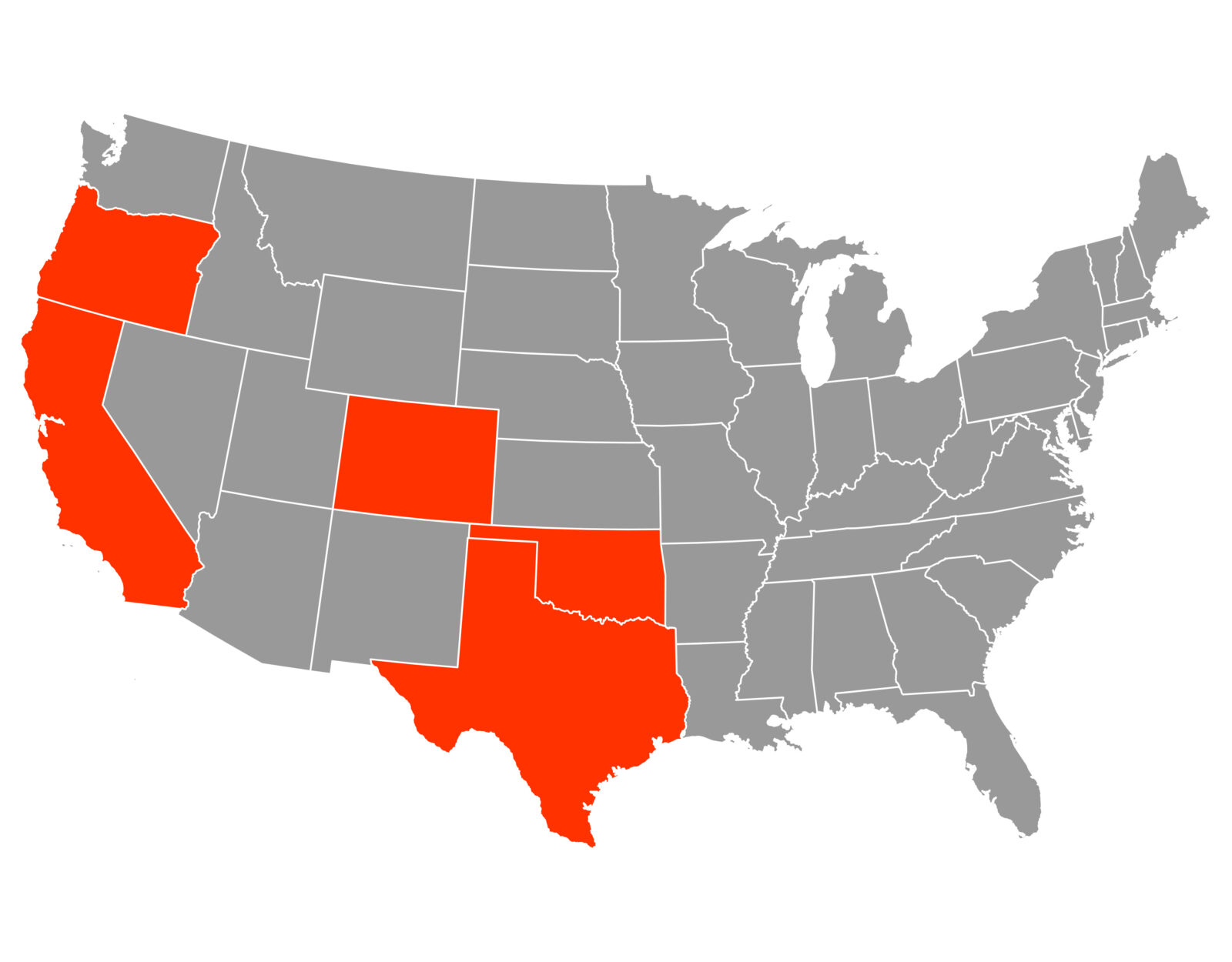
California
California is a big state, and turkey populations cover about one-fifth of it. The Rio Grande subspecies is by far the most established here, but you can also find Merriam’s, easterns, and hybrids. Add to this the average hunter success rate is 40% and higher for turkey hunts, there’s a three-bird limit in the spring, and you have a great state for chasing toms.
Local Intel: Born and Raised’s Kody Kellom
“Rio Grandes [can be found] low in the northern and central valleys and foothills. Access can be tricky in the lower country, as much of the area is private land, but there are some great opportunities for the public both via walk-in or boat-in access.
“California’s license system is unique as they don’t require a tag for turkeys, but a small game license covers your daily limit of one male turkey, and up to three per year in the spring season. The season starts the last Saturday in March and runs for approximately five weeks, giving you ample time to get your birds. Also, they have a youth-only season along with an archery only season. Another opportunity that California offers is a CDFW’s SHARE program, allowing public hunting on some select private lands.”
Colorado
Through over-the-counter (OTC) tags or through a special draw, bagging a Colorado Rio Grande can be done. Colorado has steep, mountainous terrain as well as open expanses. Be ready to put miles on your boots, either in the hills or along the river bottoms.
Local Intel: onX’s Paul Ronto
“Colorado’s eastern plains have an abundant Rio Grande turkey population that’s a bit more predictable than the mountain-loving Merriam’s. The Rios tend to hang out in the popular-choked river bottoms, and the landscape is considerably easier to navigate. Trade your hiking boots and binoculars for waders and decoys and you’ll be on birds throughout the day.
“Colorado has a point system for turkeys, but there are plenty of OTC tags as well. You can apply for both spring and fall hunts, and compile two points a year. This is great news for anyone looking for a premium hunt which takes 3-5 points, so every year or two you can realistically apply for a limited unit.”
Oklahoma
Even moving from a three-turkey bag limit down to one in 2022, turkey hunting in Oklahoma is a good state to find Rio Grandes, which inhabit most of the state. The spring season opening date has also been moved back 10 days to protect mature toms during peak breeding. One of the main culprits behind the decline in Rio Grande turkey populations has been drought.
Local Intel: Land and Legacy’s Matt Dye
“The key is, when you find a gobbler on the roost, take close notice to the surrounding areas to anticipate where he is going to fly down and strut. Recently grazed pastures, hay fields, wheat fields, sandy soil deposits, and oil field roads are likely locations to set up on to intercept a long beard in Oklahoma. Another key component to look for during the later portion of the season is to find the shade. This is where you will find midday gobblers loafing. The sun can beat down and warm things up quickly in the Sooner State.”
Oregon
Southwest Oregon is the leading place to find turkeys. The Rogue, Melrose, and Applegate units have had the highest turkey harvests in Oregon. The state also has a six-week spring season; one of the most liberal in the country.
Local Intel: Born and Raised’s Kody Kellom
“The majority of the birds you will find on the west side of the state are Rio Grandes. The southwest corner of the state has been the stronghold of the population and it has been used for the expansion projects by ODFW and NWTF. There is also a stronghold of gobblers in the northeast portion of the state, with vast plots of public land or private timberlands open to public hunting opportunities.
“Another region that holds a lot of birds contains the White River and Ochocco units. This area tends to have the highest pressure in the state, but the population is strong and hunters have a good chance of filling their tag there. The nice thing about Oregon is that the season runs six weeks, from April 15 through May 31, giving you ample time to find a longbeard.
“Once you locate an area that is holding some birds, concentrate on logged areas that have good habitat. They tend to roost in the same areas year after year so keep that intel recorded in your Hunt App. Don’t be afraid to use a crow call, coyote howler, or goose call to shock gobble the birds in these large canyons. Those locator sounds travel far and you can often hear gobbles from over a mile away.”
Texas
Texas is on the extremely low-end of the spectrum when it comes to public hunting availability. So, as you could imagine, these areas get hunted a lot. On the private land side, it didn’t take long for landowners to realize the value in turkey hunting opportunities, so the days of free access are virtually gone and the price of leases and outfitters has only continued to climb. Needless to say, if you’re a turkey hunter, Texas is still a state you need to visit. It earned its reputation for a reason.
Local Intel: onX’s Own Ben Brettingen
“If you’re able to gain access to hunt gobblers in Texas your odds of success are very high, but there just aren’t the public land opportunities found in many other states. A lot of land is leased for deer or quail hunting, and this has been a great opportunity for me to be able to access these lands for chasing turkeys.
“Areas such as the Edwards Plateau, and the Rolling Plains have traditionally been go-to destinations for spring gobblers, having some of the highest densities and production.”