Turkey Calls
Practice recognizing and reproducing key turkey sounds.
Turkey Call Sounds
Wild turkeys have at least 29 different vocalizations. Being able to replicate all of them would be a lifetime’s work, but hunters should be able to recognize and reproduce several key calls.
Below is a small sampling:
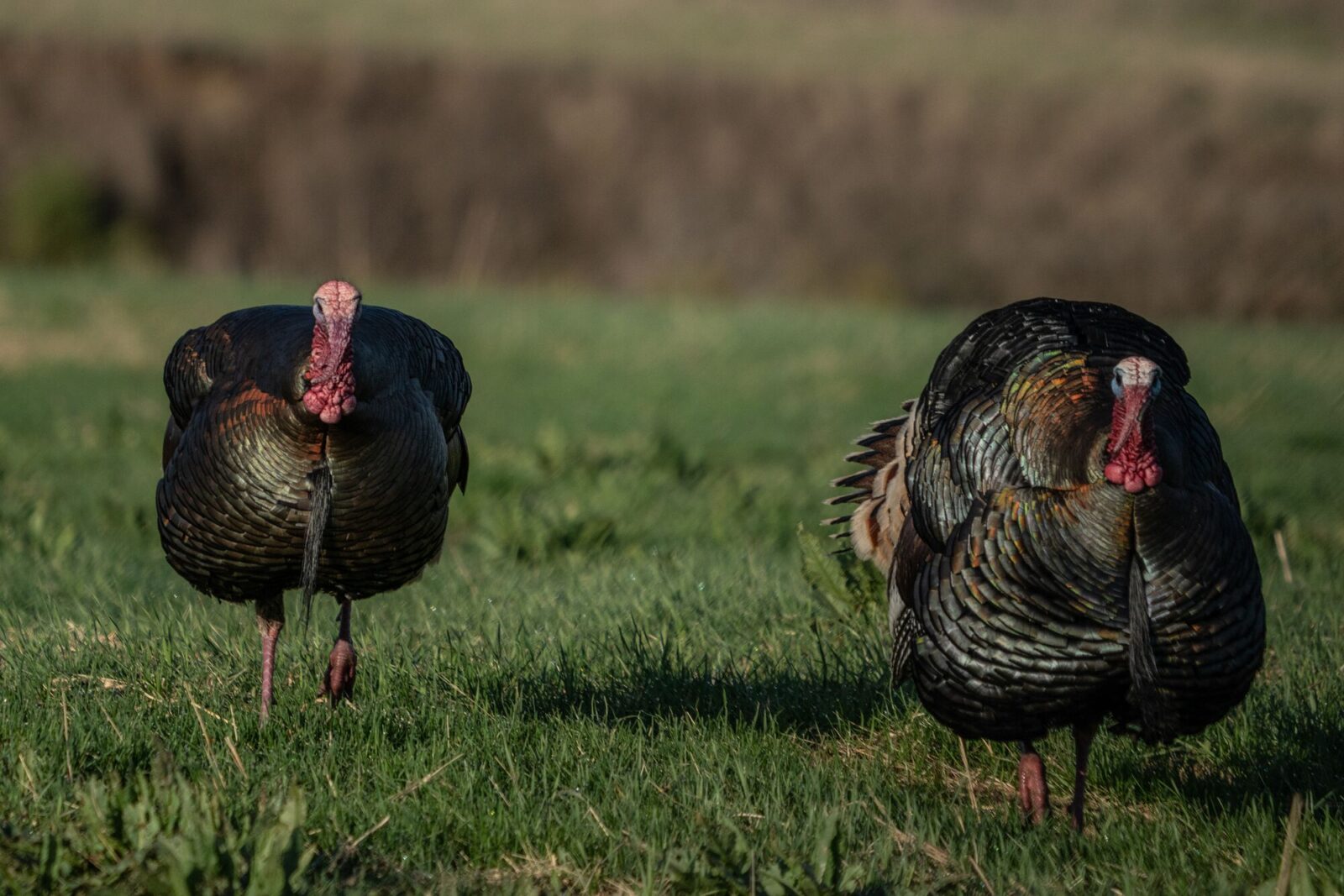
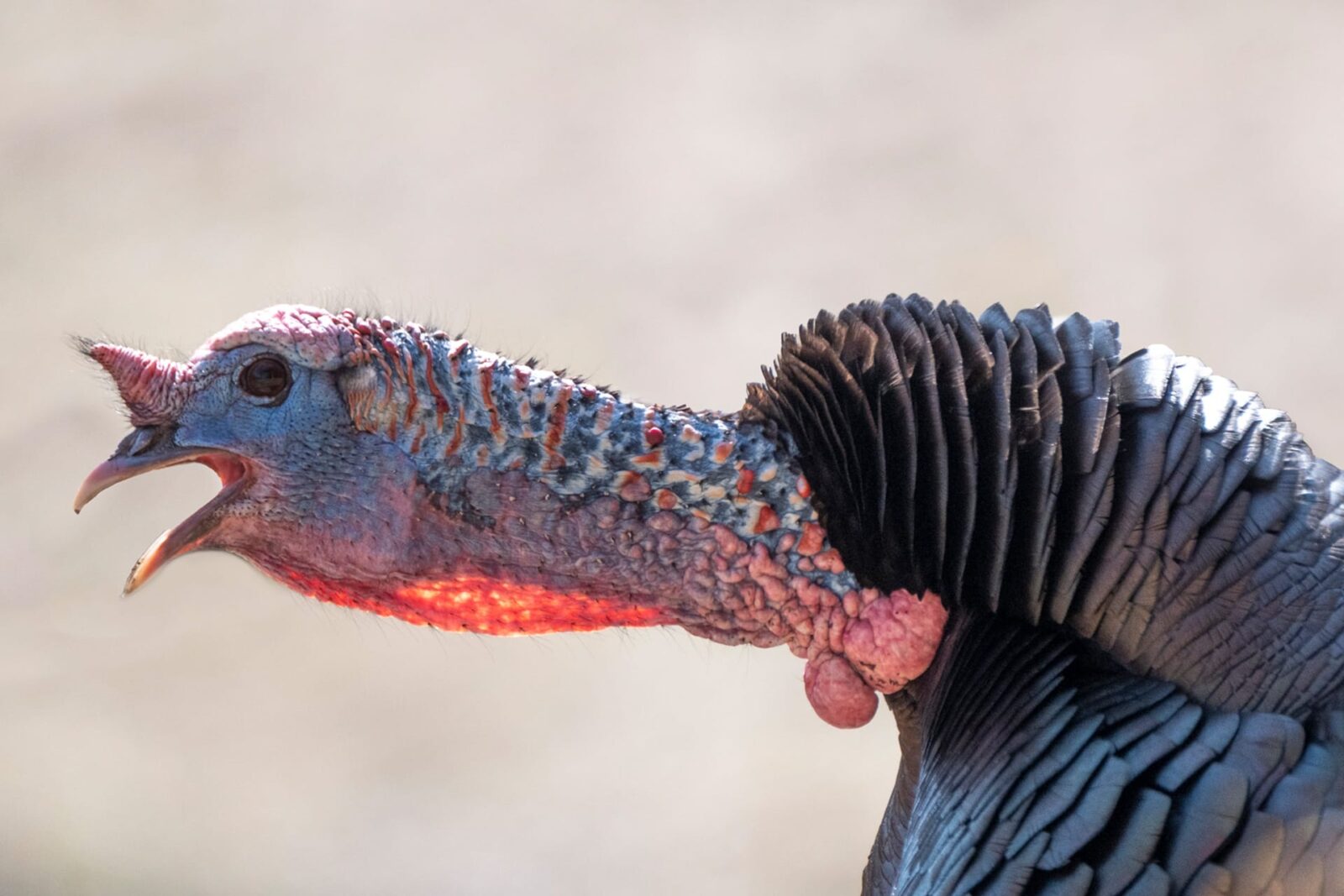
Gobble – Perhaps the most recognizable of all turkey sounds is the gobble. Toms gobble to let other turkeys in the area know he’s there and ready to mate. A gobble, then, serves two purposes: getting hens’ attention and intimidating jakes or smaller toms.
Yelp – The yelp is viewed as a hen’s main form of communication. The yelp is a locating call, helping hens find other turkeys (hens and toms) in the area and beckoning them to join her. If you can fire a hen up enough, she may have to come and investigate, even if she has to drag that tom with her.
Cutting – Cutting is usually heard as a rapid and sharp series of clucks. This is an excited call made by a hen to grab a tom’s attention—she’s fired up and wants the tom to know it. If you’re in the woods hearing cutting, you are probably hunting at or near the peak levels of the breeding season and excitement.
It can also serve as communication between hens when they are agitated with each other. If a turkey is henned-up, you can try agitating his hens to a boiling point. They may have to come settle the dispute—with a tom in tow.
Soft Yelps, Clucks, and Purrs – These are low-volume calls that signify contentment. They can translate to safety and security for other birds and can be your best weapon to get a turkey to close down that final 50 yards.
Using a less-is-more strategy, lower your volume when the toms break into the 100-yard range. The soft calls will reassure the tom that everything is safe and entice him to come and find you. These are some of the most crucial calls for finishing the hunt.
Types of Turkey Calls
Push-Button Calls – Great for beginners, these calls use the friction of two pieces of wood rubbing together to create clucks, purrs, or yelps. The hunter pushes a spring-loaded wood dowel attached to a block of wood. The wood block rubs against a pyramid-shaped piece of wood to create different sound patterns depending on the intensity with which the dowel is pressed.
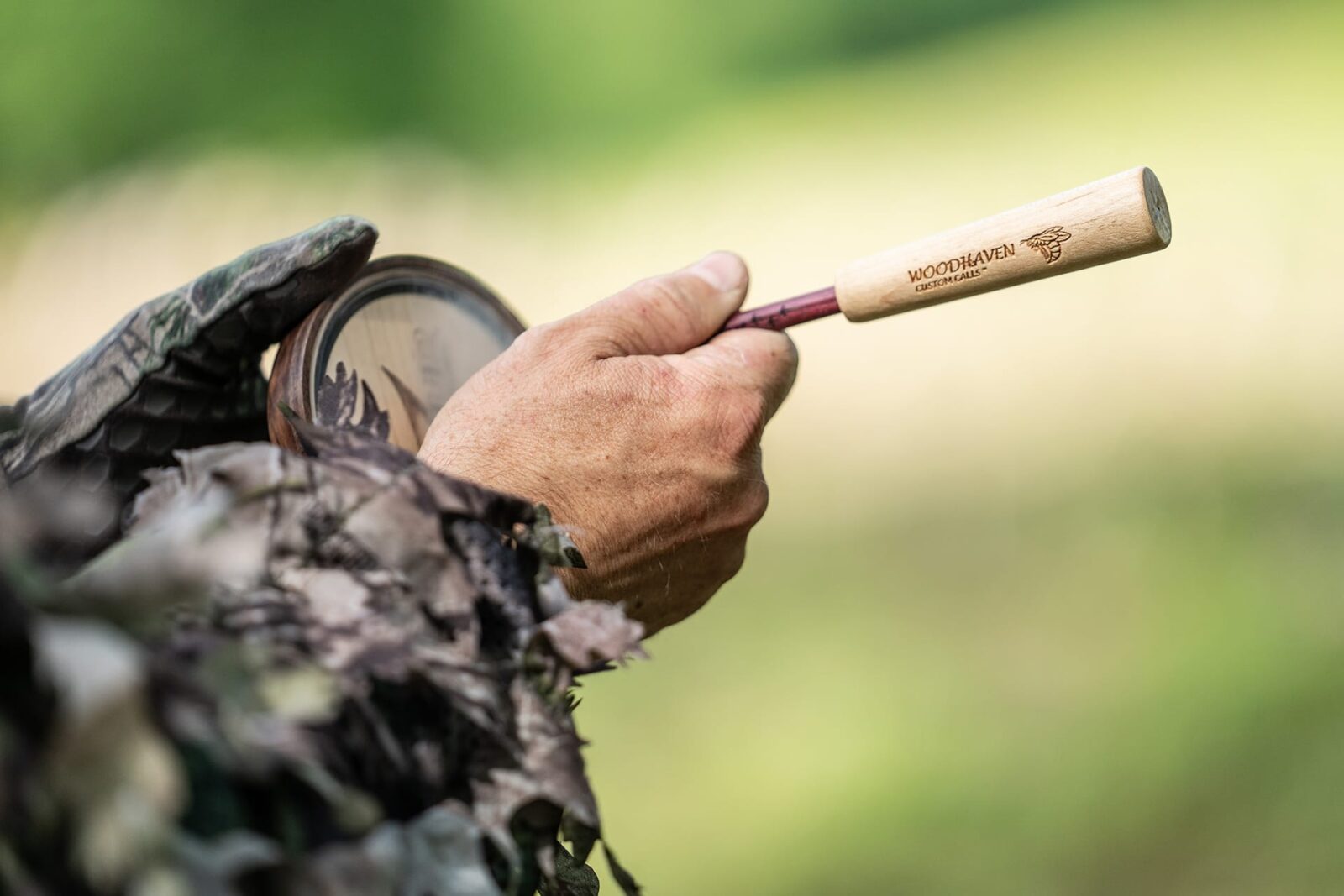
Slate Calls – Another friction call, sometimes called pot calls. These are made from a round disc of slate, ceramic, or glass and paired with a striker of wood, carbon, or aluminum. The hunter scrapes the disc (AKA pot) with the striker at various angles to make different sounds. Different sounds also come from using different combinations of pots and strikers. Slate calls take a lot of practice.
Box Calls – One of the oldest friction calls, the box call makes sound by scraping the lid (or paddle) of a wooden box across the box’s thin edge. The lid is often attached by a single screw. A box call can create yelps, clucks, cuts, purrs, cackles, whines, and many more turkey sounds, making it a favorite tool.
Mouth Calls – These diaphragm calls are horseshoe-shaped and primarily made with rubber or latex reeds that vibrate to create virtually any turkey sound. Hunters like them because they’re versatile, small, and hands-free. Two drawbacks of mouth calls are the amount of practice they require and that they are not extremely loud calls. If you’re trying to call a tom from a long distance, a box call will produce more sound.
Locator Calls – Locator calls don’t sound like turkeys at all, and that’s the point. We need turkeys to make sounds to give up their location. That’s what locator calls do. They are calls that mimic other animals, typically an owl, hawk, coyote, or crow, to make a big tom gobble from wherever he’s hiding.
Calling Tips
“Learning to cluck and yelp is crucial. If you can learn those two calls, and the rhythm and cadence of a real hen, you can kill turkeys.” –Hunt Club TV’s Phillip Culpepper
“Nothing beats the versatility of a mouth call. When a long beard is moving in close and any unnecessary movement might cost you the hunt, being able to yelp without a call that requires your hands is irreplaceable. Although using silence and knowing when not to call in these situations is as valuable as your call itself.” -Mossy Oak’s Daniel Haas
“Use box calls to locate gobblers once they are on the ground, well after they fly down from a roost. I almost never use a box to call to a bird early in the morning when they are still on a limb. Once a bird is on the ground, and if he’s giving me a hard time, I’ll go to the box to get a response, then make adjustments to my setup. When just looking for a bird to hunt any time of the day, the box call is always my first try to raise a gobble and it works often.” –Mossy Oak’s Rusty McDaniels
“Mouth calls are king for me, with pot/peg being a close second. A friction call will be louder and carry further in some environments when you need to push sound over more country. Mouth calls are nice for working birds inside 100 yards because of the realism and lack of movement. I would suggest mastering cutting and yelping first. Soft clucks are also a good one. Practice varying degrees of volume on those different sounds and excitement levels.” –The Hunting Public’s Aaron Warbritton
“I like to use ‘kee kees’ and flock assembly yelps if I’m blind calling and may not necessarily be calling to a turkey I know is in the area. If I am calling to a specific turkey and trying to convince him to come to me, I like using soft yelps and purrs. If I find he is being stubborn and won’t come in, I’ll use vocalizations like jake yelping to challenge his dominance and attempt to call him in to ‘fight.’” –Mossy Oak’s Jake Meyer
“If you ask 100 turkey hunters which call they go to first, 99% will tell you it’s the call that gives them confidence. If you can make a simple cluck, purr, or yelp on any call and have done your homework by scouting and knowing the area you are hunting, you can kill any gobbler out there. Practice with your calls, and whatever call gives you the confidence you need, stick with it.” –Primos’ Troy Ruiz