Understanding Turkey Behavior Patterns
Learn a few of the biological behaviors that make a turkey tick so you can improve how you target them in the field.
Why Do Turkeys Gobble?
Why do male turkeys gobble in the spring? For many, that’s an easy question to answer: to attract a hen. However, many turkey hunters forget this biological driver when it comes to hunting tactics. Let’s go into the reasoning behind why a longbeard gobbles, and what happens in nature.
A tom expects the hen to come to him. That’s why he’s sounding off all morning on the limb and then again when he hits the ground. He’s throwing out a sign to the ladies: He’s large, in charge, and waiting for a suitor. This rule dictates much of the interaction between a calling hunter and a gobbler’s actions. Always keep this rule in the back of your mind, and try to apply it to each hunt.
Dealing With a Hung Up Gobbler
When a gobbler hangs up outside of gun range, he’s telling you, as the hen, “Hey, I’ve met you in the middle, now it’s your turn to come to me.” There are things you can do to combat getting stiffed by a bird outside of gun range.
Part of the fun in turkey hunting is calling. But, one situation will hang a gobbler nine times out of 10: Calling too much. It’s no different than dating…there has to be some mystery involved. Imagine yourself at a restaurant on a first date, and the guy or gal you’re with doesn’t stop talking, telling you their life story in painstaking detail, finally ending with confessing their love for you. It’s a lot, right? There’s really nowhere to go from there.
On the flip side, giving a gobbler just enough charming chit-chat to keep him curious is a killer technique. “Just enough” is relative, but that doesn’t mean trying to make him gobble every 30 seconds. A few light clucks and purrs accompanied by a little leaf scratching is one of the deadliest moves in the game.
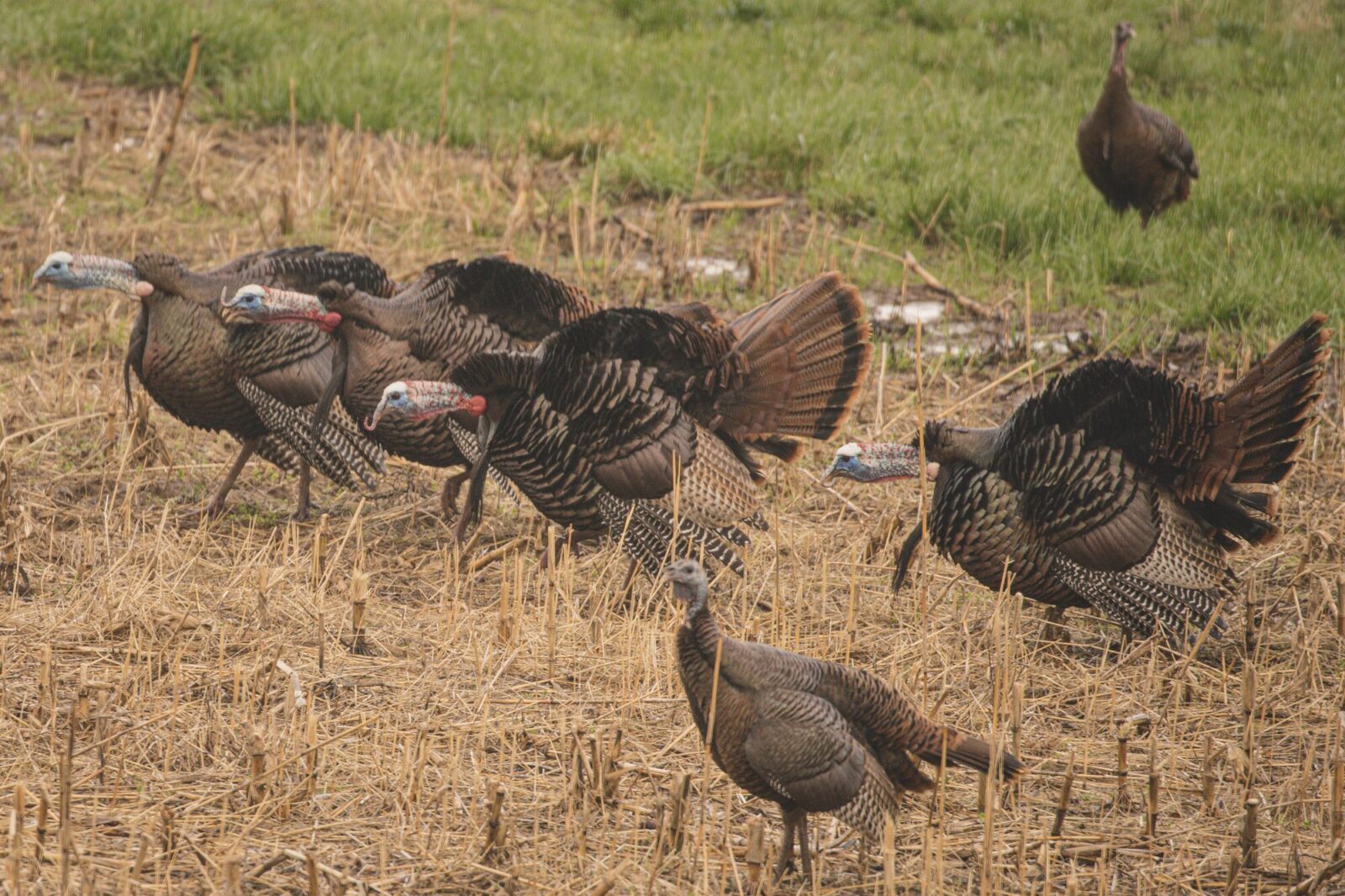
Another tactic is to get a longbeard fired up and then leave him hanging. When the bird is out 150-300 yards, get him worked into a tizzy, gobbling to excited yelping and cutting. Patience is important here because that gobbler will often sit in the same area, continuing to gobble waiting for the hen to come. Once he realizes that the hen isn’t coming, he’ll make his way toward you searching for that loud-mouthed hen.
A similar technique is the runaway hen. If you have a friend in the woods with you, have the gunner set up 50-150 yards in front of the caller. The distance depends on the terrain and thickness of foliage or cover—if it’s a big open, hardwood bottom, the caller needs to be further back than in a thicket. The gunner begins to call, and then transitions to your hunting partner behind. This will make that gobbler think the hen is leaving him, and he’ll be in hot pursuit. The goal is to have the gobbler come right past the gunner. This is also an effective technique to combat a bird notorious for hanging up outside of gun range.
If you’re going solo you can implement this same technique. Get close to his location—inside 150 yards if possible—and start calling. Quickly drop back imitating a hen leaving, then sneak back into your original position.
Turkey Nests and Behavior
After a gobbler attracts the female and breeds, the hen will search for a nest site. Generally, the hen is looking for a fairly dense understory, with cutovers and other early successional habitats. The hen will become secretive, trying to avoid predators. She will lay roughly nine to 13 eggs during a 14-day period.
Once these eggs are laid, the hen will spend the majority of her time on the nest, only leaving for short periods. She will incubate the eggs for 26 to 28 days.
This is a wonderful opportunity to kill a gobbler. As hens nest, it eliminates competition for you. Hens typically leave their nests early and late in the day to dust, feed, and get water. Gobblers will frequent these areas in search of hens. The easiest tactic is to find dustbowls made by hens, and wait for a lonesome longbeard to stroll past.
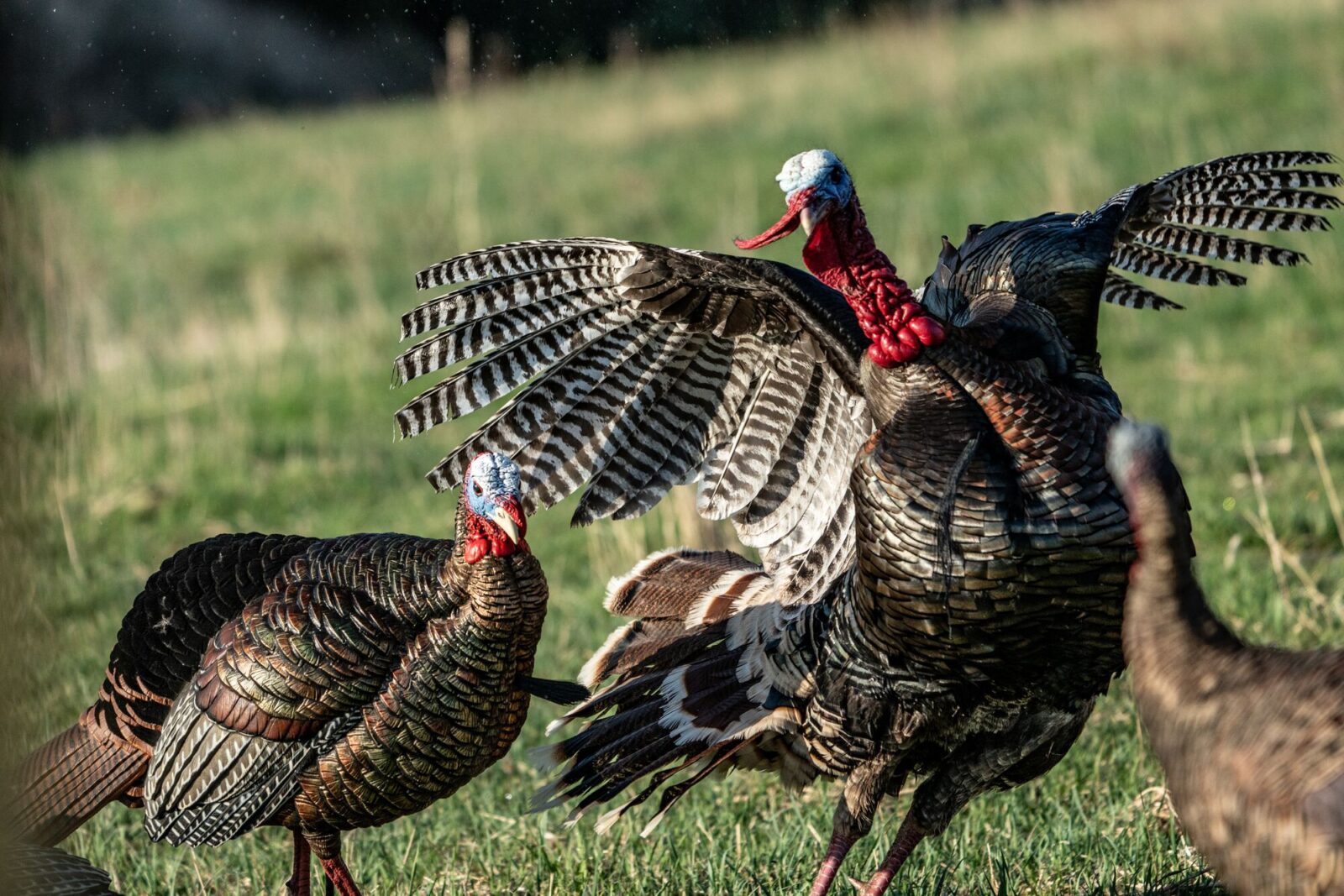
Turkey Pecking Order: Dominant vs. Subdominant Birds
Here’s a scenario: you’ve set up on a lone gobbler with a harem of hens. You call and call but that dominant tom isn’t breaking off. Have patience, because oftentimes the yelps and gobbling of the group will pull in a subdominant gobbler. Instead of going into the midst of the group and risking getting chased off, he might skirt around and hear your calling, opting for love instead of war. You can implement a similar tactic when calling to a flock of birds with multiple gobblers. By staying within 150-300 yards of the group, you’ll often get a subdominant bird to break off and give you a shot.
If it’s a lone dominant gobbler with a flock of hens and you start calling at a distance over 200+ yards, hens can actually carry the tom away. In addition, that dominant bird won’t want to leave his group of hens for an unknown bird—remember, hens should be coming to him, after all.
It’s time to burst his bubble. Find a situation where you’re able to sneak under 100 yards, or if they’re moving, try to get in the flock’s line of travel. Put out a strutter or jake decoy to elicit his fighting side. By getting inside 100 yards, that bird will be more likely to pick a fight with your decoy. You can also accomplish the same thing with a call. Try using a gobbler shaker or making a gobbler yelp, which is a slower deeper version of a hen yelp. This will make that dominant bird think a longbeard or jake has slid in to get cozy with his ladies.