Scouting Burn Areas
About a year after most wildfires, the area begins to spring back to life, creating excellent elk forage and habitat. Learn how to key in on burn areas as you look for elk hunting spots.
How Wildfires Create Hunting Opportunity
After a fire rips through an area, plant nutrients are released and put back into the ground. The nutrients, which were previously held in trees and other hard-to-digest plants, are converted into easily digestible grasses and forbs.
Also, the patchwork of burned and unburned land creates what biologists call an “edge effect,” where elk can feed in the open regrowth and then easily retreat to dense cover.
Studies have shown that fires in heavily timbered forests on average increase the elk population in that area by over 70%. A calf’s survival to maturity is tied to its relative birth weight—and with more available food for the mothers due to new forage caused by fires, calves are set up to live longer.
Selecting a Burned Area
Not all burns are equal; there is a science to picking the best area to maximize the potential benefits of a fire. Here are a few tips to help you evaluate different burn areas.
Understand When the Fire Took Place: The timeframe in which the fire took place and the stage of regrowth make a huge difference when picking an area to hunt. Just because a fire was recent does not mean that it should be passed over. If you see new growth, resident elk will begin using it that very year. Studies have shown that elk will remain on the home range in areas where fires have burned up to 70% of the area.
Most burn areas reach their maximum benefit around seven years after a fire. Start targeting burns four to six years after the initial fire, giving the area enough time to provide good feed to bulls that will now be reaching maturity.
Use the Historic Fire Map Layer: Tap Hunt Map Layers and choose Trees, Crops, and Soil to turn on the Historic Wildfire Layer. Once this layer is on, you’ll see the perimeters of past fires on your map along with data about the fire, including how many acres burned and when the fire happened.
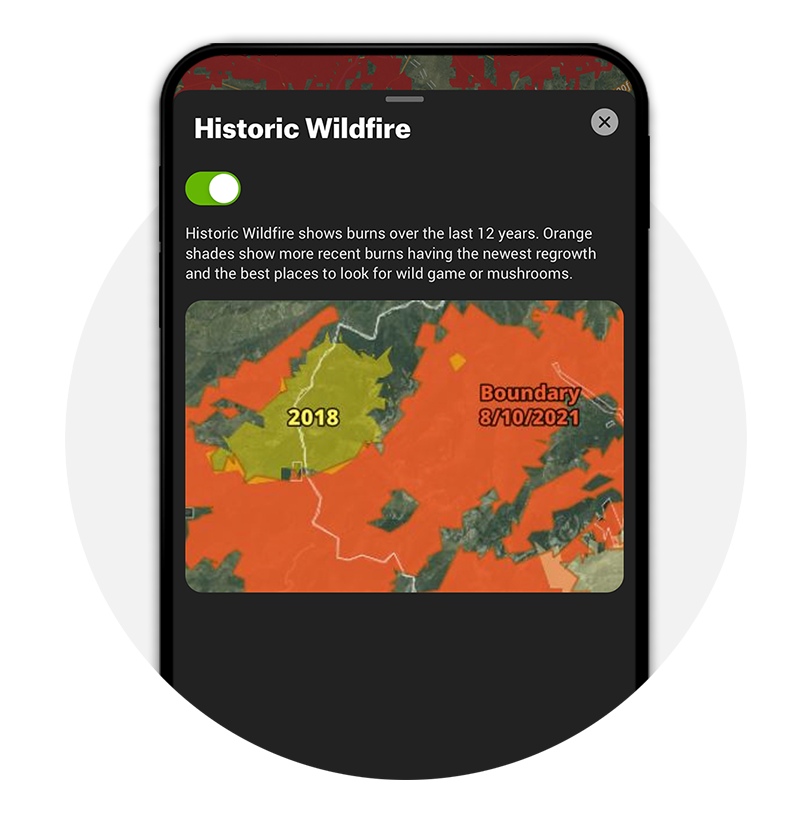
Evaluate How the Fire Burned: The best elk habitat is a patchy burn where at least 20% of the area remains unburned within the fire perimeter. Look for a mosaic pattern of areas of completely scorched earth blended with partially burned and live timber. As edge animals, elk seldom travel more than 1200 yards from suitable cover.
Assess the Type of Range That Burned: It’s better to find an area that has had a fire on a winter range than a summer range. Studies show elk use burns more frequently in the winter than in the summer because food is important in the winter months. Patchy fires in the winter range can help elk remain healthier even if it’s a hard winter.
Locate burns on south-facing slopes. Orientation of the slope is important due to the burn-off from the sun; the south slopes will regain the vegetation and graze. Areas that may have previously been timbered may now provide food for elk herds in the winter on these south slopes, making them great burns to target from mid-October through the end of November.
Also, keep in mind that the high mountains tend to have rockier soils, which means the soil may have a harder time generating forage after a fire in these areas.
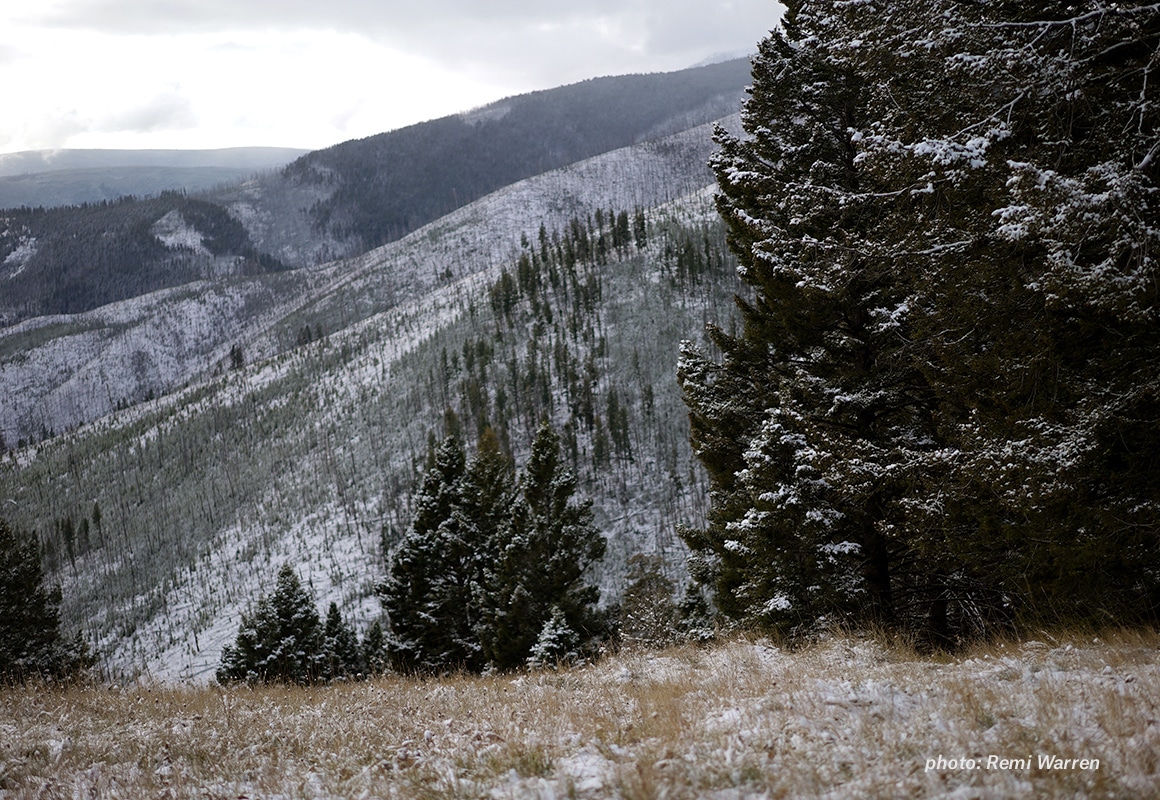
5 Things To Remember When Hunting a Burn Area
- Don’t overlook patches of standing burned timber: Dense standing burns can make elk feel secure and like they are hiding when they are actually easy to see if you take time to glass. Remember that even some areas that look fairly open can easily conceal elk—take your time to look these spots over. They can be a “gimme” and are the benefit of hunting in burns.
- When calling in elk, be in front of the burned tree: If you feel like you are out in the open in a burn, it’s because you are. If a bull is coming into bow range as you call, you are better off being in front of a tree and using it to block your outline than behind a burnt tree from which you have to lean out to take a shot. The open nature of a burn means your movement is more likely to get spotted, so you’re better off in front of a solid backdrop.
- Glass into the pockets of live timber: The majority of elk using a burn will spend their lives escaping danger in the pockets of canopy cover that remain. Find a spot where you can get across from this cover and glass into it. You may only be able to see bits and pieces, watching multiple patches from afar allows you to catch elk when they first move out into the burn to feed in the evenings.
- Think about the habitat in terms of what it was like before the fire: Elk will often use the same place they have always used, burnt or not. If there is a place you regularly got into elk before a burn and the spot is now open, elk will still be ingrained to using this portion of their home range. Burns also allow you to see the topography of areas in a new way. Look at the areas they like, notice what makes them unique, and then find other spots that look similar.
- Watch for falling trees: Burns can be dangerous, especially five to ten years after the initial fire. Standing dead trees, called snags, will rot and are prone to falling in wind—often surprisingly quietly, considering their size. Note areas where there are a lot of downed trees and avoid these areas during high winds. If you’re crossing through a large area of blow-downs, look at the direction most of the trees have fallen and walk on the opposite side of trees.
Adapted from an article by Remi Warren.