How To Make Pemmican
Follow along step-by-step to make your own nutritional, calorie-dense field snack.
What Is Pemmican?
Pemmican is a mixture of rendered fat (tallow), dried meat, and often dried berries. It’s sometimes sweetened by honey (which never spoils). It is calorie-rich, protein-packed, eaten raw, and does not need refrigeration.
Pemmican comes from the Cree word pimîhkân, which is derived from the word pimî, meaning “fat, grease”. The Lakota (or Sioux) used the word wasná, with the “wa” meaning “anything” and the “sna” meaning “ground up.” When fresh meat was not available, pemmican was the traditional energy food.
Making Pemmican
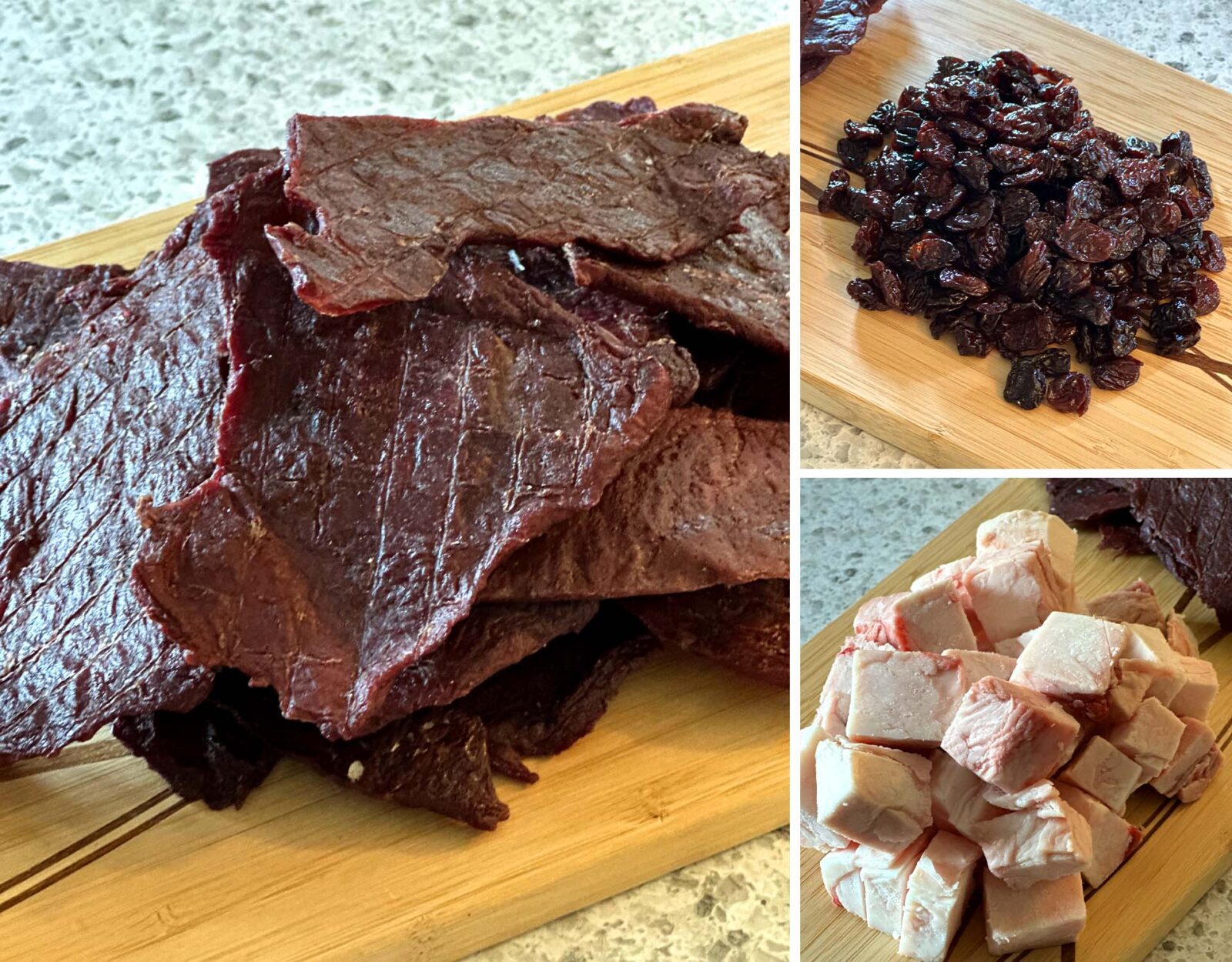
Pemmican requires two main ingredients: dried meat and fat. To be shelf stable, pemmican requires a one-to-one ratio of fat to meat by weight; although some recipes call for a two-to-one ratio of fat to meat for extra calories.
You can use store-bought jerky or make your own.
If using store-bought jerky, be aware that you may give up some shelf stability: If the jerky is quite pliable it means there’s moisture, and moisture can make foods spoil. You can dry it in the oven at the lowest temperature after it’s been chopped in a blender or food processor to remove excess moisture and help with grinding it into powder.
Making your own venison jerky at home is simple with a food dehydrator. Slice the meat as thinly as possible against the grain and dry it using the dehydrator’s meat setting (155°F / 68°C), flipping once during the process. Dry the meat until it’s brittle. Remember, it takes about 4-5 pounds of fresh meat to yield one pound of very dry jerky.
- 1 pound of very dry venison, bison, or beef jerky
- 1 pound beef or bison suet, cubed (do not use deer or elk fat)
- 8 oz. dried cherries, optional. Can also use dried berries or fruit of your choosing.
- 1/3 c. honey, optional
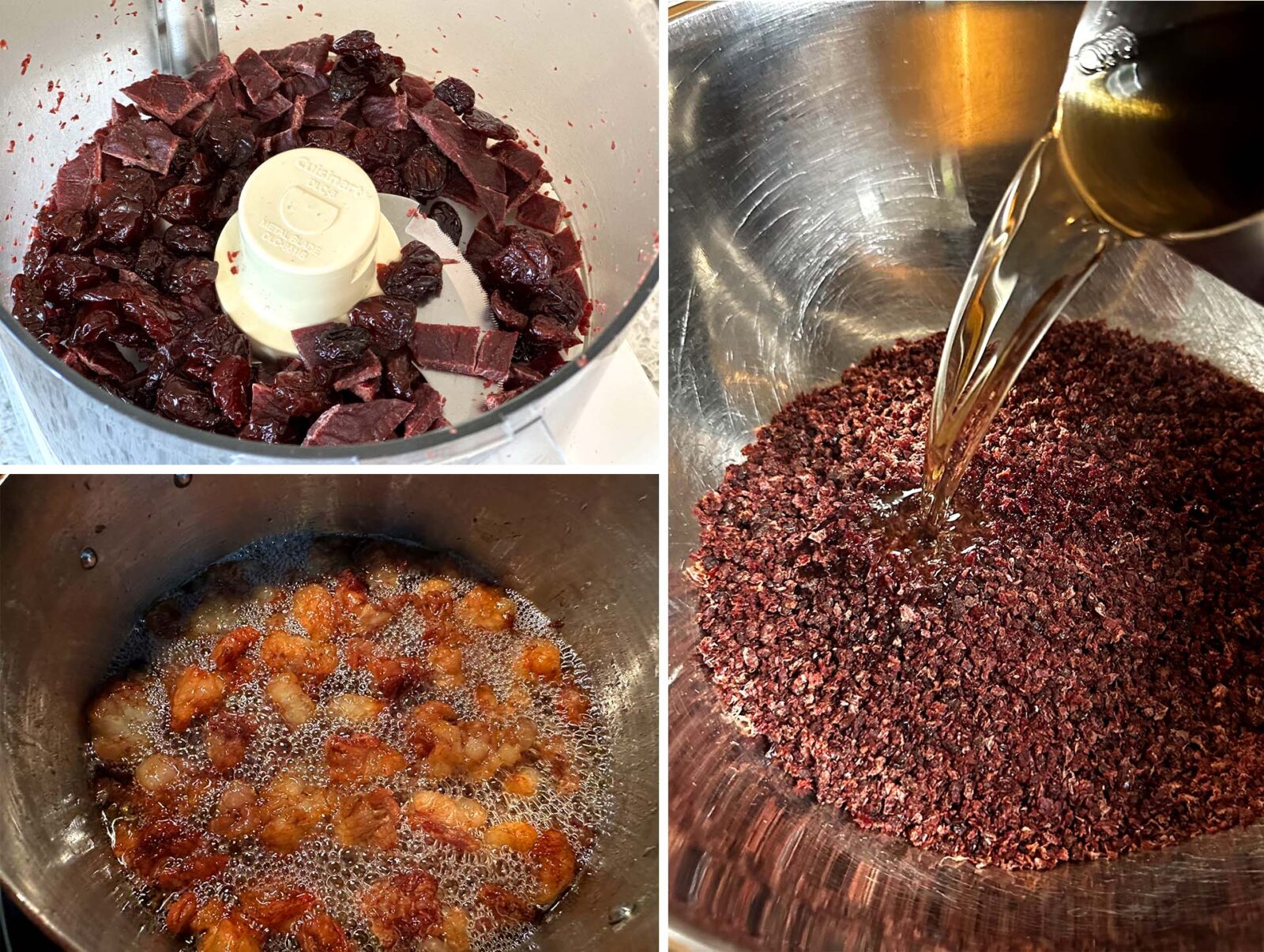
- Render the suet into its liquid form (tallow) by placing it in an oven-proof dish and putting it in a 375-degree oven for 10 minutes. Another method is to rend it on low heat for 90+ minutes on a stovetop. Do not let it burn. Strain when done.
- While the tallow is rendering, chop or cut the jerky into small pieces. Using a food processor, in small batches, combine the jerky bits and dried cherries (if using) and grind until fine (about one minute).
- Optional: If using store-bought jerky you can further dry this processed mixture in a food dehydrator for about two hours. Spread the mixture on parchment paper on each dehydrator tray. The drier the jerky, the longer the shelf-life of the final product.
- After the tallow is fully rendered (and cooled a bit) and all jerky/fruit has been processed and dried, combine the ingredients in a large mixing bowl. Mix thoroughly then add 1/3 cup of honey (if using).
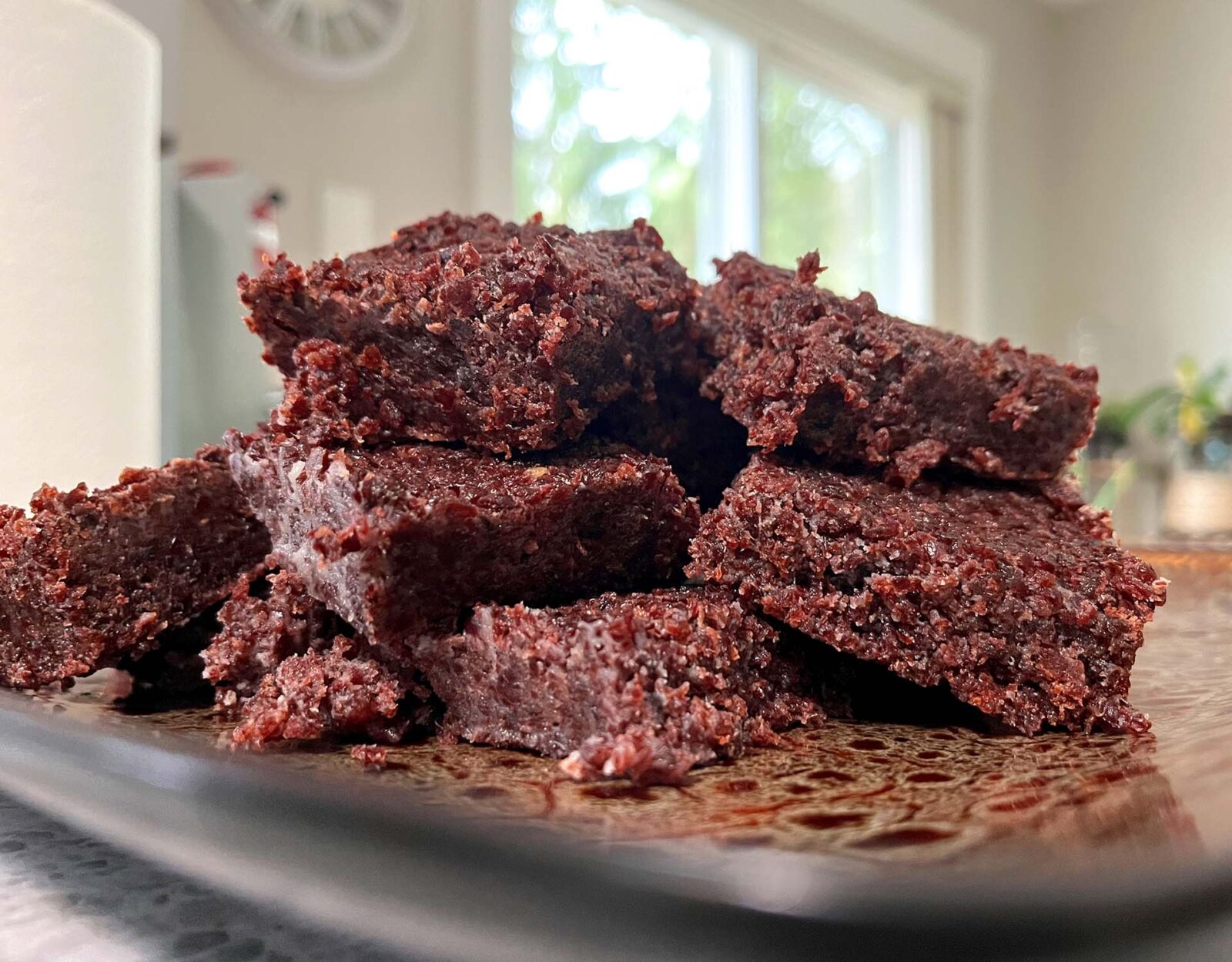
- In an 8×8 square dish or metal pan pour the mixture and press so it is even. Let it cool in a refrigerator for about an hour or leave it on the counter overnight. Cut into 16 squares to make 2.2 oz. portions.
Storing and Preserving Pemmican
Pemmican was created to be portable and stored for long periods. Its shelf life may depend on its ingredients and storage conditions, but it is generally believed that pemmican can last, unrefrigerated, for one to five years.
Nutritional Value
Pemmican is considered a complete food, meaning it provides all the carbohydrates, fats, protein, vitamins, and minerals your body needs to stay healthy for an extended period of time. Active individuals say they can eat one-quarter to one-half pound of pemmican twice a day to help fuel their adventures.
Its nutritional facts vary depending on the types of meat used and whether dried berries and/or honey were added. Some recipes tout having 3,500 calories per pound, but in its most basic form pemmican’s macros and nutritional value are:
Per 50 g. serving (about 2.2 ounces):
- 388 calories
- 1 g. Carbohydrates
- 34 g. Protein
- 28 g. Fat