Boot Care
Get the most out of your hunting boots with advice from Schnee’s Marketing Manager Matt Miller.
Leather Boot Care
With leather hunting boots, parts like the outsole are repairable or replaceable, so it’s the leather itself we want to look after. A good leather boot will last at least five years, but you’ll need to maintain them. A leather boot’s biggest enemy? Water.
“Water saturation can shrink leather, so if you saturate the leather and it dries out a little too fast, it can shrink,” says Miller. “It also makes the boots dry out faster each time they get wet. When a boot loses its oils and inherent moisture the leather will dry faster, which destroys the boot.”
When your leather boots get soaked, never dry them over direct heat. “You definitely never ever, ever, ever want to put any boot next to a fire,” says Miller. “Don’t try to rush it. Instead, some people stick them in their sleeping bags at night to dry more slowly. Or they hang them up in their tent to air dry. They might not be super dry in the morning but at least they won’t be shrunk.”
At home, you can use boot dryers to slowly dry wet boots. “We use boot dryers here, especially ones where you can control the temperature,” says Miller. “It’s similar to washing your clothes on delicate. Dry your boots as gently and for as long as you can.”
Nikwax and Conditioners
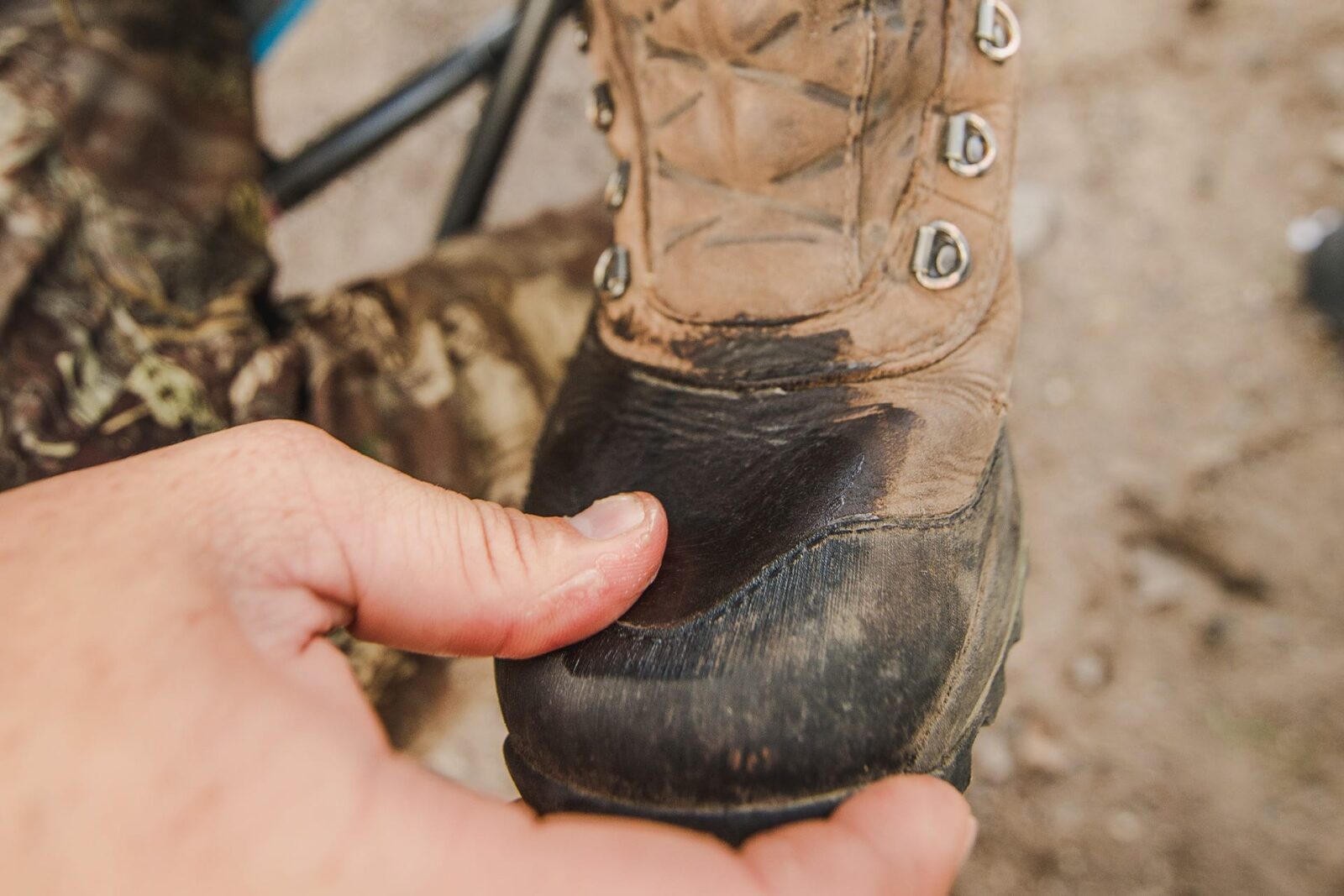
Nikwax keeps leather from getting saturated by water. “Out of the box, we’ll recommend a coat of Nikwax. And that’s not because our waterproofing is inadequate,” says Miller. “It’s about helping the boot leather not absorb water like a sponge. Our mountain boots are waterproof. You won’t get any water on your foot, but the leather can absorb water and become saturated so Nikwax helps prevent that.”
Nikwax also has conditioner in it that adds shine to leather boots, especially after a season or two of wearing them. “I personally reapply Nikwax to my boots about three times a season,” says Miller. “Whereas your guide and outfitters might put it on six times a season.”
Straight leather conditioner is another tool to help boots last longer, but it usually isn’t used by itself, or often. “Why we don’t recommend using just conditioner,” says Miller, “is because it’s not meant for membrane-constructed materials (i.e. GORE-TEX or similar). It’ll inhibit the membrane’s ability to do its job. It would be like taking a screen door and rubbing a wax candle on it. It’s not going to let any air through it because it’s clogged up with wax.
“Most mountain boots are made from rigid leather on purpose. You get support from that leather. When you apply a lot of conditioner it oversaturates the leather to the point where it softens and loses its rigidity. I’ve heard people refer to leather boots as leather socks after a few years because of too much conditioner.
“Where we recommend leather conditioner,” says Miller, “is if they are dried out, cracked even. An easy way to tell is by pigment. When the boots are new they’re a deep brown color, almost auburn. As they dry out they’ll look pale or even white. That’s when you might use a little conditioner to rehydrate that leather. Then, afterward, go over it with some Nikwax.”
Synthetic Boot Care
Synthetic boots are magnets for mud, sand, grit, and tree sap. Clean your boots after every outing for maximum longevity. All the natural debris the boots pick up while you’re walking acts like sandpaper. Without regular cleaning, the uppers are especially likely to wear out, sometimes within less than a season.
If your boots are only lightly soiled, you can get away with using a damp cloth to wipe away the grime, followed by a slow drying process (same as with leather boots).
Dirtier boots need a bath. Here’s a step-by-step guide to deep-cleaning synthetic boots:
- Remove the laces and insoles. To clean the laces and insoles you can soak them in a bowl of warm water with some mild dish soap. If your insoles are beginning to smell, sprinkle on some baking soda and set out to dry.
- Get the heavy stuff off your hiking boots. Using an old toothbrush or a boot brush, scrape off caked mud or dirt first. You can do this outside or over a trash can.
- Fill a sink, tub, or basin with warm water and add drops of mild dish soap. You can submerge synthetic boots entirely. Using a cloth or brush, clean the boots inside and out. If you have stubborn stains on your boots, use Nikwax Footwear Cleaning Gel (which is great for leather boots too).
- Wipe the boots down with a clean, damp cloth to remove soap residue.
- If you plan on adding more waterproofing treatment to your boots, do it when the boots are damp. Follow the directions for the treatment you have. Otherwise, it’s time to dry them out. You can use a boot dryer, stuff them with newspaper and let them dry naturally, or put them in front of a fan.