First Aid Kits
Carrying a proper medical kit—and knowing how to use it—can mean the difference between your best day and your worst day in the field. This list is not intended to be a complete guide, nor does it replace formal medical advice. Use it as a starting point to review your first aid practices.
Safety Prep
Before going off-grid:
- Take a Wilderness First Aid or Wilderness First Responder course.
- Prepare a med kit with supplies you have inspected and know how to use.
- Know the medical history and prescription medications of the other members of your trip.
- Leave a comprehensive plan with someone in town who will have your safety in mind while you’re gone.
- Plan for proper hydration and nutrition.
- Pack proper layers and extra layers.
- Have a plan for emergency communication (e.g. satellite communication devices—and test before you go).
- Download Offline Maps to your device (go offline or put your phone in airplane mode and confirm you can access your downloads before you head fully off-grid).
The Basic Kit
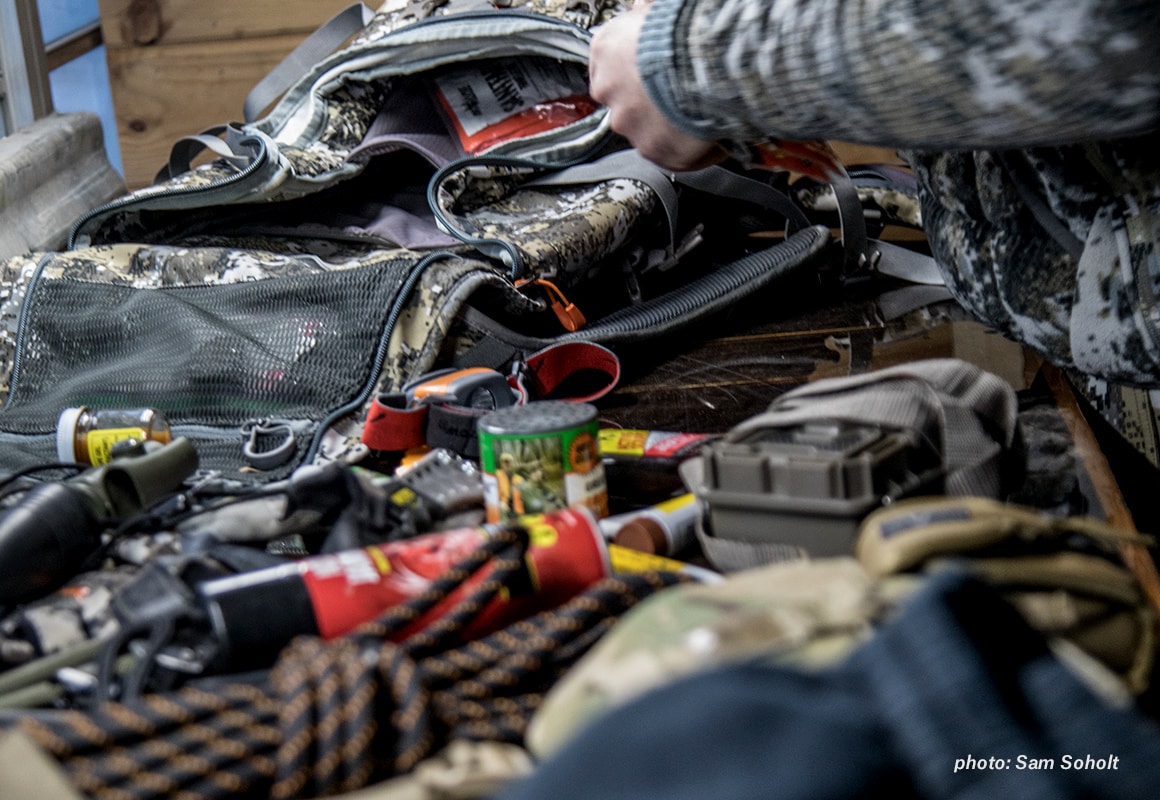
Adventure Medical Kits makes a series of solid first aid kits, from one-person single-day kits to expedition-grade. It’s a good idea to keep a “mini-kit” within your larger kit so you can grab the basics if you’re going on a quick scout away from base camp.
In your mini-kit, consider including:
- gauze sponges
- band-aids
- butterfly bandages
- prep pads
- moleskin
- tweezers
- allergy ointment
- antibiotic cream
- ibuprofen
- nitrile gloves
- duct tape
- Sam splint
- AfterBite
- towelettes
- a Sharpie marker (wrap the duct tape around it to save space)
- a space blanket
- multi-tool
- lighter
Wound Management
Celox, QuikClot, or another hemostatic agent should be in your kit, ready to stop bleeding quickly until proper medical care can be accessed. If you are trained in giving sutures, pack a suture kit; if not, pack Steri-Strips or butterfly bandages. Super Glue can also help seal a wound until proper medical care can be attained.
Consider bringing pressure dressing—a non-adherent bandage covered by an absorbent layer and then a stretchable adhesive. Pressure bandages (a stretchable adhesive) are designed to hold the bandage and absorbent layer close to the wound while applying pressure; helping to stop bleeding and allow clotting.
If a well-administered pressure wrap won’t stop severe bleeding, then it’s time to consider a tourniquet. A tourniquet is an important part of a first-aid kit, and needs to be used properly. Do your research, buy a quality one, and learn how to use it.
Also, consider receiving training on how to use a chest seal (an occlusive dressing used when an open chest wound occurs). Sucking chest wounds are extremely dangerous and need to be treated appropriately.
Medications
While this list is highly individual, consider at least covering these categories:
- Benadryl tabs (or other antihistamine of your choice): Important to keep on hand for possible allergic reactions. It’s a good idea to pack an EpiPen® along as well.
- Pain Reliever/Fever Reducer (Ibuprofen or Acetaminophen)
- Anti-Diarrheal (Loperamide)
- Electrolyte tabs: Most electrolyte tabs barely take up any space or weight and can be a day saver for hot, early-season hunting. Drop one in your water bottle and sip throughout the day, or refuel with one once you’ve reached evening camp.
- Benzocaine (Orajel or other): If you’ve ever had tooth problems in the woods, this requires no explanation.
- Water treatment tabs: Even if you hunt with a water filtration device, pack a few of these as a backup. Should something happen to your filter, you can still have potable water.
Emergency Response Plan
At a minimum, establish and share the following details with someone who will be in service while you’re out of service.
- Where you plan to start and end your hunt.
- A detailed map/description of the planned area of travel that can be passed to responders.
- How long you expect to be out of service.
- How you will communicate, and how often you will communicate.
- A specific time that emergency services should be contacted if planned communication has not occurred.