2026 Nevada Application Details
Looking to hunt Nevada? Read up on the latest from Huntin’ Fool.
Cost Overview
Hunting license and species costs for tags usually include:
- Application fee.
- Hunting license fee to apply (usually need a qualifying license before you can apply)—$38 for residents, $155 for non-residents in 2025, $15 for youth.
- Species fee (This is what you pay for the animal you want to hunt. Some you pay upfront at application, some you pay for once you get the tag.).
- Points-only fee (fees for people just buying points and not actually applying for a hunt).
Hunters may apply for tags on the Nevada Department of Wildlife website.
Application Dates
2026 NEVADA DRAW DEADLINES
Guided Deer Draw
Mar 9
Main Draw
May 13
Second Draw
Jun 15
Key 2026 Changes
- There were slight season date changes to some California bighorn sheep, desert sheep, antelope, and elk units.
- Moose and Rocky Mountain bighorn sheep tags are only available for residents to apply for in 2026.
- The California bighorn sheep ram hunt in unit 068 will be split into two different seasons.
- Rocky Mountain bighorn sheep unit 091 will be opened this year for residents only.
- Non-residents cannot apply for desert sheep in unit 213.
- The rifle antelope seasons in units 141, 143, and 151-156 were split into two rifle seasons.
- Muzzleloader bull elk in units 161-164, 171-173 will again be September 17-30.
- There will be a more resident-only junior hunt for antelope horns shorter than the ears
Nevada Draw Process Basics
High-end trophy bull elk are taken in Nevada every year, with good tags available. The state uses a squared bonus point system (optional) with no tags reserved for the highest point holders, so it’s possible to draw any available tag even if you have few or no points. There are also options for mule deer tags across the state, including some early-season archery options with reasonable draw odds.
Point System
- Nevada uses a squared bonus point system.
- Bonus points are like raffle tickets: the more you have, the more “chances” you have in the draw.
- You get one chance for your current application, and then your current bonus point total is squared and you get that many more chances in the drawing (so with 4 points, you’d get 17 chances, 1 + [4*4]).
- If you apply for a tag and are unsuccessful, you will be awarded a bonus point for that species if you purchased a hunting license with your application ($38 for residents, $155 for non-residents in 2026, $15 for youth).
- You can also apply for bonus points only, but you still need to purchase a hunting license for that application year.
- If you draw, your bonus point total will be purged to zero for that species.
- If you fail to apply for a species for two consecutive years, your bonus point for that species will be lost.
- Nevada separates bonus point categories for species, subspecies, and gender, which allows you to accumulate bonus points specifically for antlerless deer and elk hunts, as well as spike elk and horns-shorter-than-ears antelope.
Tag Allocation
- In Nevada, approximately 10% of the total tags for a hunt code are issued to non-residents, but that percentage can vary.
- In general, Nevada uses separate hunt codes for residents and non-residents with a set total tag quota for every hunt by residency type.
Nevada-Specific Considerations
- To maximize your overall chances to draw across all your hunt choices, you want to order the five hunt choices on your application from hardest to draw (first choice) to easiest to draw (fifth choice).
- Draw odds can be low for a good majority of the hunts in Nevada, including the “middle” tier (particularly for non-residents). If you’re serious about using your accumulated Nevada bonus points, take advantage of the five application choices you are allowed by choosing hunts that are in less demand at choice four and five.
- If desert sheep or California bighorn are on your lifetime bucket list, you should be applying in Nevada if your budget allows.
- Nevada has some species-specific waiting periods if you draw successfully. If you draw an antlered elk tag, you must wait seven years before you are eligible to apply again. For buck antelope, the waiting period is three years, and for bighorn sheep and mountain goat, the waiting period is 10 years. There are no waiting periods for antlerless elk or deer (including antlered).
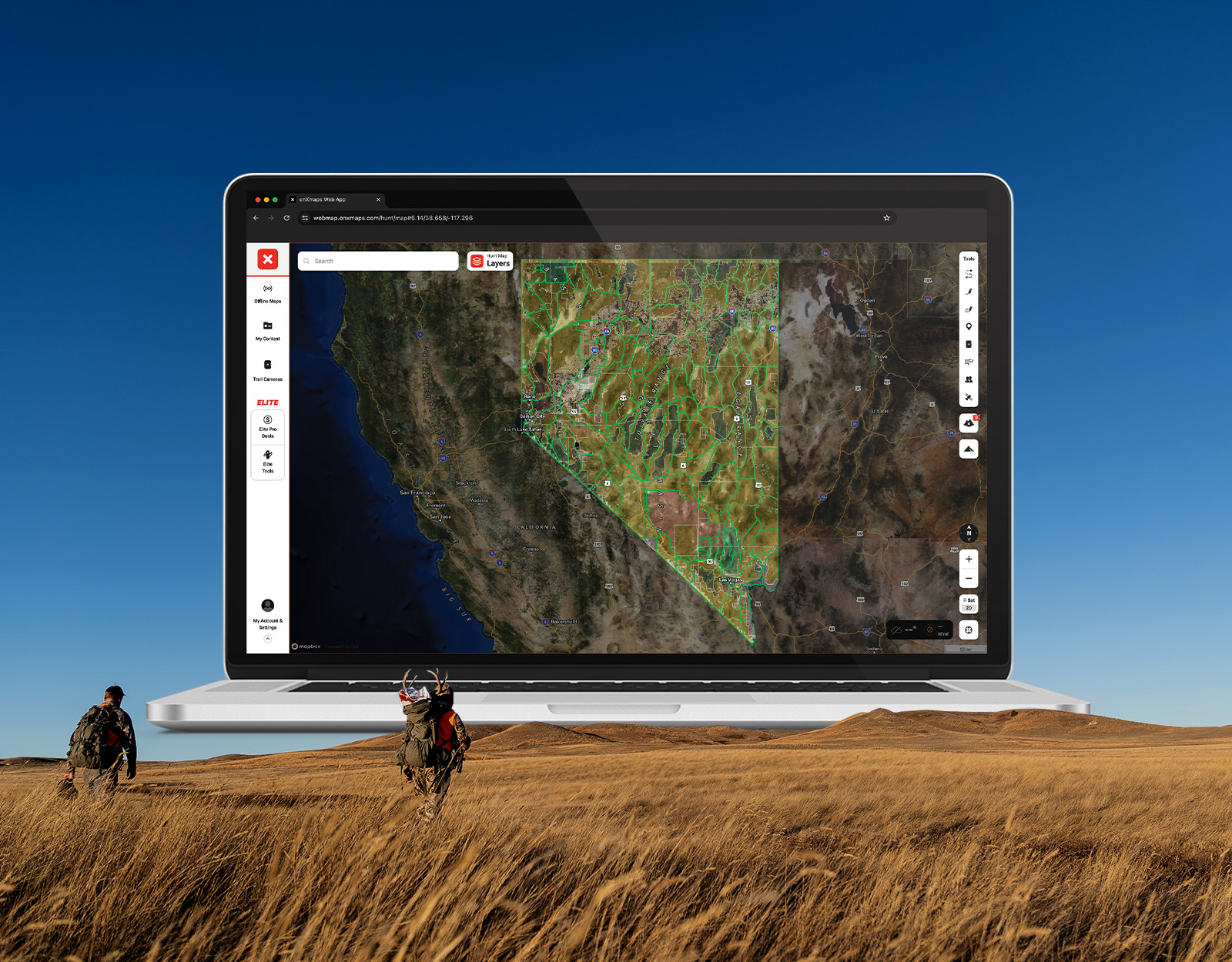
Power your pursuits
Unlock access to landowner information, public and private boundaries, Offline Maps, wind and weather forecasts, and other essential tools.
