Moose Draw Strategies
Robert Hanneman from Huntin’ Fool breaks down draw opportunities (and a few hunting tips) for North America’s three moose subspecies.
Moose Subspecies
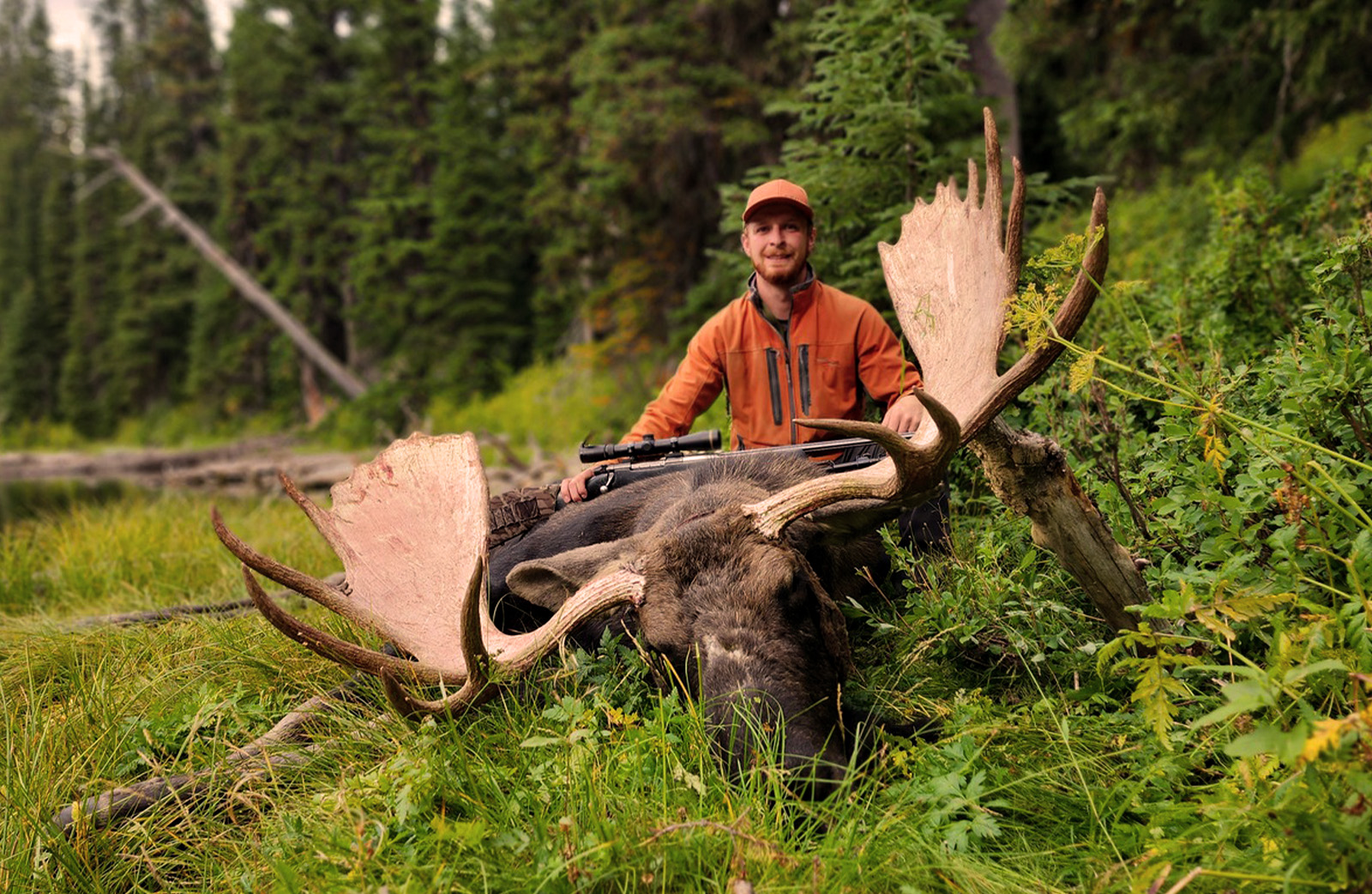
Boone and Crockett, Pope and Young, and the North American 29 recognize three subspecies of moose: the Alaska-Yukon moose, Canadian moose, and Shiras moose. Safari Club International recognizes the Eastern Canadian moose as a separate species from the Western Canadian moose.
As a general rule, the moose get smaller in body and antler size as you move south from the Alaska-Yukon country into the lower 48.
Moose Records and Minimum Entries
| Moose Subspecies | Boone & Crockett World Record | Boone & Crockett Awards Minimum | Pope & Young World Record | Pope & Young Minimum |
| Alaska-Yukon | 266 4/8″ | 210″ | 249 1/8″ | 170″ |
| Canadian | 242″ | 185″ | 222 1/8″ | 135″ |
| Shiras | 205 4/8″ | 140″ | 192″ | 125″ |
When talking about trophy size, most hunters go off width and not score. The magic numbers are 60″+ for Alaska-Yukon moose, 50″+ for Canadian moose, and 40″+ for Shiras moose. If you just want one set of moose antlers in your trophy room, your best bet is to go north to Canada or Alaska and book a hunt. If you want all three different moose species, you need to apply for Shiras moose. If you are planning on hunting moose in Canada, remember that you have to go outfitted.
Alaska-Yukon Moose
Alaska-Yukon moose is the largest of all the moose subspecies. They are found throughout Alaska, Yukon, and the Northwest Territories. If you want to do a self-guided hunt, Alaska is your only option unless you are a Canadian resident. Now is a great time to be hunting moose in Alaska. Their population is doing well, and there are a lot of opportunities (the prices rise every year, though, so prioritize accordingly).
Alaska offers moose draw tags. These draw tags are not necessarily better than the open units throughout Alaska. Alaska created draw units in popular areas and highly accessible units to help limit the number of hunters.
In Alaska, moose densities are low per square mile. There is not a moose around every corner, and more than one good hunter has come back humbled by Alaska. On average, the success rate on self-guided moose hunts in Alaska is around 25%. Hunters who use a hunt planning service typically have around 50% hunter success, and guided clients typically average over 85% hunter success.
Most people who go to Alaska end up doing a ridgetop hunt, a lake hunt, or a river float hunt. There are also a few areas where you can use ATVs to access moose country. Several companies, including air taxi services, offer hunt planning kits and rent all the rafts and gear necessary to do the hunt. Most hunt planning kits run $8,500-$12,500, depending on whether they include air travel and gear rentals. If you are looking for a fully guided Alaska-Yukon moose hunt, expect to pay between $25,000 and $45,000 with any of the top outfitters in Alaska or the Yukon Territories.
Canadian Moose
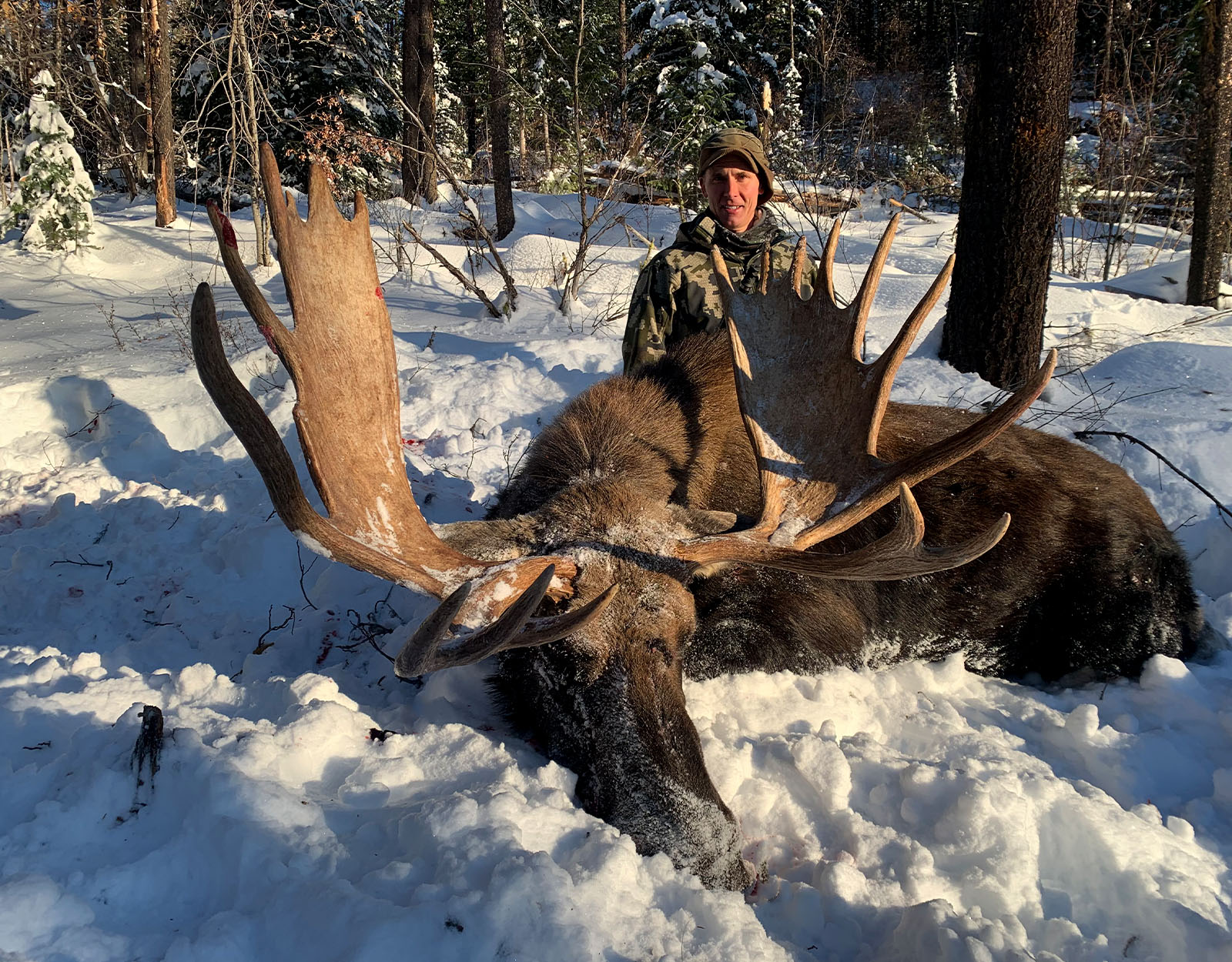
Canadian moose vary the most in body size. Typically, the biggest Canadian bulls come from Northwestern British Columbia. The bulls up by the Yukon border are bigger than the bulls the further south you go. The moose just north of the Idaho, Montana, and Washington borders are considered Canadian moose by Boone and Crockett and Pope and Young, but SCI and Super Slam consider them Shiras moose. If you are trying to complete the Super Slam, many hunters have shot their Shiras in Southern Alberta and British Columbia north of the U.S. border.
Canadian moose include moose from the rest of Canada, Maine, Vermont, New Hampshire, North Dakota, and an unhunted herd in Minnesota. Maine, Vermont, New Hampshire, and North Dakota all offer their moose permits through the draw process (North Dakota does not allow non-residents to apply for moose). If you are looking at a self-guided hunt, drawing a tag or purchasing a Governor’s tag in one of those states are your only options.
A fully guided Canadian moose hunt runs $8,500-$25,000+, depending on where you want to go. Just like moose sizes increase the further north you go, so do the costs. The moose hunts in Eastern Canada are usually less expensive, but on average, hunters are harvesting smaller bulls. Canada has every type of moose hunting available. You can book a river float hunt, a boat hunt on a lake, horseback hunts, lodge hunts with vehicle access, and everything else in between.
Shiras Moose
North America’s smallest moose, the Shiras moose, can be hunted in Colorado, Idaho, Montana, Utah, Washington, Wyoming, and Nevada (residents-only in Nevada). There is also a small unhunted herd in Oregon. Almost all Shiras moose tags are issued through a draw. There are no over-the-counter tags available for Shiras moose. Almost every state has raffle tag opportunities and Governor tag opportunities, and there are a few landowner tags available in Utah. Shiras moose is the most difficult subspecies to get due to the limited hunting opportunities.
If you apply for Shiras moose, go with Idaho, as they have the best draw odds in the West. A lot of units in Idaho have 3%-15% draw odds, whereas the rest of the states are more like 1% draw odds for non-residents.
If you draw a Shiras moose tag, set aside two weeks to hunt. Moose densities are low throughout the West, and you are going to have to cover a lot of country to find the bull you are looking for. Most Shiras moose units have outfitters, and you can expect to pay between $6,500-$13,000 for an outfitted hunt if you draw a tag. If you are looking for a guaranteed tag with an outfitter, you will be looking at $30,000+.