Mule Deer Draw Strategies
Huntin’ Fool reviews strategies for acquiring mule deer permits by either drawing or purchasing vouchers across the West.
Mule Deer Draw Overview*
Mule deer permits are issued in every state west of Interstate 29, which covers over 17 states within the U.S., four Canadian provinces, and the northern desert regions of Mexico. Mexico and Canada are “pay-to-play” for non-residents. Both countries have hoops you will have to jump through between transportation and firearm permits, and most hunting is only available through an outfitter with a guaranteed tag. For the sake of simplicity, we’re focused on opportunities within America.
Regardless of the state you are applying in, if you’re interested in the top trophy-producing units, you had better get comfortable for a long ride. If you want to hunt the top two to three mule deer hunts in any western state and you aren’t currently within one to two points of max, you will never have more than a 2% chance of getting drawn. The list of applicants within that magical one to two points of max is small, and the ones who are in that boat likely already know what their application strategy is, so this article focuses on hunters just getting started in the application game or those who’ve been applying for a few years and want to figure out if they need to burn their points or keep building for something better. The top mule deer states in the West for trophy quality are Colorado, Idaho, Nevada, Utah, Arizona, and Wyoming.
| Arizona | Colorado | Idaho | Nevada | Utah | Wyoming | |
| Non-Refundable License, Application, and Point Fees | $175 | $106 | $222 | $170 | $136 | $66.76 (Reg)$86.21 (Spec) |
| Permit Fee | $300 | $420.23 | $351.75 | $241 | $670 (LE)$418 (Gen)$798 (PLE) | $398.73 (Reg)$1,196.18 (Spec) |
| Over-the-Counter Option | Yes, archery | No | Yes, archery and rifle | No | No | No |
| Point System | Yes, bonus | Yes, preference | No | Yes, bonus | Yes, bonus | Yes, preference |
| Landowner Vouchers | No | Yes | Yes | Yes | Yes for limited- entry units. PLO for general season units | No |
| Conservation Vouchers | Yes, statewide only | Yes, statewide only | No | Yes, statewide only | Yes, unit and statewide | Yes, Commission and Governor |
| Statewide Raffle Permits | Yes, Arizona Big Game Super Raffle | Yes | Yes, Idaho Super Hunts | Yes, Silver State and Dream permits | Yes, Sportman’s permit (for residents only) | Yes, Wyoming Super Tag and Trifecta Tag |
Colorado
Colorado leads in producing trophy bucks, and is a true preference point state for mule deer, which means whoever has the most points for that specific hunt code will get drawn. This is important to remember when building an application strategy. If you want to hunt a good population of deer with a chance at 160-170″ type bucks, then you should be applying in and hunting Colorado every other year or every couple of years.
There is no other state in the West where you can consistently draw quality deer permits for 0-2 points in units that have trophy quality. It is far more likely that a hunter who hunts a lower-quality unit three to four times in 10 years will have a better chance at harvesting a trophy buck than a hunter who saves his points for 10 years and hunts a higher-quality unit once. If you are a hunter who has been banking points or who is planning on banking points for a unit that is managed for a higher buck-to-doe ratio, remember that these hunts/units only give you a broader pool of mature animals to choose from in most cases.
When you are dealing with the second, third, or fourth rifle seasons, weather trumps all. If you have hot, dry weather through these October and November seasons, you will be hard-pressed to turn up mature bucks, regardless of the amount of points it took to draw that unit.
The most overlooked trophy hunts in Colorado, if you are in good physical shape, are the archery and muzzleloader hunts. Most of the top-end units managed for trophy quality can be drawn with 0-5 points, except a handful of muzzleloader hunts and a few archery hunts. A common theme with most of the units that take more than five points to draw, especially for archery, is that they have good road access to most of the unit and appeal to a broader spectrum of hunters. However, these units do not necessarily have better trophy potential.
Potential Colorado applicants should hunt Colorado as often as possible and avoid units/hunts that take 15+ years to draw because in 15 years those same units will probably take 25+ points to draw, and you might never catch up (not to mention the quality of a unit can change a lot in 15 years).
Idaho
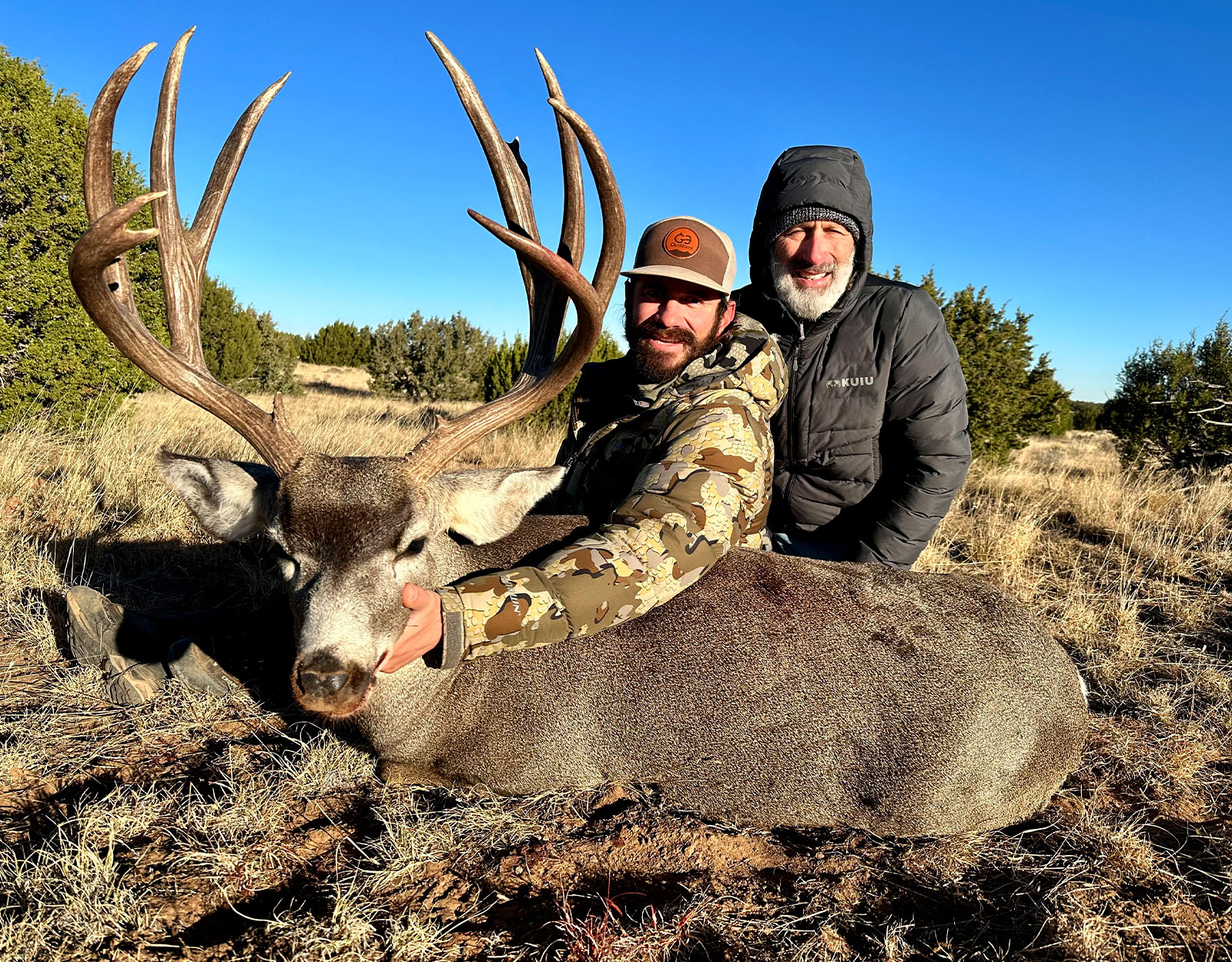
Idaho has some of the best mule deer genetics anywhere (second to Colorado), but for the most part, they manage for large quantities of hunters rather than large quantities of mature bucks. Idaho has also had a few harsh winters that have affected mule deer populations. There are still a few good bucks to be had, but it is not the Idaho of 5-10 years ago.
Since Idaho does not have a point system, you will not be penalized for sitting out a year, nor will you gain any advantage by applying the prior year. This makes Idaho a great state to apply in if you are just getting started and you want to have an equal chance at drawing a trophy mule deer permit. It also makes it a great state to apply in if you have already secured yourself a general elk or deer tag that goes on sale December 1st. Since you have already bought your hunt license and access fee for $195, the cost of applying for a limited deer tag is only an additional $21.
Idaho does a good job of mixing up its controlled hunt opportunities between archery and rifle, with a handful of muzzleloader hunts thrown in the mix. They have controlled hunts from early August and September rifle hunts down to late November and December archery hunts, with everything in between. A lot of the controlled rifle and archery hunts are fairly liberal with tag allocation, with 5%-20% draw odds for good hunts for 160″+ bucks, but these hunts will require dodging other hunters to be successful.
Another great option is unlimited tags that only require you to apply for them in the draw, and then you are guaranteed the permit. Idaho has rut archery and rifle hunts included in the list of unlimited tags. Idaho modified some of these hunts for non-residents by putting a non-resident quota on these unlimited hunts, so you will have to be careful and check the regulations for non-resident quotas.
Nevada
Nevada is a top state when it comes to applying for mule deer because they have so many options across season dates and weapon choice. Most of their hunts are conducted during the typical dates: August archery, September muzzleloader, and October rifle. They also have a few rut hunts thrown in the mix for all weapon types, as well as two to three rifle hunts on some units that help spread out hunting pressure. Nevada has a wide array of topography, from low-elevation desert country to high alpine basins over 10,000 feet. No matter what your physicality level is, Nevada has a hunt that should suit your needs.
Due to the dry, arid environment and the state being overrun with wild horses that compete with game for critical habitat, Nevada has to be stingy with the number of mule deer tags it issues. Once you are drawn for a mule deer tag, though, there is trophy potential in just about every unit. However, trophy potential doesn’t mean there is an overabundance of 180″+ bucks to sort through. Even the top 10 units are extremely tough to find a mature buck in, mostly due to the lack of overall population.
You must purchase a hunting license for $156 to gain a bonus point each year you are unsuccessful in the draw, so consider applying for mule deer if you are already applying for a different species in Nevada. If you are interested in rifle hunting mule deer with an outfitter, you should look at applying through the outfitter draw, which is conducted before the regular big game draw. This will up your odds of getting drawn out faster, depending on your unit selection. Archery tags are typically much easier to draw than rifle or muzzleloader tags, so it is a no-brainer state to apply for if you enjoy hunting early August with your bow.
Utah
Utah has always been known for the Paunsaugunt and Henry Mountains when it comes to giant mule deer bucks, but since they broke their five general region zones into over 30 management units and with the large amount of habitat improvement projects over the last decade and Utah’s proactive approach to coyote control, their general season units have been producing great bucks. Although Utah takes flak over its conservation tag program, this program has funded these projects.
Applicants can apply for two separate deer permits each year in Utah: a general season permit and a limited-entry permit. The limited-entry units are managed for higher buck-to-doe ratios and demand a high number of points to draw. The general season units are managed for lower buck-to-doe ratios and only require a few points to draw. The general season units are some of the biggest sleeper hunts for mature bucks in the West—some of the biggest bucks harvested in Utah come from these areas.
Utah has been coming up with more limited-entry deer hunts composed of late season muzzleloader hunts conducted on general season units, trying to cull some of the high-point holders out of the system. However, since Utah allowed non-residents to apply for all species 15 years ago, the number of applicants for deer has skyrocketed, making limited-entry deer hunts virtually once-in-a-lifetime for non-residents.
If you want to hunt any of the limited-entry deer hunts in Utah, plan for a 30+ year strategy if you are just starting out. Currently, most limited-entry deer hunts require at least 20 points, so unless you have 16+ points, take a long, hard look at your mule deer strategy before diving headfirst into that rabbit hole. On the bright side, if you are already applying in Utah for other species, it only costs another $16 to throw your name in the hat for some of the best mule deer hunting in the West. The true gem right now is for opportunity hunters who aren’t expecting a giant buck but don’t mind busting their butt on a general season unit for a small possibility at a trophy.
Wyoming
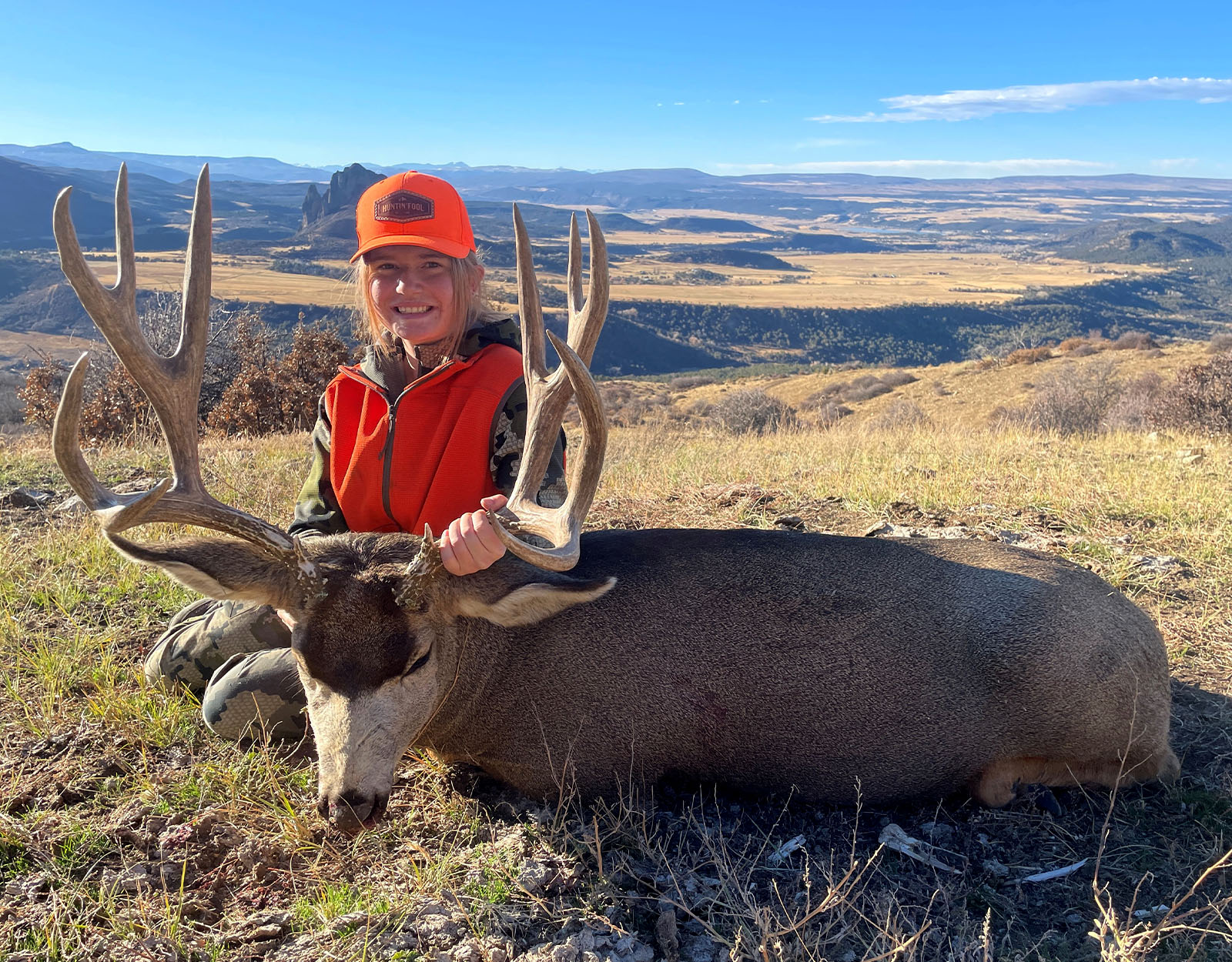
Wyoming gets a bad rap amongst mule deer snobs when it comes to trophy quality, even though in the same breath, those people will turn around and praise Nevada for its trophy potential, all while Wyoming has outproduced Nevada in B&C entries since 2010. Wyoming has limited quota and general season hunts for mule deer, but unlike Utah, Wyoming only has deer points, and applicants will need to determine if they want to use their points for one or the other.
If you want a better experience with less crowding and a few more bucks to select from, the limited quota hunts are the best fit. If you want to draw out on a more regular basis and don’t mind crowded hunting scenarios with rare mature buck sightings, then general season hunts are the best fit. Keep in mind: the true giant bucks harvested in Wyoming are not necessarily coming from the limited quota hunts.
Wyoming started its point system for mule deer a little later than most states, and by 2006, most avid hunters were aware of the benefit of getting in on the ground floor of a point system. Because of this, there are around 1,200 non-resident applicants with max points, and since most of the units that take max points to draw in the preference draw have a limited amount of 180″+ bucks, most applicants just keep building points, and on goes the cycle.
Use Wyoming for great deer hunts every three to nine years, and with a little research and scouting, you could be hunting the same size buck as the person who has waited 17+ years to draw his permit.
Arizona
Arizona’s mule deer are separated (primarily by the Colorado River) into two categories: Rocky Mountain mule deer and Desert mule deer. The population on the north side of the Colorado River (Rocky Mountain mule deer) gets most of the credit for trophy caliber bucks, and for good reason. The Kaibab and Arizona Strip districts are world-renowned for record-class bucks. Due to fame and strict management to provide a quality hunting opportunity, draw odds have continued to get harder. Even the Kaibab archery hunt is now close to a 10-point hunt, up five points from 2018. Even the early rifle hunts are garnering north of 15 points to secure a tag.
Northern Arizona is the most consistent trophy buck producer, but there are always a few giant Desert muleys that come from the southern desert climate. Units south of the Colorado River are widely managed for opportunity and lower buck/doe ratios. The rifle hunts are still limited in quantity, but they are a lot more liberal with tags, and mature bucks are tougher to come by.
Over-the-counter deer tags that are good for most of the units south of the Colorado River represent another opportunity, and can be hunted during multiple seasons that will encompass velvet bachelor herds and rutting, hard-horned bucks. Arizona recently put a quota on non-resident licenses for this archery hunt, and they sold out all 2,880 tags in 3.75 hours for the 2024 season. Arizona makes more sense from the opportunity standpoint for mule deer than trophy as far as actually putting a tag in your pocket in the next 50 years, especially if you don’t already have 13+ points.
Landowner Vouchers
For landowner permits/vouchers, each state has its own set of regulations and seasons. A quick rule of thumb when looking for price and availability is that Colorado has the highest number of vouchers along with the widest price range; Nevada has the most liberal season dates for someone who can hunt with all three weapon types, but vouchers will typically run $6,000+; and Utah has the most complicated system for distributing vouchers as some are unit wide and some are allocated through outfitters on Cooperative Wildlife Management Units (CWMUs), which are guided only.
There is no landowner voucher program in Arizona or Wyoming. Idaho has a landowner tag program that allows for transferable landowner tags, but the landowners cannot sell them or profit from them in any way. These tags are good unit-wide but are difficult to come across, and if you do find one, landowners will often give the tag to the individual and charge a premium for a trespass fee as part of the package.
Colorado
In Colorado, 20% of the general public quota may be issued to landowners west of I-25 as either unit-wide or private land only vouchers. Unit-wide vouchers have been getting harder to find for good mule deer units, especially for third and fourth season hunts. Hunters have a better chance of finding archery, muzzleloader, and second rifle hunts in better units and for a more reasonable price in the $2,500-$5,000 range. It used to be that you could count on paying $1,000 per point it took to draw that unit, but since Colorado reduced the amount of unit-wide vouchers available in the draw, the demand for popular units has shot up to where it’s hard to put a price per point value on hunts as some vouchers will sell for $3,000-$4,000 for a one point hunt.
Private land only vouchers are more readily available because they are harder to sell as they are only valid on private land. You can hunt other private land within the unit, but it’s no different than a unit-wide voucher in that you would still need to gain permission from any other landowner other than the one you purchased the voucher from.
One good thing about Colorado’s landowner tag program is that it is pretty cut and dried. There are two types of vouchers, and you simply purchase the voucher from the landowner, redeem it for the permit, and go hunting. That’s it.
Nevada
Nevada has one of the best landowner voucher programs in the West if you can afford the voucher. Nevada’s landowner vouchers are unit-specific and not hunt code-specific. For example, Nevada issues permits for certain zones within the state that often include multiple units, but landowner vouchers are only for the unit(s) in which the private land falls that was used to secure the voucher. All of these vouchers are good unit-wide and do not restrict you to private land. These permits are difficult to come by as they are in short supply, depending on the unit and the amount of private land within that unit, and since only 15% of Nevada is private land, there are not a lot of permits issued. Therefore, the price of permits has increased with demand. The average landowner deer tag costs between $8,000-$15,000.
A lot of landowners sell to the same person every year, and since these vouchers are transferable, even if that person doesn’t use the voucher, they can then turn around and sell it to someone else, and at the same time, secure that tag again for the next year from that landowner. If you research, you can find the list of landowners who receive these permits from NDOW and for which units they are issued.
Utah
Utah issues landowner vouchers and conservation vouchers that can be purchased for limited-entry units and are transferable. They also issue landowner vouchers for general season units that are transferable for private land only. Landowner vouchers are also issued to private landowners enrolled in the CWMUs. These vouchers are transferable but limit hunters to the CWMU boundaries and typically require a guide.
Most of the transferable landowner and conservation vouchers are sold through banquets hosted by non-profit conservation organizations, like SFW, MDF, and RMEF. Since they were purchased from a charity event, the dollar amount can be considered a donation and, therefore, written off as a charitable donation. The prices paid for these permits typically start at $15,000 and go up to $70,000 for a top unit voucher. Most of these will sell for $20,000-$30,000, which is far more than any other state. The cheapest route is to go through the CWMU program because there is a wider variety of hunts for different trophy sizes. These hunts will typically range from $6,000-$20,000+, but some higher-priced hunts are sold out years in advance.