Developing an Application Strategy
Your application strategy should include an even mix of short-, intermediate-, and long-term applications. Learn which states fall into three key groups: opportunity states, wild card states, and trophy states.
The Opportunity States: Colorado, Montana, and Wyoming
The best value in these states is in the three- to five-year range for most species. By cycling through each of these states while rebuilding the points for each species you’ve cashed in on, Colorado, Montana, and Wyoming are vital for those looking to hunt every year. Though, that won’t be the case if you’re chasing the best hunts in these states each year.
The Wild Card States: Idaho and New Mexico
Without a point system in Idaho and New Mexico, there’s no planning on when you’ll be hunting in these states. You’re at the mercy of the draw. Without a point system, you can jump in and out of the draw each year without hurting your future chances of drawing.
The Trophy States: Arizona, Nevada, and Utah
While it’s mathematically possible to draw any tag in these states with little or even no points, the odds are long. Lower tag allocations keep trophy potential high and draw odds low. Middle-of-the-road hunts in these states are not what you should after here. Instead, swing for the fences in hopes of someday drawing a hunt in a unit that holds world-class animals.
Species-Specific Strategies
With a better understanding of which states offer which types of opportunity, we‘ll look at planning a short (one to three years), intermediate (five to 10 years), and long-term (15+ years) plan for each species.
(How to read the tables below: Except Idaho and New Mexico, the hunts assigned to each column represent a 50% or higher probability of being drawn. The better over-the-counter hunts in these states are also represented in the one-year columns.)
Elk
Colorado’s archery and rifle hunts are easily the most popular non-resident over-the-counter elk hunting option. There’s no limit to the number of tags that may be sold to non-residents each year, which comes with a crowded elk hunting experience. At around three points for an archery hunter and around five for a rifle hunter, there are good options for hunts that will offer a much better experience than the OTC units.
Idaho also offers non-residents the opportunity to purchase OTC tags in 26 elk zones. Each comes with different season dates and weapon restrictions. These tags are not unlimited for non-residents and are subject to a non-resident cap in each zone. To pick up one of these tags, you need to purchase one when they go on sale on December 1. You will also need a little luck in getting a low enough number in the “virtual waiting room” to have your pick at the better zones. In May and early June, you may also apply for controlled hunts, and with no point system in place, your odds for the more popular hunts will be in the 1%-10% range each year.
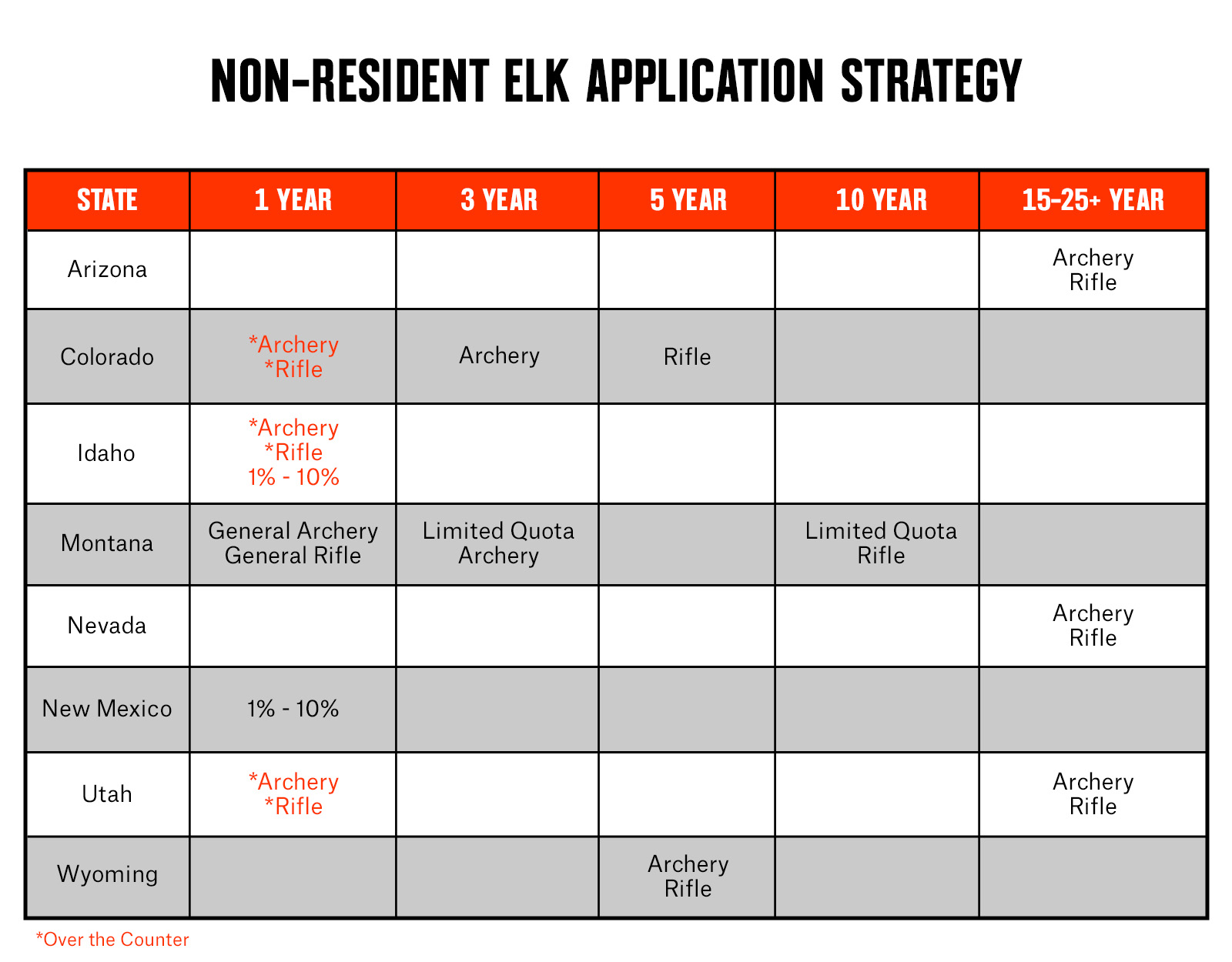
Montana’s draw system can be confusing as you can apply for general elk licenses and also limited quota permit hunts. You have roughly a 60% chance of drawing a general elk license each year if you’re not participating in the preference point system. If you are participating in the preference point system, you can count on drawing a general license every two years. For limited quota hunts, three bonus points give an archery hunter a good shot at drawing some archery permits. The odds are longer for limited quota rifle hunts with 10 bonus points giving you a decent chance of being drawn. The way Montana runs its draw, you’ve always got a chance of drawing a limited quota hunt no matter how many bonus points you have, so it makes sense to apply for limited quota hunts if you are already applying for a general license.
New Mexico, without a point system, offers a one to 10 percent chance of drawing the more popular elk hunts.
Utah has general season elk permits that go on sale in July. General archery elk permits are unlimited for non-resident hunters while general rifle permit numbers are limited. Point creep in Utah for a limited-entry elk hunt has gotten out of control and drawing a permit should be viewed as a long-term play. You’ve always got a chance at drawing along the way but doing so means beating lottery-type odds. The same can be said of limited entry elk hunts in Arizona and Nevada.
Wyoming split general elk units into 3 regions in 2024 from a statewide general elk tag in prior years. In 2023, 4.1 points guaranteed this license in the regular draw and special draw. This is going to change the draw odds and render prior draw statistics useless except for speculation. Wyoming also added close to 1,000 more nonresident elk tags which even further complicates this.
Mule Deer
Arizona offers archery hunters over-the-counter tags for mule deer. There is a cap on the number of tags that may be sold to non-residents as well as limits in place for the number of deer that may be harvested in each unit before it is closed. For limited-entry archery hunts, there are some options at around 10 points, but you’re in for a long wait if you’re trying to draw an archery Strip tag or one of the best rifle hunts in the state, which are currently taking 25 points to draw.
Colorado’s sweet spot for archery deer hunters begins at around three points. Determining the best value for its rifle deer hunts is more difficult because, between the multiple sets of rifle season dates, there are plenty of options for hunts to apply for. It’s fair to say that each point you accrue is going to return its value and get you on a slightly better hunt. Because of this, an argument could be made to put a rifle hunter’s best value in any of the three, five, 10, or even 15+ year categories. That said, with limited short-term rifle options for mule deer hunting in the West, it makes sense to take advantage of the three-point type hunts if you’re looking for a good mule deer hunt as often as possible.
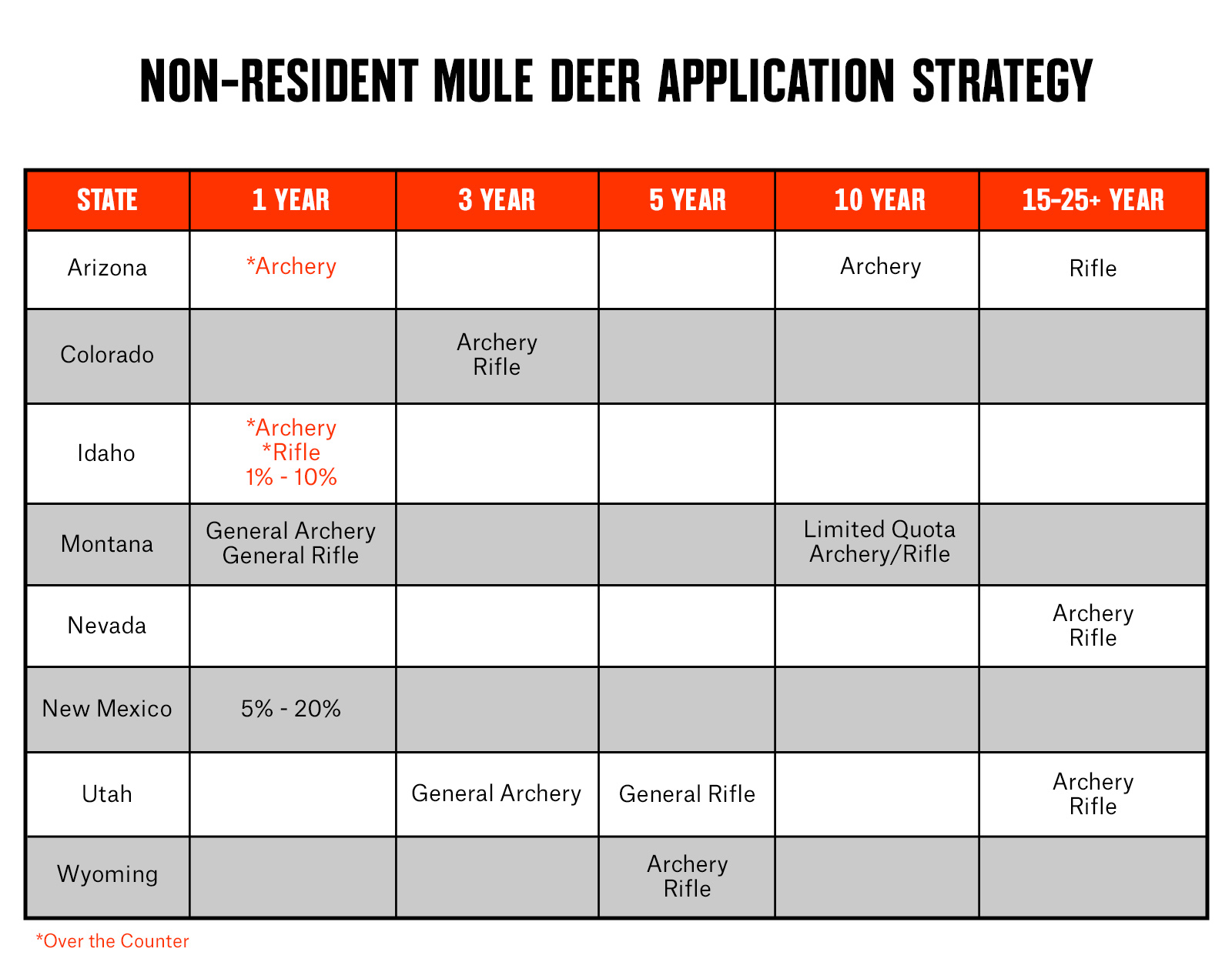
Idaho offers non-residents the opportunity to purchase OTC tags in any of the general deer units across the state. Each comes with different season dates and weapon options. These tags are not unlimited for non-residents and are subject to a non-resident cap in each unit. To pick up one of these tags, you need to purchase one when they go on sale on December 1. In May and early June, you may also apply for controlled hunts, and with no point system in place, your odds for the more popular hunts will be in the 1%-15% range each year.
In Montana, you can apply for general deer licenses and also limited quota permit hunts. You have roughly a 50% chance of drawing a general deer license each year if you are not participating in the preference point system. If you are participating in the preference point system, you can count on drawing a general license every other year. For limited quota hunts, 10 bonus points get you in the game for a good chance at drawing a decent limited quota rifle hunt. Unfortunately for archery hunters, the same is true as there aren’t any archery-only hunts to apply for. To archery hunt limited quota units, you will have to apply for a rifle tag and hunt its archery season dates if drawn.
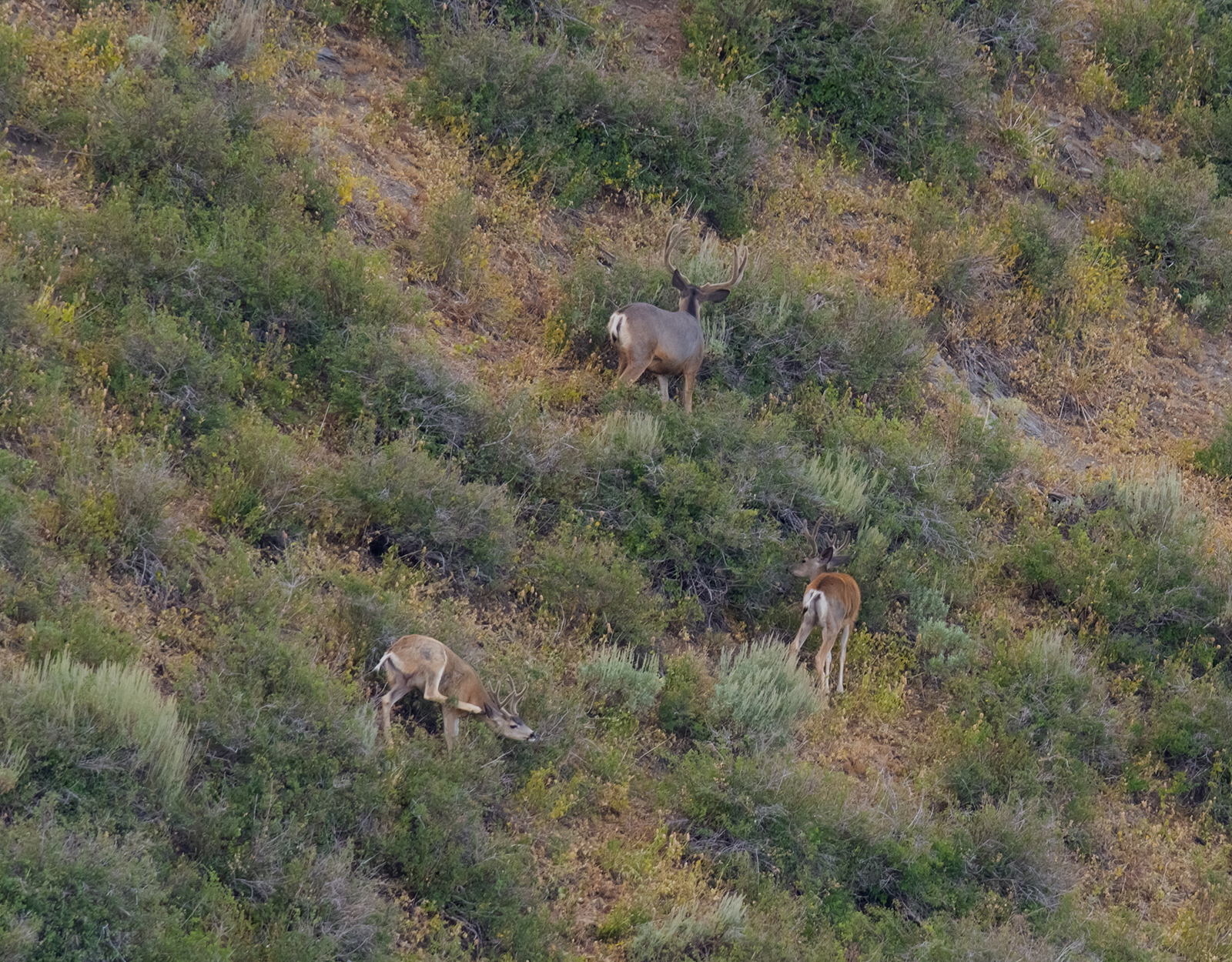
To get into one of the top units in Nevada that offer you a chance at taking one of the giant deer the state produces each year, you are going to be looking at a long-term application strategy. Only Arizona and Utah’s top hunts offer a better chance of finding a true giant than the top units in Nevada. With few states across the West offering top-end trophy mule deer hunts, take the long draw odds and wait your turn for some luck in the draw. There are also plenty of easier-to-draw options for those who aren’t concerned with how big of a deer they are hunting in Nevada.
New Mexico, without a point system, offers a five to 20 percent chance of drawing the more popular opportunity-type deer hunts.
In Utah, you can apply for two different types of deer hunts each year: general hunts and limited-quota hunts. What’s great about this system is that while you are applying for Utah’s best hunts in hopes of hitting the lottery, you can also cash in on your general deer points and be hunting a general unit occasionally along the way. Archery hunters will have good options at three points while the better rifle hunts are taking five points to draw in the general units.
Like Wyoming’s elk hunts, the general region deer hunts in Wyoming give you a few good options at around five points. It’s likely not worth chasing point creep to catch the better hunts in Wyoming if you’re looking for a good mule deer hunt as often as possible.
Antelope
In Arizona, Nevada, New Mexico, and Utah, the odds of being drawn for an antelope hunt are rough. Of these states that have a point system, you’re going to need a pile of points or beat some long odds. Aside from Utah, each of these states offers great trophy potential and should be worth the wait when drawn.
Colorado sells unlimited over-the-counter archery antelope licenses in many areas of the state. However, many of those areas are comprised of private land, making access difficult. For limited-entry hunts, five points will get an archery hunter on a good hunt and 15 points give a rifle hunter some good public land options.
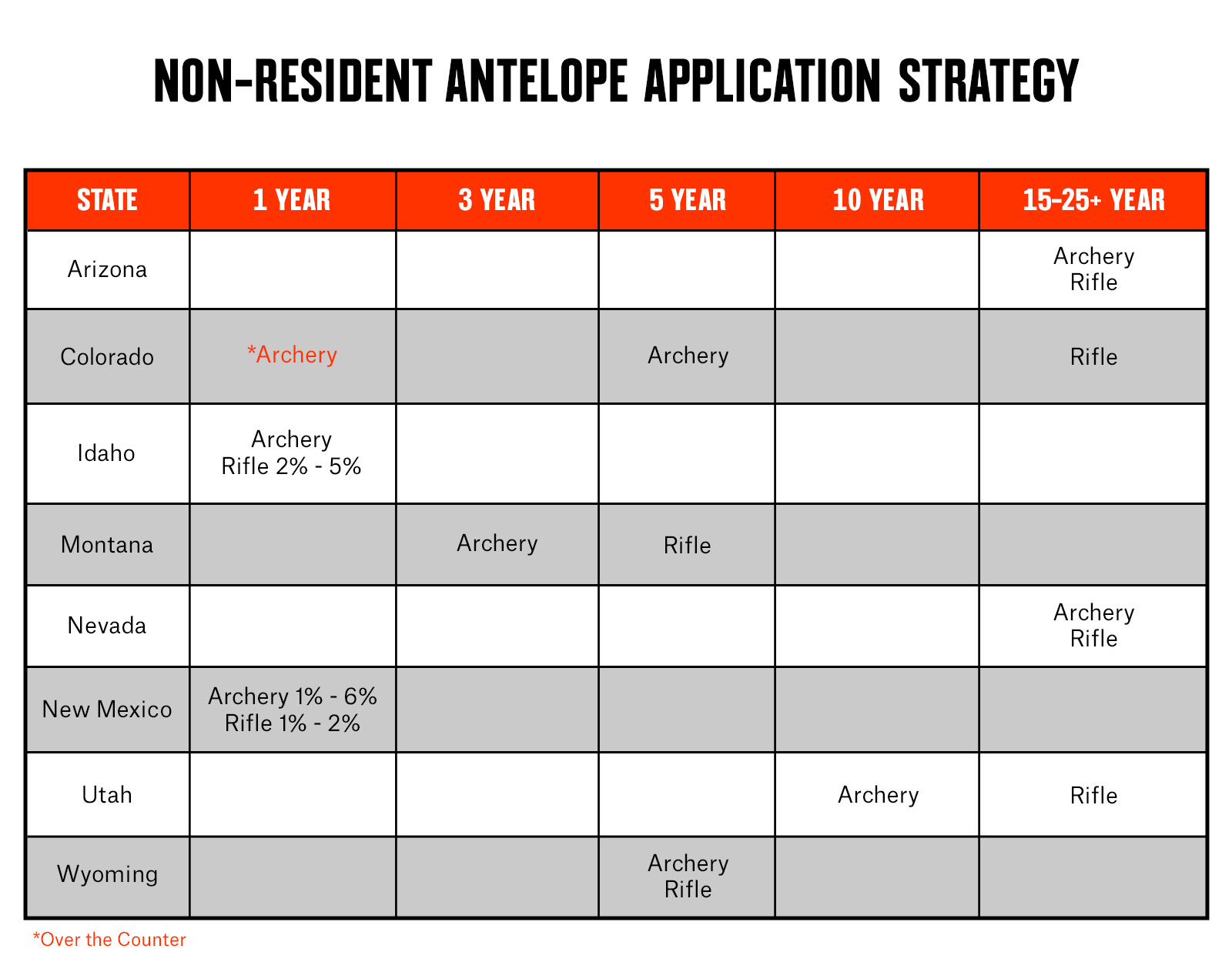
Idaho offers archery hunters a good number of unlimited quota archery hunts. You must apply in the controlled draw for them and use your first application choice to ensure being drawn for one. Many of these hunts offer good public access. There are also controlled archery hunts that are going to offer a little better potential for a better buck. Most of these hunts run anywhere between five and 50 percent draw odds. Rifle hunters are faced with two to five percent odds of being drawn for any of the controlled rifle hunts.
Montana has two different point systems for buck antelope: archery and any weapon. You may only apply for one of these hunts each year, but you can also build points for whichever one you didn’t apply for in the limited quota draw. The archery hunts are usually drawn with two or three points and are valid in any unit in the state except three units. With five points, a rifle hunter will have a good probability of being drawn for a good unit with enough public land to have a good hunt.
Point creep for antelope in Wyoming has taken off over the last couple of years and some of the easier-to-draw hunts have doubled in the amount of points it takes to be drawn over that span. As it stands now, most of the options for decent public land hunts don’t begin until you’re sitting on around five points. Aside from a few exceptions, archery hunters will need to apply for a rifle tag and hunt the archery only season dates if drawn.
Adapted from an article by the Huntin’ Fool team.