Ready to explore this trail?
View Trail Map in AppPath Type
Point to Point
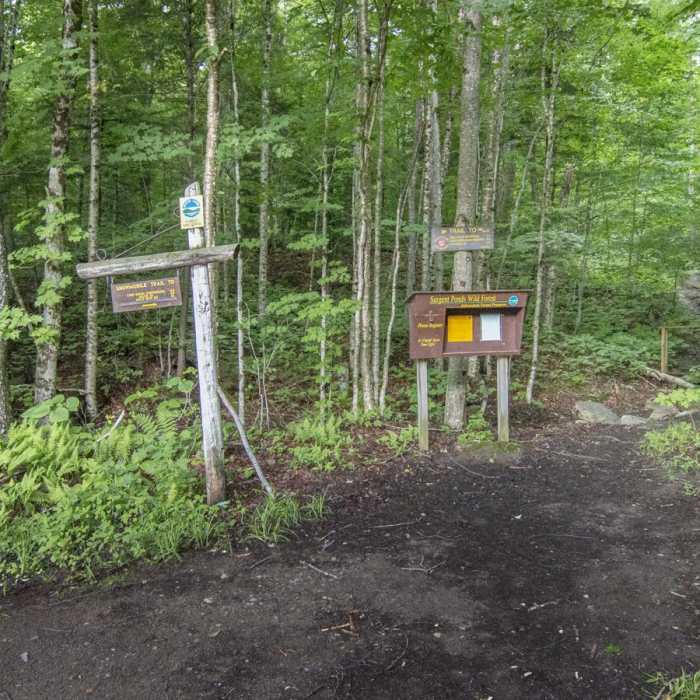
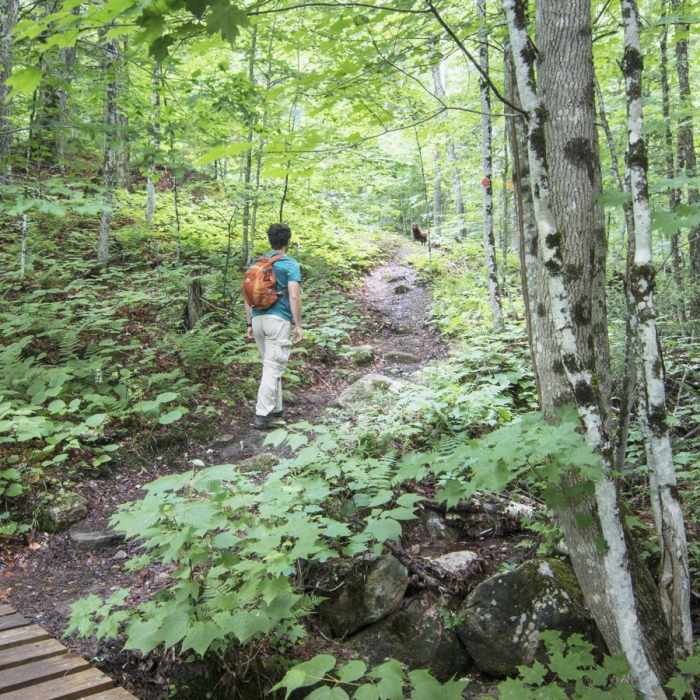
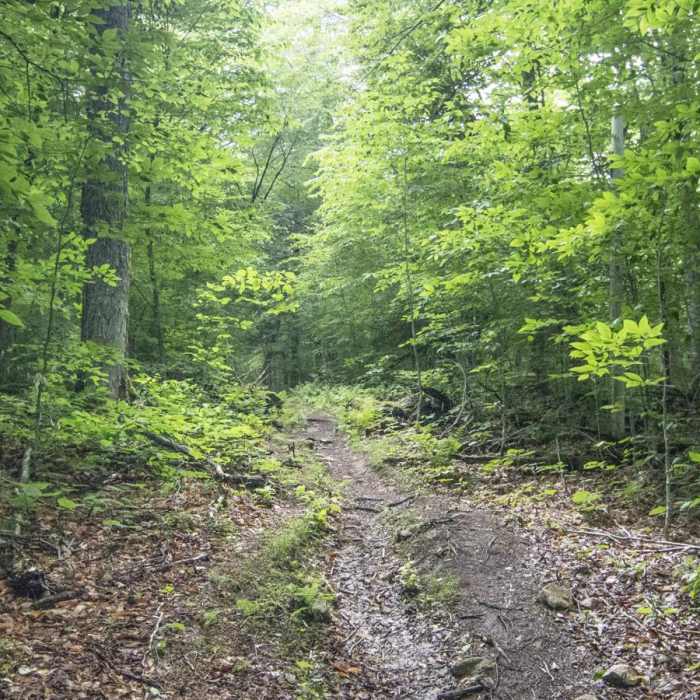
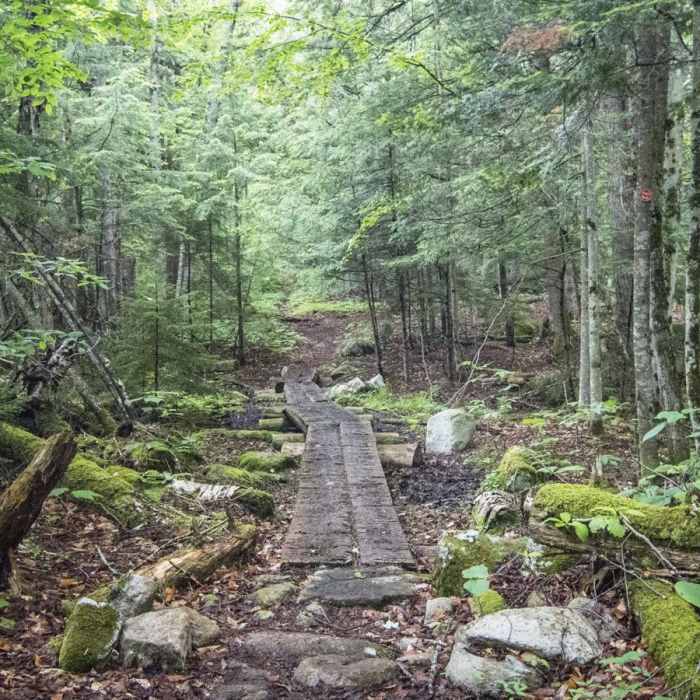
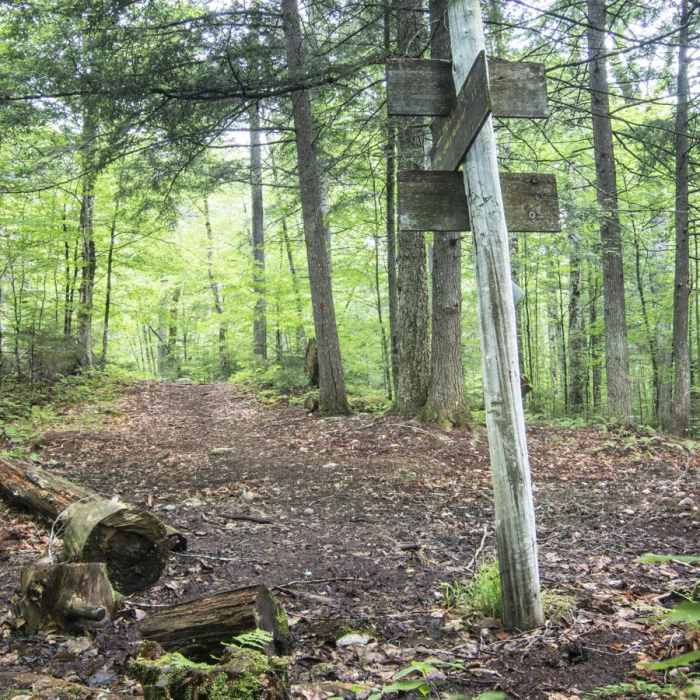
While there are several Owlas Head Mountains throughout New York State, there is only one which hosts a historic fire tower. This Owlas Head Mountain is located within the Sargent Pond Wild Forest and is accessed by a 6.4-mile there-and-back trail that is moderately trafficked. At the top, there is a cleared area with an incredible cliff-face overlook. The toweras cabin is also open for visitors to take in the incredible 360-degree views of the surrounding landscape. The trailhead is on Endion Lane off of Route 30 just north of the intersection with 28N. Both the trailhead and registration box are easily seen on the right side of the road before an obvious left turn. Crossing over a short bridge and entering the woods, the trail starts with a gradual incline. There are a number of wooden planks that pass over muddy sections and help to keep your feet dry. Up and down, the path meanders through the woods. You will see some high wooden poles used by snowmobilers in the winter to help them stay on the path. More boardwalks take you across stream runoff gullies and along rolling mountain ridges. After a little more than a mile you will reach a trail intersection. A right turn here will lead you to Lake Eaton, and going left will keep you on track with red markers to the summit. The trail is well-worn in most sections as you hop over the remains of muddy footprints. Tall grasses and young saplings creep over into the trail to capture whatever bits of light that emerge through the dark tree cover. The next 2 miles of trail begins with a gradual and rocky ascent. Leaves from the overhead deciduous trees cover most of the trail. While you shouldnat need to use your hands, some sections of the trail can be fairly steep. As the incline begins to lessen you will come to a fern-filled area with the concrete block foundations of what was once the site of the toweras observer cabin. It is marked by a large sign commemorating its place, while the path to the summit continues to proceed past it. Continuing the ascent, you will notice the transition of tree cover to hemlocks and pines. Thereas a minor dip and another rise as you traverse a sister summit to the top. After climbing up and over a few more boulders and rock slabs you will see the 35-foot steel Aeromotor LS40 tower come into sight through the trees. Climb up the steps and into the windy, 7-by-7-foot open-air cabin. Immediately below you will recognize Long Lake as it stretches off to the northeast. You can also see Lake Eaton with its break in tree cover, and Blue Mountain stands above the horizon to the south amidst the vast background of many other Adirondack mountaintops. The Seward Mountains are some of the taller prominent peaks in the area, and Kempshall Mountain, a former fire tower peak, sits along the shore of Long Lake with its characteristic domed summit. On clear days, you can make out several other fire towers throughout the region, including those atop Wakely Mountain, Snowy Mountain, Goodnow Mountain and Arab Mountain. History The name "Owlas Head" refers to a mountain with two distinct peaks near the top that combine to form the profile of a great horned owl. The fire tower on the peak of Owl's Head Mountain was constructed in 1919 and sits upon the highest of these twin summits. Like most of the other towers throughout the state, this one replaced the original fire tower that was made with wooden logs. The tower became inactive in the 1970s, but it has since been restored and opened to the public with the help of the Friends of the Owlas Head Fire Tower. Fire Towers of New York For almost a century, observers staffed more than 100 fire towers throughout New York State located primarily on the highest peaks in the Catskill and Adirondack regions. This was in response to the intense logging and tannin harvesting operations that would leave virgin forest barren, dried, and very susceptible to fire. Rangers would often reside in nearby cabins while keeping a regular lookout for smoke and flames throughout the surrounding valleys. If a fire was spotted, a message was sent to the nearby town, and the location of the suspected fire would be triangulated and confirmed by other fire towers in the area. Beginning in the 1980s the towers were systematically closed as monitoring from planes became more cost effective. Some towers have been dismantled, others remain in disrepair, while a select few have been revitalized by the DEC or purchased and renovated by the general public. Restorations continue throughout the state, and there are many assistance programs you can join to help support and maintain these historic icons. Each tower offers a new and unique perspective of New York and serves as a monument to forest protection throughout the state. Challenge yourself to visit them all!
No Condition Reports
Contributors