Ready to explore this trail?
View Trail Map in AppPath Type
Loop
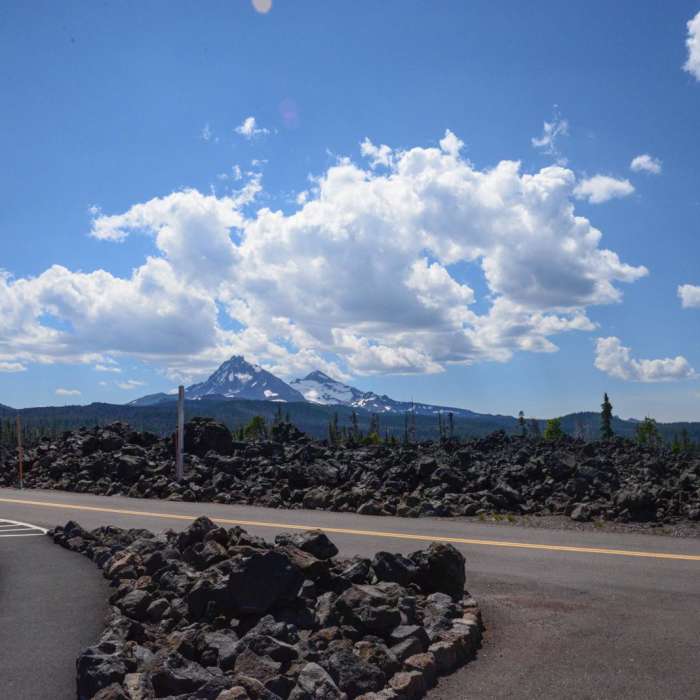
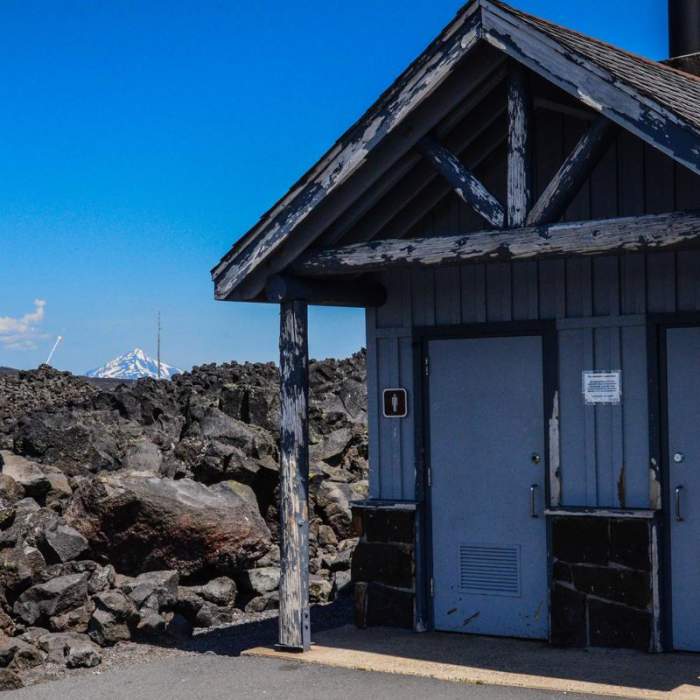
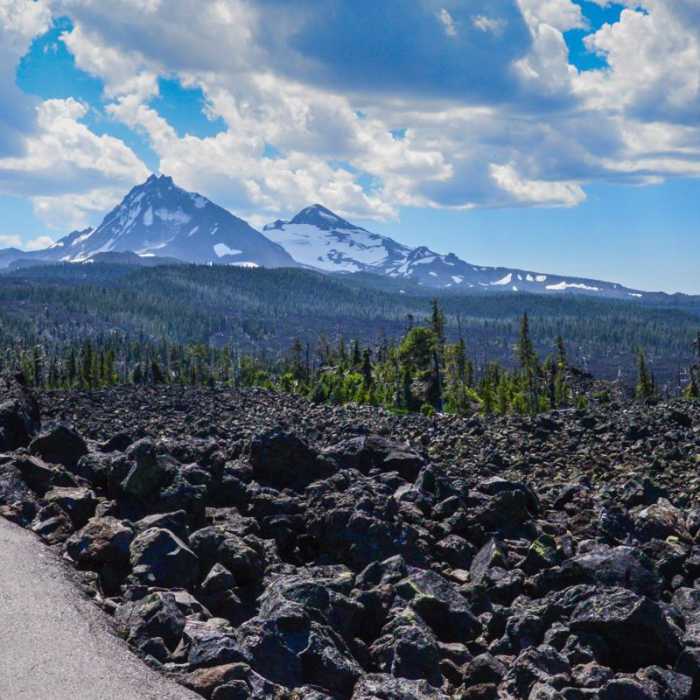
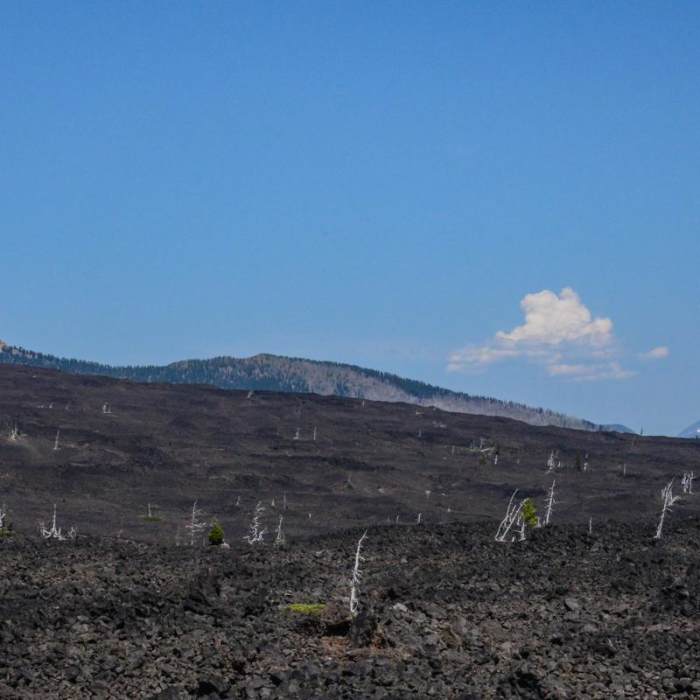
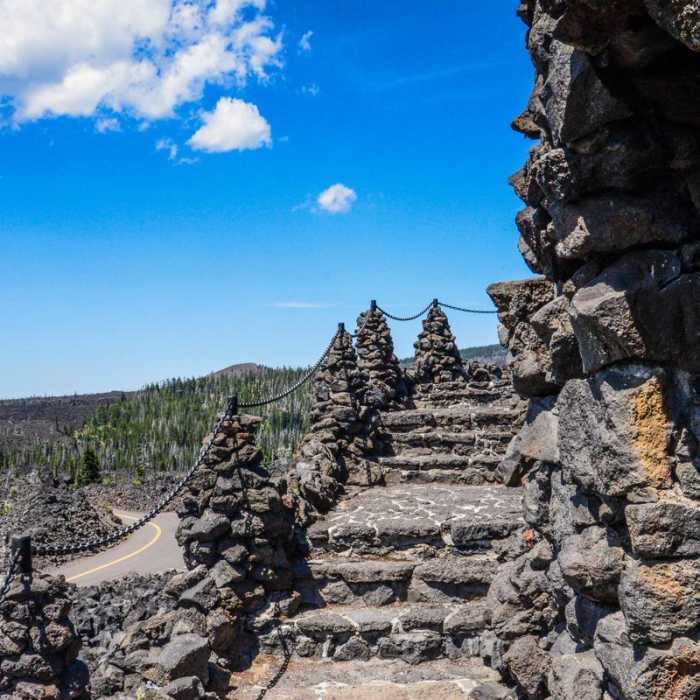
Following an 1860 wagon trail, the McKenzie Pass sits at 5,325 feet and cuts through a 65-square-mile lava bed. During the Great Depression, an observatory was built from the lava rock as part of a 1935 Civilian Conservation Corps project. The Dee Wright Observatory was named from a worker who had died during it's construction. The Dee Wright Observatory provides majestic, panoramic views of 17 different mountain peaks and two craters. Mount Jefferson, Mount Washington, North Sister and Middle Sister, and Black Butte are the most visible features, while views to other peaks depend on clarity of the sky. On the top you will find a bronze compass-like "peak finder" that denotes the directions and distances to the various mountain peaks. Inside the observatory, you can look through dedicated portals in the walls that are directed toward the individual mountains. The observatory is a trailhead for a short and informative paved walk through the lava beds. Along this route you'll find many interpretive signs that denote significant geological structures and the rich natural history of the area. The observatory has good parking and clean restrooms.
No Condition Reports
Pacific Crest Trail: Oregon Section F -- Highway 242 to Highway 35 (near Barlow Pass)
Pacific Crest Trail: Oregon Section F -- Highway 242 to Highway 35 (near Barlow Pass)
Contributors