Homemade Summer Sausage
From Field to Table’s Albert Wutsch walks us through how to make summer sausage.
Summer Sausage 101
Summer sausage is a semi-soft, cured, fermented, dried, cooked sausage. A culture is added to the meat, causing the fermentation process and cure that inhibits the growth of harmful microorganisms. The cure (along with the culture) increases the acid content which, in turn, gives that tangy flavor. The drying process reduces the moisture content, giving it that soft texture. If dried longer with or without cooking, it would be considered a hard salami.
Why make your own summer sausage?
I call it “extending the hunt.” Rarely will I butcher and/or process our game alone; it’s always a family affair. We’ll take all those hunting memories and stuff them into a 2”-2 1/2” fibrous casing, then cure, dry, cook, and store. Then, while I’m out on the lake with family and friends trolling for lake trout we open up that package and release all that flavor and memories. It doesn’t get any better than that.
Learning to butcher and process your game brings us full circle from field to table, and that is exactly what we teach at our events. It also saves you a ton of money, especially if you harvest more than one animal per season.
What equipment is needed?
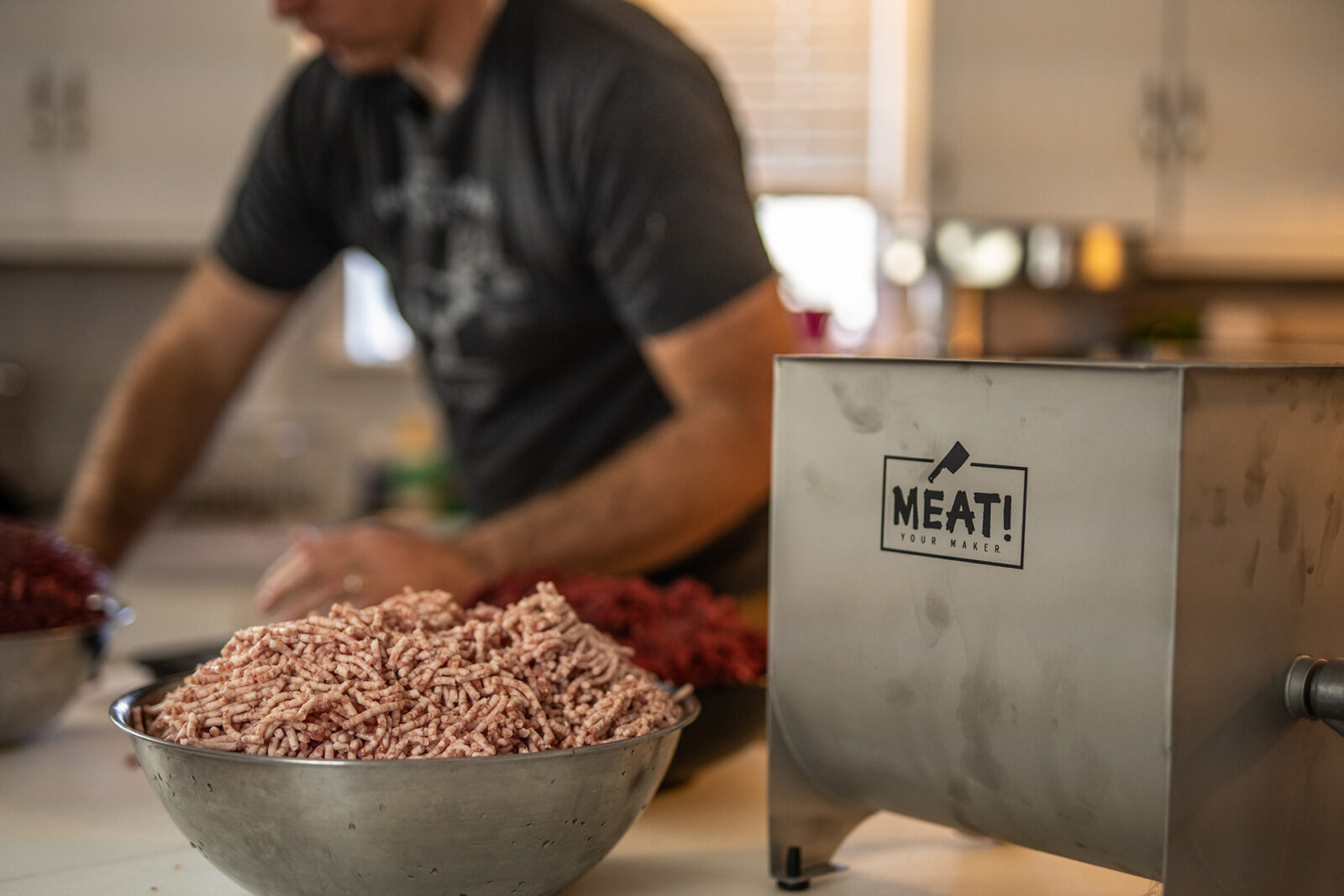
The basic equipment needed is a grinder from which you can stuff the casing. Of course, there is luxury and/or necessary equipment, such as a foot pedal that runs the grinder so you can do the entire process by yourself. If you have the space and are producing large batches of mixed meats for various sausages, a meat mixer ensures proper mixing.
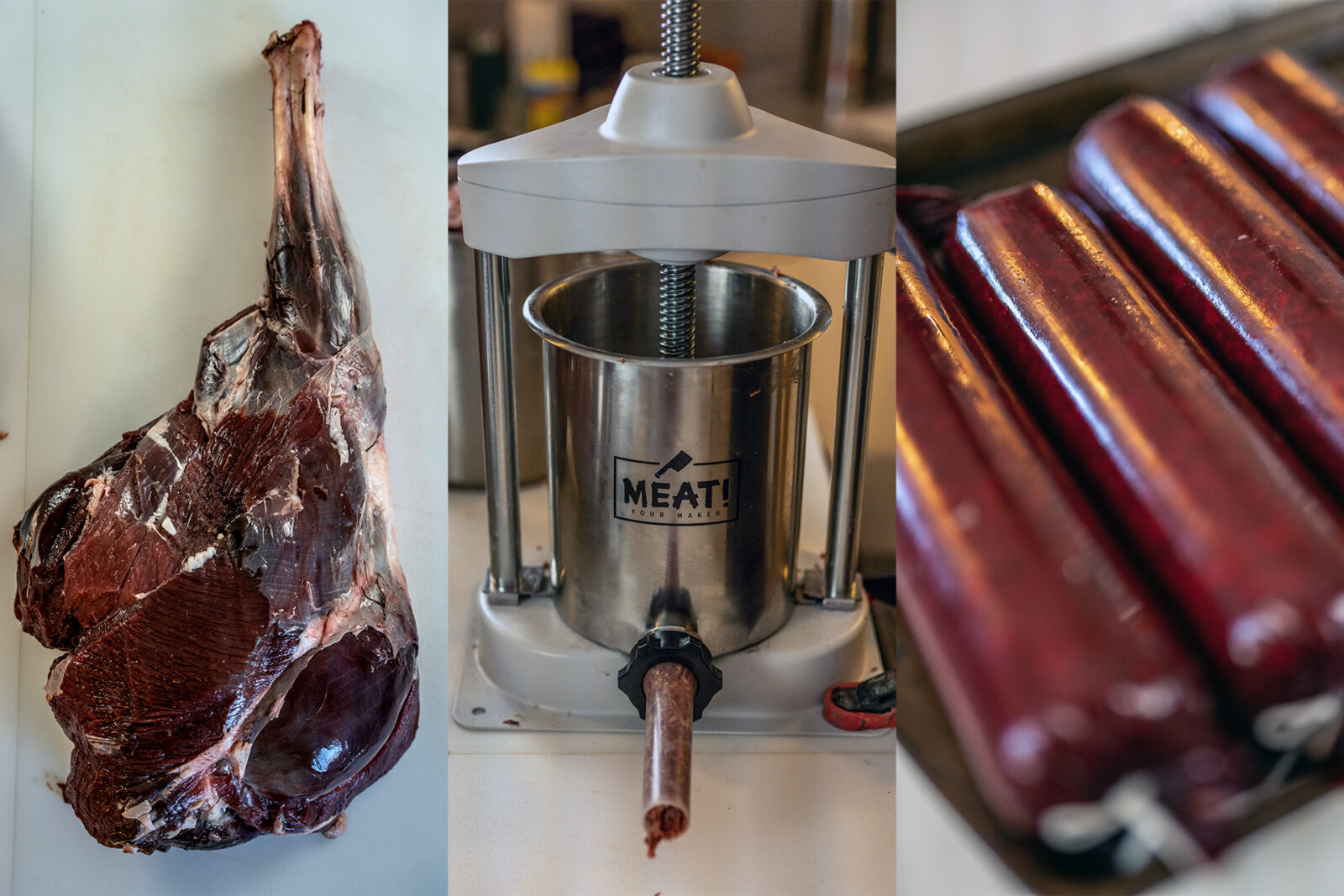
A sausage press or stuffer with various tubes or horns makes life so much easier and allows you to prepare an endless array of quality sausage products.
Even though store-bought commercial summer sausage does not require refrigeration, I still recommend that homemade sausages be refrigerated. It’s okay to throw some into your day pack or in the box of food when fishing, camping, or hiking, but out of habit I still store my processed meats in refrigeration when possible. My recommendation is to seal your homemade sausage in vacuum bags and freeze until needed. MEAT! offers a variety of vacuum and chamber vacuum sealers for all quantities. These machines will maintain quality and extend the shelf life of your frozen products.
Try It Out
Here’s a basic summer sausage recipe to get you started. Remember, once you’ve made it you can tweak it to your flavor preferences.

- 3 lbs. venison
- 2 lbs. pork butt
- 1 tsp. pink curing salt
- 2 T kosher salt
- 1 T black pepper
- 1 tsp. coriander
- 1 tsp. ginger
- 1 tsp. garlic powder
- 1 tsp. dry mustard
- ½ C brown sugar
- ½ C powdered milk
- 1 C ice water
- 2, 2 ½” fibrous synthetic casings
- Soak synthetic casings in cold water while preparing sausage meat.
- Grind meat through a large die grinder, then grind a second time through a medium die.
- Combine all dry ingredients.
- In a meat mixer or large bowl blend dry ingredients, alternating with ice water to meat.
- Mix thoroughly, creating bind. Meat should be sticky
- Place in sausage press, using 2”-2 ½” fibrous synthetic casings (non-edible).
- Hang or place uncovered in the refrigerator for 24-48 hours. (This is the drying, fermenting, and curing process.)
- Smoke at 160 degrees for 2-3 hours, increase heat to 225 F degrees and cook until internal temperature of 160 F degrees.
- Place into ice water bath to stop the cooking process.
- Chill, dry, and serve.
Notes:
– When handling ground meat, always keep everything ice cold and use gloves.
– Use only quality meat.
– If using high-temperature cheese, use ½ lb. of cheese per 5 lbs. of meat.