Preserving a Turkey Fan
Follow along to transform your treasured feathers from field to fully preserved.
Equipment
Required:
- Sharp knife
- Borax
- T-pins
- Drying board
Optional:
- Coleman lantern or camp fuel
- Large metal coffee can
- Hair dryer
- Dawn dish soap
- Rubber gloves and eye protection
- Auto body filler with hardener
- Mounting plaque
Preparing the Fan
The best way to remove a turkey tail for displaying as a fan is shown by Lake Pickle in the following video:
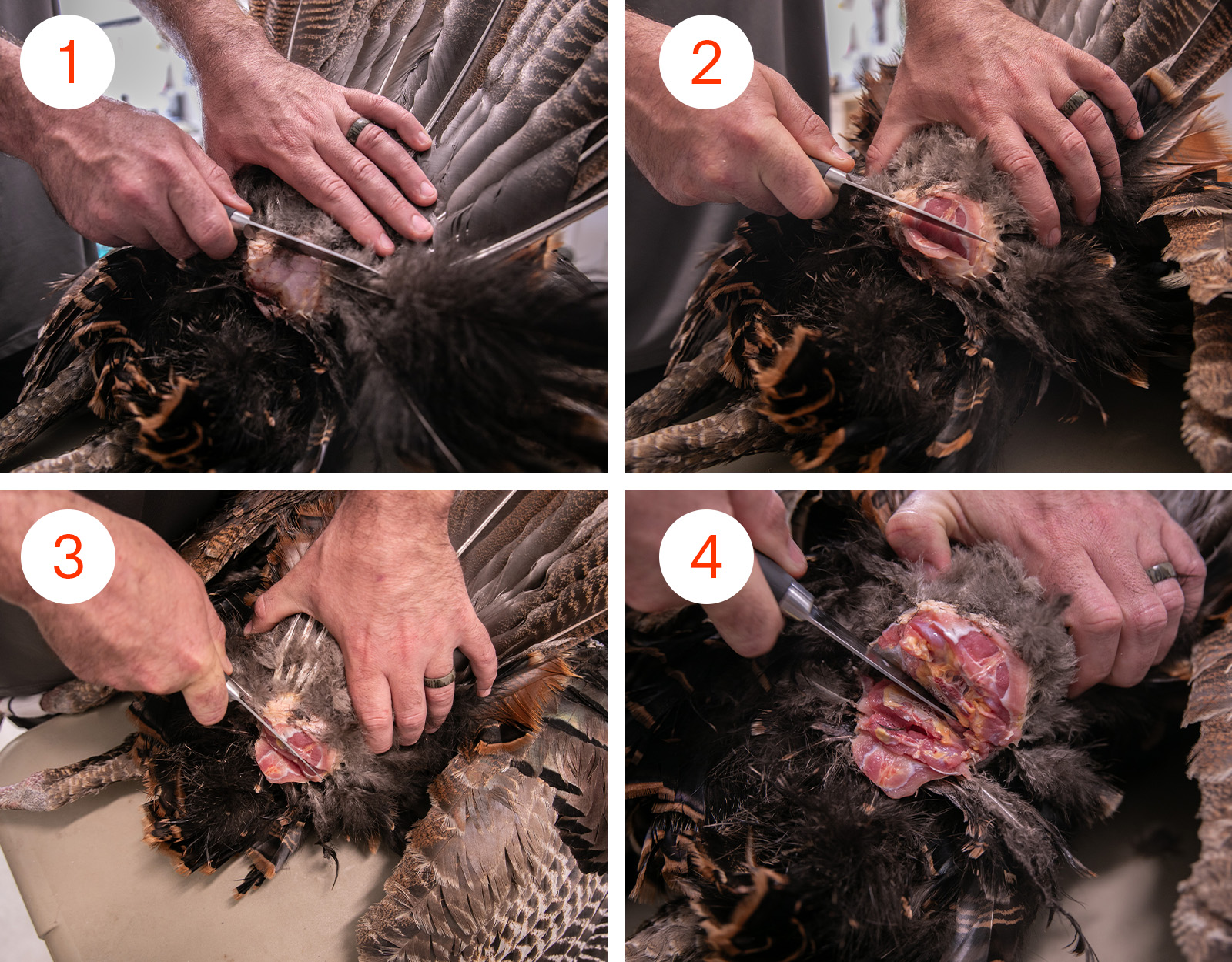
With the bird laying breast side down, use a sharp knife to cut into the meat between the bird’s vent and the base of the tail feathers where you’ll find a small knob. Take care not to cut into any part of the feathers, including the tissue that is holding the feathers together at their base.
As shown below, make a small exploratory cut with your knife to expose the knob before cutting toward the body of the bird.
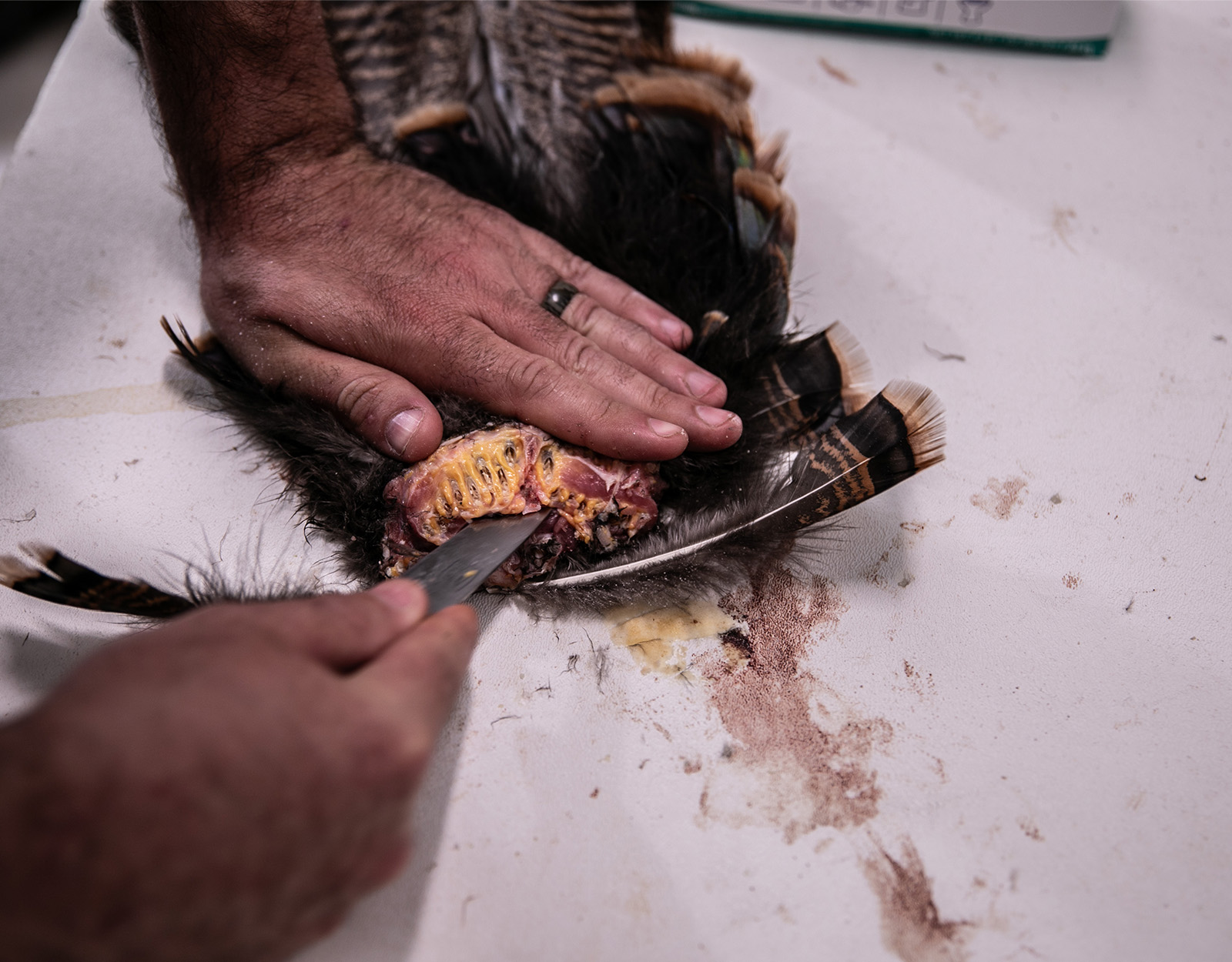
Once the tail fan has been removed, scrape away as much fat and meat as possible to make the drying process more efficient, taking care not to cut through any connective tissue. Some downy feathers might still be on the tail. You can remove those if you wish, but keep all the flat, color-tipped feathers you see. A turkey tail is typically made up of three different lengths of feathers.
As an optional step, some hunters like to soak the fleshy part of the fan in a coffee can containing Coleman white gas for an hour to help degrease the tail. After soaking for an hour, remove the fan, wash the part that was soaked with Dawn dish soap, and use a hair dryer on low/medium heat to dry the feathers. This will help the feathers fluff after being washed.
Of course, gas is flammable and the fumes can be harmful so do this step in a well-ventilated area. Many skip the gas and just wash the feathers and base with Dawn dish soap as much as needed.
Once cut, cleaned out, and washed, you’re ready for the preservation process.
Preservation Techniques
There are three main ways you can preserve your turkey fan. One is to use Borax. Another uses salt in place of Borax. Or you can pay for a professional taxidermist. The latter costs between $150-$300 depending on whether you also have the beard and spurs preserved and what kind of display mount it used.
One of the major drawbacks of using salt to dry out the tail feathers is the risk of attracting ants and insects while it dries; plus many say the smell of rotting meat is pretty bad.
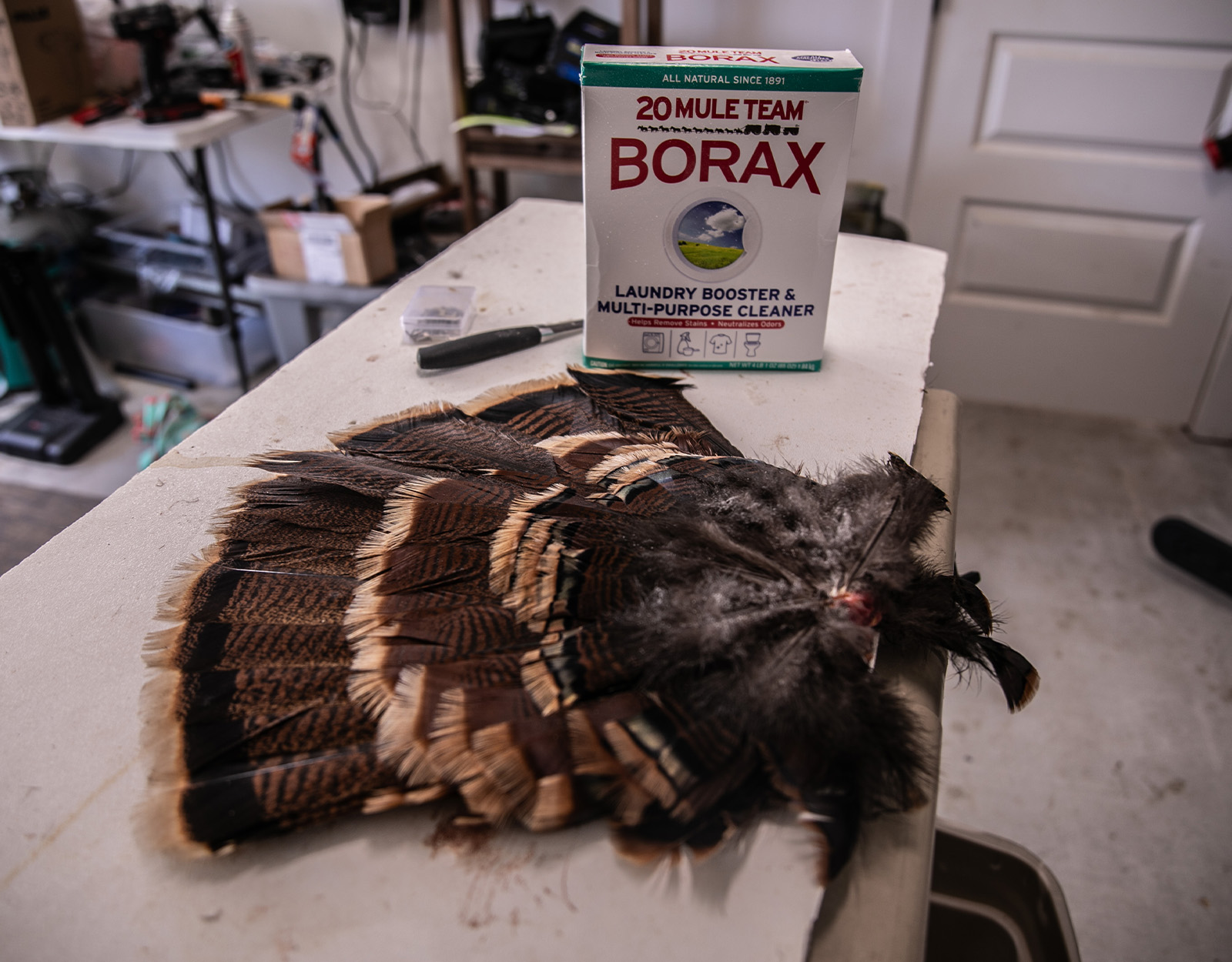
The popular method, then, is to use Borax, which is what we show below. Borax is sodium tetraborate, a type of salt. It has a pH of 9.5 compared to table salt’s pH of 7. It’s also especially good for degreasing, which is why it’s so often used for cast iron pan restorations.
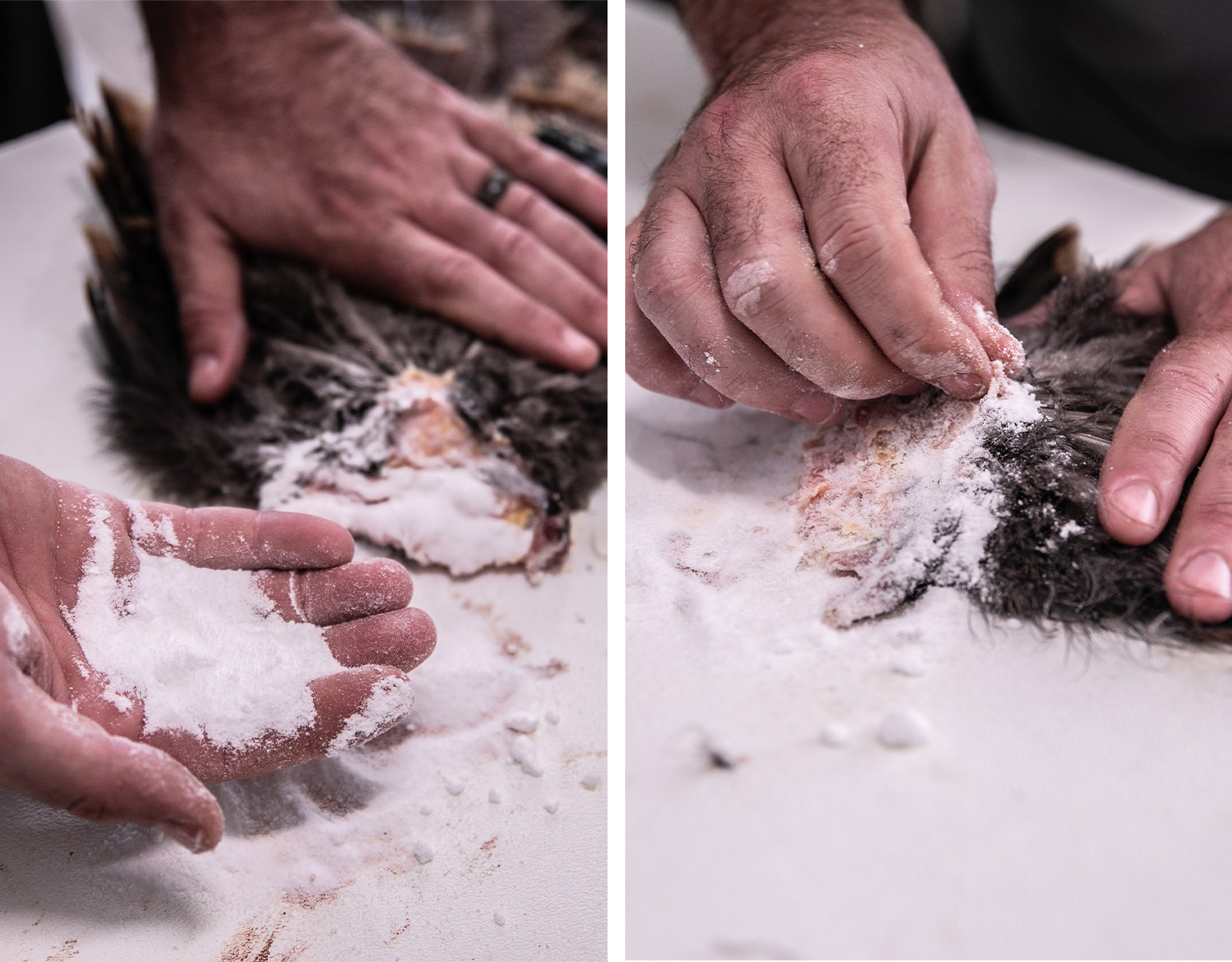
Once you’ve fleshed out the tail as much as possible, apply a generous amount of Borax to any exposed tissue. Rub it in well, lifting any loose bits of skin and getting both the front and the back side of the tail.
Then, spread the tail into its fan shape for drying. Using T-pins and placing the turkey tail on a board or foam board, push one pin into the base of the tail and then working from the outer feathers toward the middle place a T-pin alongside (but not through!) each feather’s shaft (or rachis).
Sprinkle a little more Borax on the base of the tail after it’s set in place.
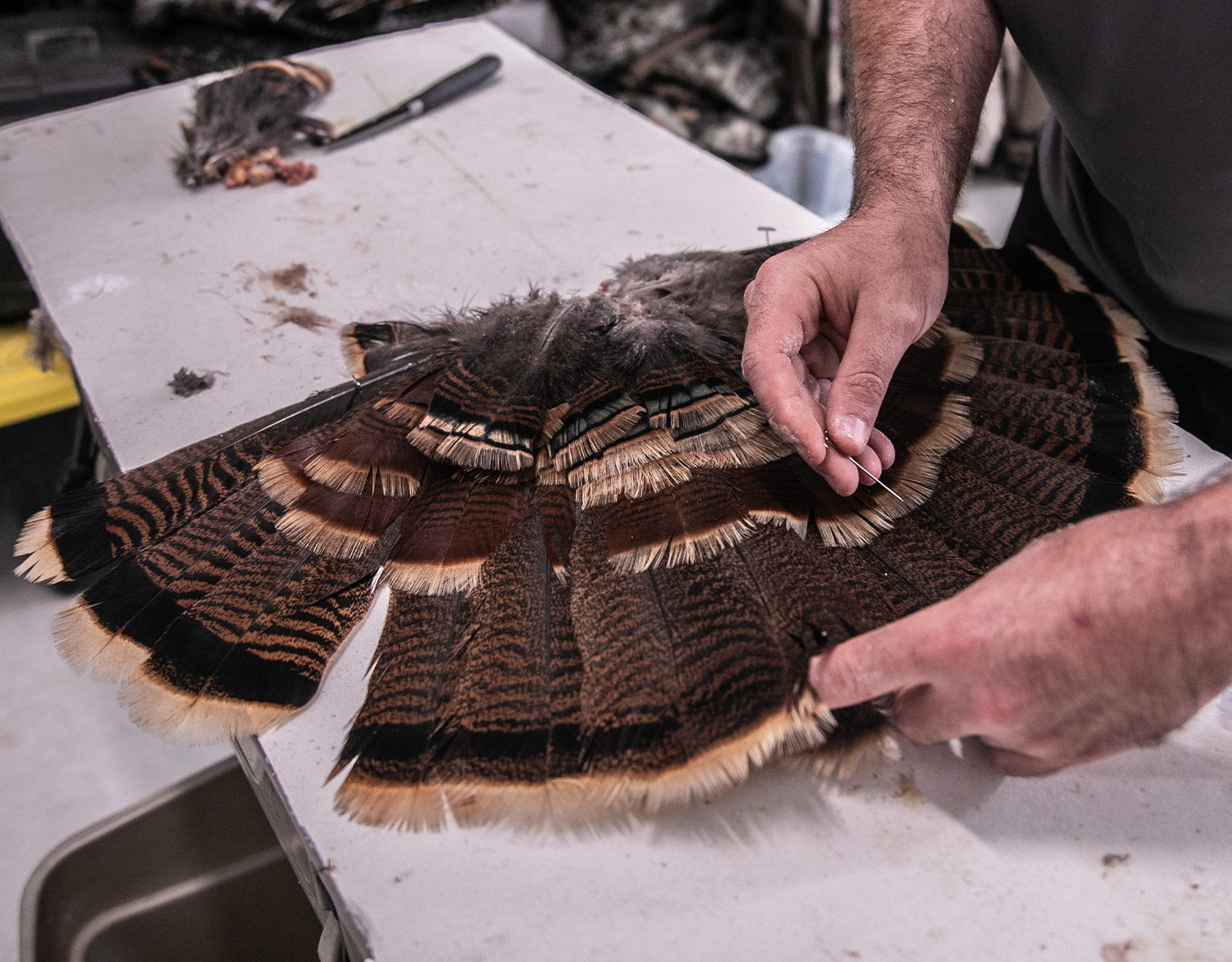
Let the fan dry for at least a week. Then turn it over, pin if needed, and dry for another week. It may take up to three weeks to fully dry.
Mounting and Displaying
After your turkey fan has fully dried, decide how you want to mount it. Outdoor stores carry turkey plaque kits, or you can make your own out of wood or leather.
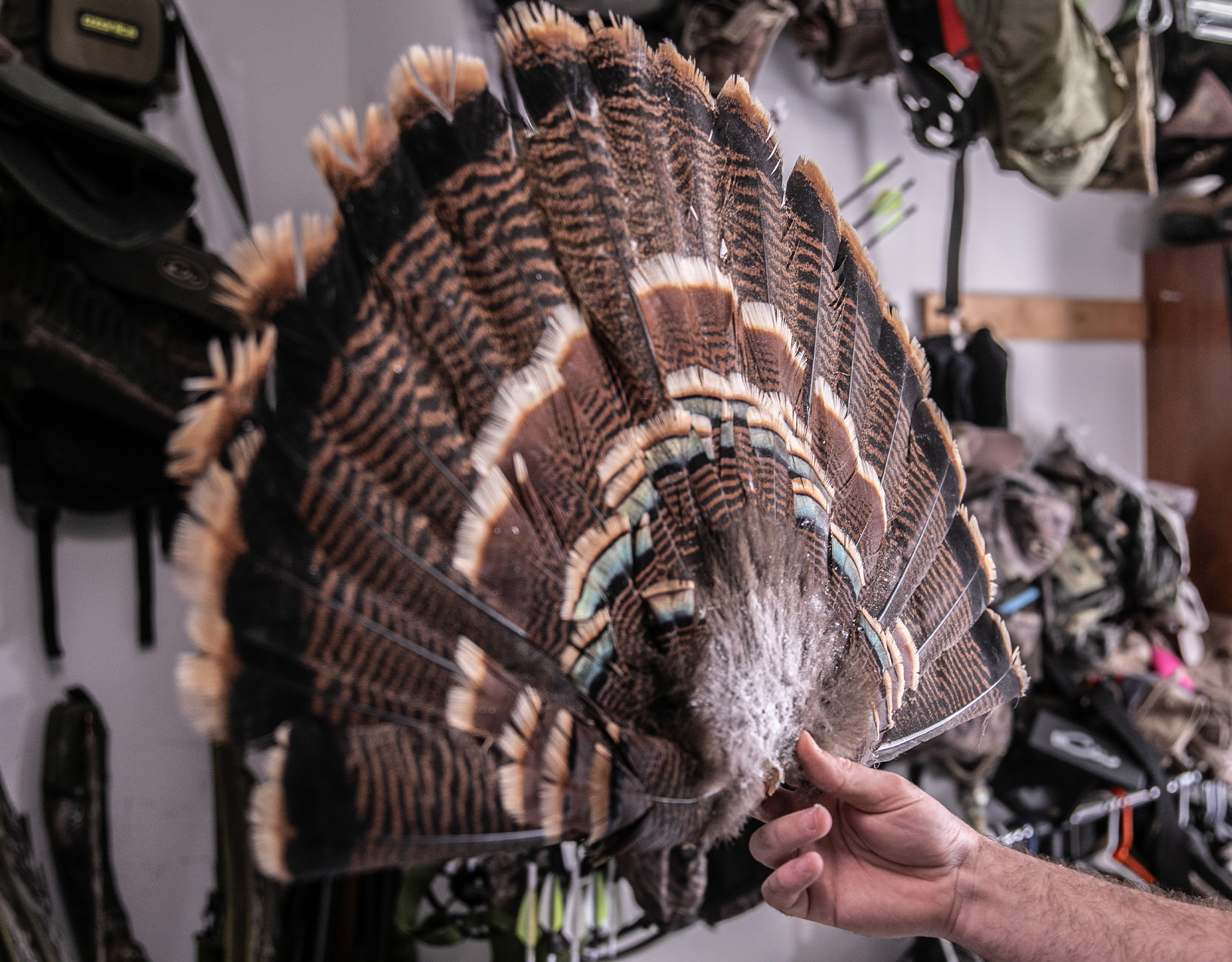
If you want to use your fan as a decoy for hunting, add a hardener to the tail base to make it more durable. This is where the auto body filler comes in. Using the provided plastic spreader, work quickly to spread the hardening filler around the base of the tail. It will dry quickly. You’ll also want to work in a well-ventilated area and use any recommended safety gear on the package instructions.
Once it’s dry, you can sand down the filler and attach the tail fan to your decoy or to a wall mount.
Maintenance
After a couple of years, you might notice dust accumulation, broken and disengaged barbs and barbules, whole or partial feather losses, or pest damage.
Combat these issues by periodically cleaning the feathers with a soft cloth and either rubbing alcohol or lacquer thinner. Never use water to clean your feathered mounts, as it will matte the feathers and mess them up. Dampen the rag in rubbing alcohol or lacquer thinner and gently wipe the feathers in the direction they lay. Alcohol and the thinner will evaporate away, leaving the feathers clean and dry.
Also, keep your turkey fan out of direct sunlight to prevent bleaching and fading.