Best States To Hunt Mule Deer
Get insights into which states offer top mule deer hunting opportunities.
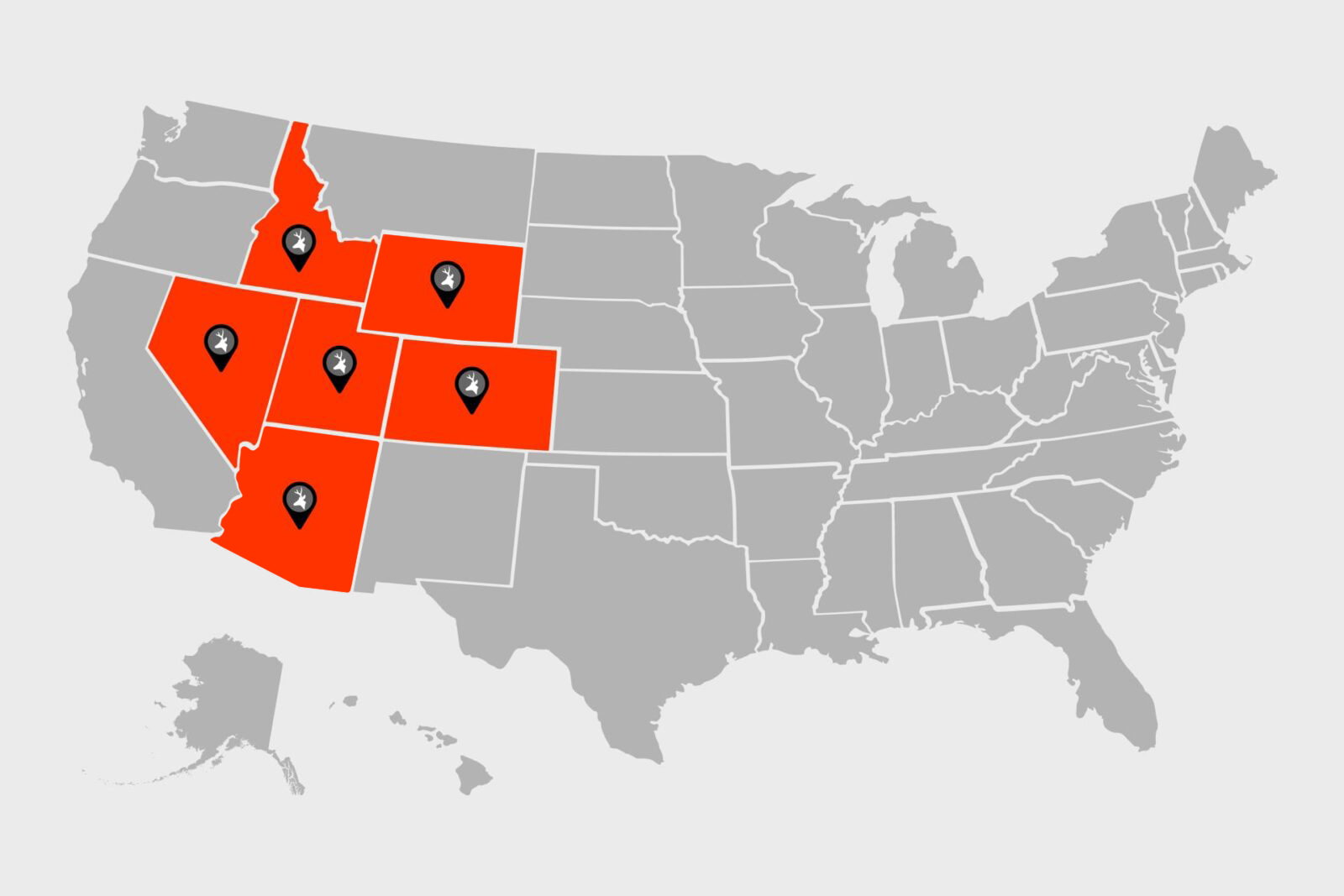
Colorado: Best All-Around
Looking over the last eight-plus years of data (2016-2024) collected as part of Boone and Crockett’s (B&C’s) Big Game Records Live feature, Colorado stands head and shoulders above all other states. Since 2016, B&C has recorded 77 typical mule deer trophies from Colorado. The second-closest state in the U.S. is Utah, with 24 records (Saskatchewan has more, but the province only issues tags to residents). When combined with non-typical harvests, Colorado stands at 97 records. That’s an average of 12 record mule deer per year over the last eight seasons, and the world’s record typical was taken in 1972, scoring 226 4/8.
Colorado is a top state for mule deer, in large part, because of the size of its deer population. An estimated 375,000 mule deer inhabit the state. Colorado operates on a preference point system, which means one preference point is awarded to each applicant who qualifies for and doesn’t draw their first-choice limited license. Once a hunter has three regular preference points and fails to draw a first choice license, that hunter will receive a weighted preference point.
So, Colorado is a top place to start applying and building points if you want to go after a nice muley buck.
Colorado also stands out above the rest because it has mule deer all over the state. From its 10,000-foot peaks to its rolling sage foothills, Colorado has a diverse summer and fall range for these deer. And with seasons that allow for archery, muzzleloader, and rifle, you’ll be able to pursue them from early September until early November.
Colorado Tip
There are no General (Over-the-Counter) deer tags in Colorado. To obtain a deer license in Colorado, you must go through either the Primary or Secondary draws, or potentially get one through the leftover process. onX’s Hunt Research Tools can help you find units you can realistically draw with zero or few points and know how many points you may need to collect for units holding trophy bucks.
Draw Deadline: First Tuesday in April
Utah: Best for Ample Places To Hunt
According to B&C, Utah is second in the U.S. for the number of record typical mule deer taken since 2016.
While it can be a lot harder to draw a non-resident mule deer tag than in other states for the most coveted districts (we’re looking at you, Henry Mountains), Utah has a lot of mule deer all over the state, and with those come opportunities to find them in any district. Nearly 335,000 mule deer live there, so if you do get a tag and the weather cooperates, you might just be in for a mule deer hunt of a lifetime.
Utah Tip
Utah has two distinct drawings for mule deer: Limited-Entry and General. The Limited-Entry hunts are managed for more mature bucks overall and are typically more difficult to draw. The General hunts are available in a different group of units and generally provide more draw opportunities. The two drawings work a little differently, so check onX’s Hunt Research Tools to better understand your options.
Draw Deadline: Last week of April
Idaho: Best for New Mule Deer Hunters
With just over 230,000 mule deer and millions of acres of public land, Idaho is a top destination for any dedicated mule deer hunter. Idaho doesn’t operate on a points system, so there’s always a chance of drawing a great tag the first year you apply. And should you find yourself in Idaho on opening day, you might find a big buck, given that one-quarter of the 20 all-time records for typicals came from Idaho. That means there are good genetics and quality habitat for monster muleys.
Don’t think hunting in Idaho is a sure thing, though. The terrain where hunters find mule deer ranges from dry, high-desert foothills to rugged, mountainous alpine zones, all of which take serious effort to cover, so make sure your fitness level matches the challenge.
Idaho Tip
Idaho deer hunters have the option of a “Regular” season tag or a “White-tailed deer.” The regular season tag allows hunters the option of both mule deer and white-tailed deer, but typically only during October (pre-rut most of the time). A “White-tailed deer” tag limits hunters to harvesting only whitetails but offers a longer and later season during prime time in November. If you’re willing to hunt only whitetails, this may be a better option for anyone looking for a mid-rut or longer hunting window.
Draw Deadline: Early June
Nevada: Best for Building Up Points
Nevada operates on a point system for its best tags, but what the Silver State has going for it is the chance of drawing one of the many mid-tier regions for big muleys in a matter of a few short years of applying.
In Nevada, you won’t find the massive herds happening elsewhere. The total population is only around 68,000 animals, but Nevada wildlife officials are doing good work managing what they’ve got, so connecting to a nice mule deer buck is even more of an opportunity here.
Nevada Tip
Although the aridness of the region limits the overall deer population, Nevada offers some quality opportunities to hunt trophy Mule Deer in stunning desert landscapes. Additionally, there are Nevada deer seasons available beginning in August and extending into late December in some areas. Explore your options via onX’s Hunt Research Tools to find a hunt that works best for your calendar.
Draw Deadline: Early May
Arizona: Best for Bowhunters
If you’re a bowhunter looking for a muley, the Grand Canyon State should grab your attention. As for licensing and seasons, Arizona is generous with both, even to non-residents. Archery tags are available over-the-counter, and there are at least three seasons for mule deer per year in most units that cover multiple biological patterns (think hunting summer range and rut).
Arizona is a hot, dry place, and recent droughts have impacted the overall mule deer population, which hovers between 85,000 and 100,000 animals.
In the mule deer hunting world, Arizona has earned a nickname for regions 13A and 13B, which is called the “Arizona Strip.” Much like the Vegas Strip in nearby Nevada, hunters might hit the jackpot should they draw a rifle tag or book an outfitter in this 5,074 square mile section of northwestern Arizona. They say it’s not uncommon to see several 230+ bucks come off the “Arizona Strip” in a normal year.
“When most fall hunting seasons have wrapped up, the mule deer and Coues deer hit peak rut in December and January in Arizona. Grab your bow and an over-the-counter tag and hunt big deer during the so-called ‘off-months’ of Dec/Jan.” – Steven Drake, Anyone’s Hunt
Arizona Tip
The Arizona Strip in the northwest part of the state is famous for its trophy mule deer genetics and is one of the premier hunt experiences in all of North America. Although those tags can be difficult to draw, the Arizona draw system does make it possible for even the first-time applicant to get lucky. Find out more about how Arizona’s draw system works via onX’s Hunt Research Tools.
Draw Deadline: First week in June
Wyoming: Down but Not Out
The winters of 2021-2022 and 2022-2023 (along with habitat loss and other factors) have hurt Wyoming mule deer populations. The Wyoming range mule deer herd population went from an estimated 30,000-strong down to only 11,000 after February 2023. For that reason, Wyoming needs time to rebound. We are keeping it here because it should not be forgotten, as it was once the best state for trophy animals.
Four of the top 20 B&C mule deer of all time were harvested in Wyoming, including the #3 and #5 world record muleys.
Wyoming operates on a point system, but some hunts can be drawn without any points. Additionally, hunters in Wyoming should know that federally designated wilderness areas are off-limits to non-resident big game hunters unless they hire a licensed outfitter. But if you’re looking for a lot of public land to roam, the western half of Wyoming is where you’ll want to start scouting. Still, many good tracts of private land in Wyoming are accessible as Walk-In Hunting Areas (learn about onX Hunt’s Walk-In Map Layers). Because of these areas and the state’s Hunter Management Areas, you can get access to mule deer in every unit and region in Wyoming.
Wyoming Tip
In addition to unit-specific draw hunts for mule deer, Wyoming also offers General deer tags that are valid for a group of units inside 17 larger defined regions. The General deer tags are over-the-counter for residents but are only issued via drawing for nonresidents. onX’s Hunt Research Tools can help you find, research, and compare the latest draw odds for General deer tags and unit-specific hunts.
Draw Deadline: End of May