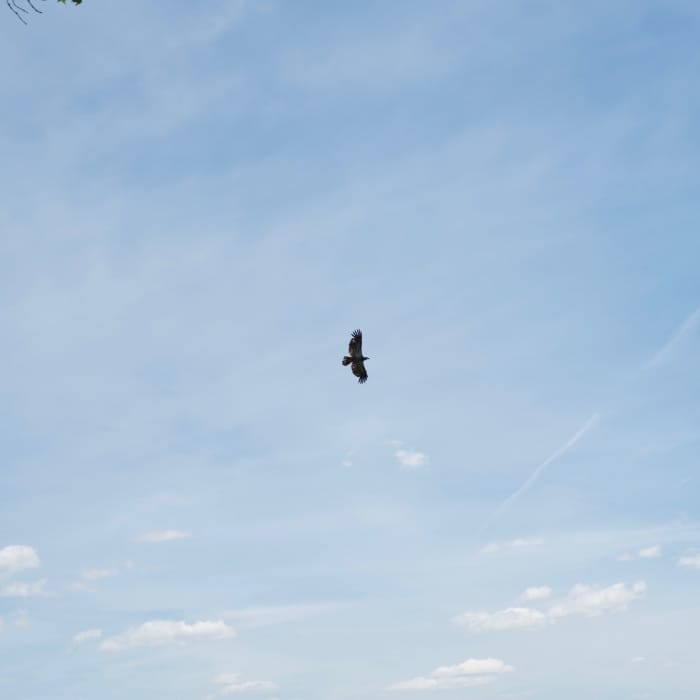
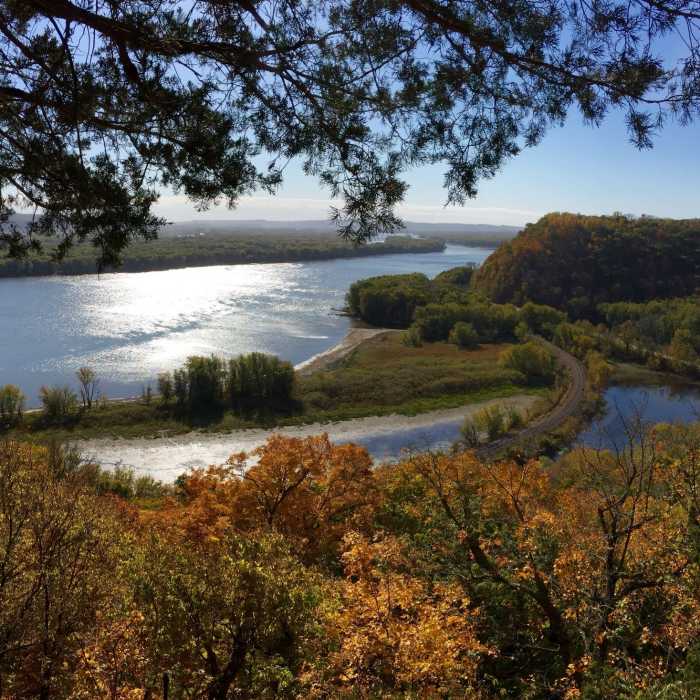
Starting at the visitor center, the trail climbs steeply towards Fire Point. Fire Point and back (2 miles) is all most visitors will do, and the NPS leads guided hikes on this route, so this section will be where crowds are heaviest. Near the top of the first climb, a junction offers the choice to go right towards Eagle Rock, or left towards Little Bear, Great Bear, and the rest of the trail system. Don't sweat the decision too much;both deserve a visit, but it's a small loop so just take the other side on your way back down. Shortly after the junction, the trail ceases its climb and becomes very gently rolling through lovely open forest. Past Fire Point, the trail becomes grassy and a little less obvious through a few mound groups. Out of respect for the mounds, please stay as close to the edge of the mowed areas as possible. You'll pass Great Bear (one of the largest mounds in the park, and the largest Effigy mound), and several more mounds before the trail runs adjacent to a large prairie. There is a junction to head straight, or branch right towards Twin Views. All the views are worth the trip, as they are just a few hundred yards "out of the way" from the main trail.Passing twin views, hikers come to one more overlook at "Third Scenic View." After this, the trail begins to climb in and out of some steep ravines toward Hanging Rock. The journey out is more difficult than the return.Hanging Rock itself is stunning. If you have time, spend a little while here and enjoy kettles of birds of prey along the Mississippi flyway. Bald eagles are abundant, as are turkey vultures in the summer. Fall migration is a real treat, with often dozens of Rough Legged Hawks, Red Shouldered Hawks, and Sharp Shinned hawks flocking together and visible from this viewpoint. Perched 400' over the river, Hanging Rock allows visitors to get up close to these birds as they drift lazily on thermals. Some birds fly so close you can hear the wind rustling in their feathers.
History & Background
Effigy Mounds are a unique archaeological feature of the Driftless area of Illinois, Wisconsin, Iowa, and Minnesota. Due to their great antiquity - effigies were built from around 800 to 1200 AD - their purpose remains mysterious, but they appear to have served ceremonial functions, with burials being more common in the Conical mounds that were built for over a millennia before and during the Effigy Mound period.