
Ready to explore this trail?
View Trail Map in AppThis route starts in North Cascades National Park; but then straddles the border between Baker-Snoqualmie National Forest, and Wenatchee National Forest. You'll want to coordinate with all 3 offices.
Path Type
Point to Point
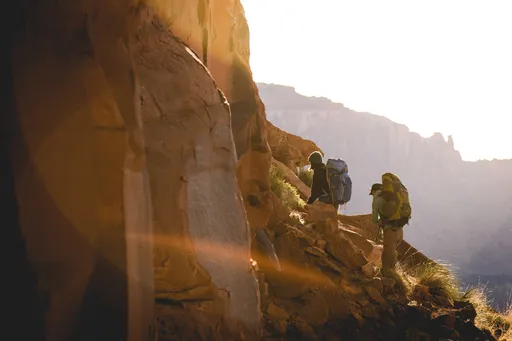
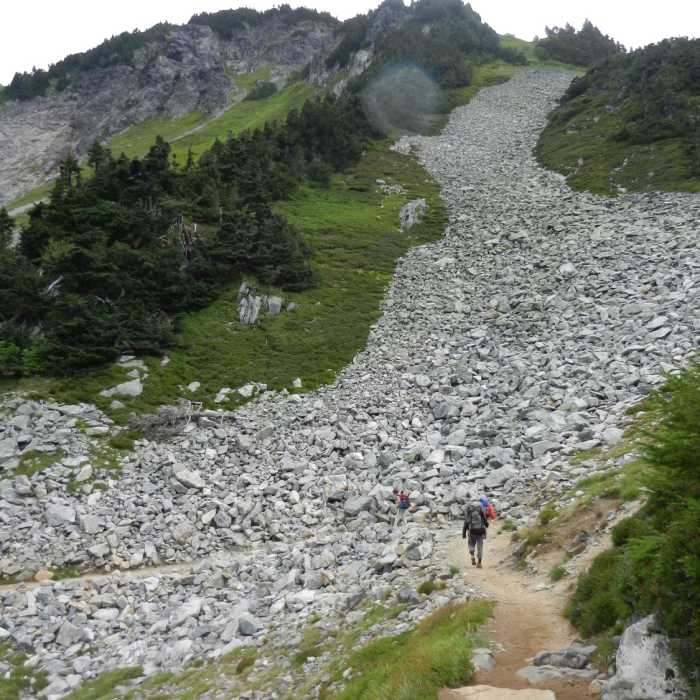
This is a multi-day alpine ridge traverse off trail which takes 5-8 days depending on the desired intensity and 'extracurricular' activities. This "trail" rides a fine line between climbing and backpacking. In some conditions, this can be done as a very strenuous backcountry wilderness trek. However, in challenging conditions this is a serious alpine mountaineering endeavor. The true allure of this trip is the adventure, and as such, I wont spoil it by giving an endless list of turn by turn directions :) Rather, I'll give you some key waypoints you'll want to aim for so you don't end up stuck in seriously technical terrain. The term "col" is the low saddle point along a ridge connecting two mountains, it will get used a lot in the directions.To get to the start:Go to the Cascade Pass to Sahale Arm junction, and go south, off trail from there. Now you'll route-find your way south from lake to lake until you end at Cub Lake. Major Waypoints:1: Cache Col, have to cross over the ridge here.2: Kool-Aid Lake, Bivouac #13: The red ledges (runs under Arts Knoll) - very narrow and exposed ledge that must be crossed, watch your footing! It is a little intimidating if you aren't a climber, but I promise it is the least technical way to go.4: Spider-Formidable Col - above middle cascade glacier, its the only non-technical way to cross the ridge5: Ying-Yang Lakes, Bivouac #26: Le Conte Glacier and Sentinel / Old Guard Peaks: The easiest way to cross onto South Cascade Glacier is at the smooth western crossover point of Le Conte Glacier north of these two peaks7: South Cascade Glacier Col, just west of Lizard Mountain, the crossing point to access White Rock Lake, Bivouac #38: Spire Point, the col just east of spire point is the safest place to cross south between the Spire and Dana glaciers.9: Cub Lake, Bivouac #410: Bachelor Creek / Downey Creek junction - you made it, you have reached a maintained trail again! You'll be so glad to see this well-maintained trail, after the unbelievably rough and strenuous bushwhack along bachelor creek.Key points before you consider doing this trail:1. There are glaciers and mountainous terrain. You and your party will need to know how to self arrest and conduct a crevasse rescue. The slopes are never incredibly steep, nor are there serious crevasse fields like on Rainier/Baker etc. In ideal conditions, the snow is very easy to traverse without crampons. However, you can't assume these perfect conditions will exist. Know your glacier and snow travel skills and bring the appropriate equipment. The route has been soloed before, but use your best judgement.2. There is no cell coverage and you may not see another person the whole trip. Don't attempt this route if your wilderness self-care skills are not up to speed. Minor issues such as malnutrition, a sprained ankle, dehydration, or an infection can all lead to an expensive helicopter rescue (if you have a satellite phone to even call for one) or many days alone while your buddies walk 2-4 days to get help.3. This is extremely physically demanding. The route calculator here shows 15,281ft ascent, but my actual GPS track, with all the intermediate ups and downs was almost 30,000ft. Find a 4,000ft ascent route, and give it a try with a 6-day backpacking load. Then think about doing that 5-8 days in a row. There are no easy ways out of this trek, so once you get 2-3 days into it, you are committed, you can't quit. If you can't pack for 6 days of this type of travel under 55lbs, consider buying lighter gear. 4. There are no trail markings. A rut has been established over time, but you need very good route finding skills, map reading, navigating off-terrain features, maneuvering around objective mountain hazards, etc. Bring your map and compass even if you have a GPS. If you get off route it will become technical mountain climbing.
Basic Wiki Background:The first traverse took 13 days in July 1938. The group consisted of four members of the Ptarmigan Climbing Club: Bill Cox, Calder Bressler, Ray W. Clough, and Tom Myers. The second traverse was in 1953 and consisted of Dale Cole, Bob Grant, Mike Hane, Erick Karlsson and Tom Miller. Miller took high-quality photos of the peaks, valleys, glaciers, and lakes, which were later published in a book by The Mountaineers. The book, called The North Cascades, was published in 1964 and proved instrumental in the bid to create the North Cascades National Park.The route is named after the alpine bird of the same name. The "p" is silent and is pronounced "TAR-mig-an".Coleman Leuthy and others made the third successful traverse of the route in the late 1950s. Today the route is a common goal of Cascade Range mountaineers.There are tons of great peaks along the route, so take more than 5 days, bring your gear, and see how many you can climb!
No Condition Reports
Contributors