Ready to explore this trail?
View Trail Map in AppWilderness permits required for overnight trips. Each day, 15 permits can be reserved and there are 10 walk-in permits. This is a popular trail -- make reservations well in advance at recreation.gov. Select Inyo National Forest Wilderness permits. Walk-in permits issued starting at 11:00 AM the day before your trip. They can be obtained at the Ranger Station/Visitor Center in Lone Pine, Bishop, Mammoth Lakes, or Lee Vining (Mono Basin).
Path Type
There and Back
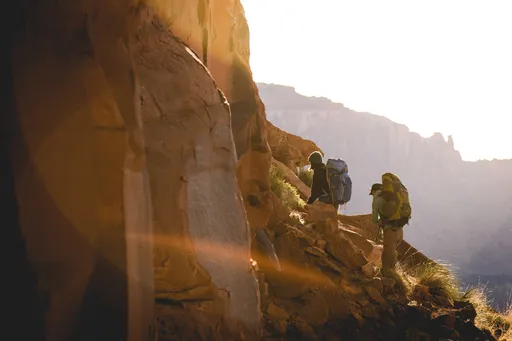
The Mono Pass Trail starts in Little Lakes Valley at Mosquito Flats, which at 10,270 feet is the highest trailhead in the Sierras. It follows the Parker Pass Trail for about 0.5 miles and then branches off to the right. For the next 1.4 miles, the trail climbs the side of the canyon, alternating between moderately steep climbs and mostly level sections as it traverses a rocky shelves a few hundred feet above Little Lakes Valley. Views from the shelves are especially scenic with the afternoon sun shining up the valley. Several people that I passed spontaneously commented on the beautiful wildflowers. At 1.9 miles, there is an easy 0.25-mile lateral trail to the beautiful Ruby Lake. Good campsites can be found near the lakes outlet. I recommend one on the rocks, 30-40 feet above the trail. From the lateral, the trail begins a steady, moderately steep climb up to the pass. This is best done as a morning hike, because there is no water and very little shade between here and Summit Lake. In spite of the altitude, it can be hot in the bright sun. For the first mile, the trail switchbacks up the rocky slopes. There are extraordinary views of Ruby Lake and the steep granite cliffs of the surrounding 13,000-foot mountains, including Mt. Abbot at 13,704 feet. The trail then swings into a narrow, steep canyon that leads up to Mono Pass. Snow can linger late here and can be a significant problem. The other side of the pass is a different world. All is barren, with decomposed granite covering the valley around Summit Lake and the gentle ridge on the west side. On the east side, steep, rocky slopes lead up to Mt. Starr. The far end of Summit Lake is only 0.5 miles and 150 feet lower than the pass. The lake is shallow and shrinks considerably after the snow has completely melted. Exposed camping is possible here, but good campsites are 1.3 miles farther at Trail Lakes.
No Condition Reports
Contributors