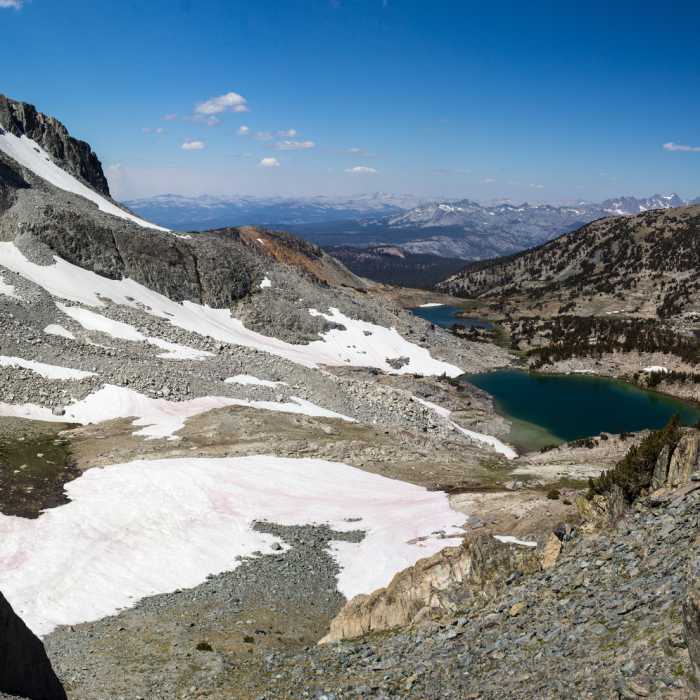
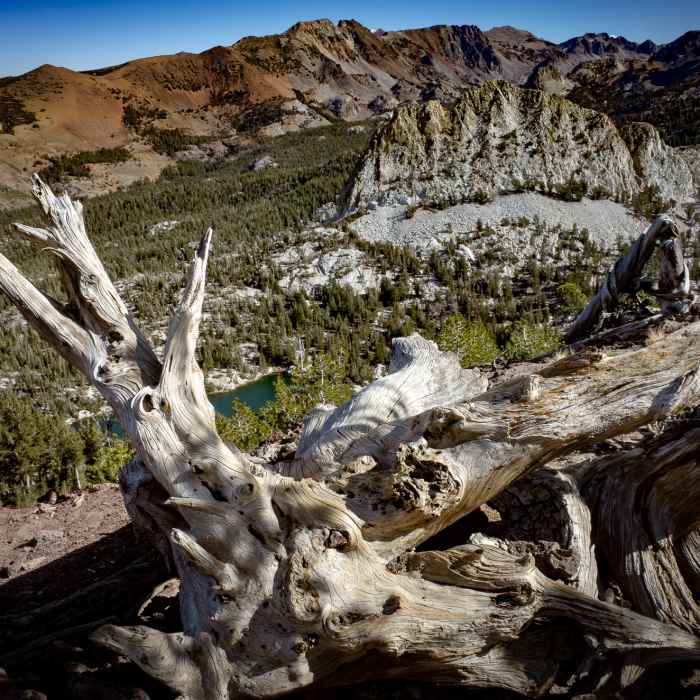
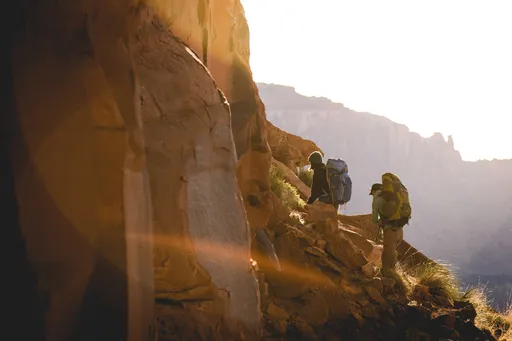
This trail leads you to the Mammoth Crest mountain ridge offering you stunning views in all directions. You can see Yosemite in the west and Mammoth Lakes in the east. And, you'll encounter a number of lakes along the way.
The trail starts at the !Crystal Lake Trailhead, north of the parking area and steadily ascends through fir and pine forest. Once you get past the summer cabins on the left, the trail will zigzag up the northwest hillside of Lake George to offer occasional views of Crystal Crag and Lake George. After a mile, you'll reach the junction with Crystal Lake Trail. Make a sharp right turn to stay on this trail. The further up you go, the better the views will be. At a sandy switchback towards the south, you have a stunning view of the entire Mammoth Lakes basin, including Mammoth Mountain, Horseshoe Lake, Lake Mamie, and Twin Lakes. Trees are sparser beyond this point.
At two miles, you finally reach Mammoth Crest. The trail turns left, but continuing straight onto Mammoth Crest Alternate Spur is highly recommended to get spectacular views of Mount Ritter, Banner Peak, and the Minarets. Continue south over what looks like volcanic slag until the trail becomes sandy. Pass the sign for John Muir Wilderness and cross the desolate plateau while soaking in the views to the west and south.
You'll reach the highest point of the crest at roughly 4.5 miles. The trail will very steeply descend to Deer Lakes - three lakes surrounded by high mountain walls. This is a good place for a longer break. Continue along the middle lake and steadily ascend again. At this point, the trail becomes less defined, but is still recognizable most of the time. Once you reach the southeastern lake, do not continue further south, but stay on an easterly direction up a fairly rocky slope. Several maps show Mammoth Crest Trail heading further south and then up an extremely steep slope. That is not the trail.
At the top of the slope is another plateau covered in snow until late in the summer. Once you have crossed the plateau, another bowl opens up with Duck Lake and Pika Lake and their surrounding mountains. Descend towards the lake. The trail will become very hard to find very quickly. Head east and just cross the meadow. You may find small cairns that people have put up, but if you don't, then just continue until you reach the maintained Duck Pass Trail.