Ready to explore this trail?
View Trail Map in AppNo dogs allowed at the visitor center other than service dogs. Trail closes at sunset and reopens at sunrise. Trail is now open--cargo boxes are in place to make a covered tunnel to protect from falling objects.
Path Type
There and Back
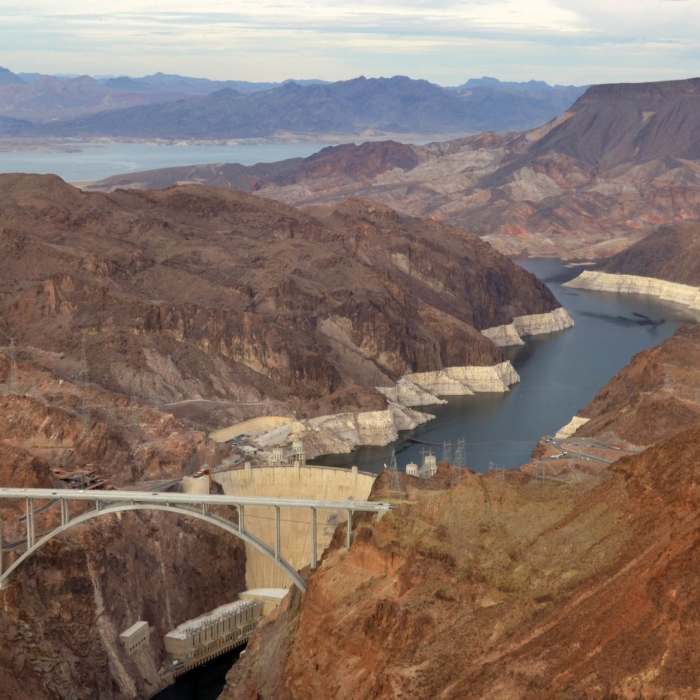
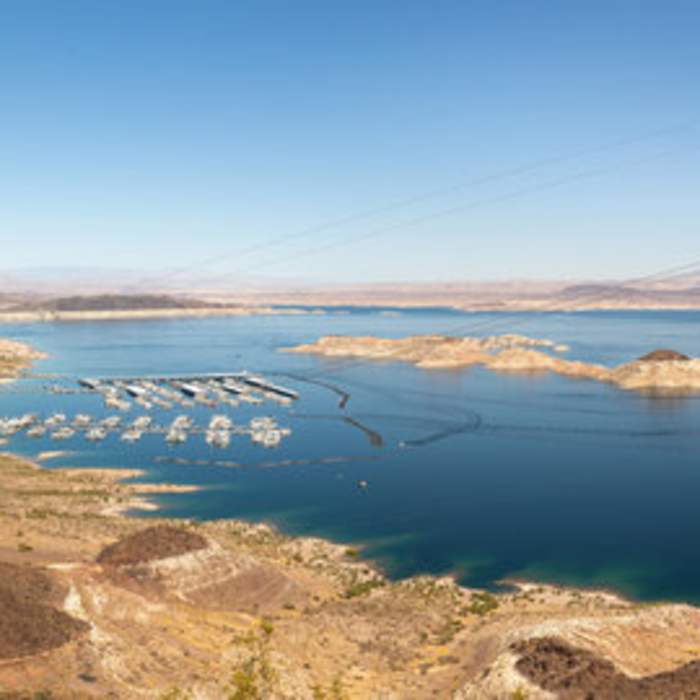
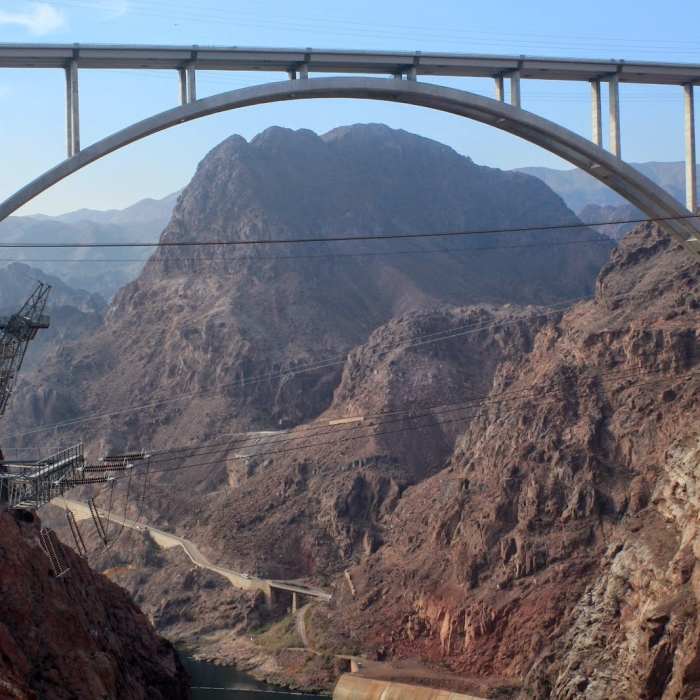
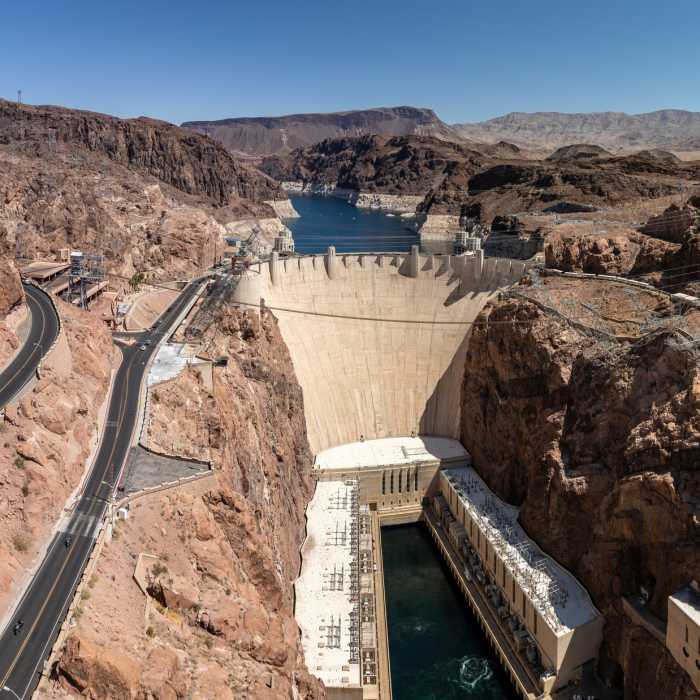
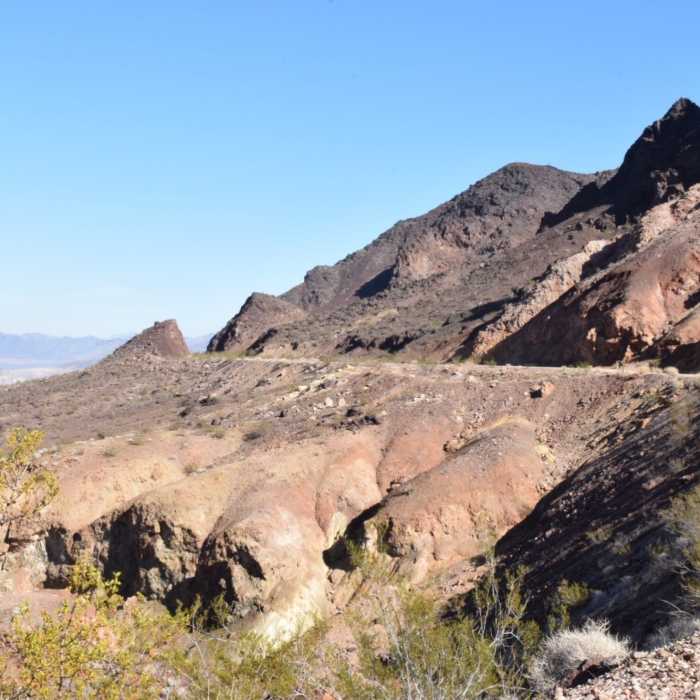
The starting point for the hike is located at the Alan Bible Visitor Center near the intersection of Highways 93 (U.S.) and 166 (Nevada.) Either the upper parking lot at the visitor center or the lower lot a short distance toward the lake may be used. The trail passes through five tunnels next to Lake Mead built for the rail line used during construction of Hoover Dam. A newly opened lower section continues downward and ends on the top floor of the parking garage at the Hoover Dam. Another trail junctions with this trail to take visitors to the walkway that crosses the Hoover Dam Bypass bridge. The total out-and-back distances is four miles if stopping at the fifth tunnel or seven miles if going to Hoover Dam. You can add another two miles if you are going up to the bridge. Elevation change is negligible.General suggestion for Historic RR Tunnels, Hoover Dam, & Bridge (owner: John Blackwell ) suggested by Ed Price Accessibility notes: For access for individuals with disabilities, park only in the lower parking lot, not at the Bible Visitor Center. The route to the trail from the visitor center is paved but very steep by accessibility standards, up to 9% grade for 1100 feet distance. The access route from the lower parking lot to the trail is up to 9% grade with 5% cross slope but for only 203 feet. These are on-the-ground measurements.Based on accessibility characteristics, the Historic Railroad Trail can be divided into two sections. The first 2.2 miles through the five tunnels is on National Park Service property, and the remaining trail to the Dam on U.S. Bureau of Reclamation land.In 2015 the NPS laid a beautiful stabilized decomposed granite trail surface to create a "universally accessible" surface that is firm and stable through the 2.2 miles, including the tunnels. The typical grade is 0.9% with a short maximum grade of 5% at one tunnel. Cross slope is very low. At 2.2 miles, at the boundary with the BOR land, there is a gate, a picnic shelter, and an "accessible" vault toilet.The part of the Historic Railroad Trail on BOR land is much less "accessible". The trail surface is mostly loose gravel and is impossible for wheelchairs with small castors or for individuals with unsure footing. Large-wheeled power chairs may be able to traverse this section. While gradients are generally moderate, but up to 12% in a place or two, signage with a wheelchair symbol is confusing, misdirecting, and dangerous.As the trail approaches Hoover Dam, this trail ends at the upper deck of the parking garage in a series of concrete switchbacks down to the deck. Gradients here are extreme for a concrete access route at up to 21% making it impossible for someone using a manual wheelchair, or possibly other adaptive hiking means, to return.This Historic Railroad Trail, with great views of Lake Mead and the five tunnels, is recommended to be enjoyed by adaptive hikers. However, only the first 2.2 miles, one way from the visitor center end, is recommended.
Today's path is the route of one of the railroads used to haul heavy equipment and materials for the construction of Hoover Dam.
No Condition Reports
Contributors