
Ready to explore this trail?
View Trail Map in AppHunting and fishing are allowed, but permits are required. Camping is permitted in the gorge, but permits are required from May 1 through October 31.
Path Type
Loop
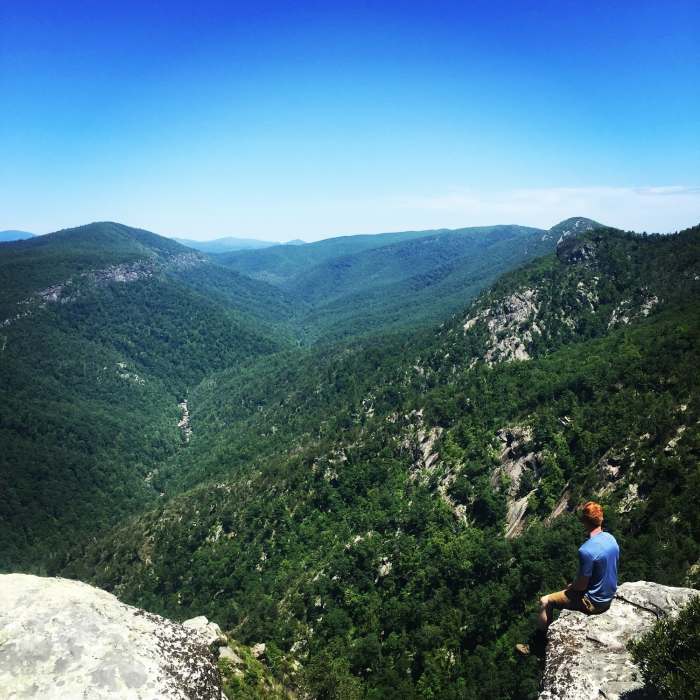
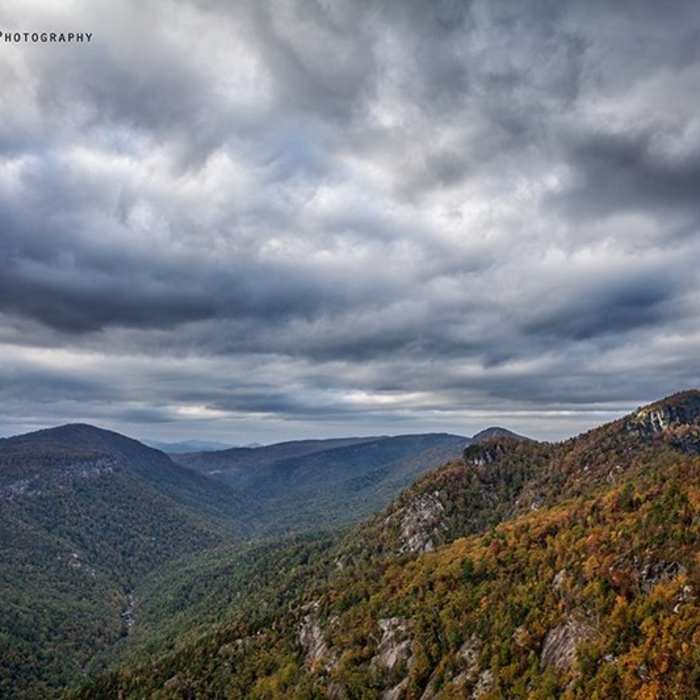
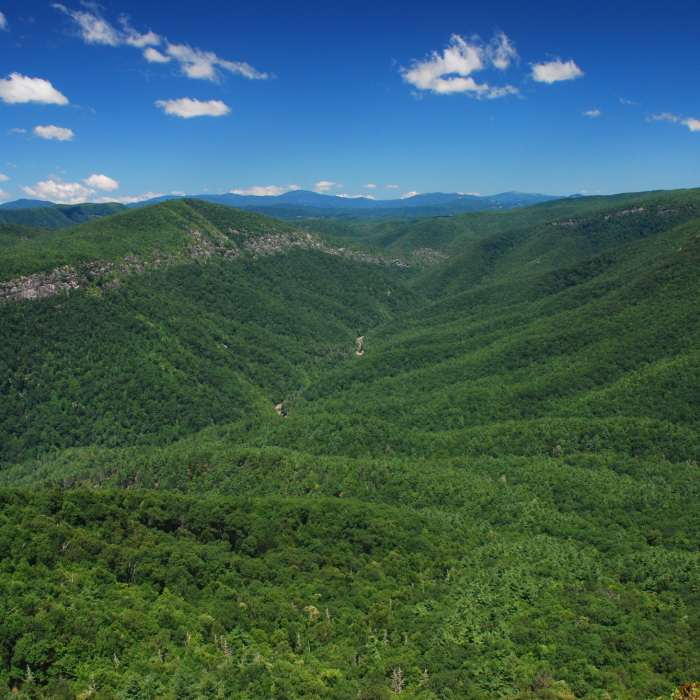
Directions: Take I-40 to exit 105 to NC 18 (toward Morganton/Shelby). Continue on NC 18/Green St./NC 181 for 6.5 miles and turn left on Frank Whisnant Rd./NC 1250. Follow Frank Whisnant Rd./NC 1250 for 2.5 miles and turn right onto NC 126 for 6 miles. Turn right onto Wolf Pit Road and follow to the parking area.Starting at the southernmost portion of the loop at the Wolf Pit Trailhead, hikers will continue north on Shortoff Mountain Trail. This trail is also part of the Mountains to Sea Trail (MST). For more information concerning the MST, please refer to this webpage. Shortoff Mountain Trail is a wonderful backpacking location with ideal camping spots and unmatched scenery. This trail comprises most of the eastern portion of the loop. It's also the more clearly marked of the trails, making it easier to navigate for novice hikers. One of the most favorable campsites for hikers is at the Big Flat Rock Overlook. There is an open portion of ground ideal for multiple tents. From the campsite, hikers can look out into the gorge. It is also quite apparent that Shortoff Mountain Trail has been a host to a number of forest fires in the past few years, providing a remarkable hike amongst scorched trees. Hikers will then come to Tablerock Summit Trail and Little Tablerock Trail, both of which branch off of the Tablerock Parking Area. Tablerock Summit Trail is a short but steep trail that leads to the lookout on Tablerock Mountain. At 3,680 feet, hikers will find a beautiful, panoramic view of North Carolina's expansive Linville Gorge Wilderness Area. Heading north on Little Tablerock Trail, it's a roughly 1,000-foot descent to Spence Ridge, offering great views of the expansive Linville Wilderness Area.Spence Ridge Trail is the northern portion of the Loop. It's also important to note that !Spence Ridge Trail bridge at the Linville River is currently washed out. Hikers must execute a wet crossing to proceed. River conditions are to be considered dangerous in the event of recent rainfall. Once hikers cross the river, they will come to the Linville Gorge Trail which makes up the entire western portion of the Linville Gorge Wilderness Loop. This is considered the most strenuous portion of the loop, and is not recommended for novice hikers as the trail is poorly marked (if at all) in many locations. The Mobile App, a map, and a compass are strongly recommended. Hikers will notice a great number of fallen trees in the area, due to the Southern Pine Beetle infestation. This trail follows the Linville River for the most part, providing ample locations to replenish water. As always, please remember to use a filter - never drink water directly from the source. Along the way, the trail passes through hardwood forest, rugged cliffs, boulders, and cascades.At the southernmost portion of the trail, hikers will cross the Linville River once more to Shortoff Mountain Trail, where they will hike uphill and return to the Wolf Pit Trail and parking lot.
The Linville River was originally known to the Cherokee Indians as "Eseeoh-la," which translates roughly as "a river of many cliffs." The area now gets its name from William Linville and his son, John, two men who were killed in one of the last confrontations between settlers and the Cherokee. William was good friends with Daniel Boone, who was later a member of the party sent to retrieve his body.The Linville Wilderness area fell under formal protection in 1952 when the land was purchased with funds donated by John D. Rockefeller. With congressional approval of the Wilderness Act of 1964, Linville Gorge became one of the first formally designated wilderness areas as part of the new National Wilderness Preservation System.
No Condition Reports
Contributors