Ready to explore this trail?
View Trail Map in AppPath Type
Loop
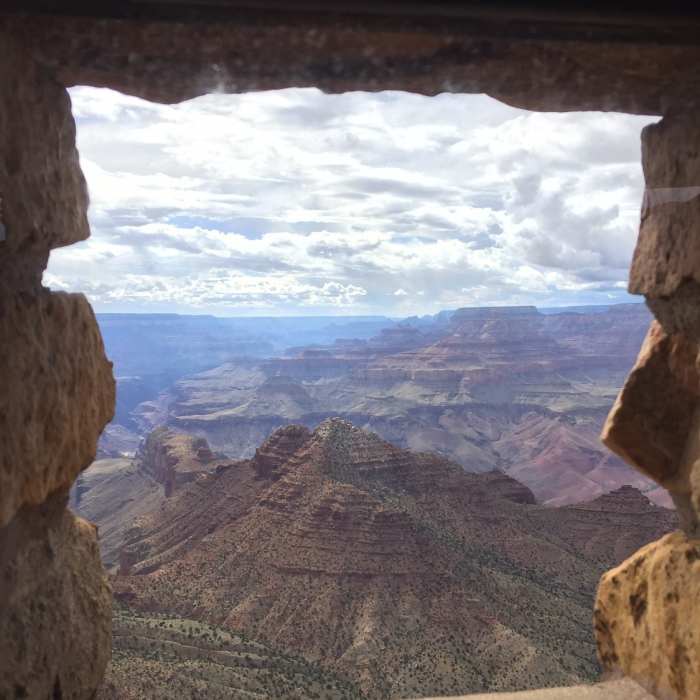
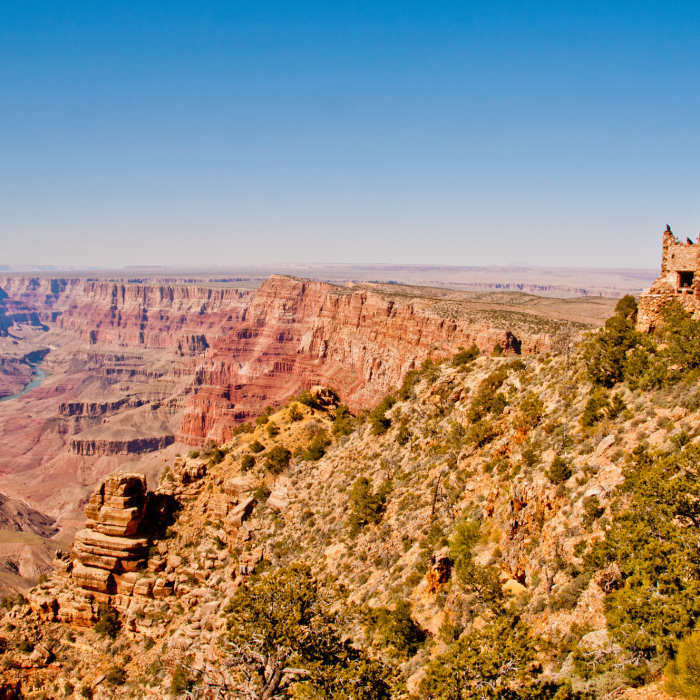
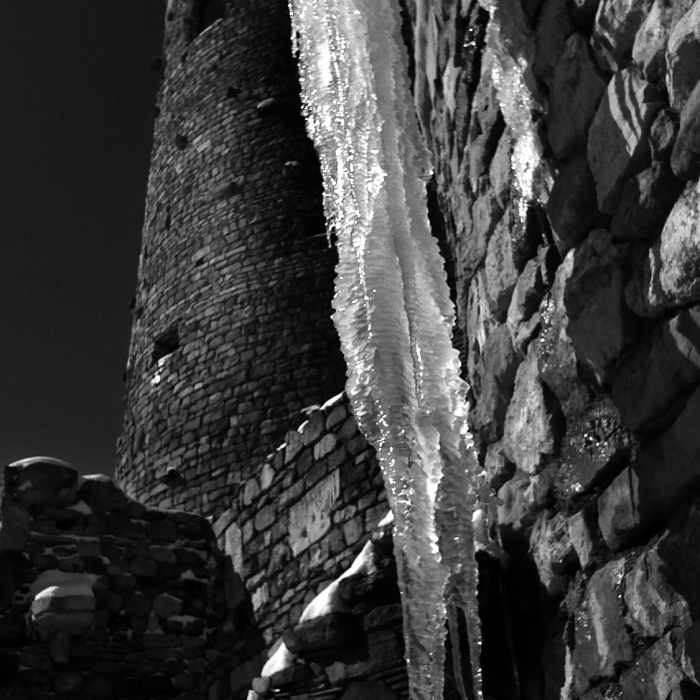
From Desert View, aptly named because of the views to the east of the Painted Desert, you can see the Colorado River make a big bend and continue to the west, the North Rim more than 10 miles away, and a panoramic view for well over 100 miles on a clear day.The Watchtower dominates the near view. This structure was designed by Mary Elizabeth Jane Colter who is often referred to as the architect of the southwest. She traveled throughout the southwest to find inspiration and authenticity for her buildings. The architecture of the ancestral Puebloan people of the Colorado Plateau served as her model. This particular tower was patterned after those found at Hovenweep and the Round Tower of Mesa Verde. Ms. Colter indicated that it was not a copy of any that she had seen, but rather modeled from several.As you get closer to the building you might see how well it blends into the environment. It is difficult to tell where the rock of the canyon walls end, and the tower begins. She said: First and most important, was to design a building that would become part of its surroundings;one that would create no discordant note against the time eroded walls of this promontory.To obtain this result she insisted that the rocks not be cut or worked, so they would not lose the:weathered surfaces so essential to blend it with the canyon walls.Note, too, some of the intricate designs she had built into the tower. For example, look for the white decorative stones near the top, which fade out as the eye goes around the tower. She had seen this pattern at Chaco Canyon and thought it would break the monotony of this Watchtower. The built-in cracks which are patterned from some of the ancient towers she had seen are deliberately designed. There are petroglyphs on some of the stones which were brought here from near Ash Fork.The internal steel framework of the Watchtower was designed and supervised by the bridge builders of the Santa Fe Railway company. Upon this framework, each exterior stone was selected and carefully placed to ensure exactly the look Mary Colter was hoping to obtain for she was a stickler for detail. At one point, she had to leave for a day and the workmen continued to put on stone, completing two layers. When she returned, she was not satisfied with one stone on the newly laid layers, and the men had to take the whole thing down and re-do it to her exacting specifications. Her attention to accuracy of detail was amazing.The kiva room, which is now used as retail space, was also carefully designed as a rest area. It was here that visitors to the canyon in the 1930s could sit in comfort and have outstanding views of the canyon. The fireplace is unique in that it does not block the view for visitors. Gaze into one of the reflectoscopes and see a different perspective of the canyon.As you climb the stairs of the tower there are many stories embedded in the paintings and artwork which decorate the walls. The first gallery, on the first landing, was done by Fred Kabotie, a Hopi from second Mesa. These represent the physical and spiritual origins of Hopi life. The ceiling images, painted by Fred Geary, are recreations of images from Abo Rockshelter, now part of Salinas National Monument in New Mexico.The top floor of the tower is without decoration which might detract from the beautiful panoramic views of the Grand Canyon. Again, this design reflects Mary Colters respect for the landscape in which she was building.The Watchtower stands today, partly as a monument to Ms. Colters careful attention to detail, her enchantment with the southwest, and her commitment to the cultural preservation.
The Indian Watchtower at Desert View (1932)From the National Register of Historic Places Nomination, 1986The Watchtower stands at the eastern end of the South Rim of the Grand Canyon. From a distance, the building's silhouette looks like the Anasazi watchtower it was meant to mimic. In plan, the structure is composed of one enormous circle at the north, a small circle at the south, and gently arched forms connecting the two. As Virginia L. Grattan wrote in Mary Colter Builder Upon the Red Earth, "The Indian watchtower at Desert View was not a copy, but what Colter called a 're-creation' of an Indian watchtower." Standing at 70 feet, with a 30-foot base, the tower was unique in having a concrete foundation and a steel framework well hidden in the stones of the tower. The ground level of the tower was a large, round observation room with a spectacular view of the Grand Canyon.
No Condition Reports
Contributors