Ready to explore this trail?
View Trail Map in AppRegional Classic
A must do route for the area handpicked by local experts.
An official permit from the Havasupai Tribe is required in advance for all visitors. Day hiking is strictly prohibited, and reservations must be booked online, in advance, at havasupaireservations.com.
Hiking season runs from February 1st to November 30th. Immediate closure of the canyon is possible at any given time. Closures generally occur due to flash-flood risk, but will also occur when the temperature exceeds 115 degrees Farenheit.
Path Type
There and Back
This route begins and ends at the Hualapai Hilltop trailhead, after reaching Havasu Falls.
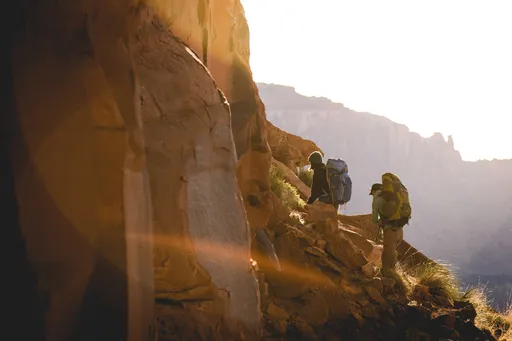
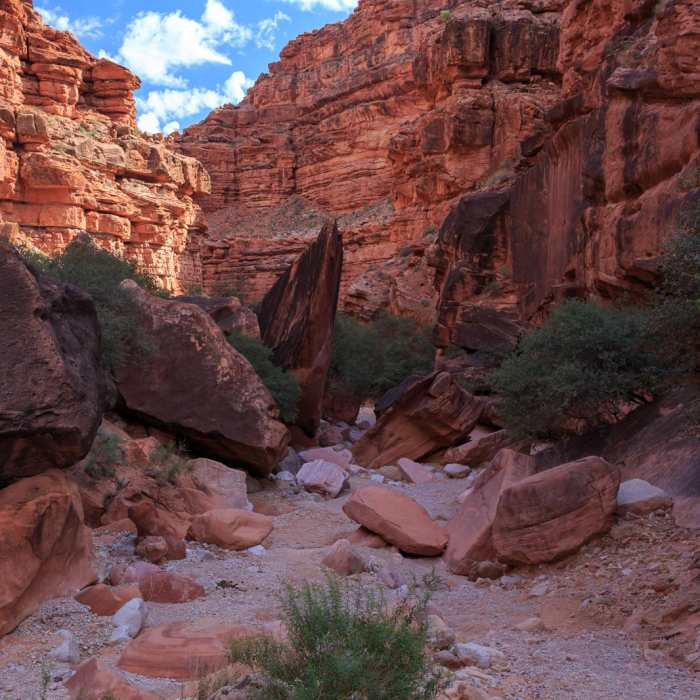
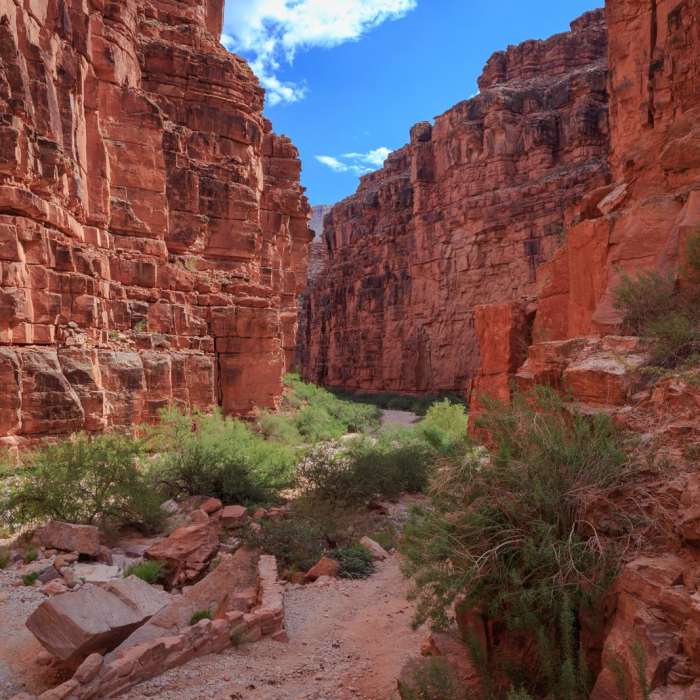
The route starts with a steep descent down rocky switchbacks into the canyon. At 1.5 miles, the trail levels out onto the gravel floor of a wide, dry wash. Follow this wash down-canyon.
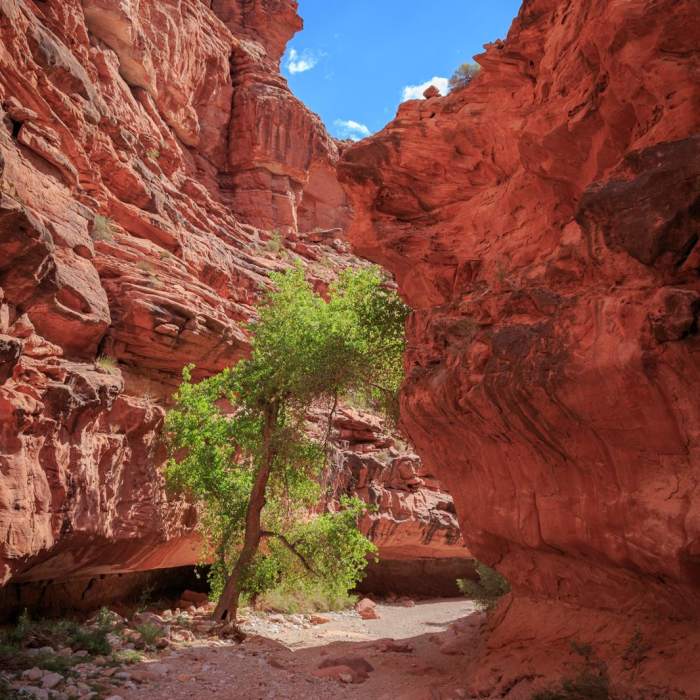
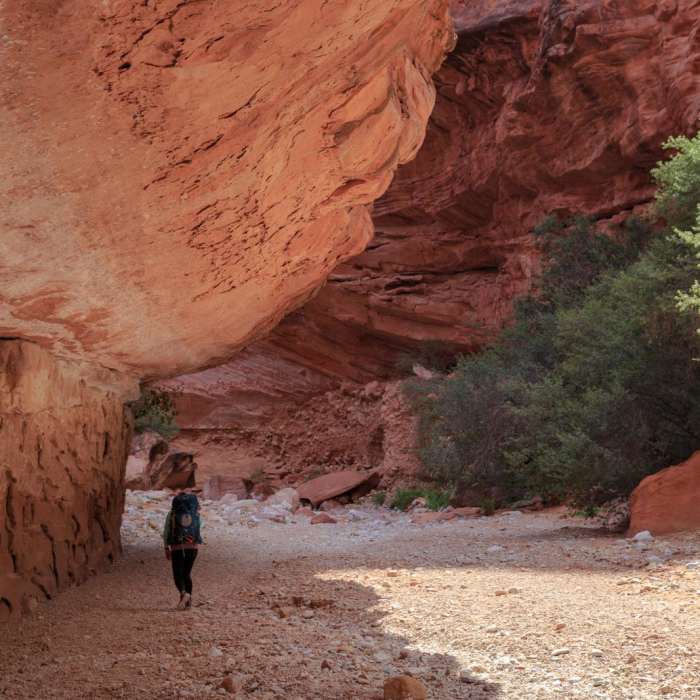
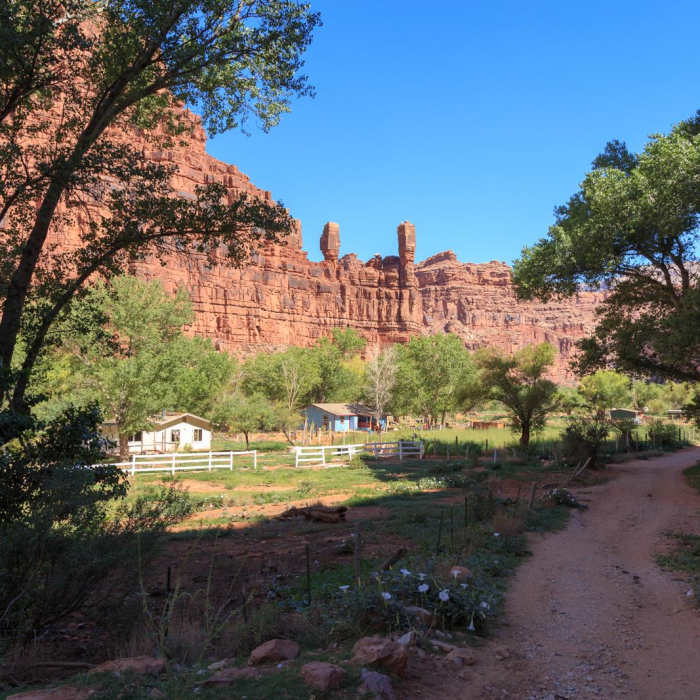
At 5.0 miles, the canyon narrows and high rock walls begin to offer shade. Around 6.3 miles, reach the intersection with the Supai Trail. Turn left to continue north. The terrain becomes sandier as it passes through Gambel oak groves. Cross a footbridge to the right side of Havasu Creek at 7.5 miles, then descend into Supai Village at 8.0 miles. Hikers must check in at the tourist office on the left.
Proceed through the village, and descend along Havasu Creek. At 9.0 miles, Navajo Falls is visible on the left. Cross another bridge to reach Havasu Falls on the right. Continue descending past Havasu Falls to reach Havasupai Campground at mile 9.5.
To return, retrace your steps, saving sufficient energy for the final 1.5 miles of strenuous uphill switchbacks.
Crux: The return climb out of this descent — 800 vertical feet on tired legs at mile 18 of a 19-mile desert route — is the defining physical challenge of this route. Start the return before the canyon heats up, typically no later than 7 AM in summer.
The Havasupai Indian Tribe has lived here for at least eight centuries, long before the Grand Canyon was established as a National Park in 1919. The reservation was officially created in 1880 on just 518 acres, and Havasupai were pushed out of much of their ancestral land in the canyon. In 1975, through the Grand Canyon National Park Enlargement Act, the reservation was expanded to 188,077 acres. Though still very far shy of their original territory, this allowed the Havasupai Tribe to build a new economy around tourism.The tourism economy also has its downfalls. Visitation is heavy, and campers often leave trash behind, degrading the environment in the process. It is also very expensive for people to live here and manage this land with no road access, and it doesn't appear that the tribe has the resources it needs. For obvious reasons, visitors should treat this heritage land with the utmost respect.
No Condition Reports
Contributors