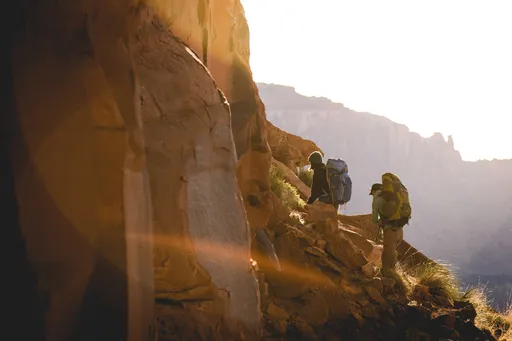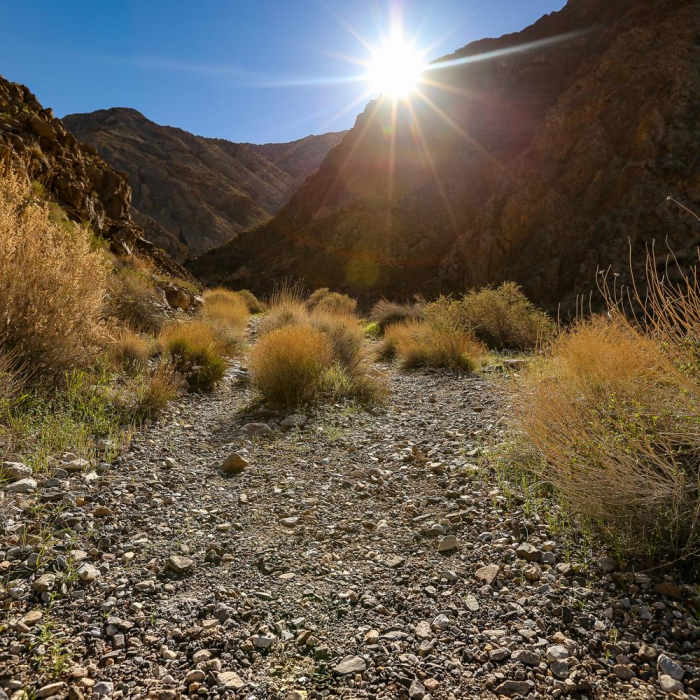
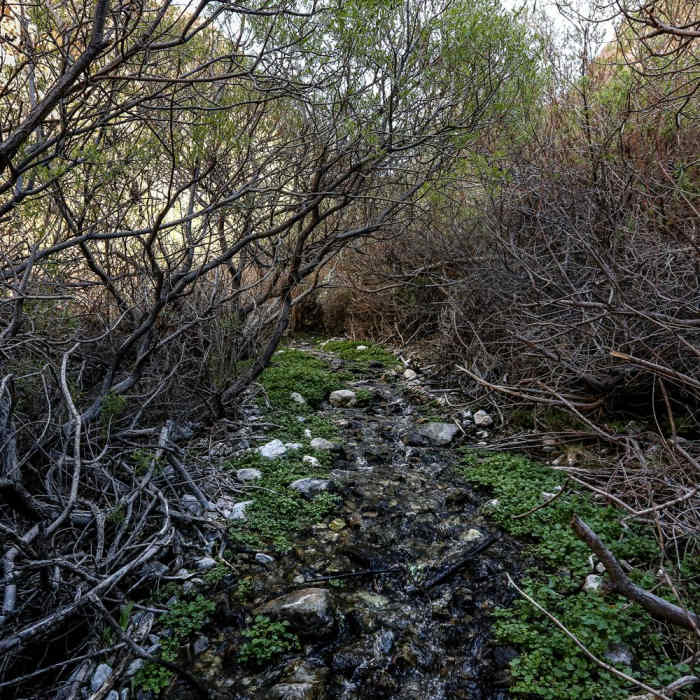
Near Panamint City
Near Panamint City
Near Panamint City
Near Panamint City
Near Panamint City

Looking for more photos?

View All Photos
Driving Directions
Hike Route

Panamint City

No rating
5.3
mi
Distance
4,353
ft
Gain
strenuous
Difficulty

Route Details

Flatter
Steeper
5.28mi
Distance
4,353ft
Elevation Gain
647ft
Elevation Loss
60%
Max Grade
6,330ft
High Point
2,625ft
Low Point
Path Type
Point to Point
Description
Panamint City, which was sometimes just known as Panamint, is a ghost town in Death Valley National Park that once had a population of 2,000 people who worked the silver mines in the surrounding Panamint Mountains. Silver was discovered in the region by a group of outlaws using Surprise Canyon as a hideout. A heavy investment by Nevada Senator William M. Stewart into local mining operations started the boom that brought prospecting and development to the area. The town of Panamint City was incorporated in 1873, though the isolated mining town at the top of Surprise Canyon quickly became a rugged and lawless mining camp. The reputation was so harsh that Wells Fargo refused to open a branch in town. The first thing that greets hikers into Panamint City today is the stretch of Main Street, which was once a one-mile stretch of mills, saloon and a red-light district during the mining town's several incarnations. Panamint City's location at the high end of a canyon prone to major flash floods presented challenges to access and living conditions. A flash flood completely destroyed the town in 1876, yet Panamint City carried on mining in some capacity until 1983, when another flash flood washed out the rugged road built up Surprise Canyon. This led to the abandonment of the town altogether. As of 1994, the area containing Panamint City and the majority of Surprise Canyon were incorporated into Death Valley National Park. Because of the normally arid climate, the strenuous and long hike to reach Panamint City, and the recent abandonment of the active mining in the area, the collection of cabins, ruins, machinery, and mining structures remain in relatively preserved condition. Those taking on the challenge of hiking up to the ghost town are rewarded with a large number of buildings that still remain in some capacity. There is a lot to explore, and under the right conditions, freshwater springs piped into the area provide a source of water for cooling off. The hike itself is a difficult and strenuous climb, with more than 3,600 feet of elevation gain over the 7.5-mile trail into downtown Panamint City. The hike begins at the ruins of Chris Wicht Camp, today only a collection of burnt-out mill ruins, and shortly enters the narrows of Surprise Canyon, where a stream runs over slick boulders and through overgrown brambles with little discernible trail. There is a lot of scrambling up and along rocks, through tight and thorny bramble passages, and along crumbling sedimentary ridges, and it is very likely you'll be walking a portion of the hike through the stream itself or looking around for trails among many of the dead-end paths. Hikers should plan for a small amount of backtracking and wrong turns because floods have washed out previous trails or made them unpassable. Among the abundance of current footpaths, it is possible to choose the best one or improvise one's own. As long as hikers continue heading up the canyon, the tight and slippery passages will eventually become steep and rocky. The trail passes a disconcertingly high number of abandoned vehicles that were either left to the old road or were victims of past floods that washed through the city remains. Barrel cactus and frogs share the canyon with burros and bighorn sheep, and the entire ecosystem gradually changes from the canyon basin to juniper- and pinyon-studded mountain slopes. Stone foundations on either side of the trail will mark the final stretch into the ghost town along what was once Main Street. Native American pictographs can be found in Surprise Canyon just before reaching the ruins of Panamint City. In the town of Panamint City, the old mines are visible on the slopes to the right. Several well-preserved cabins can make for a shelter in the central area, and up Sourdough Canyon to the left is a cabin called "The Castle," where spring water has been run through a hose into a basin standing behind the cabin. Note that the flow of this spring is intermittent. and park officials have at times deemed the water unsafe to consume. Hikers should not underestimate the amount of water that they should carry in with them for this trip. There is a lot to explore here before backpackers can eventually turn around and travel back down Surprise Canyon and return to Chris Wicht Camp. The trek back down is remarkably easier than the trek up! The final 4-mile dirt road from Indian Ranch Road to Chris Wicht Camp should be driveable by passenger vehicles; however, a high-clearance vehicle is highly recommended. There are no facilities of any kind at the trailhead. Beer and water are available from the store in Ballarat. Anything else must be bought in from the larger towns farther away.

Route Conditions

Report Conditions
No Condition Reports
Report Conditions

Nearby Hike Routes

Panamint City

Hike Route

Panamint City

Cave
strenuous
10.54 mi
+4,929 ft
Surprise Canyon to Johnson Canyon

Hike Route

Surprise Canyon to Johnson Canyon

Views
extreme
23.04 mi
+7,255 ft
Surprise Canyon Trail

Hike Route

Surprise Canyon Trail

Views
extreme
20.32 mi
+6,759 ft
Johnson Canyon

Hike Route

Johnson Canyon

extreme
13.85 mi
+87 ft
Telescope Peak Trail

Hike Route

Telescope Peak Trail

Views
strenuous
12.33 mi
+3,416 ft
Panamint Valley

Hike Route

Panamint Valley

Views
extreme
40.48 mi
+2,963 ft
Contributors
Shaun Hunter