Ready to explore this trail?
View Trail Map in AppPath Type
Loop
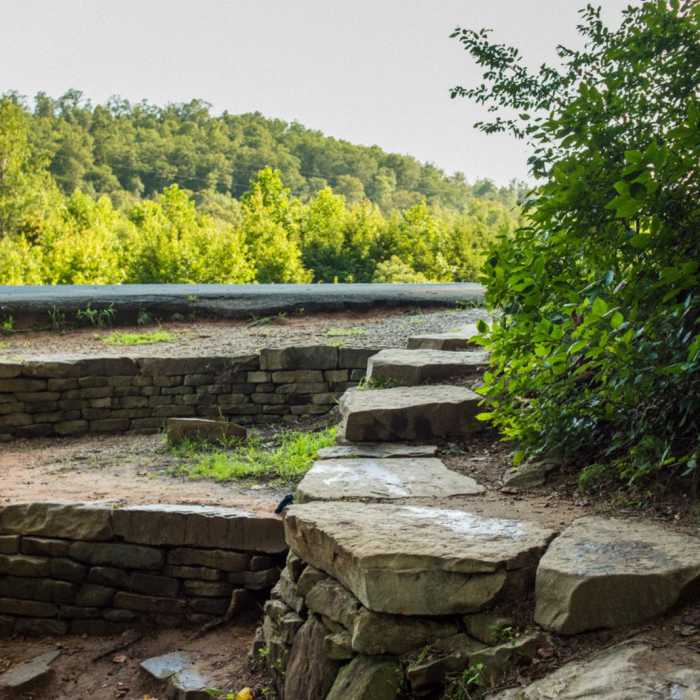
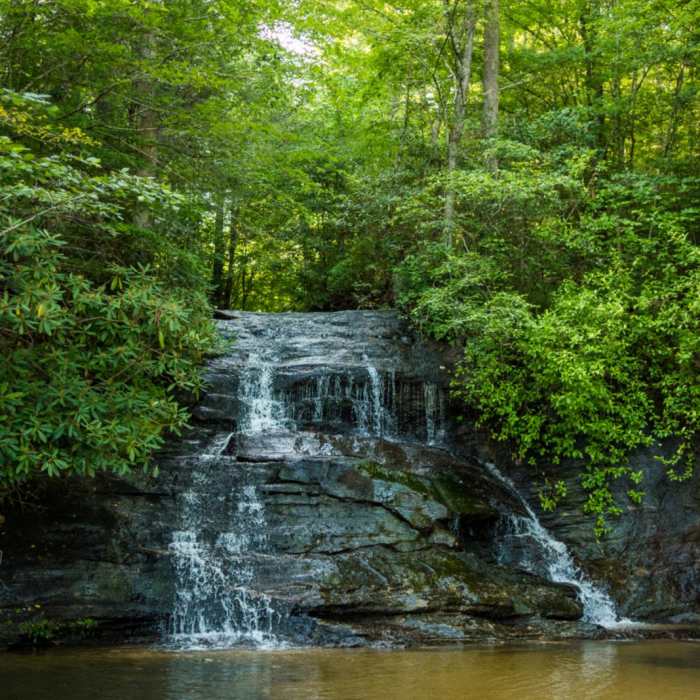
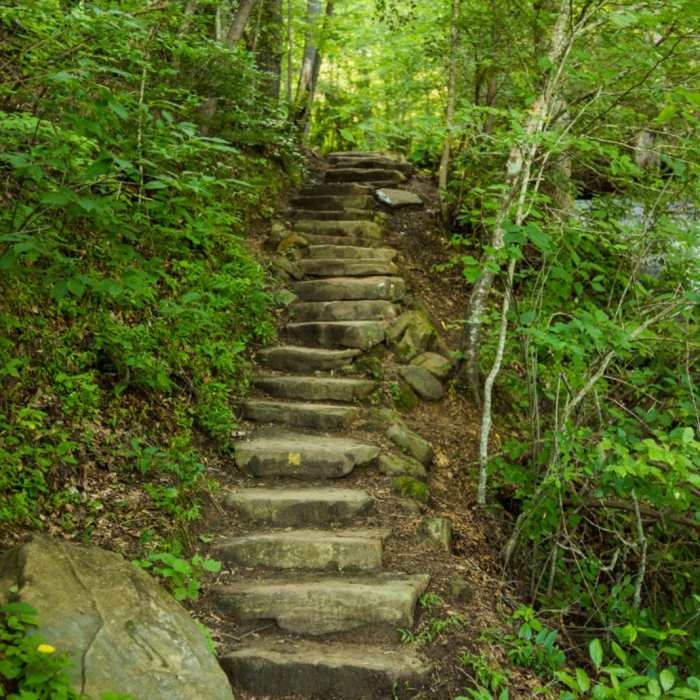
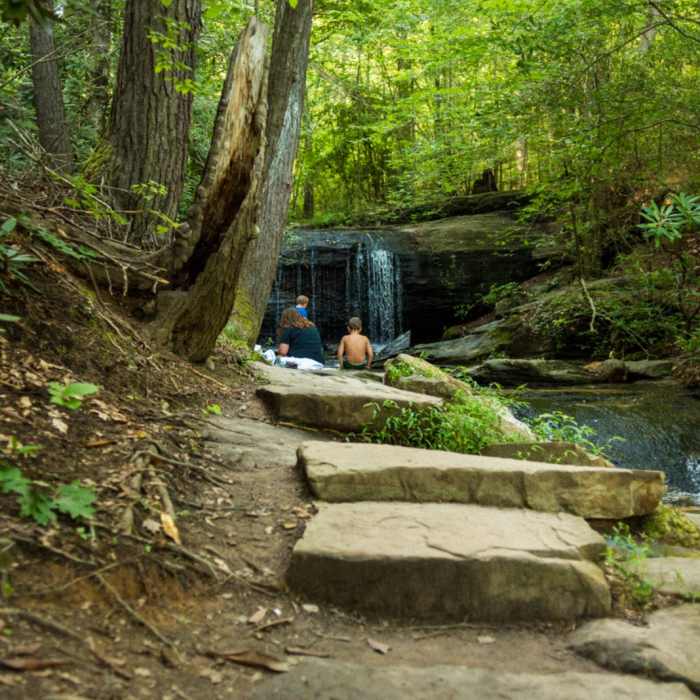
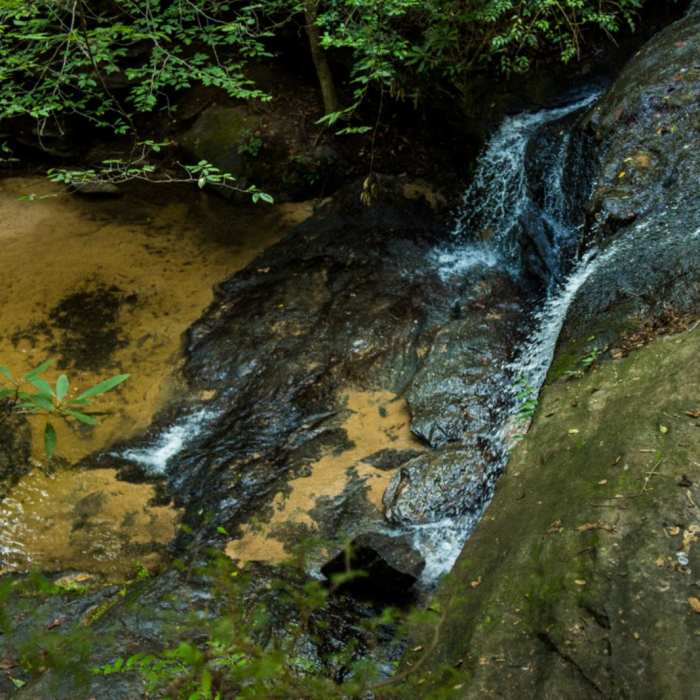
Rock steps will take you up to the second level of Wildcat Falls of about 20-30 ft. high where you'll cross the creek to the other side with an information board. Both of these falls have shallow pools under them, making it a great place to cool off during the heat of the summer especially with kids. The pools are pretty shallow for kids. Adults would have to lay down or sit under the falls to get wet easier. The Upper Wildcat Falls are more for view than getting wet, as they are about a half mile back and drop about 100 feet.This trail is roughly a mile long, depending on if you're starting from parking lot or the information board. From the parking lot, it was recorded as 1.1 miles using the Mobile App and took about 50 minutes which included stopping at the waterfalls. Park along the side of Geer Hwy 11 / 276 and the first set of falls is right near the road. Rock steps will take you up past the chimney of an old picnic shelter and to the second level of Wildcat Falls which are about 20-30 feet high. Here the trail will fork (this description follows the clockwise direction), and hikers should head left for a slower climb up and back down the stairs on the right. Cross the creek to the other side with the information board.About 0.5 miles into the hike, you'll reach the base of Upper Wildcat Falls; you'll have to cross a few rocks to get to the other side where you'll find a little trail going up the right side a little higher to some flat rocks which make a nice seat for admiring the high falls. Be careful climbing as well for your own safety as it is risky with signs posted and past fatal injuries apparently. Over the next 0.3 miles, there are a few dry stream crossing and a small granite side waterfall. Near the highest point of the loop, the sound of the creek fades. Here, hikers can see a leaf shrouded view of the little valley below. From there, it's basically all downhill with over a few log stairs to connect back to the fork and the reaming short distance back to the parking area.
The Greenville Wayside Park was built as short time rest stop experiment by the National Park Service in the 1930's as automobiles were taking off in popularity. This is one of six in the state of South Carolina ranging in size from 29 to 62 acres. Workers were hired under the New Deal emergency relief program (aka. Federal Emergency Relief Administration (FERA) from 1933 - 1935 to be replaced by Works Progress Administration in 1935) under the Roosevelt's Administration to help create and hire unskilled labor in state and federal jobs to ease the unemployment. Under FERA, facilities were developed on public lands across the country providing work for over 20 million people.
No Condition Reports
Contributors