
Ready to explore this trail?
View Trail Map in AppPath Type
Loop
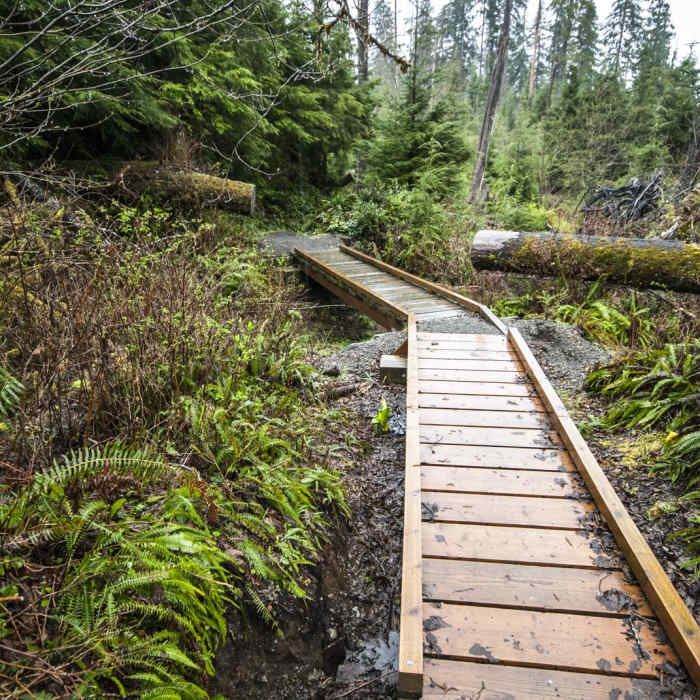
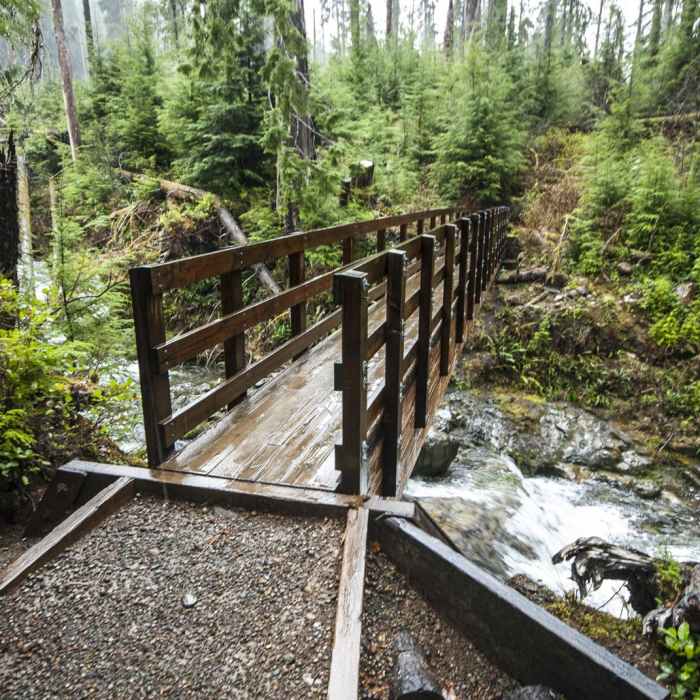
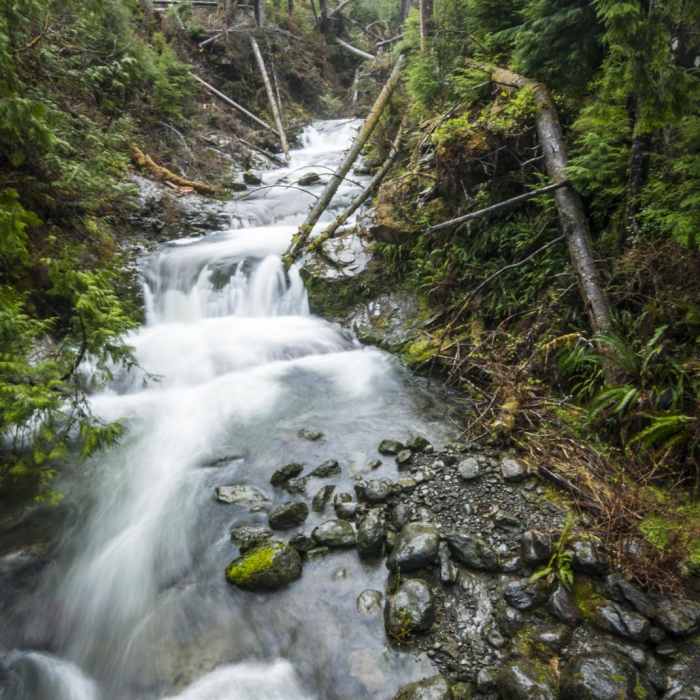
Any visit to the west side of the Olympic National Park and Forest ought to start with a walk on the well-maintained trails of the Quinault National Recreation Trail System. From the south shore of Lake Quinault, the trail system departs into some of the most well-preserved and diverse old-growth forest on the entire peninsula. To gain a better understanding of the incredible ecosystem into which you're about to venture, it is best to start on the short but extremely informative Quinault Rain Forest Nature Trail. At only 0.5 miles in length, however, you'll likely yearn for more;the Gatton Creek Loop Trail, along with the Cedar Loop Trail, are the next-best places to go. The walk along Gatton Creek exposes countless small cascades, and the upper reaches of the trail traverses through stands of some of the largest Douglas firs found anywhere on the planet. In fact, the co-champion for largest Douglas fir in the world rests at an undisclosed location just off the trail. Although you won't find this giant, which stands at 302 feet and has a 13-foot diameter base, you will come across many of its cousins that are equally as impressive. Did you know... Coastal Douglas fir (Pseudotsuga menziesii) is currently the third tallest tree species in the world after coastal redwoods (Sequoia sempervirens) and mountain ash (Eucalyptus regnans), the latter of which are found in southeastern Australia and Tasmania. At 327 feet, the Doerner Fir (previously called the Brummit fir) in Coos County, Oregon is currently the tallest Douglas fir. Prior to European/American settlement and logging, Douglas firs are believed to have been the tallest trees in the world. Reliable accounts documented a 415-foot tree cut down on the north shore of Vancouver, BC in 1902, and less reliable accounts claim a 465-foot tree was cut down in Whatcom County, Washington in 1897. The Queets Fir, located within Olympic National Park, is the other co-champion Douglas fir. It measures 15.9 feet at the base and stands 281 feet tall. Old-growth Douglas fir species can live 500 to 1,000 years. Douglas firs technically are not true fir trees and are often called "Douglas-fir" (with added quotation marks) to correct the misappropriation of the name. Because of its tolerance to sunlight and rapid rate of growth, Douglas fir has come to dominate the timber industry, particularly in areas where clear-cutting is standard practice. Today, more timber is yielded from Douglas firs than any other species in North America.
No Condition Reports
Quinault National Recreation Trail System, Cedar Loop
Quinault National Recreation Trail System, Cedar Loop
Contributors