
Ready to explore this trail?
View Trail Map in AppPath Type
Point to Point
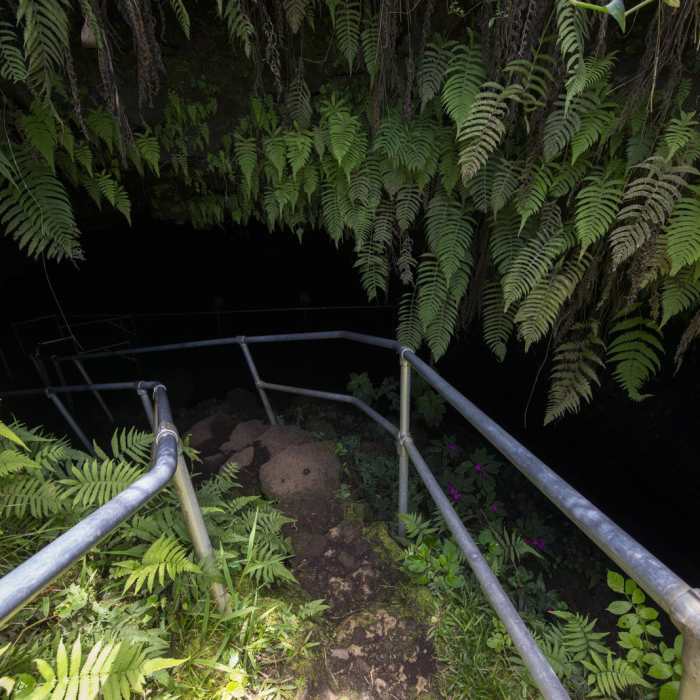
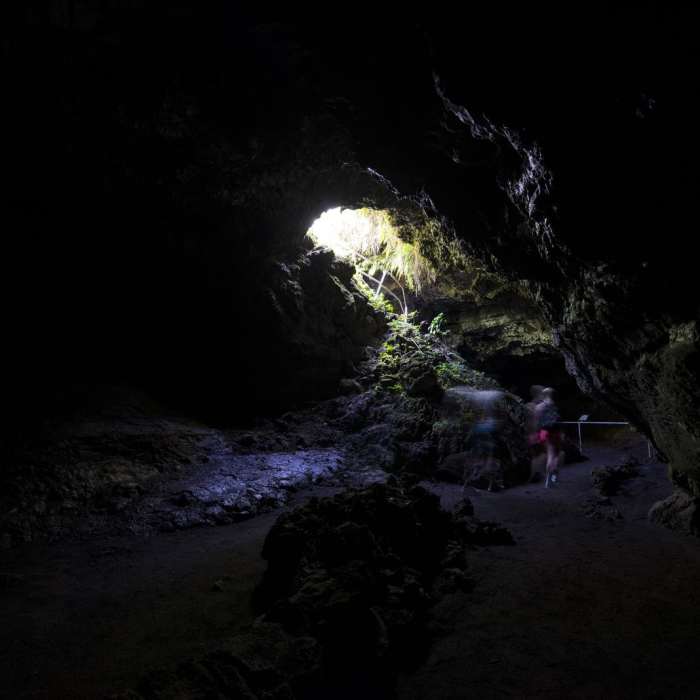
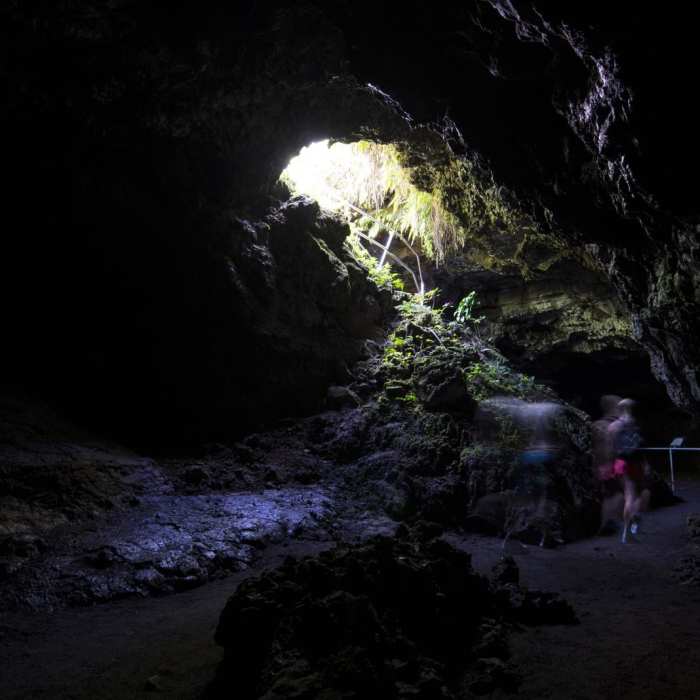
When youare setting off for your day (or two) adventuring along the Road to Hana, donat forget to toss in your headlamps! This half-mile self-guided tour through 1,000 year-old lava tubes is truly a worthwhile experience especially if youare bringing little ones along. The variety of wild cave formations is downright fascinating, and, oftentimes, the cooler air is a lovely reprieve. A visit to the caves (between 10:30 a.m. and 4 p.m.) will cost you $12, though kids under 5 are free. Theyall give you flashlights to use, and though caving can conjure notions of highly uneven terrain, bats, bugs, and tight spaces, the Kaaeleku Cave is spacious and traversed by a well-traveled cinder path supported by a hand rail. As a massive volcano eruption spewed a nearly inconceivable amount of lava down these hillsides toward the sea, the layers closest to the open air slowly cooled to form a crust, leaving massive underground rivers of lava meandering toward the sea for nearly two years after the eruption ended. Eventually, all of the lava drained out, leaving this structureathe 18th largest lava tube in the world. In most places, the distance between the cave and the open air is between 30 and 50 feet, though erosion slowly carved away at the ground until it exposed the entrance to the cave. Itas so deep, sturdy, and large, that it was once set aside to be a government fallout shelter. Along your hike through the cave youall come across a number of different formations. Keep an eye out for the notorious Ropey Pahoehoe that looks remarkably like brownie batter, pillars, stalagmites, cauliflower, a Flintstone-esque "bowling alley" and more. For a solid dare, turn off all of the flashlights/headlamps in your group. Itas quite unnerving!
No Condition Reports
Contributors