Ready to explore this trail?
View Trail Map in AppThe Smugglers Pass Trailhead and Ron Coleman Trail are currently closed while the park finishes rerouting the lower portion of the trail, and for rehabilitation.Official hours for the Franklin Mountains State Park headquarters are 8 am to 5 pm. Both ends are accessible outside of these hours no gates and pay stations are located at both trailheads. Fees are $5 per adult and are free for children 12 and under. The busiest seasons are spring through fall.
Path Type
Point to Point
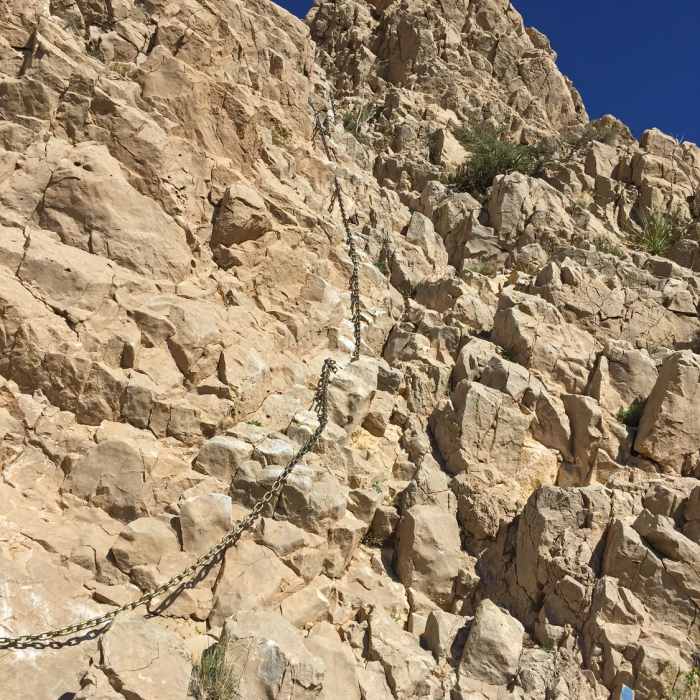
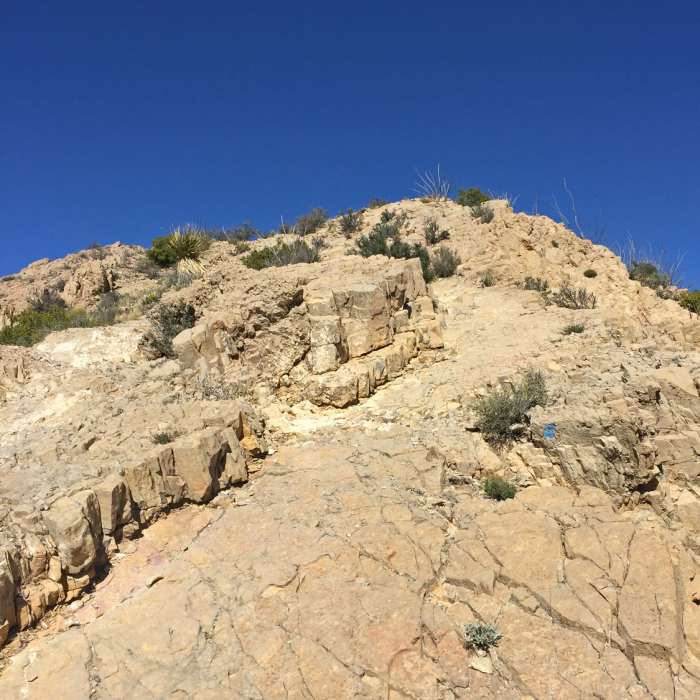
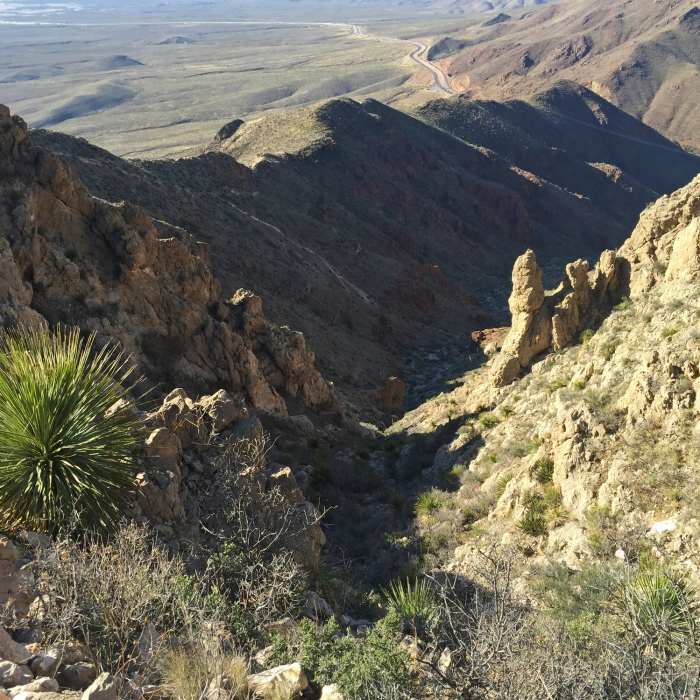
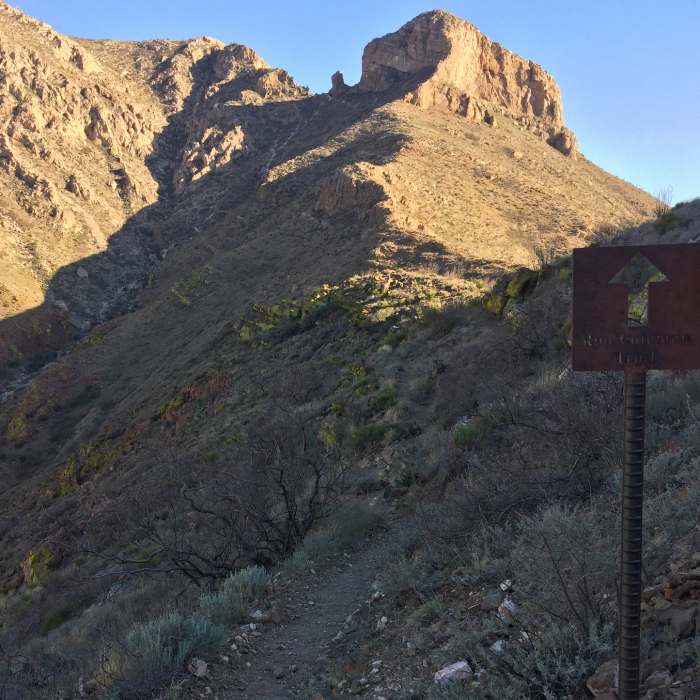
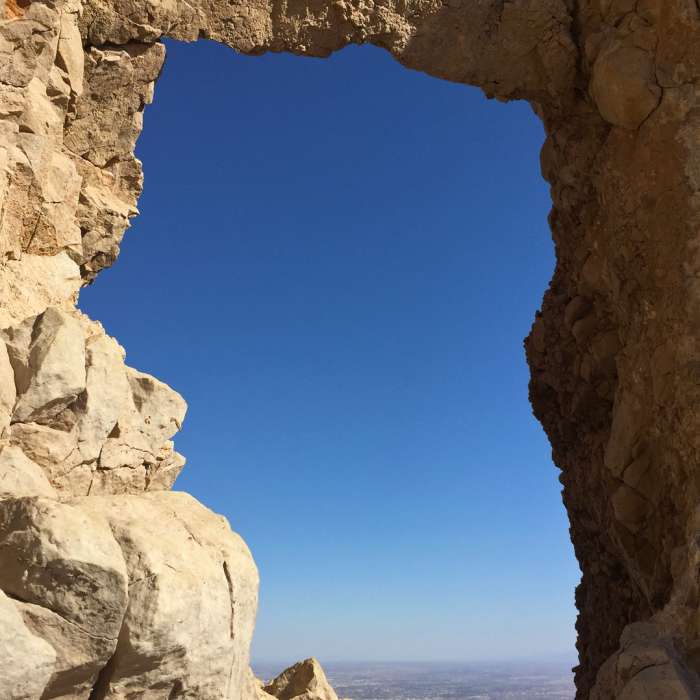
The southern end of the Coleman Trail is found at the back of McKelligon Canyon. Initially a wide doubletrack, it quickly narrows to single and makes a slow circle to the left of the canyon. Visitors familiar with other area trails will find Coleman's composition about the same: frequently rocky, with hardpacked dirt underneath.Soon, the first of two caves found along the route comes into view. The portion between here and the ridgeline becomes fairly steep, and at the quarter mile point, the trail starts to split into several parallel segments. All are within a few feet of each other, and they eventually end at the cave, so pick whichever one makes the climb easier. Covered in graffiti by local idiots, the cave marks the turning point for most casual trail users.Look to the right of the cave opening for a narrow track making a steep ascent. A red arrow painted onto the rocks can help. This section may require some minor scrambling, but some poured concrete steps assist in the climb. After reaching the top of the cave, the trail continues to the left. Another cave is visible to the right and can be reached by going off trail a bit. The remainder of the climb to the ridge is similar to the path before the first cave, with a few more splits and occasional loose rock. The path can be faint at points, so look for areas without vegetation indicating prior foot traffic.An impressive view of both sides of El Paso awaits at the ridgeline. Turn right and continue along the top of the mountain range. For the next two miles, a series of blue dots spray painted onto rocks help mark the trail. Experienced hikers won't have much trouble locating the rugged path, but the dots can help guide through ambiguous portions. As it transits the ridge, Coleman occasionally forks and rejoins. The left segments follow the higher line and tend to be more scenic and challenging, whereas the right side drops down a few feet, blocking the winds that whip up from the west side. At the three quarter mile point, the trail stays on the leeward side, and spends the next half mile in a relatively peaceful climb. Coleman shifts back to the west side of the ridge at the mile and a quarter point. Avoid two false paths branching to the right. Keep an eye out for the blue dots.The trail then comes to its most challenging segment. First up is a precipitous cliffside section be careful, as a fall would be dangerous followed by the first chain assisted climb. This ascent is short and easy, but the next one, found just ahead, is significantly more difficult. Check for good handholds and move slowly, climbing about twenty feet up the jagged rock face. The reward at the top is The Window, a hole formed in the mountain through which an impressive view of the east side can be seen.Two more chain climbs follow, and a lack of good footholds can deter some hikers here. Power through to the top and continue on the last climbing segment of the trail, which passes through a mountaintop bowl thick with plantlife. Coleman flattens out just west of the transmitters on South Franklin Peak; a barely visible path leads to the perimeter fence.Coleman is indistinct through this plateau, passing through numerous creosote bushes. Again, look for the dots. Continue down the other side and curve right around a runoff area. The trail now begins a rugged descent down a washout, directly towards Mammoth Rock. Some scrambling may be required. At the base of Mammoth, the dots end and the trail turns north for a half mile along the jagged, rocky ridgeline.At the two and three quarter mile point, Coleman descends down the west wall of Fusselman Canyon in a series of thirteen switchbacks. False trails lead off from the south end of many of these; stay on track. The hairpins, covered in talus, make for a grueling climb in reverse.At the three mile point, the trail reaches the canyon bottom. Coleman ends on a long, bumpy straightaway descent to the parking area.
The Coleman Trail is named for Ronald D'Emory Coleman, a prominent Texas congressman who played a significant role in protecting the land which would eventually become Franklin Mountains State Park. Residents felt that the Park's centerpiece trail was a worthy tribute to Coleman's work, which created the largest urban state park in the United States.The north side of the trail ends at Smuggler's Pass. Once a route for cattle rustlers to move between the mountains, it is now the high point of Transmountain Drive, a four lane highway connecting El Paso's two sides. The nearby Fusselman Canyon, through which the Coleman Trail descends during its last half mile, was named for Charles H. Fusselman, a Texas Ranger killed in pursuit of bandits in these mountains.
No Condition Reports
Contributors