Ready to explore this trail?
View Trail Map in AppDue to severe winter weather, Forest Road 75 is typically closed to vehicles from January 1 to April 15
Path Type
Loop
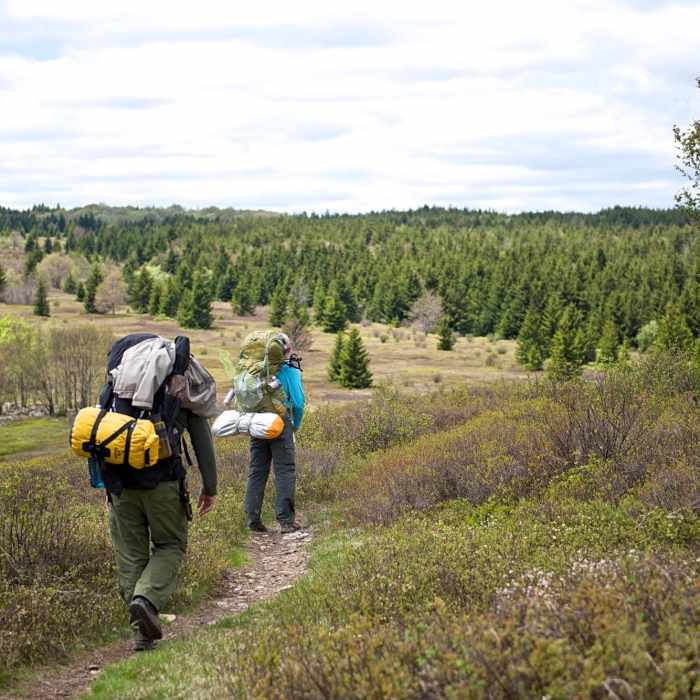
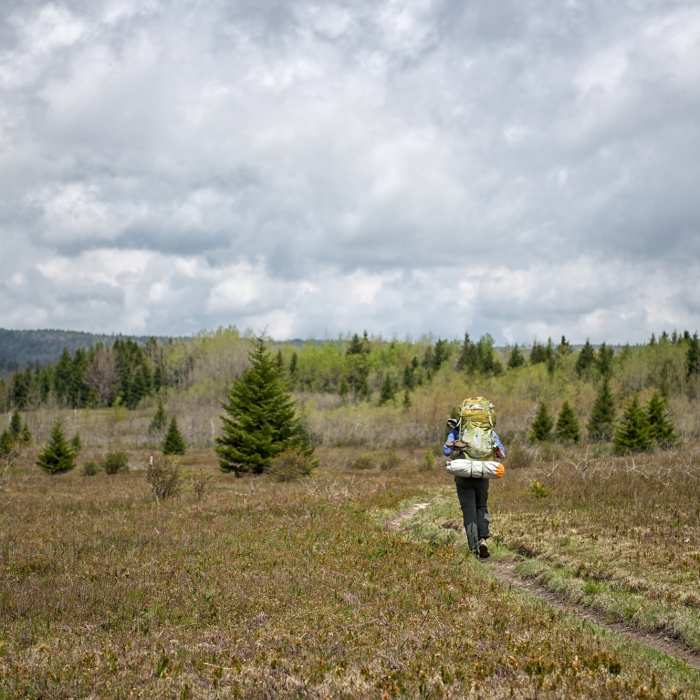
Start at the parking area off Forest Road 75, approx. 100 yards north of the !Bear Rocks Trailhead. From here, you'll follow the Bear Rocks Trail through open meadows and dotted sections of pine forest. After 2.4 miles, you'll meet up with Raven Ridge Trail. At the junction, follow the trail northwest. Raven Ridge will dead-end at the Rocky Ridge Trail... head south but take a few minutes to enjoy the views from the rocks! Continue along Rocky Ridge until you reach the junction with the Big Stonecoal Trail. NOTE: there is a possibility that water sources will be scarce from the !Bear Rocks Trailhead until after you reach the Big Stonecoal Trail... plan accordingly! You'll find some great campsites along this trail... keep your eyes open! After roughly 2.5 miles, you'll meet up with the Rocky Point Trail. This trail is appropriately named... very rough and rocky, so watch your ankles! You'll meet up with the Red Creek Trail after 1.9 miles. Be prepared for a steady climb over the first half mile or so, but it will flatten out and eventually drop down to Red Creek. Great campsites here! Continue north along the Red Creek Trail - but be prepared for a steady and steep-at-times climb over the first mile or so. At the junction with the Blackbird Knob Trail - hang a right and head east for a short jump over to the connection with the Upper Red Creek Trail. After 1.3 miles, turn right on the Dobbin Grade Trail. Be prepared for very wet and muddy conditions! It's not uncommon to end up ankle deep in some sections... just be prepared for it. You'll eventually come to a junction with the Bear Rocks Trail - make another turn to the east and head for home!
In settler times, the native Red Spruces averaged 4ft in diameter with 5ft of hummus on the forest floor. During the mid to late nineteenth century, the area had been logged heavily. Fires ravaged the leftovers burning the ground down to rock. The area could no longer sustain Red Spruce so it was repurposed for grazing. In fact, the "Dolly" part of the name is due to a family of sheep farmers in the area named Dahle.Without the tree cover, however, the slow-flowing mountain waters submerged the landscape. It has been cited that the flood of 1907 lead to the creation of the Monongahela National Forest for watershed protection. It was the CCC's in the 1930's that aided reforestation by planting Red Spruce.During WWII, this area was used by the military as a training ground and artillery range. There are signs warning of the possibility of live ammo so take care!In 1975 Congress protected 10215 acres and then in 2009, this was increased to 17371 acres by the Wild Monongahela Act.
Some Issues
All Clear
All Clear
All Clear
Looking for more condition reports?
Contributors