
Ready to explore this trail?
View Trail Map in AppPath Type
Loop
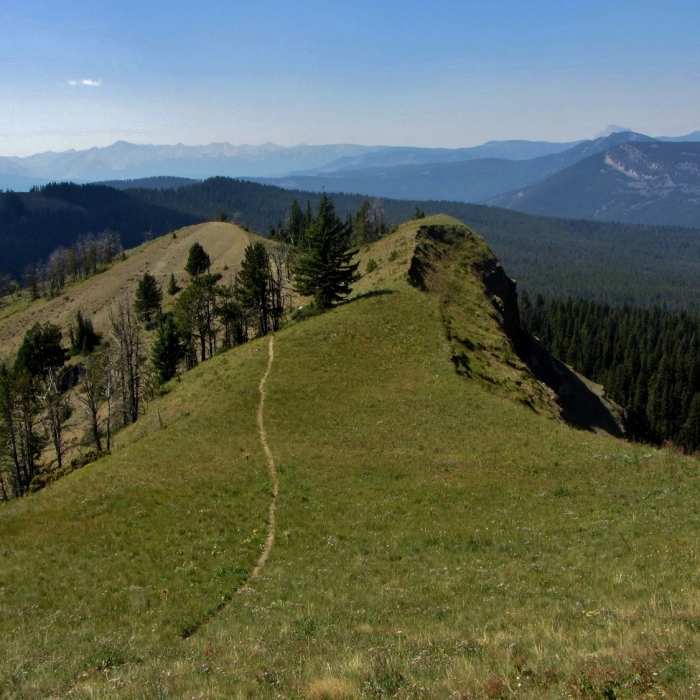
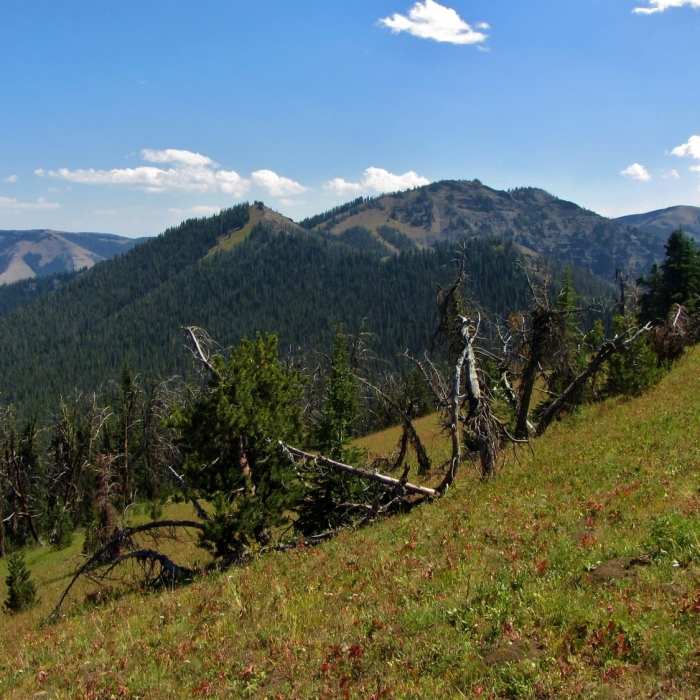
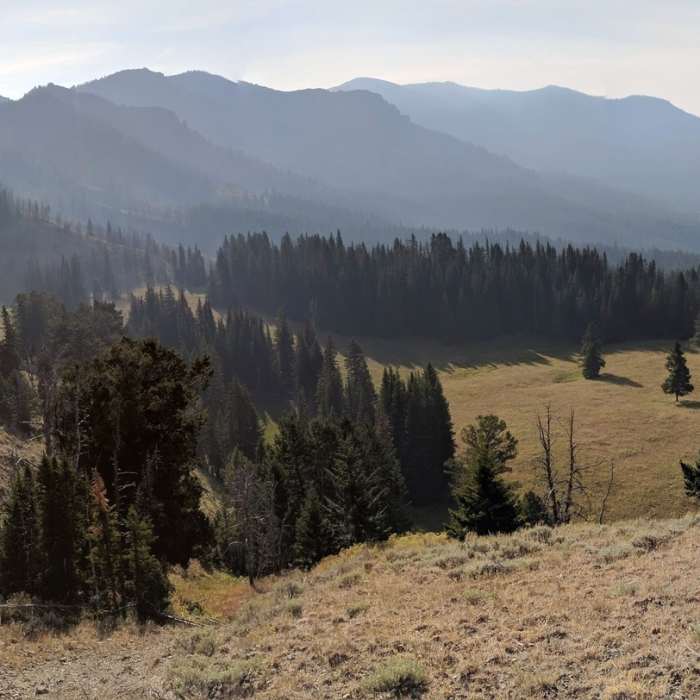
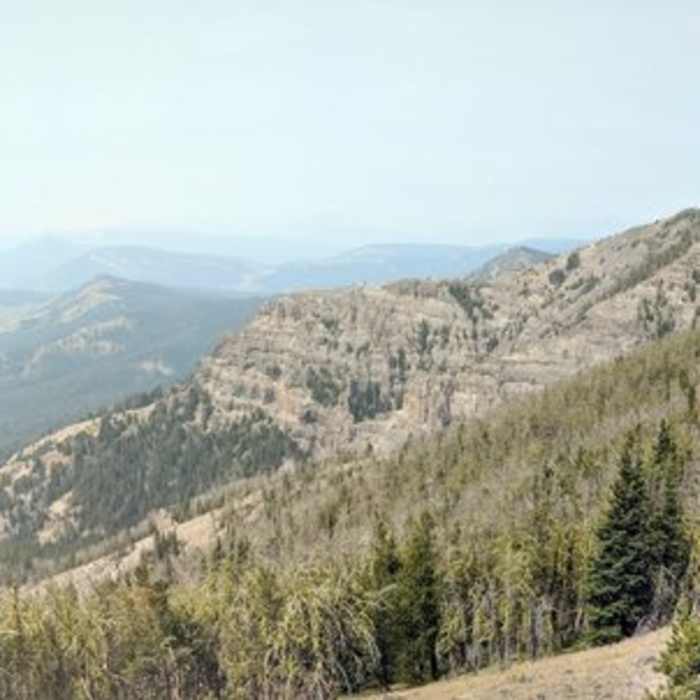
The hike begins from the Dailey Creek trailhead (sometimes misspelled "Daly Creek"). The trail quickly crosses tiny Dailey Creek and follows it as it bends left around formidable Crown Butte. The trail continues north, gently rising through beautiful open meadows, passing a junction with the Black Butte-Dailey Creek Cutoff Trail (your return route, on the right) at 1.9 miles and the Dailey Creek Spur Trail (on left) at 2.8 miles. As you get further up Dailey Creek, the wall of mountains that hems in the valley on the north and east becomes more and more imposing. That's where you are headed - the Sky Rim follows the top of that ridge!At the 3.6-mile mark, the trail enters the trees and begins a 900-foot climb to Dailey Pass, reached at 5 miles. The pass straddles the boundary between Yellowstone National Park and Custer Gallatin National Forest. Dailey Pass is a major 4-way backcountry intersection. A left turn follows the final mile of the Sky Rim Trail to a junction with NFS Trail #100. Straight ahead is NFS Dailey Pass Trail NFS #57. Our trail turns right and follows the Sky Rim Trail along the narrow ridge and climbs another 600 feet to a junction with the Tom Minor Divide Trail at 5.7 miles. From there, the views in every direction are spectacular and they stay that way for miles and miles. Turn right and head SE along the flower-spangled ridge. This ridge is the irregular shaped boundary to Yellowstone. At one time, the ridge lay outside the park. In the early 1920s plans were made to dramatically expand Yellowstone by annexing among others: Jackson Hole to the south; the Wapiti Valley to the east; and even the snowy Beartooth Mountains. Of course, these high hopes never completely materialized, but out of them came Grand Teton National Park and several Yellowstone boundary changes. In 1927 this northwest corner of the park was expanded to include the Gallatin Petrified Forest and a winter grazing grounds for a large elk herd. Beginning around the 6-mile mark, look for short side trails to the right that lead to nice views and a chance to see fossilized trees (part of the Gallatin Petrified Forest). As the trail continues, it rolls up and down (mostly up) and has three big hills to climb (beginning at 6.9, 8.3, & 9.8 miles) on the way to Big Horn Peak. Just after the second climb the trail levels and disappears into a big meadow. Continue south and watch for trail markers on the far side of the meadow. The trail also is hard to find as you steeply climb the third hill; just keep climbing and you'll find it.At 10.4 miles (the top of the third hill), the Black Butte Trail junction is passed. This is our route down, but the best part of the hike is just ahead. Continue .3 miles to the top of Big Horn Peak (9930'). This is the real crux of the trail, as it winds through a rocky section with precipitous drop-offs and awesome views. There is no more spectacular scenery anywhere in Yellowstone! From Big Horn Peak, it's possible the see Sheep Mountain (10095') the highest mountain in the area and which is conspicuously topped by a huge metal screen called a "microflector." If you continued on the Sky Rim, you would end there. Once you have soaked-up views on Big Horn Peak, backtrack .3 miles to the Black Butte Trail. Turn left and follow the difficult to see trail down the sloping meadow. Keep the cliffs on your left and you'll soon pick up the trail. The Black Butte Trail drops 2400 feet in the next 4 miles. As you drop, keep an eye out to the north on King Butte's gray, gnarly face for brown, petrified trees.At the 15.1-mile mark (including the side trip to Big Horn Peak) the Black Butte-Dailey Creek Cutoff Trail is reached. Turn right and follow the Cutoff Trail up a steady 330-foot climb, the top of which is reached at 15.7 miles. From there, the trail passes the Dailey Patrol Cabin and drops 700 feet to rejoin the Dailey Creek Trail at 17.4. Turn left and hike the last 1.9 miles back to the Dailey Creek trailhead.Thanks to guidebook author, Tom Carter, for sharing this trail description. To learn more about visiting Yellowstone, check out his book, Day Hiking Yellowstone.
No Condition Reports
Contributors