
Ready to explore this trail?
View Trail Map in AppPath Type
There and Back
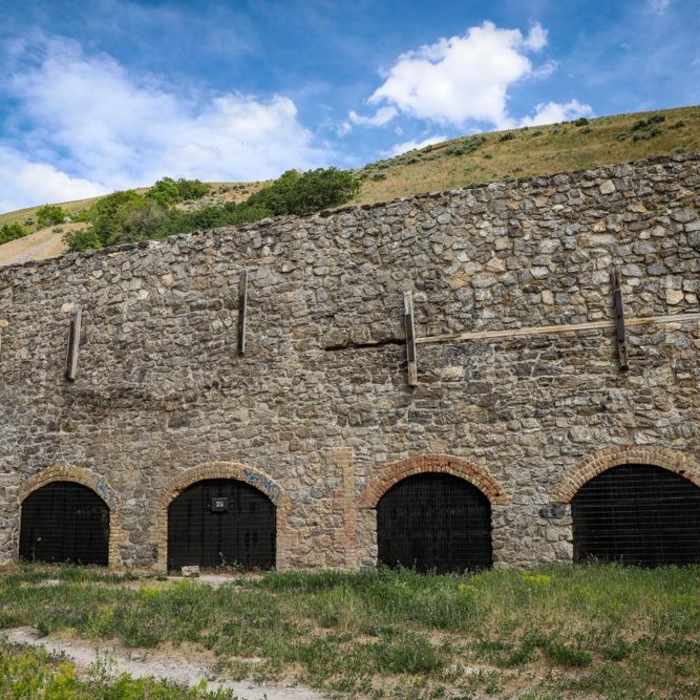
The lime kiln was constructed in the 1850s and was used to create lime which was used in masonry products. Many early Utah structures were created from the lime from this kiln. This is an easy hike that meanders partly through a residential area. Just follow the signs and you will arrive at the kiln. Note: Please be respectful of the lime kiln. Do not vandalize or climb in or on the structure. Hiking to the historical Pioneer Lime Kilns is very easy. You could technically hike roundtrip in less than 12 minutes and there isn't too much elevation gain in that time. At the trailhead, you just park on the side of the road in the residential area. You will see a garbage can and also a dog post here. Hike on the gravel about a hundred feet until you see the "TRAIL" sign. From here you will hike another 800 ft or so until you come to the lime kiln. The lime kiln is still in pretty good condition considering they had to do repair and stabilization work on it. Due to the vandalism, the kiln openings have been gated. Here is some information about these kilns that can be found on a plaque: "Historic Pioneer Limekiln. The University of Utah received a generous gift of land from Bernard P. and Francis M. Brockbank in 1975, which included this area known (since pioneer times) as Limekiln Gulch. There were originally three limekilns in this area, all constructed in the 1850s. Limestone, quarried from nearby deposits, was broken into grapefruit-sized chunks and alternating layers of wood and limestone were loaded into the vertical shafts until they were full. The heat from the burning wood transformed the lime into a white powder by removing the water and carbon dioxide. Quicklime, masonry mortar, or slaked lime, a remix of powdery lime, was widely used in the state's early construction work. In addition to being used for making cements, mortar, plaster, and whitewash, lime was also used for softening water and reducing the acidity of butter, cream, and milk, and as a whitening agent in sugar. Other uses included tanning leather, destroying diseased animals' bodies, drying cuts on livestock, sanitizing outhouses, and treating overly acidic soil. A violent rainstorm in 1908 destroyed about a year's worth of lime, approximately 10,000 bushels, that was stockpiled in this area. This resulted in the kilns being abandoned. Chunks of the ruined lime were used for the University's first block U. Through the interest and efforts of the University of Utah and the Utah Bicentennial Commission, the largest of the three limekilns was restored in 1976. Much of the kiln's stonework had to be replaced and all remaining stonework had to be repointed. Stone walls were added at the back of the vaults, and bricks that had lined the vault were replaced. The chimneys themselves, where the limestone was burned, were not refurbished as any work would not have done justice to the glaze that resulted from the incredible heat that was generated in the lime-making process. After the structure was stabilized and rebuilt, a slab of concrete was poured around the vertical shafts to further stabilize and shed water away from the stone walls. This historic landmark recalls an enterprise that helped build the state and significantly influenced the architecture of early Utah buildings. Very few pioneer limekilns remain today, making this historic landmark and the natural setting around it even more unique. As a result of continued vandalism and uses not befitting a historic landmark, it became necessary to restrict public access into and on top of the limekiln. Please do your part in preserving the limekiln and keeping the area free of debris. This area is closed to visitors from sunset to 5:00 am." I enjoyed seeing this historic location and imagined how important this was back in the day when the valley was being settled. It is still an important piece of our history that deserves protection.
No Condition Reports
Contributors