Ready to explore this trail?
View Trail Map in AppParking and access are free
Path Type
Loop
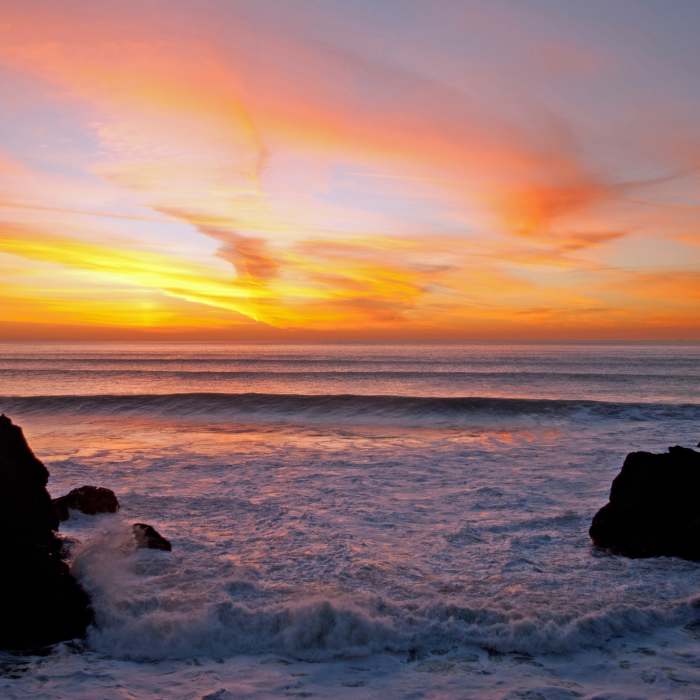
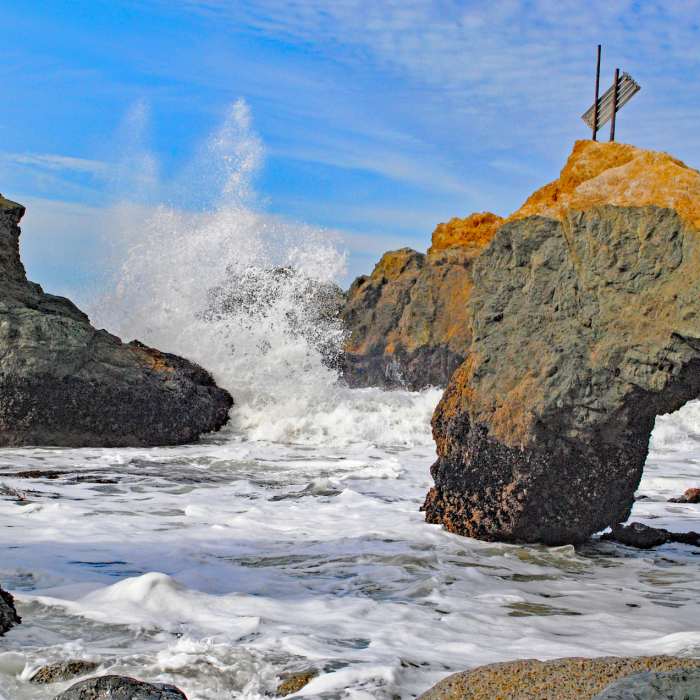
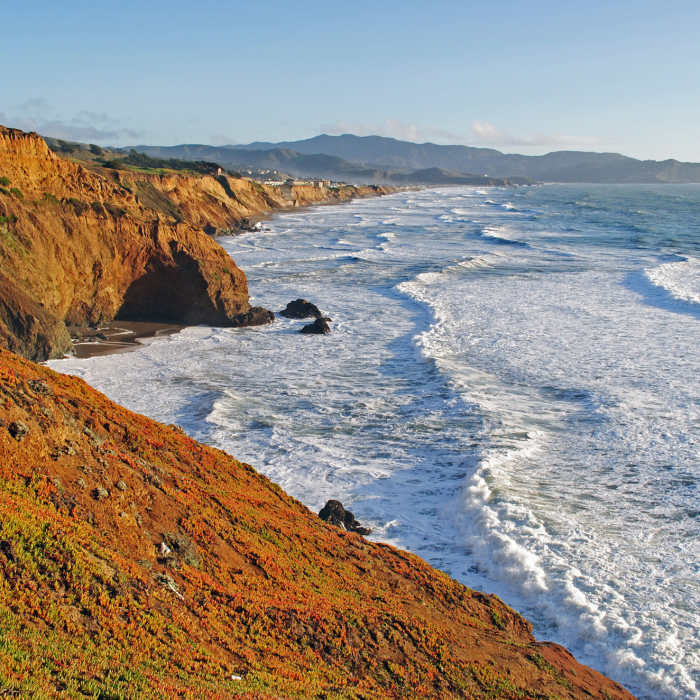
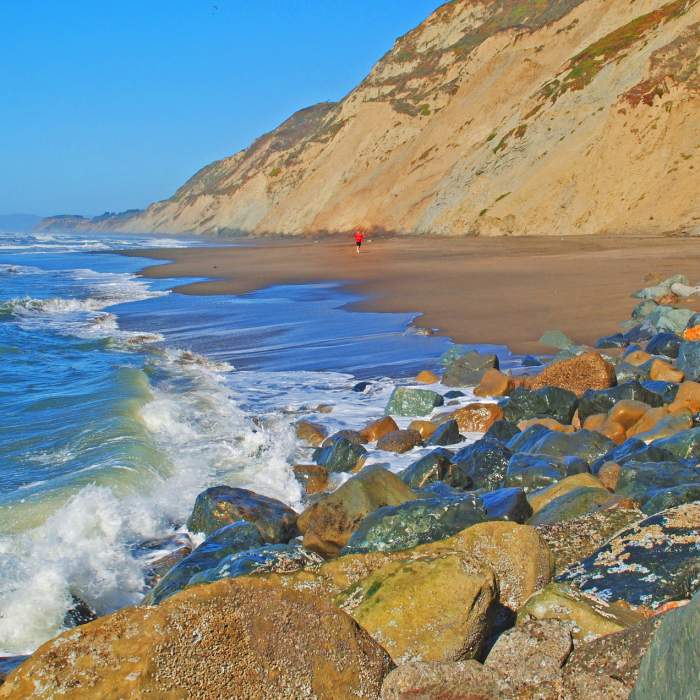
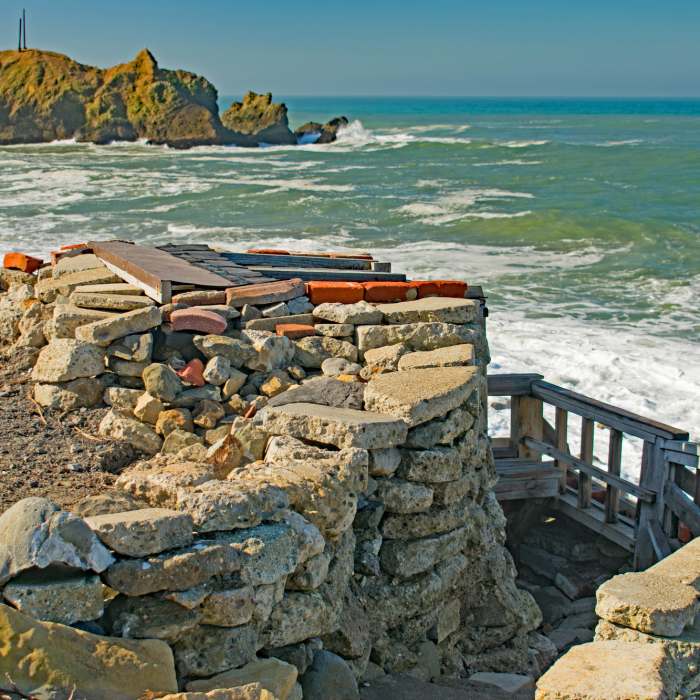
This Mussel Rock Park Tour covers a total of 2.4 miles, including the return to the parking lot. It is mostly a combination of three underlying trails: the Mussel Rock Trail, the Shore Trail, and the High Trail. All of these are my descriptive names. None of the trails in the park have official names. The Mussel Rock Trail starts from a parking lot, 200 feet in elevation above Mussel Rocks, and ends at the rocks themselves, almost directly below the starting point. After you pass through the gate at the northern end of the parking lot, look at the houses high on the cliffs above. They have incredible views, but the cliffs are related to the San Andreas fault which reaches the ocean at this point. Also, the cliffs are soft and have major problems with erosion.The trail drops a little farther to the most popular paraglider take-off site. When the conditions are right, there may be a dozen or more gliders in the air. Take the fork in the road that leads down to Mussel Rocks. Mussel Rocks is one of the best places in the area to watch waves crashing on the rocks, especially when the surf is high. Beyond the end of the road, you can see the tunnel called Tobin's Folly. Its historical background is explained in the description for the Mussel Rock Trail. During low tide, it is possible to enter the tunnel, but it is never possible to hike to the beaches on the other side. When the tide is low, there is also a small but beautiful tide pool between the end of the road and the tunnel.From Mussel Rock turn back north and take the Shore Trail, a road which crosses the park close to the sights and sounds of the surf, only 10 to 30 feet above the water line. There are a few good-sized rocks off-shore. The waves sometimes splash over these or high in the air. The shoreline below the road is lined with boulders to prevent erosion. There is little sand. Near the mid-point of the trail, there is a small, unique rock shelter with wooden benches. It is a nice, shady place from which to watch the surf. The road ends above colorful boulders at the edge of a long sandy beach. At low tide, the beach extends all the way to Fort Funston. Volunteers have built a short trail down to the sand. It is solid, but difficult and narrow. On a warm summer day, there may be a few people on the beach, but even then, you'll probably not have to go far to have a huge section of beach all to yourself.From the beach overlook, hike back south for about 150 yards and take the first road (Connector Road) leading up the hill. Then turn left at the first road you come and take it up past a wide triangular intersection to the road that heads north up the hill. As you hike along, you'll notice a series of six parallel drainage ditches designed to slow the hill's erosion. At the point where the trail switches back towards the south, there is another flowery road/path that branches north for about a quarter mile to a viewpoint that overlooks the beach, the Marin Headlands, and Tamalpais. This path ends at a major landslide. Be careful not to hike out onto unstable land. The High Trail continues climbing past a high paragliding launch site and on up to where a lot of construction has been done to drain water out of the cliffs and slow their collapse. Pipes have been drilled into the cliff. There is a large catch basin that fills with water after rains and a long pipe that runs down from this to take the water farther away from the cliffs. From the higher parts of this trail, you have views over the entire Mussel Rock Park, the cliffs above and the ocean below.If you look at the hillside to the north, you can see a small trail zigzagging through the brush up to the top. This trail is extremely steep, slippery, and becomes dangerous near the top. I'm not sure why it is there.From the High Trail, it is easy to see how to return to the parking lot.
The description for the Mussel Rock Trail gives details about "Tobin's Folly", the first "highway" tunnel in California (1874).Through the 1960s, Mussel Rock Park was the site of a trash landfill, but I personally have never seen any remnant trash or noticed any smells. It does explain some of the gravelly roads crossing the part, but they have probably been maintained for all of the drainage construction designed to slow erosion and the collapse of the high cliffs above. This site is where the San Andreas Fault meets the ocean, and it is the closest spot to the epicenter of the 1906 earthquake.
No Condition Reports
Contributors