Ready to explore this trail?
View Trail Map in AppPath Type
Loop
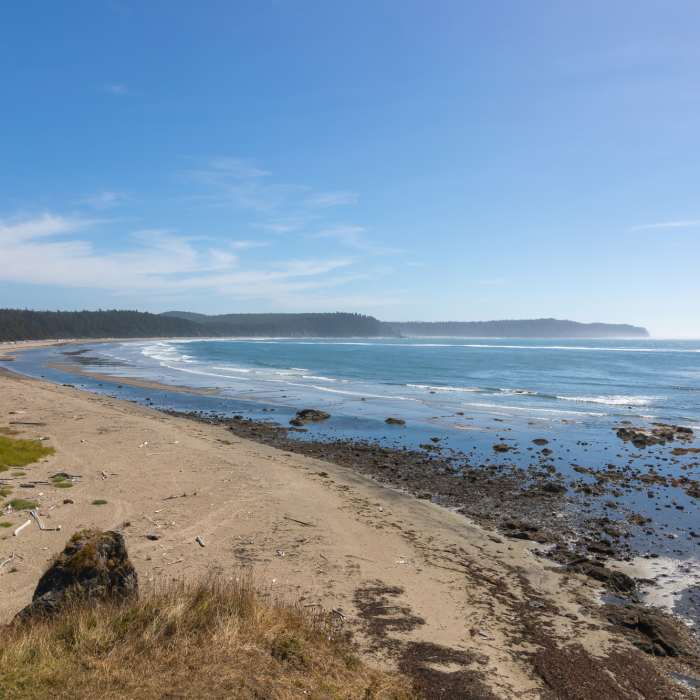
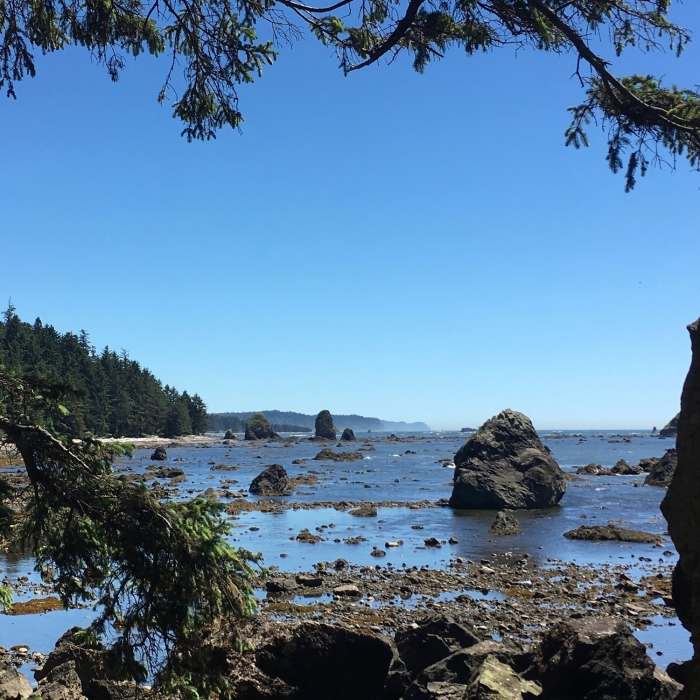
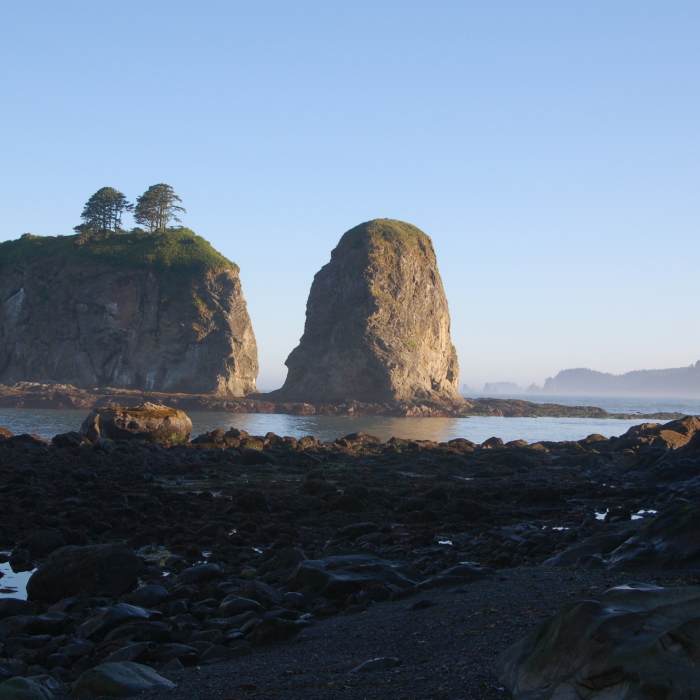
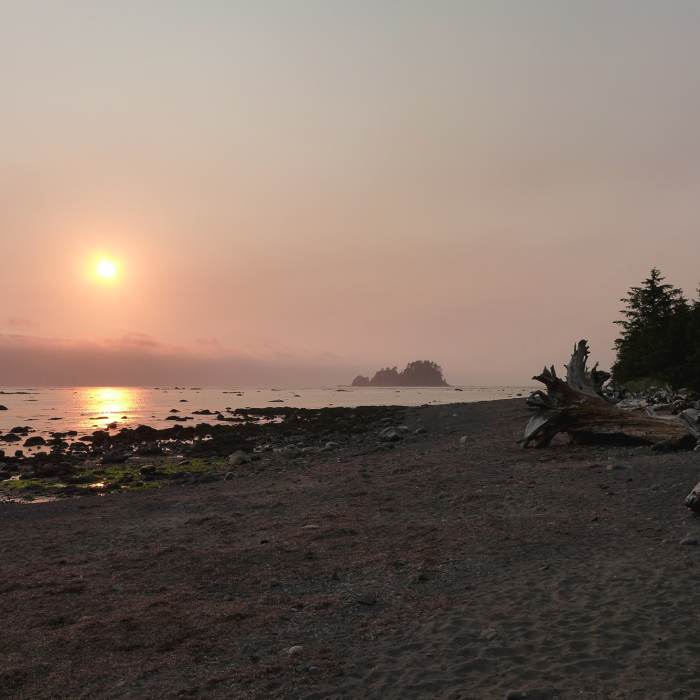
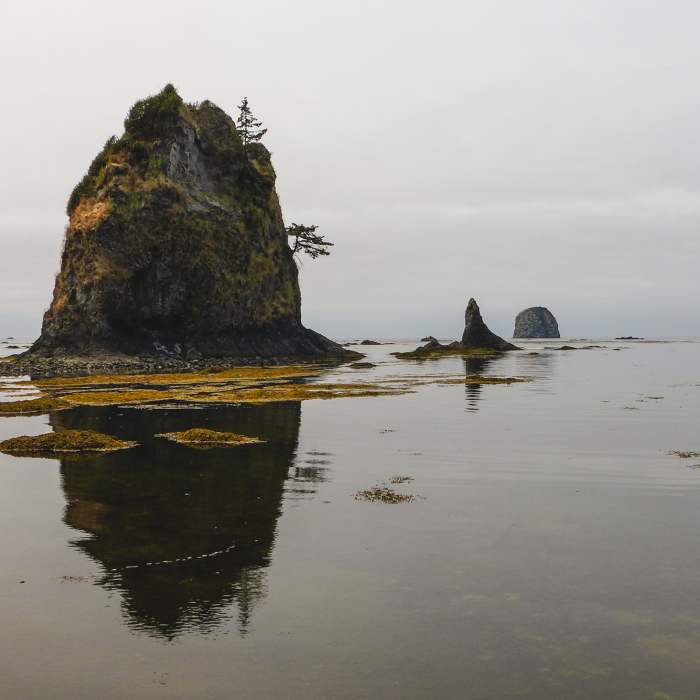
This enjoyable loop can be done in either direction. What follows is a description of the counter-clockwise route. Start from the parking area and seasonal ranger station off Seafield Road. Cross the Ozette River and take the right fork onto the Cape Alava Trail heading west. The Cape Alava Trail is well maintained and composed mostly of (sometimes slippery) boardwalk and sections of stairs. Traverse mostly flat ground with a few rolling sections through ferny, wet forest. The raised boardwalk keeps you out of the boggy areas. The last part of the trail descends a few flights of stairs over the bluff to the beach - use the rope to steady yourself as needed. At the beach, there are many campsites scattered about and a pit toilet. Depending on the tides, the shoreline can be a wonderful place for exploring tide pools and general beach combing. The next segment of the "Triangle" is a scramble south on the beach to Sand Point. Follow the rugged coastline past driftwood obstacles and over sand and rocks. A little less than 1/3 of the way down the beach is the Wedding Rock petroglyphs, so called because of the suggestive pose of the figures. There are also a few campsites near here. Next, look for red/black circular signs which mark the two headlands to climb - use the ropes to pull yourself up the rooty parts. Along the rest of the way, enjoy views of Ozette Island, sea stacks, Cannonball Island and a neat natural arch. Upon reaching the rocky peninsula of Sand Point, you leave the coast behind and head inland to catch the North Sand Point Trail. There are campsites at this junction in addition to the sites just south of Sand Point. Take the North Sand Point Trail uphill to the northeast, first through dry stands of forest. Then transition on boardwalks through more dense jungle-like vegetation on gentle slopes. Finally, arrive back at the junction with the Cape Alava Trail, and head east back to the parking area to close the loop.
In the 1890's settlers populated this area with farms, schools and shops. Some remnants of their homesteads remain. Just to the north, on the sheltered side of Cape Alava, is an important archaeological site. In the 1960's the coastline eroded to expose Ozette Indian stone artifacts, longhouses, and bones - some 2000 years old. In all, archaeologists recovered 50,000 pieces which are now housed in the Makah Museum in Neah Bay. After excavation was complete, the scientists reburied the site and planted vegetation.
No Condition Reports
North Wilderness Beach Route: Shi Shi Beach to La Push
North Wilderness Beach Route: Shi Shi Beach to La Push
Contributors