Ready to explore this trail?
View Trail Map in AppThe trail is open daily, 7 a.m. to sunset. The park is closed Thanksgiving, Christmas Day, and New Year's Day.
Path Type
Loop
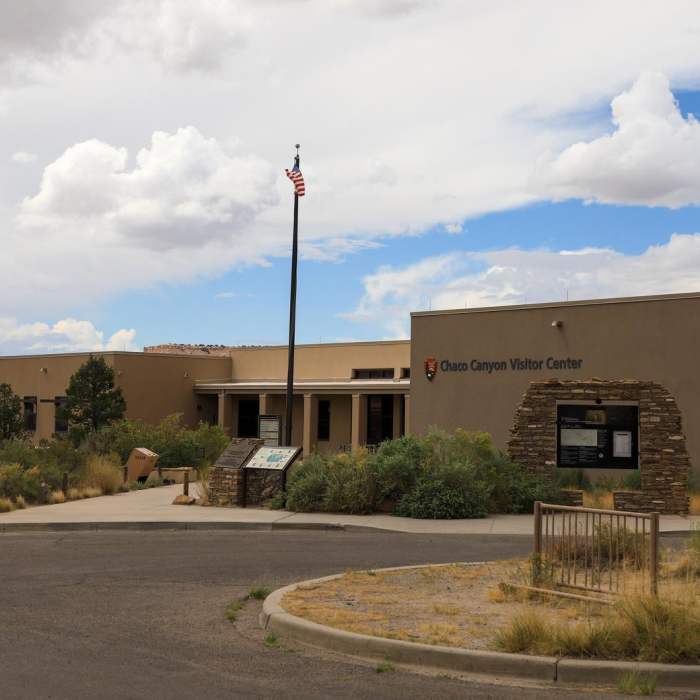
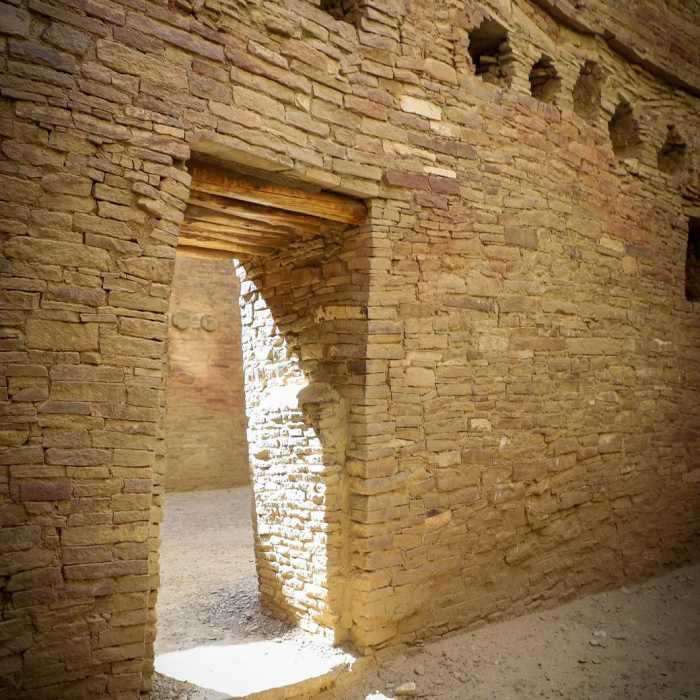
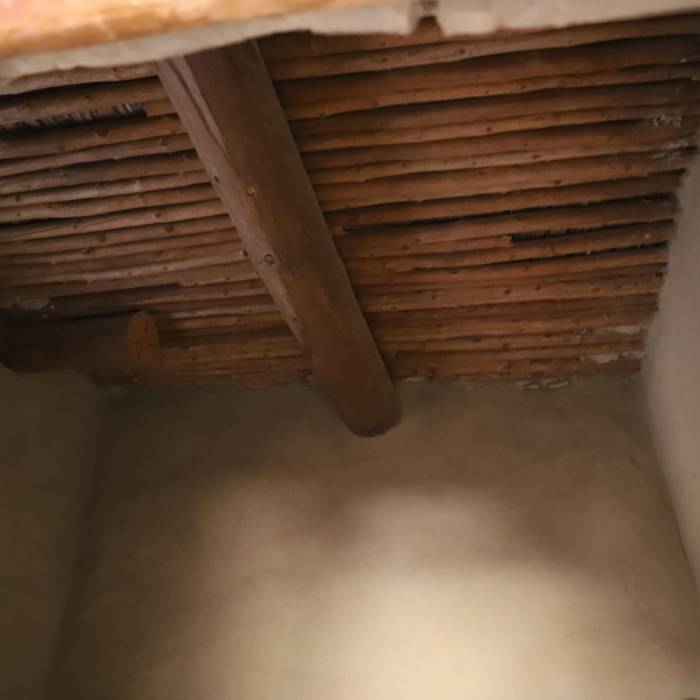
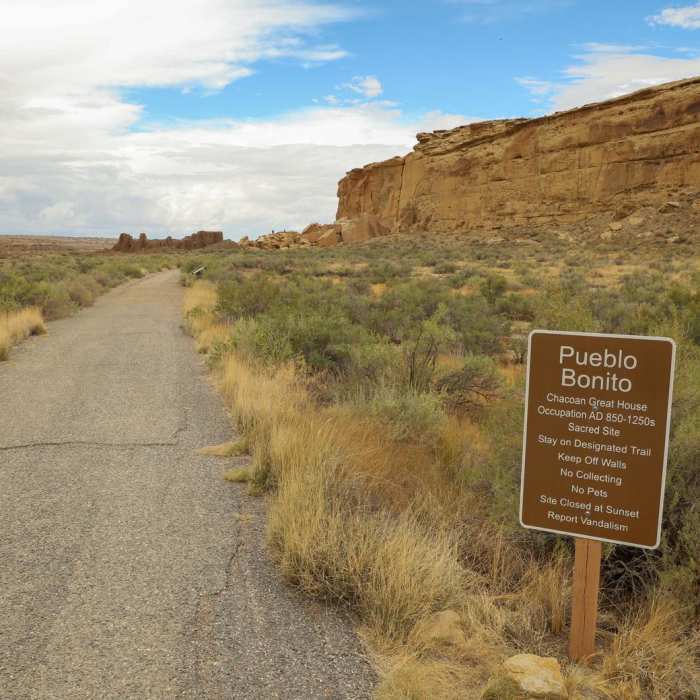
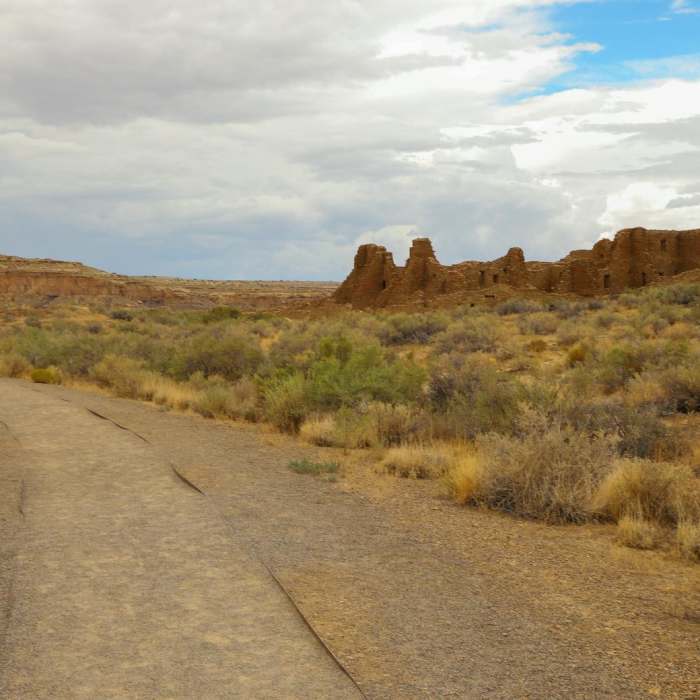
Pueblo Bonito is the center of ancient culture known as Chacoan. The Chacoan Culture began here and spread to other parts of New Mexico, and parts of Utah, Colorado, and Arizona. Who are the Chacoans today? Pueblo Indians of New Mexico, Hopi, and the Navajo all have histories with the ancient Chacoans. Pueblo Bonito is full of incredible ruins and examples of advanced masonry built by the ancestral pueblo peoples from the years 850 to 1150 AD. If you only have one day at Chaco then this should be the site for you to see. Once you stop at the visitor center to pay the entrance fee and get a map, you can experience Pueblo Bonito in two ways: self-guided tour or guided tour. We recommend you do both, but you can do a self-guided tour after your guided tour and experience the ruins at your own pace. The guided tours are an hour long. It is a short drive from the visitor center to Pueblo Bonito. You will need to walk about 800 feet from the parking lot to the actual Pueblo Bonito though. The overall adventure is relatively flat and easy hiking. There is a part with some stairs, but you can bypass this part if you want. There is also a really fun spot where you can go through parts of the buildings, so you will need to crouch a little and this spot is avoidable too. There are pros and cons to either of these two tour options. The self-guided tour will miss out on lots of insight, stories, and just the overall information of the area in general. That being said, you can still have a fun and enjoyable experience on your own! Pueblo Bonito is set up as an open area so you are free to explore many of the open areas and even some of the rooms. Of course, you aren't allowed to jump down in the kivas or climb over the walls to access other parts of the ruins. In general, you shouldn't be touching or leaning on the buildings or walls. The ruins are extremely fragile and you can see where bracing has been put to stabilize walls. Please be respectful and just take pictures. You can start your self-guided tour by hiking on the east side of Pueblo Bonito. Immediately, you can see the tall walls and unique masonry that kept all these ruins together for more than a thousand years! You can peek inside the windows to view the rooms that make up much of the structure. It must have taken immense amounts of water to create the mortar for all the rocks and bricks. There are few places for water in the park, but none directly located at Pueblo Bonito. Just imagine the time consuming efforts of bringing water in pots from afar to create so many buildings! The trail circles around large boulders that broke off the cliffs and destroyed part of the northeast corner of Pueblo Bonito. On the guided tour, the guide said that the ancient Chacoans knew this would one day collapse and put many prayer feathers in it. The trail goes through part of these boulders so you can get a higher vantage point. You can see down inside some of the rooms too. The trail then goes behind where you can see some stabilization and bracing efforts by the Park Service. From here the trail goes into the center plazas at Pueblo Bonito or it goes west to the nearby Wetherill Cemetery. The trail cuts through some now broken rooms and into the main plaza area. This massive open space was probably for daily living and the trading of goods. Make sure you check out some of the kivas that go into the ground. Be careful as some of them are quite deep! Standing in the middle of the plaza, it was fun to imagine myself as an ancient Chacoan. I could really see this place busy with visitors, trade, daily life, and spiritual ceremonies. Directly to the east there is a small narrow path that goes through a brick tunnel then into some of the rooms. You are allowed to explore in this portion and it's recommended you do if you are able. You will pass through several rooms and take note of the height of the walls and rooms! You will see windows at some of the corners of the rooms that would have brought in light. The pathway goes through several open rooms that are fun to explore. You will notice that on the inside of the rooms there used to be plaster on the walls. Most of that plaster is gone but you can see some of it still clinging to the walls. Not much is known about these rooms because evidence doesn't support the theory that people lived in these rooms. Were they for visitors? We don't know.
No Condition Reports
Contributors