

Ready to explore this trail?
View Trail Map in AppPath Type
Point to Point
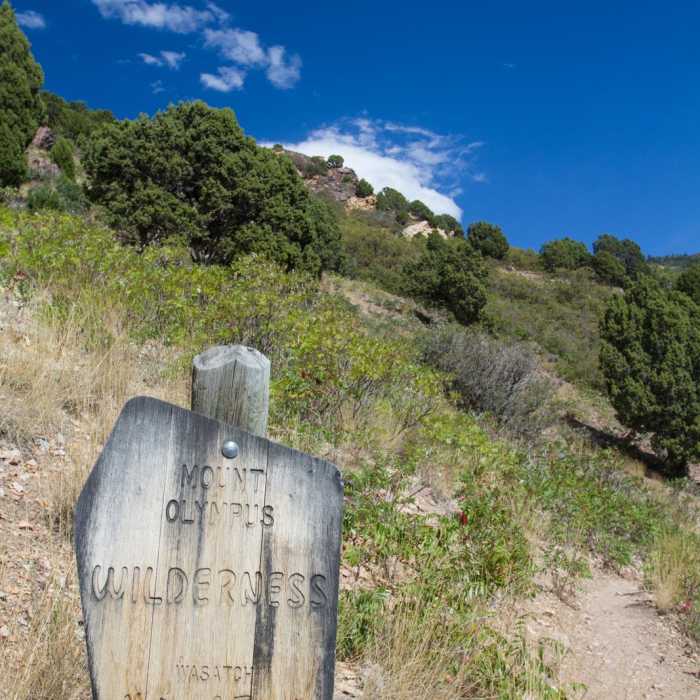
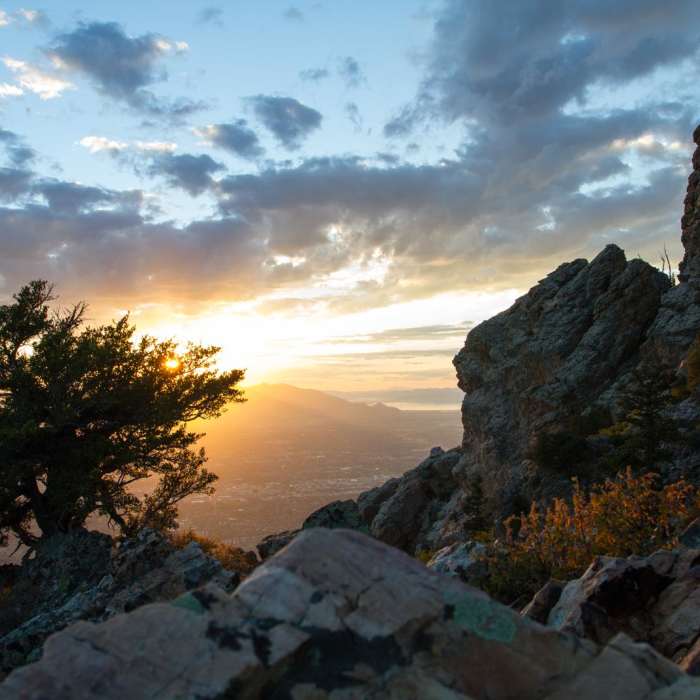
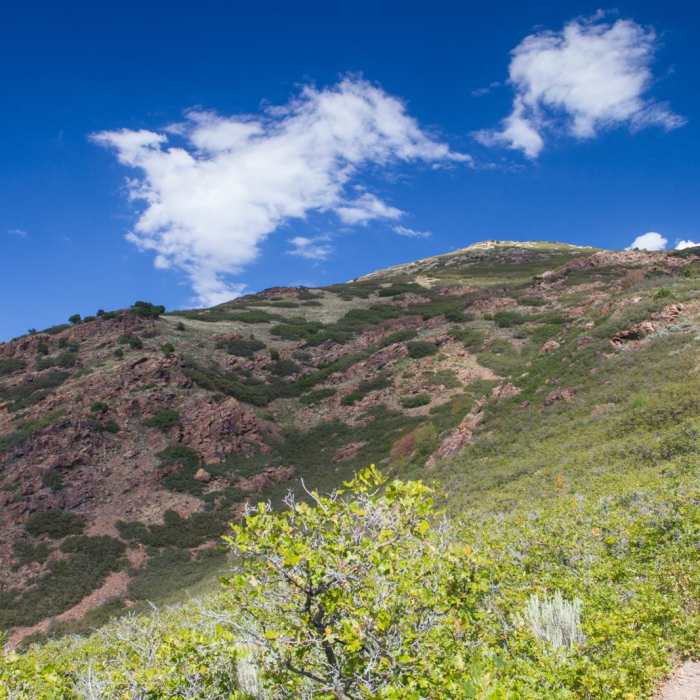
Mount Olympus is a dominating presence on the Salt Lake City skyline and makes for one of the area's most rewarding hikes. Its craggy summit juts up nearly a mile above the valley floor below, beckoning hikers to try to gain it. The north side of the mountain is terrain full of cliffs and enormous slabs of broken quartzite, the domain of mountain goats and rock climbers. The west side, on the other hand, offers more modest grades and a trail that can take even mortals to the top of this impressive 9,026-foot peak. Capping off the route is several hundred feet of third-class scrambling over boulders and ledges, adding to the thrill and sense of accomplishment on reaching the top. Olympusas striking position on the edge of the city makes it an enticing destination for hikers, as does the relatively short distance from trailhead to summit, just 3.4 miles. However, itas important for novice hikers not to underestimate the 4,050-foot elevation gain or the consistent grade of this trail. Also, since the route is almost entirely west-facing, ascents in warm weather can feel especially strenuous and require carrying plenty of water. From the Wasatch Boulevard Trailhead the trail ascends steeply from the start, passing a prominent rock outcrop called Peteas Rock. This spot is fairly popular with rock climbers due to its easy access and long history, if not for its rock quality. The trail is wide and easy to follow as it climbs switchbacks through sagebrush, juniper, mountain mahogany, and Gambel oak. At two points along this first section the route intersects the Bonneville Shoreline Trail. Stay to the right, heading east (and uphill) rather than taking either of these trails. The trail takes a curve to the left around a rock outcrop, and the grade eases up for a short stretch as you enter Tolcat Canyon (the old trail began farther down this drainage). Just past this point a sign marks the beginning of the Mount Olympus Wilderness Area at 0.7 miles. Continuing up Tolcat Canyon, the trail crosses a small stream 1.7 miles from the trailhead. Although the stream may be dry in the late summer, this is a nice shady spot for a rest, and it marks a point about half-way, at least in terms of mileage; two-thirds of the elevation gain still lies ahead. After the stream, a series of switchbacks continues ascending toward a saddle at the head of Tolcat Canyon. The trail is steep and rocky along this section, but it is not difficult to follow. To limit erosion, try to resist the temptation to cut the switchbacks. Itas generally more efficient to stay on the main trail anyway. As the route gains elevation, Douglas fir and stands of aspen appear, offering welcome shade on a hot day. At about 8,400 feet, the trail levels off at a saddle with a stand of mature Douglas fir. Take a moment to stop here for the views of the Salt Lake Valley to the west and the Wasatch to the east. While there is no water available, a well-used, shady campsite here offers a good spot to pitch a tent or have a picnic. The trail now turns to the north, winding through the trees toward the base of a rocky couloir that ascends directly toward the summit. The remainder of the route stays in this couloir, gaining about 600 feet in a quarter of a mile. The route is well-traveled, and a faint trail is visible most of the way. The scrambling here is easy, only occasionally requiring use of the hands. There is no exposure here, but be careful not to dislodge loose rocks. Should you find yourself facing a drop-off or a steep, blank, rock faceathis isnat the way. Look around, and the correct route should be nearby. The couloir tops out near the summit with an old fir tree marking the way when youare ready to go back down. The summit itself is just a bit farther to the right from this point. The top of Mount Olympus is a jumble of broken quartzite boulders. Magnificent views are in all directions: the Great Salt Lake to the northwest, the Salt Lake Valley and the Oquirrh Range beyond it to the west, and the Wasatch mountains all around to the east and south. From the summit, any route other than the couloir you ascended is more challenging and requires some basic rock climbing skills. The north summit is an attractive objective that is rarely visited. It doesnat look far, but getting there requires some challenging scrambling and a few sections of low fifth-class rock climbinganot for the faint of heart. While most of the route up Mount Olympus is in a wilderness area, the trailas popularity makes wildlife sightings uncommon. One exception is rattlesnakes: this area is prime habitat for them. Watch your step in particular if you are descending in the evening, and be careful of putting your hands places you canat see on the summit scramble. Mount Olympus can be climbed year-round, and the high traffic makes snowshoes unnecessary most of the winter. Traction devices will be helpful, especially in the shady sections near the saddle where packed snow quickly becomes icy. They may be sufficient for the summit scramble, depending on your comfort level and the amount of snow. With a deep snowpack, crampons and an ice axe would be advisable. In winter, the summit is an even wilder place. Be wary of cornices that may form on the north side and along the ridge to the west. Expect this route up Mount Olympus to take experienced hikers between six and seven hours, perhaps a bit longer in winter.
All Clear
The trail was dry and free of snow. The trail map shows this as 3.4 miles but it is about 4.3 miles to the top, so 8.6 round trip.
Some Issues
Deep snow at the top, made the scramble not too bad but definitely some swimming up there! Felt fine with microspikes and one trekking pole, ended up with a guy who made it to the summit in shorts and trail runners 💀
All Clear
All Clear
Looking for more condition reports?
Contributors